A sheriff in Southern Colorado posted a frightening map on social media this month. It depicted an angry red zone, dotted with flame icons, where wildfires were burning. And a blue zone nearby showed where floods threatened, too.
The graphic wasn’t from the National Weather Service or Federal Emergency Management Agency. It came from a smartphone app.
The mapping and forecasting provided by this app, Watch Duty, are quickly becoming indispensable for emergency authorities, utility crews and residents in parts of the country that, until recently, seemed relatively safe from fires and floods alike.
Watch Duty began culling disaster data from government warnings, weather forecasts, radio scanners and social media five years ago to help residents of a few California counties track wildfires and plan evacuations. Since then, it’s boomed.
In January 2025, after a firestorm swept through Los Angeles, millions of new users joined. Utilities and philanthropic groups have sent millions of dollars to help expand the app’s focus. And this year, it has started to cover wildfires on the East Coast and widespread threats of sudden catastrophic flooding in other regions, too.
The changing climate means existing systems for dealing with disasters haven’t always kept pace with hazards. But Watch Duty is growing more like a tech start-up than the public-service-oriented nonprofit it is.
“People are hungry for information,” said Yusra Kauppila, a regional captain for Watch Duty, one of the dozens of paid staff members and volunteers who gather and vet the data shared with users.
The app has attracted 10 million unique users this year, the organization said, putting it on a pace to surpass the nearly 17 million users it reported in 2025.
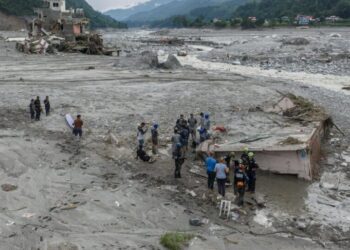
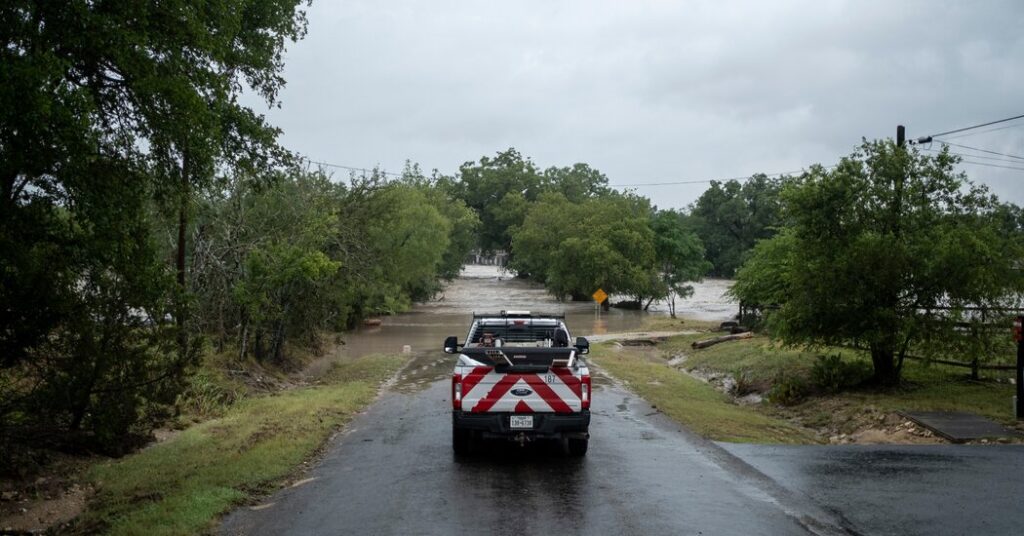
Despite recent floods in Texas and fires in Minnesota, 2026 has been a relatively quiet period for disasters in the United States. But there’s been a steady surge in climate-change-fueled wildfires and flooding rains over the past several decades. The most damaging disasters cost the United States more than $100 billion last year, according to Climate Central, a nonprofit group.
Global warming, caused by fossil fuel emissions and the greenhouse effect, is increasing both the atmosphere’s capacity to produce heavy downpours and its ability to rapidly dry out fire-prone landscapes. A developing and potentially record-setting episode of the El Niño climate pattern could intensify some floods over the next year, while diminishing Atlantic hurricane risks.
Elected officials and disaster preparedness groups have raised concern about the government’s ability to respond to such emergencies. President Trump has significantly cut budgets and staff for agencies like the Weather Service and FEMA since he returned to office.
Watch Duty relies heavily on all levels of government to keep its users updated, said John Clarke Mills, its co-founder and chief executive. But it still provides a service those agencies cannot, using technological know-how that the government hasn’t been able to muster as quickly.
“If they’re not going to do it, we’re going to do it,” Mr. Mills said. “If they put us out of business, great.”
Demand keeps rising.
As many as 1,000 people were subscribing per hour to alerts in Florida and Georgia as wildfires spread across the South this spring, giving Watch Duty 127,000 users there within about six months of launching coverage.
The organization began tracking floods in June. A few weeks later, more than a foot of rain fell on parts of Missouri within a few hours, and its page dedicated to the incident quickly garnered 37,000 views, the nonprofit said. The day had started with only about 300 subscribers in the area, Ms. Kauppila said.
Watch Duty is free, but users can pay $25 or $100 annually for upgraded memberships that allow subscriptions to alerts in unlimited numbers of U.S. counties, or extra layers of mapping data on variables such as public land ownership. In 2025, more than 111,000 people paid for the $25 tier, twice as many as a year earlier.
Some companies have found the app valuable, too. Watch Duty said it signed $1 million in recurring contracts with utilities, telecommunications companies and railroads last year, and it expects to more than double that this year.
Pacific Gas and Electric, the utility serving 16 million Californians, is among its heaviest users. PG&E admitted responsibility for the deaths of more than 80 people in the 2018 Camp fire in Butte County, Calif., which utility equipment ignited.
More than 4,000 of PG&E’s 29,000 employees use an internal version of Watch Duty that maps out power infrastructure alongside the app’s fire data, giving them information that helps them protect themselves, communities and the utility’s equipment, said Logan Monroe, the utility’s senior manager of wildfire risk management.
Evaluating how power systems and fires might interact once required hours of cross-referencing internal maps with fire data, Mr. Monroe said. Now, Watch Duty sends fire alerts to his smartphone.
“That’s a three-second investigation,” Mr. Monroe said.
Other apps finding an audience during disasters include MyRadar, popular among tornado watchers, and American Red Cross Emergency, which helps people prepare for and recover from disasters. The National Oceanic and Atmospheric Administration, which includes the Weather Service, has its own radar app and issues wireless alerts for tornadoes and flash floods.
Even with Watch Duty, some communities could struggle to keep up with evolving disaster threats. In Eastern Kentucky, for example, officials are still trying to improve their readiness for unpredictable and deadly floods like those that hit in 2022.
Watch Duty’s new flood coverage could help. But steep topography, limited hydrology data and a lack of access to smartphones and cell service could nonetheless make it difficult to ensure the next flood will come with enough warning, said Rebecca Shelton, director of policy for the Appalachian Citizens’ Law Center, a nonprofit law firm that advocates for climate resilience.
“We really need something that is going to wake people up in the middle of the night, or give them advance notice so they’re watching,” Ms. Shelton said. “We need better info at the community level that’s actionable.”
Mr. Mills acknowledged the challenge, but he said Watch Duty’s rapid growth in areas facing fresh disaster threats shows it’s serving people’s needs.
If a quiet fire or hurricane season means fewer people use Watch Duty, that’s OK with Mr. Mills, he said. “The app isn’t built for attention,” he said. “It’s built for safety.”
The post As Natural Disasters Expand, a Disaster-Tracking App Is Booming appeared first on New York Times.