How much time is 20 years? It’s the same amount of time since the dawn of what was once called Twitter.
It’s the same number of years since the premiere of “The Da Vinci Code” and the debut of a promising newcomer named Taylor Swift.
And it’s the number of years that many older Americans leaving work today will spend in retirement.
On average, 65-year-olds are living longer than ever, an estimated 18.5 years for men and 21 years for women, according to the Social Security Administration. That’s five years longer than in 1970 for men, a gain of 41 percent, and nearly four years more for women, or 23 percent.
Retirees in good health with adequate financial resources may spend as many years in leisure and other nonwork activities as the total time their grandparents remained alive after turning 65. Those 20 years — or more — can leave people who haven’t planned their retirement with a lot of suddenly empty time to fill.
“Most people have never been retired, so they can’t connect their present reality with their future unknown reality,” said Michael Crews, author of the retirement book “Saturday Everyday” and chief executive of North Texas Wealth Management in Allen, Texas.
“The biggest question that people miss is the goal-setting and lifestyle for retirement,” he said. “In retirement, you still have to figure out what’s really important to you. And people just aren’t having those conversations.”
Like Mr. Crews, an increasing number of financial planners now say the most important retirement question to answer isn’t your net worth, your marginal tax rate, your gift-tax exclusions or expected longevity. Instead, it’s this: How do you plan to spend your time?
Decades ahead of you
With more than four million baby boomers turning 65 this year and next, and with some people’s retirements lasting 30 years, what retirees plan to do, where they plan to do it, and how that will define their post-work lives has become the linchpin of their financial decisions. That’s different from the traditional money-first approach.
“It’s not necessarily about optimizing your finances, it’s about optimizing your life,” Mr. Crews added. “The real question is: How much can you do in your life and not run out of money?”
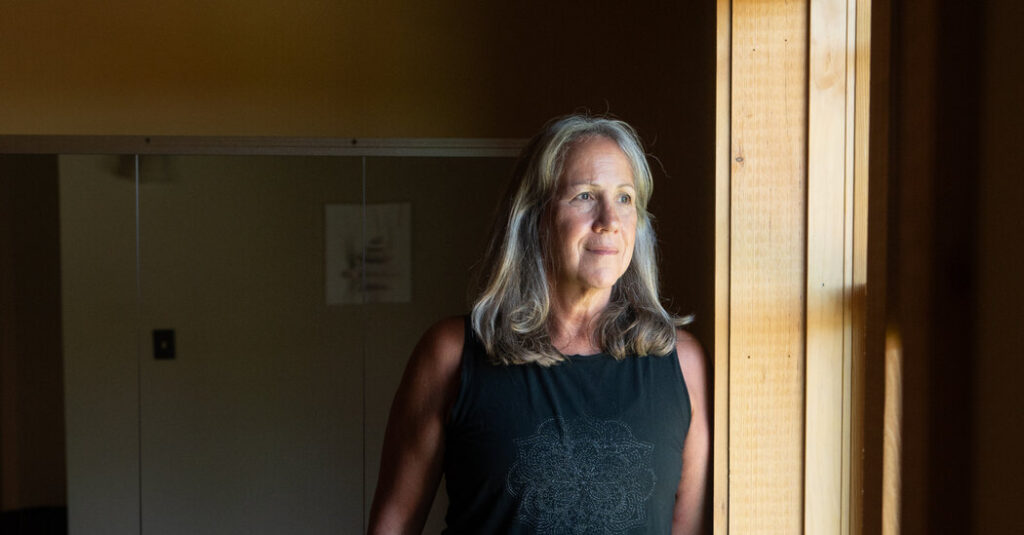
Figuring out how much she could do didn’t present a challenge for Liz Klohmann, 64, of Trumansburg, N.Y., who spent 26 years with the parks, recreational and youth development programs for nearby Ithaca and surrounding Tompkins County, including her last 10 years as director. Ms. Klohmann was a competitive swimmer starting at age 5, returning to it around the time she turned 40, then added triathlons and other physical activities. After injuring her back, she discovered Pilates and became certified to teach Pilates and yoga.
“It was my little side gig,” Ms. Klohmann said. About five years before she retired, she was working with a leadership coach as part of her job. “He said, ‘You ought to put together your Liz 2.0. What is it you want to do?’ I started thinking it would be really cool to have my own studio, to teach more yoga and Pilates. So that’s what I did.”
After she and her husband met with a financial planner, Ms. Klohmann retired with a pension at 62. She found free consulting from the Binghamton Small Business Development Center to guide her through the start-up process. After arranging for a website, business insurance, marketing materials and registration software, Ms. Klohmann rented space at a local gym for a minimal fee, which she covered with earnings from her classes.
“Because I didn’t require any equipment, I was able to get up and running for under $1,000,” she said.
Two years later, Ms. Klohmann and her husband, Neil, 67, turned a rental home they own into her fitness studio. Besides teaching her classes, she travels to Costa Rica and other locales to teach at resorts. Her husband, a retired pilot, is starting his own small-boat charter business. He started receiving Social Security retirement benefits; Ms. Klohmann is holding off.
“We looked at when we might take Social Security and potential inheritances,” Ms. Klohmann said. “Our planner mapped it out and said, ‘You can retire and do these things you want to do now.’”
Other retirees stop working entirely for a while and then return part-time or as consultants, aiming to balance the social and mental stimulation with shorter hours and less stress than in a full-time job. An AARP study published early this year found that of the 7 percent of retirees returning to work, 15 percent cited boredom as the reason, with 14 percent saying they were motivated to help others. Still, nearly half said they needed the money.
“People unretire, I think, largely because it was part of their plan to do that all along,” said Geoffrey Sanzenbacher, a research fellow at the Center for Retirement Research at Boston College, who said that academic literature finds that nearly a quarter of retirees unretire at some point. “They’re stressed, they’re done, they retire, and at some point they’re recharged and they come back to work, especially the more educated group, where there’s not a physical component to the job.”
Work that is physically demanding and low-wage jobs extend inequality in the labor force to inequality in retirement, too, denying the benefits of a lengthier retirement to many older Americans, Mr. Sanzenbacher added. Black and Hispanic Americans, or people who live in multigenerational households where they support parents or children and grandchildren, are among the groups most likely to keep working well past retirement age.
“The expectation of longer lives post-retirement applies if you are a white, white-collar worker. That increase is very much seen in people with middle-class and better jobs,” said Ruth Finkelstein, executive director of the Brookdale Center for Healthy Aging at Hunter College. “Low-wage workers are facing exactly the same retirement they always have. They’re likely to have their health deteriorate before retirement age and continue to deteriorate.” And some of those retirees, she added, will have to keep working despite their declining health.
Envisioning a long retirement
A retirement of 20 years or longer can cover three phases: An active, healthy phase right after leaving work, followed by a period of less activity, and a final period when retirees settle in to a lifestyle with little activity near the end of life.
Phase One: If they have the resources, this is when retirees should travel, before illnesses or ailments show up. Conventional wisdom once held that spending dropped after you left work, but later, research found that spending actually increased as retirees took up new hobbies, traveled, relocated and pursued other long-delayed plans.
Phase Two: After 10 to 15 active years, physical reality catches up with 75- or 80-year-old retirees. Those who were working part time have typically finished but still have time for family, friends and social activities. Spending tapers off.
Phase Three: After an additional five to 10 years, retirees typically stay closer to home with less activity and may develop more serious health issues that can lead to large medical bills. As of 2025, the median cost for nonmedical caregiver services at home was $80,000 a year (assuming 44 hours a week), assisted living was just over $74,000 and a private nursing home room cost about $130,000.
“We all have the fantasy that we leave work, establish a lifestyle and we live like that until we drop dead in our sleep 25 years later,” Dr. Finkelstein said. “Think about planning the part of your life when you’ll need more help, and do some supported decision-making now. But people are not interested in having that conversation. Then, when it happens, they’re scrambling in all kinds of states of emergency.”
Like all retirement decisions, though, lifestyle comes down to money. Check with a planner to see whether your finances will support your goals, and don’t ignore inflation. At the Federal Reserve’s target rate of 2 percent annual inflation, a retiree living on $5,000 a month in 2026 would spend more than $7,400 20 years from now to cover their expenses. But inflation doesn’t stick to the average — the rate for June was 3.5 percent, nearly twice as high as the Fed’s target.
“Most people haven’t thought through what their life will be like in retirement,” Mr. Crews said. “They’ll say, ‘I’ll figure it out. I’m going to go to Yellowstone, I’ll go on cruises.’ They need to consider the work benefits that don’t involve a paycheck — friendships, solving problems and feeling like you play a significant role. The question is, ‘Where are you going to find purpose?’ And it’s not going to be on a cruise ship.”
The post You’re About to Retire. What Are You Doing for the Next 20 or 30 Years? appeared first on New York Times.