You’re reading The Checkup With Dr. Wen, a newsletter on how to navigate medical and public health challenges. Click here to get the full newsletter in your inbox, including answers to reader questions and a summary of new scientific research.
Nearly 120 million adults in the United States have hypertension, yet despite effective and accessible treatments, only a quarter have their blood pressure under control. This carries significant consequences: The condition, one of the leading causes of preventable death, is associated with heart attack, stroke, kidney disease and dementia.
In response to this stubborn problem, the American Heart Association and the American College of Cardiology have updated their guidelines for diagnosing and managing high blood pressure, the first major revision since 2017. It’s noteworthy because it represents broad consensus across the field, with endorsements from a dozen medical organizations including the American Medical Association.
Five changes stand out:
1. The definition of high blood pressure has stayed the same, but the treatment goal has changed.
The updated guidelines keep the same four categories that the 2017 recommendations used to classify people’s blood pressure: normal, elevated, Stage 1 hypertension and Stage 2 hypertension. Those are based on two measurements — systolic pressure (the force produced by the heart when it pumps blood out to the body) and diastolic pressure (which measures the same force when the heart is at rest).
Normal blood pressure (measured by mercury-based barometers) is under 120 systolic and 80 diastolic (written 120/80). Elevated pressure is anywhere between 120-129/80-89. Stage 1 is anywhere between 130-139/80-89, and Stage 2 is anything higher than 140/90.
What’s new is the treatment target. The guideline reaffirms the goal of lowering blood pressure to below 130/80, first introduced in 2017, but places stronger emphasis on achieving tighter control. Clinicians are encouraged to help patients move toward a systolic level closer to 120, reflecting evidence that more intensive control can further reduce long-term cardiovascular risk.
2. Newly diagnosed patients should receive urine tests to assess their kidney health.
The guidelines now recommend that everyone newly diagnosed with hypertension should have a specific urine test measuring the protein albumin and a waste product called creatinine, which together can indicate kidney injury and greater long-term risk of stroke and cardiovascular disease.
This is the only test added to the initial evaluation. It can detect signs of kidney disease sooner than traditional blood measurements. The test is also widely available, low-cost and straightforward to perform, making it practical to incorporate into primary care visits.
3. Treatment should be individualized based on blood pressure and overall health risks.
For adults with Stage 2 hypertension, or with Stage 1 hypertension plus significant risk factors such as diabetes or kidney disease, the updated guidelines continue to recommend lifestyle changes and medication at the outset of treatment. What is new is clearer guidance to start most of these patients on a single pill containing two first-line medications. Using one pill rather than two separate medications improves adherence and helps patients reach their target blood pressure sooner.
For adults with Stage 1 hypertension and a lower overall health risk, the recommendation also shifts slightly. The guideline now more clearly supports starting with lifestyle changes alone and reassessing blood pressure over three to six months. If levels remain above the treatment goal of 130/80 after that period, medication should be added. This staging formalizes an approach that had previously been left to clinician judgment and is now more explicitly outlined.
4. At-home monitoring needs to be part of standard care.
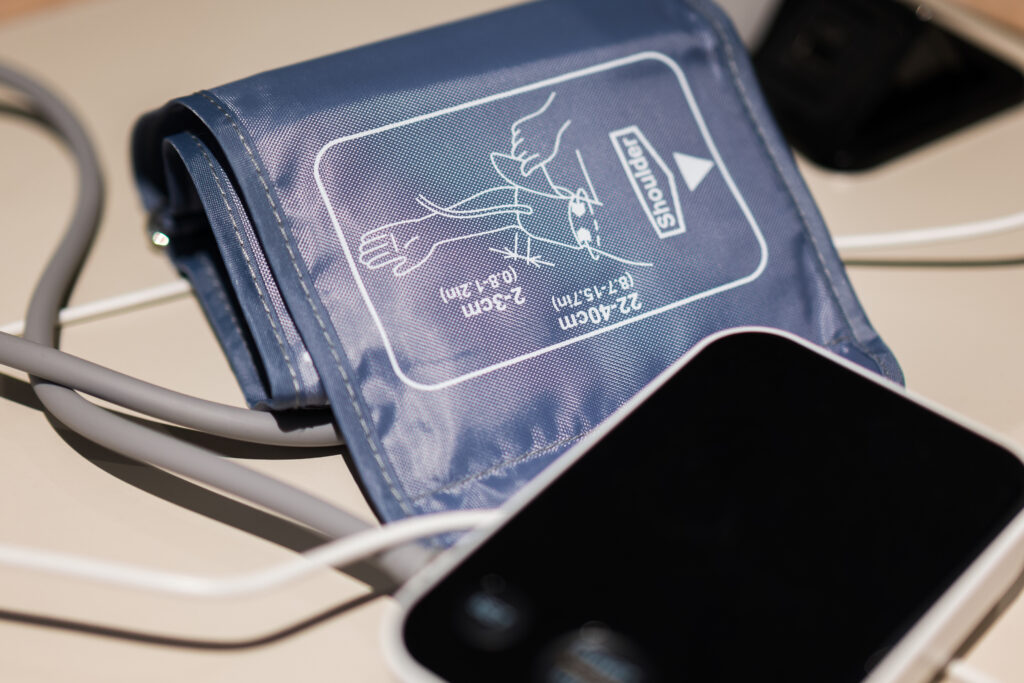
The revised guidelines affirm that people with hypertension should regularly measure their blood pressure and document it for their providers. To obtain the most consistent and accurate reading, blood pressure should be taken at the same time each day, ideally in the morning before meals or exercise. People should sit with their back supported, feet flat on the floor and their arm extended at heart level.
Patients can use this list pulled together by the AMA to choose a home monitor, which are available in different prices ranges. Until more evidence is available, cuffless devices such as smartwatches are not reliable for precise blood pressure readings.
5. Lifestyle changes remain a cornerstone of treatment.
The recommendations emphasize that behavioral measures can meaningfully lower blood pressure and should accompany medical therapy. Lowering dietary sodium remains a crucial step. Most adults in the U.S. consume far too much sodium, and reducing intake to less than 2,300 milligrams per day can help lower blood pressure.
Weight management, regular physical activity and a heart-healthy eating pattern are also strongly recommended. A diet rich in vegetables, fruits, whole grains, legumes, nuts and seeds and with less added sodium, saturated fat and ultra-processed foods has been shown to help lower blood pressure. Limiting alcohol intake and addressing contributing conditions such as sleep apnea can further support blood pressure control.
Hypertension is often called a silent killer because many people have no symptoms even when their blood pressure is dangerously high. But complications of this common condition are not inevitable. The key is timely diagnosis, ongoing monitoring and appropriate treatment to protect people’s hearts, brains and overall health.
The post Hypertension treatment wasn’t working. New changes could help. appeared first on Washington Post.