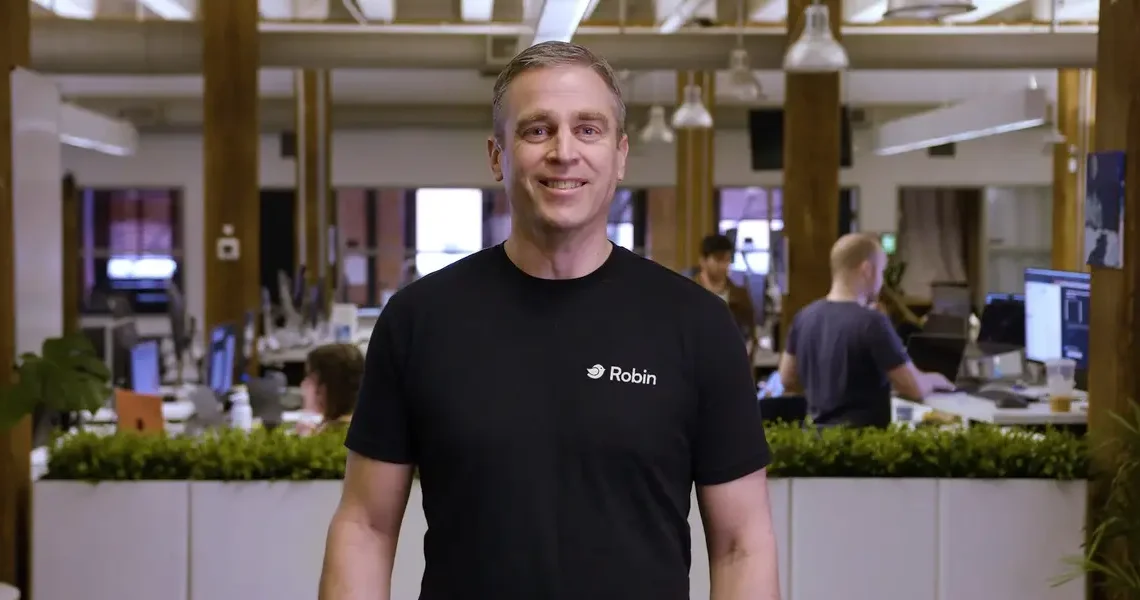
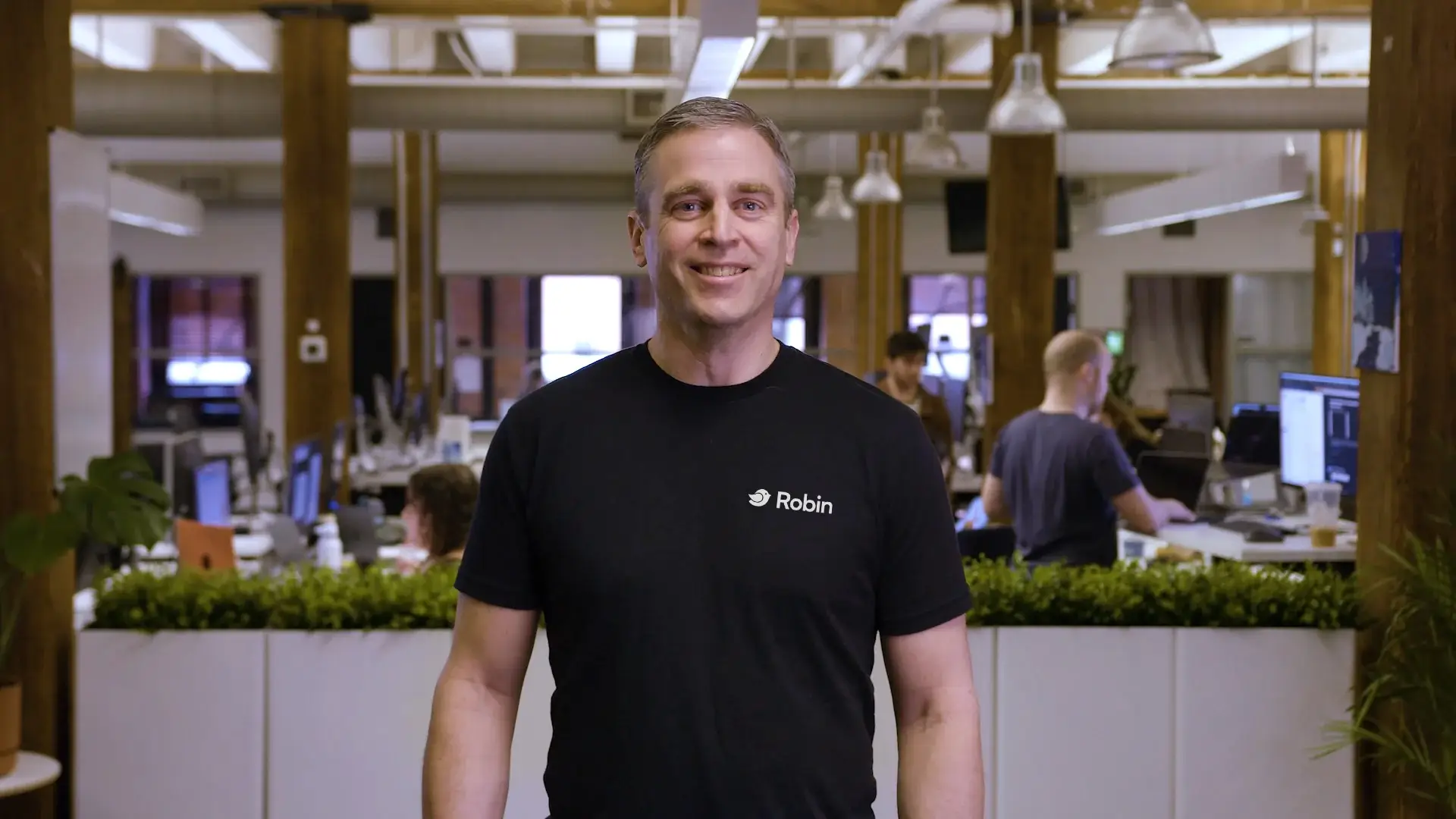
This as-told-to essay is based on a conversation with Micah Remley, the CEO of Robin, a workplace management platform that helps companies manage hybrid offices. Remley has spent more than two decades working in startups and has led Robin since 2022. The essay has been edited for length and clarity.
When you run a workplace management platform, you get a unique window into how work is changing.
We work with companies around the world, so we spend a lot of time helping customers think about the future of work as technology and social trends reshape the office.
I’ve been in startups for about 20 years, and before joining Robin as CEO four and a half years ago, I led a fintech company through the pandemic. That experience convinced me that building a hybrid culture is much harder than people realize.
Right now, I see two major workplace trends tied to AI. One is about the office space itself. The other is about company culture.
AI is physically changing what the office looks like
AI is reshaping office design itself.
Developers are among the first workers broadly adopting AI agents, and their work looks very different from just a year ago. Now you’re spending a lot of your time multitasking, running multiple AI agents across different platforms, and constantly switching between them.
That means offices increasingly need quiet places where people can speak to AI without disturbing everyone else. We’re seeing more phone booths and other quiet spaces emerge for exactly that reason.
At the same time, AI is creating a need for more collaborative spaces, especially for Gen Z workers.
Some companies are experimenting with pod-style workspaces that remind me of a group of Gen Z friends playing video games together. Everyone has their own screen, they’re all managing their own AI agents, and they’re casually talking with one another while the agents work in the background.
That is because working with AI changes the rhythm of the workday.
You give an agent instructions, then it goes off to work. While it’s doing that, you might start another task, check another agent, or chat with a teammate before returning to review the output and send it off again.
It’s a lot of start-and-stop work with some downtime in between, which is breaking down traditional organizational silos. Product managers, designers, and engineers are increasingly working together in cross-functional pods instead of sitting in department-based clusters.
So for companies redesigning offices, the answer isn’t simply adding more desks. It means creating flexible spaces that balance collaborative team areas with quiet places where people can take video calls or talk with AI. The companies succeeding are the ones designing their offices around how people actually work today and how AI is changing that work tomorrow.
AI could exacerbate hustle culture
One of the biggest workplace trends today isn’t technological at all — it’s social.
Hustle-culture companies get an outsize amount of attention, but they’re still a very small group, and we haven’t seen that group expand much at all.
There are lifestyle companies where flexibility comes first, but most companies fall into what I call the momentum group. They want people to work hard while still giving employees flexibility. That usually means requiring employees to come in a few days each week. That’s one reason the broader hybrid work numbers haven’t changed much despite all the return-to-office headlines.
But AI will put pressure on the kinds of work that tend to be remote. Many of the jobs being automated first involve heads-down tasks that have often been done remotely, like customer service, coding, marketing content creation, and data analysis.
So the bigger unanswered question is how AI changes that equation. Whether more companies in the momentum group will start adopting the AI startup model is the question. That trend isn’t fully showing up in the data yet, but I think it’s one to watch for anyone looking for jobs.
Read the original article on Business Insider
The post I run a workplace management platform. Here’s how AI is reshaping both the culture and physical form of offices. appeared first on Business Insider.