In the chaotic days of America’s 2021 withdrawal from Afghanistan, the U.S. military deployed MQ-9 Reaper drones above Kabul, hunting for ISIS-K operatives who threatened the remaining American forces. Based on a tip, the drone operators focused on a white Toyota Corolla, watching as it stopped around the city and was loaded with large bundles, believing the driver was preparing for a suicide attack.
U.S. commanders gave the attack order, and the car was obliterated. When the mission was disclosed, Gen. Mark Milley, then chairman of the Joint Chiefs of Staff, hailed the operation as a “righteous strike.”
Then the truth began to trickle out. The supposed ISIS-K operative was, in fact, a longtime worker for a U.S. aid organization, and the bundles turned out to be water bottles, not explosives, as suspected. Less than three weeks later, the Pentagon acknowledged that the military had mistakenly killed 10 civilians — including seven children — in the blast. General Milley and other senior military leaders issued public apologies.
The U.S. government, like those of many other nations, has a longstanding tradition of playing down civilian casualties during wartime. But there is little precedent for the Trump administration’s current abdication of responsibility over a mistaken missile strike in Iran that killed an estimated 175 people on Feb. 28. The wrongful attack has gone publicly unacknowledged for nearly five months. “I don’t know that they are ever going to solve that problem in terms of whose fault was it because there were missiles flying all over the place,” President Trump said at the White House last month. “Somebody said it was our missile; well, maybe it wasn’t our missile, but I have seen nothing to lead me to believe it was.” He added, “I don’t think it was us.”
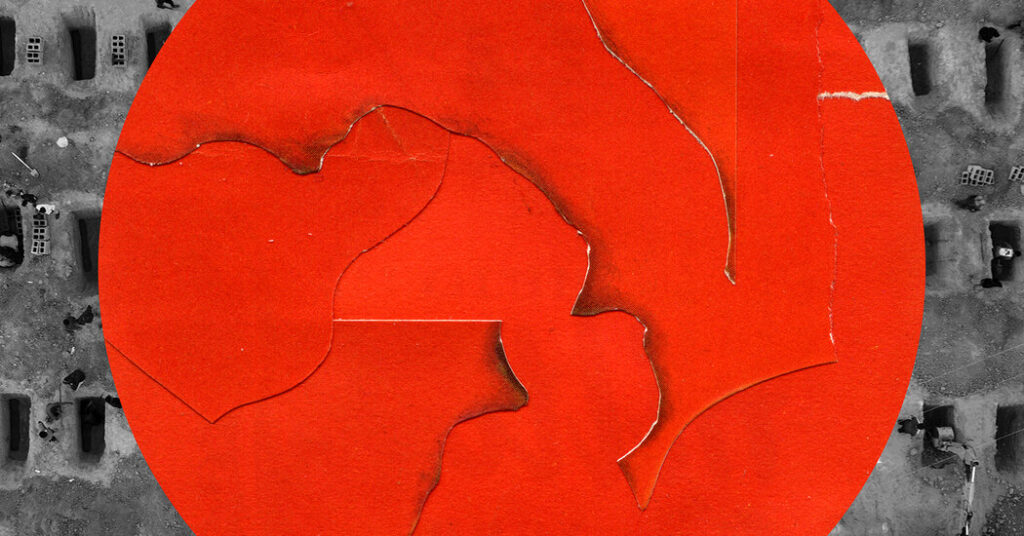
Perhaps Mr. Trump should consult the commanders he oversees. The military realized its disastrous error shortly after eyewitness accounts and verified video and satellite images of the strike surfaced. American forces had mistakenly destroyed the Shajarah Tayyebeh elementary school in a Tomahawk missile attack while bombing the adjacent naval base in the southern city of Minab. Many victims were children, making it one of worst civilian casualty incidents caused by American forces in decades.
In an investigation that began shortly after the strike, the military discovered that the site had once been part of the base but had been repurposed into a school several years ago. The change was not entered into U.S. targeting databases before the United States launched its air war with Israel against Iran — even though the building’s new use was registered on publicly available sites.
It’s hard to imagine how Mr. Trump could make this tragedy worse, but his unwillingness to acknowledge the intelligence oversight does not live up to the moral standard many Americans would like to see in their commander in chief. By denying the truth, he is hurting the nation’s integrity and generating speculation among humanitarian groups as to whether this unintentional catastrophe amounts to a war crime. He’s also breaking with how the White House traditionally responds to such high-profile allegations, and instead is reverting to his well-honed defense mechanism of denial at all cost. American forces are not perfect, but they are exceptional for many reasons, including their longstanding commitment to morality and a willingness to recognize mistakes and correct them.
“Taking responsibility is not a weakness,” said Todd Huntley, a retired U.S. Navy lawyer who now directs the national security law program at Georgetown University. “Refusing to acknowledge these sorts of tragic incidents hurts the credibility of the United States, but it also hurts the legitimacy of U.S. military action.”
Mr. Trump initially claimed, without evidence, that Iran was responsible for the strike. He has since sidestepped responsibility by claiming it’s under investigation, which, while technically true, is not the whole truth. Whenever there’s a mass civilian casualty incident or U.S. service member is killed in combat, the U.S. military opens an administrative investigation, called an A.R. 15-6, to determine the facts surrounding the incident. U.S. Central Command has completed that probe, and it’s being reviewed by various government agencies. Sen. Kirsten Gillibrand of New York and 24 fellow Democratic senators wrote a letter on Monday, calling on the Trump administration to disclose the investigation’s findings by July 20.
Combat is inherently chaotic, and human error is a part of every conflict. As with the Afghanistan drone strike, the United States has a long history of initially denying such mistakes before coming around to the truth. President Biden never did apologize for that strike, but his military team and department officials publicly owned the grave error in short order — just as Mr. Trump’s team did in other deadly incidents in Yemen, Iraq and Somalia during his first administration.
“From my experience it was always best to get out with the information as soon as possible,” said Joseph Votel, a retired general who commanded all U.S. forces in the Middle East during Mr. Trump’s first term. “And if we saw problems or mistakes, we’d move to address them quickly to minimize the chance of repeating them.”
The second Trump administration has made a practice of weakening and dismantling the systems intended to minimize collateral damage. The Pentagon quietly made deep cuts into its Civilian Harm Mitigation and Response program, which was established to put in place training and procedures to help avoid the types of errors that led to the Minab school strike. A Defense Department inspector general report released in May found that the moves “may not comply” with federal law that requires the department to maintain such a program.
Defense Secretary Pete Hegseth, who has made a habit of ridiculing “stupid rules of engagement” and stressing “maximum lethality, not tepid legality,” can’t outright shutter the program because it was ordered by Congress. But he can cut the personnel and tools to render it effectively inoperable, which is precisely what he’s done, the report said. The decision doesn’t look so wise amid the deaths of at least 1,700 Iranian civilians in the war, according to the Human Rights Activists News Agency in April. The New York Times has verified damage to 22 schools and 17 health care facilities.
When asked about Minab, Mr. Hegseth said the U.S. forces “never target civilian targets,” but like his boss, he has routinely ducked direct questions about what occurred, citing the investigation. Mr. Hegseth’s words and actions have prompted speculation among critics about the United States’ intentions in not admitting fault in the strike. The secrecy surrounding the investigation has caused humanitarian watchdog organizations, including Amnesty International and Human Rights Watch, to raise questions about whether the administration is simply seeking to protect itself from a potential violation of international humanitarian law.
The president could help clarify the situation by revealing the military’s finding that the school strike was an honest targeting mistake or by releasing the A.R. 15-6 investigation. He could also offer an apology, money to rebuild the facility and condolence payments to the surviving family members of the attack victims — moves that President Obama made a week after a 2015 gunship attack on an Afghan hospital, which killed at least 42 people, including children. A subsequent six-month investigation into that event prompted the Pentagon to discipline 16 service members.
Accountability is necessary. Americans deserve better answers about actions taken in their name.
The Times is committed to publishing a diversity of letters to the editor. We’d like to hear what you think about this or any of our articles. Here are some tips. And here’s our email: [email protected].
Follow the New York Times Opinion section on Facebook, Instagram, TikTok, Bluesky, WhatsApp and Threads.
The post An American Strike Killed Iranian Civilians. Where’s the Accountability? appeared first on New York Times.