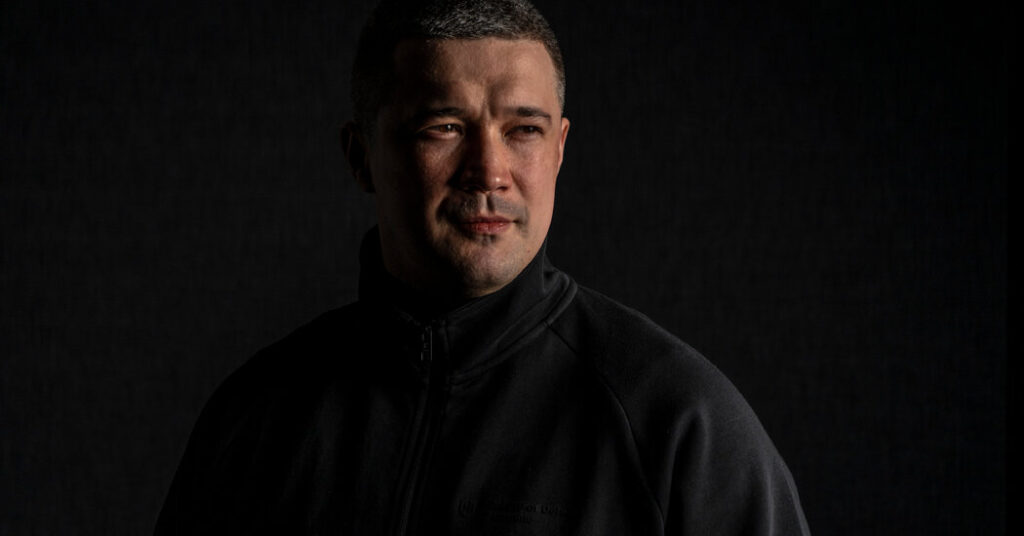
Ukraine’s minister of defense, the youthful face of the country’s successful drone warfare program, was ousted on Wednesday in President Volodymyr Zelensky’s latest shake-up of his government.
The departure of the minister, Mykhailo Fedorov, 35, for years the most prominent proponent of fighting with drones and robots, clouds the future of Ukraine’s innovation-centered strategy for confronting the much larger Russian Army. He had previously headed a ministry focused on e-government initiatives and had for years been Mr. Zelensky’s closest adviser on technology.
Mr. Fedorov confirmed his departure, after just six months as defense chief, in a social media post in which he described his approach to war as fighting with the “speed of innovation.” Neither he nor the president indicated whether he would take another position in Mr. Zelensky’s government.
The departure of Mr. Fedorov is part of a personnel overhaul that includes the dismissal of the prime minister. Mr. Zelensky did not comment on Mr. Fedorov’s leaving.
His exit came amid broader debate in Ukraine and beyond on the future of war. Mr. Fedorov clashed with seasoned military generals who saw aspects of his robot war vision as fanciful or naïve. He also angered established defense contractors with programs threatening their businesses, such as one that allowed soldiers to buy their own weapons on the website Brave1, nicknamed the “Amazon of Weapons.”
Mr. Fedorov had helped create a surge of optimism in Ukraine, as his tenure coincided with drone programs long in the works coming to fruition, enabling recurring, long-range strikes into Russia and a strategy of isolating and bombarding the occupied Crimean Peninsula.
But from the moment of his appointment in January, Mr. Fedorov, Ukraine’s youngest cabinet minister, clashed with army generals who argued for the continued need for gritty, dangerous infantry deployments in the war.
His efforts to overhaul military procurement had made enemies of contractors in the multibillion-dollar defense industry. Within the army, he had critics who noted his lack of military experience and saw him as adept at presentations.
Serving as the face of the popular drone program also posed political risks, analysts said, in a system firmly dominated by Mr. Zelensky.
“Zelensky wants to be the only star,” said Volodymyr Fesenko, the head of the Penta Center for Political Studies, an independent think tank base in Kyiv. Mr. Fedorov also had support in the political opposition, which Mr. Zelensky likely saw as a threat, Mr. Fesenko said.
Volodymyr Ariev, a member of Parliament in the opposition European Solidarity party, said he had intended to vote for Mr. Fedorov if he were renominated as defense minister. Mr. Fedorov, he said, had been sidelined by “corrupt guys who want to keep the profits on defense contracts.”
Having a young, innovative leader apparently sidelined by entrenched industrial interests and an old guard of generals sparked calls on social media late Wednesday for street protests Thursday morning in central Kyiv.
Mr. Zelensky on Wednesday did not nominate Mr. Fedorov to return to the post of defense minister, an adviser to the government familiar with the decision said. After meeting with Mr. Zelensky Wednesday evening, Mr. Fedorov announced his departure on social media.
“It was a great honor to serve the Ukrainian people,” Mr. Fedorov wrote, along with a lengthy description of what the defense ministry had accomplished, and what remained to be done.
Parliament is expected to vote on the new government Thursday.
A former chief executive of Ukraine’s national oil and gas company, Serhiy Koretsky, has met this week with members of Mr. Zelensky’s political party and is seen as the likely nominee for prime minister. Mr. Zelensky’s allies said the choice of an energy expert reflected the challenges Ukraine will face keeping lights on and apartments warm in the coming winter, which will be the fifth since the Russian invasion.
Mr. Fedorov had maintained ties with Silicon Valley executives interested in the transformation of warfare on Ukraine’s battlefields. He had met repeatedly with Alex Karp, the chief executive of Palantir. Earlier this year, he took credit for persuading Elon Musk to shut off Russia’s access to the Starlink satellite internet service, blinding Russian drones for a time.
Even before leading the defense ministry, Mr. Fedorov had championed military innovations. He gamified war for drone teams by awarding points for blowing up tanks, howitzers or enemy infantry, a program that was popular in the army.
The defense procurement reforms, however, made powerful enemies, said Mr. Fesenko, the political analyst. Brave1 and another site, DotChain, bypassed traditional procurement altogether. They allowed soldiers to pick out some of their own armaments and order them online, short-circuiting arms industry lobbying and backroom dealing.
Conflicts with defense contractors and the military leadership simmered for months. A top aide to Mr. Fedorov criticized an assault unit, Skelya, for losses of men and armored vehicles in a battle. The unit tauntingly suggested that the aide try an assault himself if he knew better.
Many top aides to Mr. Fedorov had served in the e-government ministry, not in uniform.
Ukrainska Pravda, a Ukrainian news site, reported Wednesday that Mr. Zelensky had told political allies he could no longer manage the disputes and for this reason had to dismiss Mr. Fedorov.
Stanislav Kozliuk contributed reporting from Kyiv.
The post Ukraine’s Minister of Defense, a Proponent of Drone Warfare, Steps Down appeared first on New York Times.