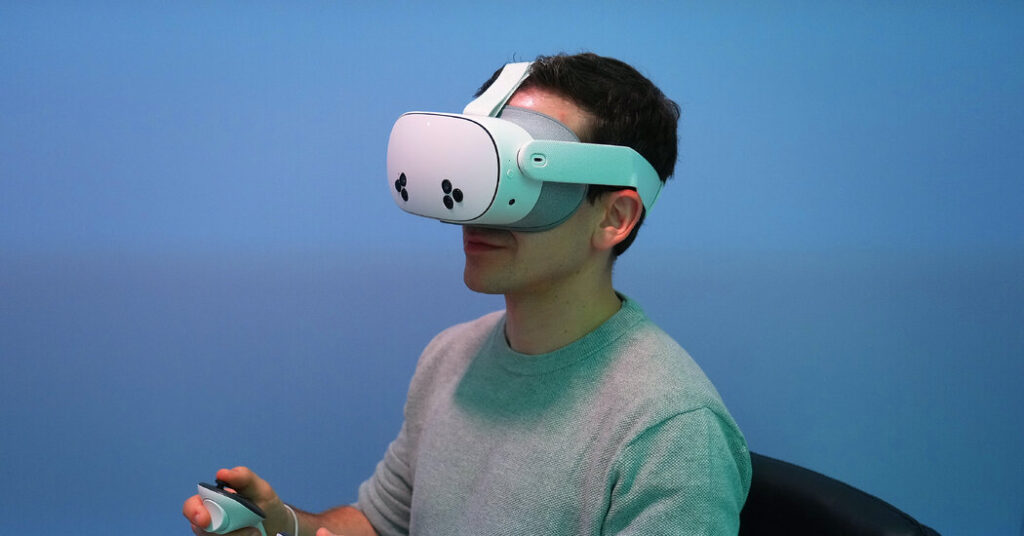
Meta is considering making cuts to a division in its Reality Labs unit that works on the so-called metaverse, said three employees with knowledge of the matter.
The cuts could come as soon as next month and amount to 10 to 30 percent of employees in the Metaverse unit, which works on virtual-reality headsets and a V.R.-based social network, the people said. The numbers of potential layoffs are still in flux, they said. Other parts of the Reality Labs division develop smart glasses, wrist bands and other wearable devices. The total number of employees in Reality Labs could not be learned.
Meta does not plan to abandon building the metaverse, the people said. Instead, executives expect to shift the savings from the cuts into investing in its augmented reality glasses, the people said.
Meta introduced the glasses — which have built-in cameras and microphones that allow users to take phone calls and listen to music — with Ray-Ban in 2021. More recently, Meta incorporated an artificially intelligent assistant into the glasses that users can interact with using their voices. The glasses have been a surprise hit, with sales surpassing internal targets in recent years, the people said.
A Meta spokesman declined to comment. The potential cuts were earlier reported by Bloomberg.
Mark Zuckerberg, the company’s chief executive and founder, rebranded his company to Meta from Facebook in 2021 as he pursued a far-flung vision of what social networking could look like in a virtual reality-based version of the internet. He has chased that vision since 2014 when he purchased Oculus, a virtual reality start-up that became the foundation for Meta’s hardware division.
But paving the road to that future has been difficult. Though Meta made significant technical advances in virtual reality devices, consumers have not widely embraced the technology. Reality Labs, which builds the hardware and software for Mr. Zuckerberg’s metaverse vision, has posted more than $70 billion in losses over the past four years.
Investors have grown wary of those rising costs and their concerns have ratcheted up recently as Meta has also spent heavily on artificial intelligence. The company has said it expects to spend tens of billions of dollars on data centers and A.I. development for the foreseeable future.
Meta is weighing the metaverse cuts as competitive pressure on virtual reality devices has lessened. In 2021, Apple and Google were furiously working on competing virtual reality devices. But as those companies’ efforts have slowed, Meta executives came to believe that the company could decelerate the rate at which it pursues virtual reality efforts, two of the people said.
Reality Labs is made up of a Metaverse unit and a wearables unit. Within the Metaverse unit, executives are considering making the deepest cuts to V.R. jobs, two of the people said.
At Meta’s developer conference this year, Mr. Zuckerberg debuted three new lines of smart glasses, including a new version that has a small screen inside the lenses. The glasses are powered by a voice-based artificial intelligence assistant that can talk to the user through a speaker and see through a camera.
On Wednesday, Mr. Zuckerberg announced that he had hired Alan Dye, a longtime designer at Apple, to lead a new creative studio inside the Reality Labs division that would be focused on design, fashion and technology. Mr. Dye will report to Andrew Bosworth, Meta’s chief technology officer who leads Reality Labs.
“We’re entering a new era where AI glasses and other devices will change how we connect with technology and each other,” Mr. Zuckerberg said in a post to Threads on Wednesday. “With this new studio, we’re focused on making every interaction thoughtful, intuitive, and built to serve people.”
Mike Isaac is The Times’s Silicon Valley correspondent, based in San Francisco. He covers the world’s most consequential tech companies, and how they shape culture both online and offline.
The post Meta Weighs Cuts to Its Metaverse Unit appeared first on New York Times.