Subscribe here: Apple Podcasts | Spotify | YouTube
On this week’s episode of The David Frum Show, The Atlantic’s David Frum opens with his reaction to the recent ICE shooting in Maine.
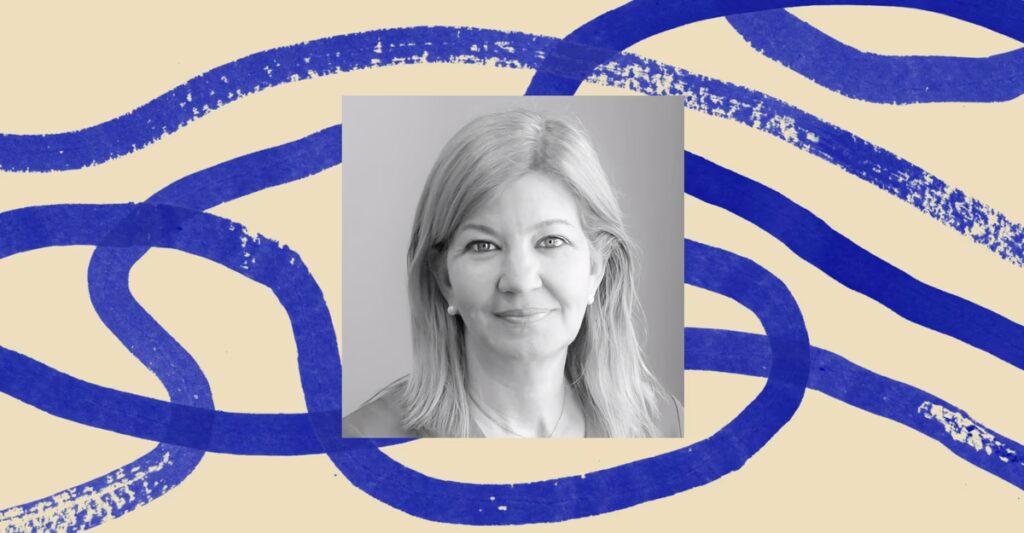
Then, David is joined by Maya MacGuineas, president of the Committee for a Responsible Federal Budget, to discuss the future of Social Security, the mounting national debt, and the political dysfunction preventing Washington from confronting America’s fiscal challenges.
Finally, in honor of Bastille Day, David ends the episode with a discussion of Hilary Mantel’s novel A Place of Greater Safety and the lessons one can learn from the terror of the French Revolution.
The following is a transcript of the episode:
Maya MacGuineas: And so you look at young people—they don’t trust our economic system. The vast majority of them don’t think Social Security will even be there for them, and they are starting, en masse, to resent the huge commitments that we have created for them, right? Because we have made promises that a huge portion of their budget will go to programs for seniors. So a vast amount of the budget is going to be going to Social Security and Medicare. Those are intergenerational commitments, and they’re thinking, Wait a second. We don’t trust these systems. We don’t trust the permanency, the long-termness, the intergenerational piece of it. And I’m really worried about the intergenerational tensions that are simmering as a result from that.
And frankly, I think they’re right. I think the young people are absolutely right.
[Music]
David Frum: Hello, and welcome to The David Frum Show. I’m David Frum, a staff writer at The Atlantic. My guest this week will be Maya MacGuineas, president of the Committee for a Responsible Federal Budget. We’ll discuss the looming exhaustion of the Social Security Trust Fund, the threat to Social Security benefits, and whether or not America will ever have a responsible federal budget. The book this week will be A Place of Greater Safety, a novel by Hilary Mantel set during the French Revolution, selected in honor of Bastille Day this very week. But before either the dialogue or the book discussion, some opening thoughts.
If you are watching this program, you will see an unfamiliar backdrop. I am recording in the studio of a public library in Ontario. I depart from our arrangements because of the urgency of the news on which I’d like to comment. As I record on the morning of July 14th, much remains unsettled about the ICE shooting of a Colombian man in the town of Biddeford, Maine, at about 7:00 in the morning on July 13th. I refrain from commenting about this particular incident because we are waiting for details. The details we have are disturbing, dismaying, and shaming, but until they are facts, judgment should be withheld.
But here’s what we can say with confidence. According to PBS, this latest shooting is the ninth death in an ICE enforcement action since President Trump came to office and the second death at ICE’s hands in just the past week. ICE has a long and disturbing record of providing questionable information about these killings.
In the killing of Alex Pretti in January ’26, ICE claimed Pretti had been violently resisting arrest. Video evidence contradicted those claims. Pretti’s lawful gun was in its holster when Pretti was assaulted, pepper-sprayed, and shot dead as he attempted to assist a woman who had been shoved to the ground during ICE operations in Minneapolis.
In February 2026, an ICE agent in Minneapolis shot a Venezuelan man who ICE claimed attacked the agent with a snow shovel and a broom. That claim, too, was contradicted by video evidence.
The most flagrant case is that of Renee Good, shot dead by ICE in Minneapolis in January ’26 as she attempted to drive away from ICE agents. Almost everything said about this case by Trump administration officials, up to Vice President J. D. Vance, has been belied by video evidence recorded from multiple angles.
Even as ICE explanations unravel, the agency stonewalls investigations and defeats accountability. In an episode of The David Frum Show recorded last summer, my Atlantic colleague Caitlin Dickerson detailed the low standards of ICE recruitment. People who otherwise would not qualify for any branch of federal law enforcement were being issued masks, badges, and licenses to kill in situations where nobody is in danger except for the danger presented by the federal agents themselves.
The killings are the most extreme abuse in an immigration policy that also features projects to send detained immigrants to inhumane prisons in third countries or to deport them to places to which they have no connection at all. The Trump administration has repeatedly insisted that its harsh methods are directed only against the worst of the worst. By now it’s clear that those insistences fall far short of the truth.
People are being subjected to draconian and even lethal punishment for being illegally present inside the United States. Often, they have been present for decades. They may have American families. And by and large, most of them present no imminent danger to any American person. A study by the Cato Institute found that 65 percent of ICE detainees had no criminal convictions at all, and 93 percent of them had no convictions for crimes of violence. Those people who had convictions in a majority of cases were convicted for traffic offenses, for drug or alcohol possessions, or for violations of the immigration laws.
Now—laws should be enforced, including traffic laws and drug laws. But the Trump administration wanted to sell a story that America’s very real problems are being inflicted on America by alien outsiders. If Americans harm themselves with dangerous drugs, it’s because some immigrant made them do it. The book that launched the public career of Vice President J. D. Vance, Hillbilly Elegy, delivers a rebuttal to such poor-us thinking. But Vance and Trump hold office by inciting poor-us thinking, pandering to it, exploiting to it. We are never to blame, only they are. They being the world’s striving people who break America’s laws to deliver Americans food and bathe Americans’ elderly.
I speak as one who has a 35-year record of urging stricter enforcement of U.S. immigration laws. But from that record, I say a severe wrong is being perpetrated that discredits proper immigration enforcement. Illegal immigration; the reason we oppose it is, illegal immigration overstrains the resources of society and corrodes the fabric of law. It needs to be brought under control, as does the breakdown of the American system of asylum application, which has turned into a backdoor immigration policy for anyone who shows up in the United States. That also needs to be fixed. People who took advantage of gaps in the U.S. law to enter the country and work here broke the rules, but they’re usually not otherwise dangerous. They should be dealt with by paperwork, not by deadly force.
It’s very striking that the Trump administration has not introduced legislation to improve immigration enforcement or to deal with the problem of outdated asylum laws. Instead, the Trump administration hopes that homicidal violence and abusive detention will frighten away the people they don’t want. Even on its own terms, this is not a smart plan and will only last as long as Trump’s administration does.
We await more information on the killing in Biddeford, Maine. But the Trump administration long ago forfeited the benefit of the doubt. Those charged with protecting the public are doing harm, terrible harm, spreading fear and telling lies to justify their misconduct. The lawlessness comes from the agents of the law. It is long past time for this brutality to come to an end.
And now my dialogue with Maya MacGuineas.
[Music]
Frum: My guest today has spent her career insisting on a truth that almost no one in Washington wants to hear: that the bill always comes due. Maya MacGuineas runs the Committee for a Responsible Federal Budget. She studied economics at Northwestern and public policy at Harvard, but the conversion happened on Wall Street. It was working as a stock analyst, watching the numbers, that turned her into the country’s most persistent deficit hawk. For more than two decades, she’s managed to irritate both parties equally with her insistence that the numbers must add up.
We talk today at a moment when the numbers have stopped being abstract. The Social Security Trust Fund is now projected to run dry in late 2032, six years from now. When it does, unless Congress acts, every beneficiary faces an automatic cut of about 22 percent. The national debt, meanwhile, has crossed $38 trillion and is climbing more than $6 billion a day. Last year, the federal government paid more than a trillion dollars just in interest on its debt, more than it spends on the entire military. Interest is now the fastest-growing line in the budget. Through it all, Maya warned us.
Maya, thank you for joining The David Frum Show.
Maya MacGuineas: David, thank you for having me.
Frum: All right, let me start with a question. This whole topic—it’s full of numbers, it’s a little depressing, it’s kind of dreary, and I think there’s a lot of evidence that neither the politicians nor the voters want to hear very much about it. There was a joke back in the ’80s, I think Ronald Reagan used to tell it, although it was kind of a joke on himself, where the voter asks the politician, What are you planning to do to take care of the deficit? And the politician replies, I believe by now the deficit is big enough to take care of itself.
And a lot of people take that as not a joke. So would you begin by helping us to understand—why does this topic matter?
MacGuineas: You know, there’s a lot of answers to that, and I will give you a long list of them. But one of the most frustrating things about working on this issue is just how hard it has been to link that to people’s lives, because it is an invisible threat. It is not something you see in your daily life, like growing health-care costs or national-security risks that you may be concerned about. It is kind of the underpinnings of the overall economy.
Let me talk about it on a personal level and kind of a macro level. But on a personal level, you just brought up the issue I think most people should really be worried about. At this point, we should’ve been worried for quite some time: Social Security. Social Security is the government’s largest program. It affects the most people directly. Many people—many, many seniors—depend on it for the bulk of their livelihood, and it is going to be insolvent in six years. When that happens, benefits will be cut across the board by 22 percent for everybody.
This is something we’ve known about for years and decades. Politicians have chosen not to do anything about it, because the solutions aren’t easy, and they have been increasingly running away from those kinds of tough choices. But anybody who is on Social Security, knows somebody who is on Social Security, or will in the future be on Social Security, which is everybody, should be aware that that is the kind of outcome that we have by ignoring these problems.
But Social Security’s the one you see more directly. The others are more invisible, as I said. So one thing’s a lot of the things that are going on in the economy that are affecting people’s lives: high interest rates and high levels of inflation. Those, in part, are driven by government excessive borrowing. So on a macroeconomic level, when the government borrows too much, it drives up interest rates, it drives up inflation, it slows economic growth, and it reduces our standard of living—so it hurts us economically. It also harms the budget in that some of the numbers you just gave when we started, but interest payments, the fastest-growing part of the federal budget. I don’t care whether you’re conservative and want smaller government or very progressive and want a much larger government; the first dollar’s going to interest payments, and when you’re spending $1 trillion a year, that is squeezing out all the other areas in our $7 trillion budget that you might want to spend money on.
One of the big reasons to worry about it, and we’ve seen this in recent years, is not all borrowing is bad. There are times you absolutely want to borrow. COVID, the Great Recession, whenever GDP is below potential, it can make sense to stimulate the economy by borrowing. We’ve done that. We did that well during COVID. We did that well during recessions. Well, people might debate “well,” but we did that, and I think it was the right thing to do. But if you borrow when times are good, which is what we have been doing, we’ve got excessively high levels of inflation, and we’re still borrowing $2 trillion a year. That leaves you less able to respond to those kinds of emergencies in the future.
But I’ll tell you: The thing that’s changed is, when I started to get involved in this issue, and as you said, I came from a financial background, I was really worried about the economic risks. I’m now really worried about the national-security risks, and that has actually surpassed my concerns about this from an economic perspective. But our national security is gravely compromised, because many of our defense, security—both reactive and proactive, or defensive and offensive—are being determined by fiscal constraints instead of what the national-security needs may or may not be at any time. That is not a position you want your country to be in. And right now, China still owns hundreds of billions of dollars of our debt. We are dependent on them and other countries to continue lending to us. That is a dangerous position to be in, so I think there’s a national-security risk.
Lastly, anybody who has kids. It’s a very complicated issue, but it’s also very simple in some ways. We want to spend a lot of money, and we don’t want to pay for it. And so we are borrowing, and we are passing that bill on to the next generation. That’s a generation of younger people who are already inheriting an economically fraught and definitely geopolitically fraught world, where their budgetary needs are going to be huge and changing all the time, and we’ve locked them in with huge interest payments, commitments to seniors, and a massive near-record level of debt. That is not something that gives them a good start for grappling with what they will have to through the budget.
Frum: Look, we’re all a little bit Dr. Evil here—which is, I think intellectually, most of us know that a billion is a thousand times a million, and a trillion is a thousand times a billion, but we don’t feel it. So when you say $1 trillion for interest, Ronald Reagan used to have a trick about how many dollar bills that would stack up. But by the time we’re getting out to Neptune, I think it becomes a little hazy. Help us understand what it means to spend $1 trillion on interest.
MacGuineas: So, I mean, the easiest way to think about that—and we have this whole kind of tool which lets you look at any area of spending per person, per household, per taxpayer. Because, of course, “trillions” mean nothing to us, other than they’re very large. But interest payments now are running about $7,700 per household. We’re not actually paying them because we’re borrowing to pay that interest each year, but that’s the amount that it is. That is a huge, huge cost that is falling on households. And that is only about paying for borrowing of the past, nothing about current needs or future investments.
Frum: If you’re someone who’s paying $10,000 a year in federal income taxes, then three-quarters of what you spend, three-quarters of your tax bill, is interest payments.
MacGuineas: Well, if the interest payments were allocated equally, which of course they’re not because it’s a progressive tax code. Some people aren’t paying taxes; some people are paying huge amounts of taxes. But if you just divided it by household, that’s what it would be, which is an exorbitantly large number.
Frum: You made the point about national security. It is now a number that is approaching what is spent for defense.
MacGuineas: It is more than we spend on defense, which happens to be a threshold that has been demonstrated in the past. No country has ever remained a superpower when they’re spending more on interest than they are on national security. So we are spending more on interest right now, and it is projected to grow more quickly than defense.
Frum: I think one of the reasons this is abstract is—those of us who are nearing Social Security age can remember the very high interest rates of the ’70s and ’80s. But through most of the past generation, interest rates have been on a long decline, and there have been periods when interest rates for the federal government were almost zero. The money could be borrowed for free, and that detracted some urgency from this problem. But now we seem to be at the beginning of an era where interest rates are going to start rising again, are going to become meaningful and maybe even painful in the future. Not only for individual borrowers, but for the federal government, the most creditworthy borrower in the world. Can you explain the relationship, or what you understand to be the relationship, between interest costs and interest rates?
MacGuineas: Yeah, sure. And this is something that we grapple with a lot, because for many years there, there was a period where we were running very large budget deficits, but interest rates were remarkably low—and it sort of undermined the credibility of all of these warnings. There were those of us who were warning the entire time saying, You cannot borrow this much. It is unsustainable, and these are the threats to the economy, to the next generation of a potential fiscal crisis, to national security. And there were those who were saying, Don’t worry. Let’s borrow more.
And so there were a lot of things that were going on when interest rates were—well, let me talk about how it should work, how it theoretically works. Which is—the more the government borrows, and the way that it borrows is by selling treasuries, issuing bills, bonds, and notes. And so if it is selling many treasuries each year, you need more people who are creating a demand for that. And as there are more, the more demand that you need, the rate you have to pay is going to go up, is going to increase. So if you are issuing $2 trillion in new borrowing a year and say $10 trillion is turning over, that’s a huge amount. You need that appetite for people who will lend money to the U.S., and that will drive interest rates up because they will require a higher amount of return. And that’s what we’re seeing is happening now.
But for a significant amount of time there, that wasn’t happening. And people thought Maybe this relationship isn’t real. But, of course, there were a lot of other things that were happening. Central banks were in there buying massive amounts, trillions of dollars of U.S. debt and other countries. That was keeping those interest rates down. We had a lot of effects from globalization that were contributing to lower interest rates. So there were some people who said, This is great. We should take advantage of this and borrow so much more. And there were those of us who were saying, That’s a terrible idea, because when rates go up, and they will, we will have trillions more in national debt.
And that’s where we are now. It’s sort of like saying, Oh, don’t worry about something until you’re at the emergency moment. Because a lot of those people who were saying, Don’t worry about it are now saying, Oh, we have a problem. But it was an obvious problem that you could have seen. And by getting ahead of it, fixing it would’ve been so much easier. But now that we have probably at least $10 trillion more in debt than if we had stopped borrowing a decade ago when we were worried about this, the vulnerabilities that we have, the interest payments that we have, the huge squeeze on the rest of our budget that we have, is so much greater.
And most importantly, the fixes are much more difficult. If we had done this 10 or 20 years ago, even when it was clear that there was a problem, a structural problem, the changes we would’ve had to make would’ve been tiny. Really barely noticeable. And now we’ve got some significant tough choices we have to grapple with, because we kind of were lulled into complacency with all the: Don’t worry, be happy. Let’s borrow.
Frum: A point I often try to make when I’m talking to audiences of one generation or the other that don’t understand each other is, over my working lifetime, there have been two big periods, economic periods. And it’s very hard if you grew up in one to understand the people who grew up in the other.
So I graduated from college in 1982. But 25 years later—the next quarter century, 2007—over those 25 years of my early adult life. If you were an American—it was different in other countries—but if you were an American, there was no significant inflation and two mild recessions. Otherwise, 25 years of great economic stability punctuated, as I say, by two mild recessions, neither of which lasted even a year, and low inflation.
If you reset the clock to start in 2007 and look at the next 15 years, you have two catastrophic economic events—the Great Recession and the pandemic—followed by protracted inflation after the pandemic. So in 15 years, three major shocks; in 25 years, almost no major shocks. And it’s hard for people on either side of those divides to understand each other. I think a lot of the people who are now thinking about their Social Security are used to a world which was much more stable than the world that we’ve had since 2007.
MacGuineas: Gosh, that is such a great point. Because I think that there was a trust in an economic system and a trust in institutions that certainly isn’t here in the same way for a number of reasons, both economic and political, right now.
And so you look at young people—they don’t trust our economic system. The vast majority of them don’t think Social Security will even be there for them, and they are starting, en masse, to resent the huge commitments that we have created for them, right? Because we have made promises that a huge portion of their budget will go to programs for seniors. So a vast amount of the budget is going to be going to Social Security and Medicare. Those are intergenerational commitments, and they’re thinking, Wait a second. We don’t trust these systems. We don’t trust the permanency, the long-termness, the intergenerational piece of it. And I’m really worried about the intergenerational tensions that are simmering as a result from that.
And frankly, I think they’re right. I think the young people are absolutely right. If you look at our federal budget, we spend $6 per senior for every one we spend on people under 18. That is the reverse. That is an upside-down budget of making investments. We are spending $1 trillion dollars in interest payments in order to finance all the borrowing from past consumption. If it had been huge, massive investments that were paying off and had enhanced productivity, that would be one thing, but this was consumption. This is a big transfer budget where we are borrowing money because we don’t want to pay for the things we’re spending on. And I think younger people have lost the trust and lost the sense that the budget reflects their priorities, and I think that they’re right.
Frum: We’ve been talking about a deficit and a debt as a kind of math problem and a technical problem. It’s really a political problem, because what a deficit and a debt reflect. The debt reflects maybe wars and past crises, but an ongoing persistent deficit reflects a society that can’t bring itself to make choices and trade-offs.
The last time the United States was serious about deficit reduction, back in the 1990s was a much more cohesive time, and the formula would look something like this. Well, we’ll slice defense a little, we’ll raise taxes a little, we’ll cut back on social programs, especially for retirees a little, we’ll make some wise policy choices that drive economic growth a little higher, so we’ll get something from growth. And between a little less defense, a little more tax, a little less spending on middle-class constituents, and some more economic growth, we’ll sort of make up the difference. But that all depended on a degree of trust that has vanished. When we tried that again—so that was the formula in the 1990s—then we tried it again in the 2010s with the famous sequester. And if you’ve forgotten what the sequester is, you know what? I don’t need to explain it to you. It was a thing. It was a thing we did in the 2010s to try to repeat the experience of the 1990s, and it dismally failed because the parties would not cooperate in the 2010s the way they had cooperated in the 1990s. And things, of course, are even more acrimonious in the 2020s than they were in the 2010s.
MacGuineas: Well, I have not forgotten the sequester. I’m still scarred by the experience. And you’re absolutely right that what we did when we were able to bring the budget into surplus was everything was on the table, there was trust between the parties, and they were willing to compromise. And I think the situation we’re in now is basically a frightening polar opposite. So everything is worse, if you think about it. Our fiscal situation is worse than it was, now, in terms of that our debt as a shared GDP is at near-record levels. Deficits are the highest they’ve ever been outside of emergency times. This impending problem with Social Security and Medicare, interest payments, all of those things. Everything is worse now.
But even more importantly, our political situation is so much worse. And you brought this up, and I think it’s probably the single biggest threat to where we are right now—the loss of trust in our institutions, in our systems, in our promises, and in each other. And if you look at the levels of polarization and what they create, it creates the opposite of what allows us to get to a reasonable fiscal compromise. So in order to have a big debt deal, and I should put out some numbers right now—in order to just stabilize our debt as a share of GDP or, let’s say, bring the deficit from 6 percent of GDP where it is now to 3 percent. Just cutting it in half, not balancing the budget, cutting in half.
Frum: Three percent would historically been considered a lot.
MacGuineas: Huge. Huge. We would’ve been deeply concerned about 3 percent. The problem is that getting to balance is so far out of the realm of possible that if you put it as a fiscal goal right now, we will quit immediately. It’s like saying, I’ll run a marathon as soon as I hang up this phone. Like, it’s not going to be possible. We used to talk about, Let’s go big. Let’s fix this. Let’s go big. Unfortunately, now the slogan is Let’s go incremental—so we’ve gotta do this part by part. But just getting to 3 percent of GDP is $10 trillion in savings over the next decade, and frankly, the largest savings deal we’ve even had in the past over a decade was one and a half trillion. So 10 is huge. Balancing the budget at 18 trillion, inconceivable.
But in order to do something that would improve it, there are a couple things you need that I think polarization render absolutely, well, hugely challenging. Perhaps impossible. I hope not. But you need to focus on policy instead of politics. We have two parties that are at war with each other, and they are looking for every political opportunity. Nobody is willing to do good policy if it’s terrible politics, and the debt is not great politics. We have to change that. Two, it’s about a long-term improvement, not an immediate improvement—and we’ve become more and more short-term oriented as a country. Everything is about the immediate. Everything is certainly about the next political cycle. Nothing is about the next general cycle, generational cycle, or the long-term health of the country. So we need good policy focused on the long term. We have the opposite. But we also need compromise, which is a bad word in many circles at this point, because things are so polarized.
And finally, we need hard choices, and we are in an era of free-lunch promises. Everybody has their various free lunches. They work at the ballot box. And until we have people who are willing to say, We actually understand we need to make some hard choices. We’re going to have to fix Social Security and Medicare. We’re going to have to raise taxes. We are going to have to look at defense procurement and health-care waste, every single thing. Until we have leaders willing to talk about that instead of kind of trying to one-up each other with free-lunch things, it’s going to be really hard to put together even a smallish debt deal, even a go-incremental debt deal.
But nonetheless, we really have to. Otherwise these economic, national security, and intergenerational threats only continue to grow.
Frum: I think you may have known the late Herb Stein, America’s wittiest economist. He was on the Council of Economic Advisors. He wrote a column for many years in The Wall Street Journal. Now taken from us sadly, but he had, among his many contributions to the witty economics, was what he called Stein’s First Law of Economics. And Stein’s First Law of Economics was, If something can’t go on like this forever, it will stop. So we’re on a trajectory that can’t go on forever. It will stop. What does stopping look like?
MacGuineas: One of our co-chairs, Leon Panetta, always says this in a slightly different way, but: We will make these changes. We have to make these changes. The question is whether it will come from leadership, or come from crisis. And there are a lot of ways that this could play out.
In fact, it already is playing out in the invisible frog in the boiling water, or the slow burn. We are already worse off than we would have been because of these fiscal changes. Our economy is slower. We are poorer. We have fewer chances. We are less prepared for global cyber attacks. We have lower health insurance. All of these things are, in many ways, a result of not having the fiscal flexibility in our budget to have done things we would otherwise have done, and it’s left our economy weaker. But I think the bigger concern, of course, is what does this look like if you can see a crisis unfolding? And there are so many scenarios.
In fact, we run a lot of these scenarios, and we do kind of virtual simulations of them. Perhaps the one that most people talk about and worry about is if there are a few Treasury auctions that just aren’t strong. So—the U.S. government goes to issue new debt, and people just don’t want that debt. And in order to lure them to buy it, which we have to, and the U.S. has the first claim on any investment dollar. It will get that if it needs it, interest rates start to go up. But the problem is—just like the credit-card teaser rate—we already have so much debt that, say, interest rates were one percentage point higher than they’re projected to be, that would lead our interest payment bill to be $320 billion more every single year. That’s like starting a whole new program just from one percentage increase. And we’ve already seen that rates can go up by that much or more. So, you could have something like that. And there’s a technical issue, which is when the U.S.’s borrowing costs exceed our growth rate, it’s known as R versus G, and that’s projected to happen in about four years. Then you get yourself in a debt cycle, where in order just to borrow, to pay off your borrowing, the interest rates will go up enough that it will increase the level of borrowing you need. And you can’t catch up.
So, the scenario for an individual is—wait a second, interest rates are getting more expensive. My credit card, my auto loan, my mortgage, anything you’re borrowing for is becoming prohibitive quickly. That’s pushing up inflation. And hopefully we don’t get back into where we were just a few years ago when it was at 9.1 percent, but inflation is likely to keep going up, which pushes higher interest rates.
So you get yourself in a very difficult cycle. This has happened in many countries around the world, where we are all poorer and at greater risk because of this.
Frum: Everything you say, as powerful and true as it is, it’s kind of dreary if not depressing. And people don’t want to hear it, and so they refuse to believe that it can be true. It’s a little like the debate over climate change. If what you’re saying is true, that’s very upsetting. I don’t want to be upset, so I refuse to believe that it’s true. When you talk to people in the halls of Congress, do you find acceptance of the message, oh, but helplessness? Or do they just rebuff you and say, This can’t be true. It’s too terrible. I don’t want to believe it?
MacGuineas: You know, it is dreary. It is a dreary topic, and it’s really hard. Nobody wants to hear the message of, We have to start paying for things and then some—when the other message is, Hey, here’s a huge tax cut. We’ve got a new program for you. We promise never to fix Social Security and Medicare. We’re just going to wish it into solvency.
And so it’s hard with a dreary message, but honest one, to compete against all the false political promises. What we’re finding on Capitol Hill, it’s honestly different than it used to be. He referenced back when we balanced the budget, and it was the Clinton administration [that] worked on that, and there was bipartisan budget deals, and it was just a different time.
President [George W.] Bush led and started getting the whole discussion going. Everybody got to a point where they knew we had to do something, and they worked together. And like we said, everything was on the table, and they compromised. It’s not like that on the Hill these days. I guess I break the groups into those who get it, those who talk about it, and the deniers.
And the true believers—there are a bunch of them. We work very closely with these groups, and they’re bipartisan folks, and they really want to put forward a Social Security plan. They want to put forward a deficit target of 3 percent. There’s a big bipartisan effort to do that. They endorse a fiscal commission. They want to get going on this. And they understand it. I talk with them behind closed doors. They really understand the issue, and they’re even willing to admit that their party has played a role in creating it. And that’s really helpful, looking in the mirror and saying, Okay, this isn’t just the finger-pointing exercise of it being the other side.
But David, that group of people is shrinking. It is shrinking quickly. The people who understand this issue and are willing to talk about it honestly is much smaller than it used to be. We still have people who will go and create angry tirades about the importance of the debt. Or, if there’s a debt-ceiling vote, they’ll talk about how awful it is and threaten not to raise the debt ceiling, which is a terribly dangerous idea.
But they end up not making any choices. And let me just give one example. There’s a pledge out there, a “no new taxes” pledge, okay? And this is on the Republican side. There’s problems on the Democratic side as well. The Republican side, a lot of people have signed a “no new tax” pledge. If you want a smaller government, which I am completely—you know, that makes sense. As a political independent, I sort of respect both views of government, but it makes sense to want a smaller government. The way you get there is cutting spending. It’s not cutting taxes. It’s cutting spending. You can cut taxes, and then you need to cut spending by even more.
But those who have signed this “no new tax” pledge, over 90 percent of them have also voted to increase spending. You can’t increase spending if you’re not willing to increase taxes and have a smaller government or a more responsible government. But those are some of the people who are out there yelling the most loudly about how bad this issue is.
So you have the true believers You have the talkers. And then you have people who just pretend it doesn’t even matter. And there was—people may remember—MMT, Modern Monetary Theory. Don’t worry, we can just keep on borrowing, and we can print money. And luckily—well, not luckily, because inflation was a terrible experience to go through, and it’s still too high—but inflation at least kind of put that false argument to bed. But there’ll be others. There’s always the free lunch. There’s always the right now. There’s the, Don’t worry, we can grow our way out of it. AI will fix all of it. There’s always something easy to hang onto.
So the deniers is a growing, growing faction of Congress. Absolutely. And I would say, and I’m sure you’ve seen this too, members of Congress are—fewer and fewer of them—really focused on the deep policy issues than we used to have. And that’s a trend that really concerns me for fiscal issues, but for many other things as well.
Frum: Well, the activists, the most excitement in the two parties. We’ve got one party where the people who are most energized and excited say, I’m not interested in any issue unless the answer is “blame it on immigrants.” And in the other party, the people who are most excited and energized are saying, I’m not interested in any problem unless the answer is “blame it on billionaires.”
And this is one problem where the immigrants are actually part of the solution, because America’s bad habit of allowing people to work here illegally means they get taxed and get nothing in return, or get very little in return. And on the billionaire side, maybe you can tax them some more, but not very effectively and not without other consequences. And so you’ve got the parties organized around systematic refusal to cope with what this fiscal problem is driven by a commitment to fantasies that it’s the immigrants or the billionaires who are at fault.
MacGuineas: Fantasies is exactly what this is about. First, what really concerns me about that point, which is so true, is that almost all the answers are punitive. I don’t like a group, I want to do something against the group. The only tax policies the Democrats really want to talk about are very, very high income earners, and it seems less fiscally driven. I mean, that can be part of the solution, but it seems less fiscally driven and more punitive. And when it comes to immigration at the federal level, immigration is absolutely a net plus to the budget and to the economy. Less so at the state and local level, but at the federal level it is. And there are all these falsehoods that are put out there about immigrants collecting all these benefits, which, again, is true at the state level in many areas—but on things like Social Security, they’re a net plus. And we’ve seen the CBO has scored a $500 billion loss because of lower immigration. Neither side—
Frum: But the children of illegal immigrants can go to school. Immigrants use roads. Some of them get arrested and have to use jails. They don’t get so very much in the way of social benefits. They don’t get Social Security. They don’t get Medicare. They don’t get Medicaid, contrary to false report. They may get emergency rooms if they have to go to an emergency room, but they don’t get regular Medicaid payments.
MacGuineas: Absolutely. At the federal level, the net is a positive gain, and at the state level it is not, and there are real costs associated with it. We should not minimize that. But I just think the story isn’t told sort of accurately in its nuance. And that’s all a result of the problem that you were talking about, which is: Nobody has a cohesive story for how they’d fix the problem or is willing to really address this head-on. The problem is so large, there is no way to do this without higher revenues. No way at all. And the problem is driven by spending growth, and in particular in our mandatory spending programs, health care, and retirement benefits.
And you cannot not fix these programs. Promising not to touch Social Security and Medicare is absolutely reckless, and it’s gotten us to this point where we’re going to be doing this at the last minute. The problem is each party has now adopted the free-lunch kind of myths of each other’s side. So Democrats say no tax increases except for the top 2 percent or 1 percent, right? That’s not going to fix it. And Republicans—Trump has changed this party so that Republicans, you can find only a handful of them who are willing to be honest about the need to fix Social Security and Medicare. So both sides have taken the irresponsible pages from each other’s playbooks, and now nobody’s really talking about full-fledged plans.
I honestly think every member of Congress should be willing to put out or endorse a budget that would get us, say, the fiscal goal should be 3 percent deficits within 10 years. Every member of Congress should show how they would get there, because there’s very few of them who have a plan. They’re taking so many things off the table that they’ve rendered it impossible. And that perpetuates this myth that we’re telling voters about what is realistic.
Frum: Well, two members of Congress who have signed something that is about revenues are Elizabeth Warren and Bernie Moreno, the senator from Ohio. They have just published an op-ed, and I think they have a legislative proposal to raise the cap on Social Security. You pay Social Security taxes up to, I think, about $185,000. And after that, any additional dollar—you’ll know the figure better than me—but above $185,000, you don’t pay. You continue to pay a Medicare tax, but you don’t pay a Social Security tax. What do you think of that idea? Would that make any difference? Is it at least an act of symbolic leadership?
MacGuineas: Yeah, your numbers are correct. It’s just under $185,000 you stop paying taxes for Social Security but still do for Medicare. And I think it’s absolutely one of the ideas that should be considered and probably will be adopted. So that payroll-tax cap is, first off, if we’re fixing Social Security at the last minute, which we already are, it is easier to get money into the program quickly through revenues than through savings or benefit alterations, because those have to be done gradually. And so lifting the payroll-tax cap—that could happen pretty quickly, and that could get revenue in right when the program is insolvent or hopefully before. I think there’s broad-based support for lifting the payroll tax cap.
Here’s the rub. It used to be that if we did that, it would fix the entire shortfall. Now we’re talking about closer to half, a little bit more than half of it, not the entire program. So there’s still more things we’re going to have to do, and we know what they are. We’ve got to look at how we would change the benefit formula, and I think most people would agree we can look at savings at the high end, but we should not touch any benefits for the people who depend on the program.
If you worked a full lifetime, you should not retire in poverty. We’ve got to talk about raising the retirement age. I find it crazy when people say that we shouldn’t think about that for younger workers, because the life expectancy was 62 when the program started and the retirement age was 65. Today, retirement age is only 67. It’s gone up very gradually, and life expectancy is into your 70s, 80s, and 90s and growing, so we know we’ll have to make alterations there. We’re going to have to do kind of a basket of things, but lifting the payroll-tax cap is absolutely one of them.
The only other thing I would say, David, we’re going to need more revenue. We need it to bring down our budget deficits. We need it for other needs. AI is clearly going to create disruptions in our economy, where we’re going to need an updated social safety net that’s going to help people with the transition. All sorts of needs are out there. Before we raise trillions of dollars for any one need, we should also think about it comprehensively.
If we’re raising, say, $2 trillion, what’s the best, most important need for it? Is it to make sure that everybody gets their promised Social Security benefit, or might there be some people who are fine and don’t need the full promise? People starting this year, the richest couples will be getting $100,000 out of Social Security a year. Many people, including us, have suggested we don’t need benefits that are that high, given that it’s really a program that’s supposed to create insurance against under income in your retirement years.
So I think we do want to think about where the best use of new resources is. Most of the times when I go talk in the public, if I don’t say anything about means-testing benefits or slowing the growth for people who are the most well-off, somebody in the audience will raise their hand and say, I don’t need my Social Security. I’m lucky to be secure. I give a lot of talks at senior citizens’ homes, and they’re really interesting. People almost always say, I’d like to give it back to the program, as long as I knew that it was going to be there to strengthen the program for my kids and grandkids. So there’s a lot of willingness to be part of the solution out there. Which is one of the things I find encouraging—that when you talk to citizens, they’re more, We’re all in this together than our politicians are.
Frum: The solution that most peer democracies have fallen back on as a way to generate revenue with the least disruption to productive economic activity is a value-added tax of some kind. I think just about every other peer democracy has one. And it’s been periodically discussed in the United States, but it never seems to go anywhere. Is that part of the answer? Actually, maybe go back a little. So what is a value-added tax, and why is it less harmful than other taxes?
MacGuineas: So value-added tax, or a VAT, comes when every portion of creating something is taxed, and ultimately the tax is on consumption. Right now, the bulk of our tax is on income. And as my great economics teacher Jim Himes always used to say: You want to tax what you want less of, not what you want more of.
And we want to think about things that don’t dissuade income. I’m not too worried about that. Our tax rates aren’t too high. But you still want to think about what it’s okay to tax, and consumption is generally a better tax base. A value-added tax also has ways where it’s enforced pretty easily, so there’s not a lot of leakage out of it. There’s one tangential issue, which is—there are big questions about whether AI is going to be inflationary or deflationary. I think that whatever that turns out to be will have an impact on whether it’s a good time to put a VAT into place. You don’t want to do it when inflation is already high; you want to think about that.
But that is definitely one of the big taxes that’s talked about. Another is a carbon tax, which is a different form of consumption tax. And a third is we lose about $25 trillion in revenue over a decade because we have so many tax expenditures, credits, deductions, tax breaks. And if you even just put a haircut on them, limited them as a share of your income, we could save trillions of dollars. We could generate trillions of dollars of revenue from that. So I think those are the three big ones I hear about: a VAT, a carbon tax, or a tax-expenditure cap of some sort. I think they’re all important things to consider along with lifting that payroll-tax cap that you mentioned
Frum: The AI people will sometimes say, We’re about to have such a massive productivity boost—
MacGuineas: Yeah.
Frum: —that none of this will matter. And maybe. Maybe.
MacGuineas: Maybe. Maybe.
Frum: But on the other hand, you know, it’s hard to project productivity back into the past. The most statistics that we have are products of the post-1946 era. But the Industrial Revolution delivered a lot of productivity gains, and over decades they became very important, But they weren’t overnight. The steam engine didn’t save Britain’s fiscal situation overnight. It took a couple generations to pay off the Napoleonic Wars, even with the Industrial Revolution. Same thing in the United States, with the Civil War. It took a while to pay that off, even with all the extraordinary technologies of the late 19th century.
Maybe this is a miraculous, unique, never-before-in-history technology, but maybe it’s more like the steam engine, which is a big deal, but not a miracle drug.
MacGuineas: Yeah. I mean, who knows with AI? There should be humility for all of us. I happen to be somebody who’s both incredibly optimistic and incredibly pessimistic. I think it’s going to be transformative change to the way we do just about everything. And that will have productivity-increasing effects, but I also think it’s going to have a lot of negative effects. But just to think through what happens if AI does boost the economy in a lot of ways—it’s going to shift all of this revenue from labor to capital.
Capital’s already taxed much lower than labor is. We’d need to change our policy of how we tax. We have not seen our lawmakers leading in any of the ways to think about what policies should be adjusted because of this. It would put certainly a number of people out of work, at least for some amount of time. That’s going to be a huge drain on our social safety-net system. We know that that’s going to be affected. We also know that if that happens, interest rates will go up. The natural rate will be higher than it has been; the neutral rate will be higher than it’s been before. And so we’ll see effects on interest rates, which will lead to higher interest payments.
And finally, the downside, the dark underbelly of AI. National-security risks, huge cyber risks—which we’re hearing warnings about all the time right now—disinformation, all of those things go against higher efficiency. So we may have huge booms in some areas, but huge new costs in other areas. Bottom line, though, it is nothing that anyone should assume will definitely happen. Or certainly, as you said, will happen quickly enough that, I mean, even if that were the case, we could still easily have a fiscal crisis before that all went into place. It’s just always one argument for why you don’t have to do the basic mathematical budgeting changes—of pass a budget, make sure you’re paying for what you spend, and if your debt is too high, figure out a way to bring it down, which is exactly what we should be doing.
Frum: What can responsible citizens, as individuals, do to make a difference with this problem?
MacGuineas: So—and this is what a lot of the politicians say—frankly, I’m really frustrated with our political leaders because they should be leading on this. And it’s hard to expect voters or citizens to understand why this problem, which as we said, is sort of—it’s hard to see, it’s hard to touch, it’s hard to feel, but it is there affecting every single thing. It’s hard for voters to understand that, if you don’t have political leaders both making the case that this is important and these are the kinds of realistic things we have to do to improve it. But we’re not seeing that kind of leadership right now. And so the best thing that any voter, any citizen could do is actually just tell their politicians that they care about the issue.
Honestly, if I hear somebody on C-SPAN saying something good about it, call their office and say thank you for having talked about it, because they get approximately zero calls saying, I care about the deficit and debt. And if they even heard from a few people that it mattered, those of them who know that it does, that will be the nudge in the right direction.
The big ask, of course, is go to vote, and pay attention to who is willing to improve the situation and who is promising unpaid-for tax cuts and spending increases. And I know there’s a lot. It’s a crowded and important agenda right now. I understand that it’s not everybody’s top choice, but make it part of those choices. Because there is no way we can do any of the things that people are worried about, whether it’s national security, whether it’s their children, whether it’s social programs to help with income inequality.
Any of those things are at great risk because of our just unstable and dangerous fiscal position. So no matter what you care about, you need a strong fiscal foundation. Anything voters can do to either cast a vote that way, or at least kind of share that it matters, is what our political leaders need to hear.
But it is on them. They also need to lead. They need to pass budgets. They need to make choices, and they need to be more honest than they have been about these issues.
Frum: Maya MacGuineas, thank you so much for joining me today on The David Frum Show.
MacGuineas: David, thank you.
[Music]
Frum: Thanks so much to Maya MacGuineas for joining me today.
This week’s book is A Place of Greater Safety, a novel about the French Revolution by Hilary Mantel, which I chose to honor the French National Day of July 14th, marked this week. You may recognize the name of Hilary Mantel as the author of the Wolf Hall trilogy of novels, made into a popular TV drama set in the reign of King Henry VIII of England.
A Place of Greater Safety was written earlier. It was published in 1992, but it was actually written when Mantel was a very young writer in her 20s, in the 1970s. She couldn’t get the book published at that time, but when greater acclaim came her way, she was able to revise it and publish it in 1992. A Place of Greater Safety tells a richly complex story about the interlocking lives of three friends who became architects first of the French Revolution and then leaders of the Reign of Terror of 1793, ’94. The men were George Danton, Camille Desmoulins, and Maximilien Robespierre. Mantel imagines them as friends, intimate friends with shared ideals, and there’s a kind of also some homoerotic romantic longing of Camille Desmoulins to George Danton. Again, that is her imagination. And she brings into the story the women in their lives. George Danton was married twice, second time after his first wife died. Camille Desmoulins had love affairs with a mother and a daughter of the same family. And Robespierre had a romantic but never-consummated love affair of his own.
These three men begin, as I said, as idealists: as public-spirited people imagining a better world for France, imagining a way forward for France away from the medieval past into some kind of more modern future, away from the monarchy, away from oppression, toward freedom, dignity, equality. And they end up as architects of this terrible nightmare of the French Reign of Terror that becomes the prototype for revolutionary violence for the next 200 years.
In the end, there will be a power struggle among the three men. Maximilien Robespierre will emerge on top, and he will send his friends Danton and Desmoulins to the guillotine in April of 1794 before Robespierre, in his turn, loses power and is sent to the guillotine himself in July of 1794—bringing the Terror to an end, at least as the Terror is conventionally dated.
The novel asks us or invites us or demands of us to think, How do people of good intentions end up doing such terrible things? How does public spirit turn into revolutionary violence? This is a question that has haunted the world ever since, and plays especially on the American mind. It is a remarkable fact about the American Revolution that almost all the architects of the American Revolution, almost all the Founding generation—once they are past the actual battles and wars of the revolution itself—lived peaceful lives. Alexander Hamilton died in a duel. One other Founding Father, George Wythe, a signer of the Declaration of Independence, was poisoned by a grandnephew in pursuit of a legacy. But otherwise, a remarkable absence of violence and a complete absence of state violence, of regime violence against the people who made the regime.
But in France, it was quite different. The new regime turned on itself. The revolution devoured its children, in a famous phrase, and the person who had the highest hopes and highest ideals for the revolution, Maximilien Robespierre, became the bloodiest of them all. It’s a shocking problem and one that, as we watch the evolutions of radicalism in our own time, continues to speak to us. Why does idealistic radicalism so often turn to revolutionary violence? Mantel’s answer is to say: You know, there are all kinds of historical explanations—inflation, war—but the story begins and ends with people, and we have to go into the minds of these people to see, how did they justify to themselves the terrible things they were doing, not only to the country that they led, but to their closest, innermost circle of friends?
There’s an interesting irony in the title of the book, A Place of Greater Safety. It’s a kind of mysterious question, because wouldn’t we all want a place of greater safety than France during the Reign of Terror? And what is explained to us in the novel is the only place of greater safety is the grave. That is the only place where human beings can be free of the terrors of the revolutionary changes they themselves initiate and bring to, often, such bloody and tragic climaxes and conclusions and such self-defeating endings. Because as we all know, the French Revolution ended in a tyranny worse than that of the Bourbon monarchs or that of Napoleon, which put France at war with all of Europe and convulsed the continent for a quarter of a century.
That’s it for this week’s David Frum Show. Please, if you enjoy the program, share, subscribe to us on whatever platform you like. Share it with your friends. As ever, the best way to support the work of this program, if you’re minded to do that to support the work of all of us at The Atlantic, is by subscribing to The Atlantic. I hope you’ll consider that.
That is it for this week’s program. See you next week on The David Frum Show. Bye-bye.
The post Social Security Is Running Out of Time appeared first on The Atlantic.