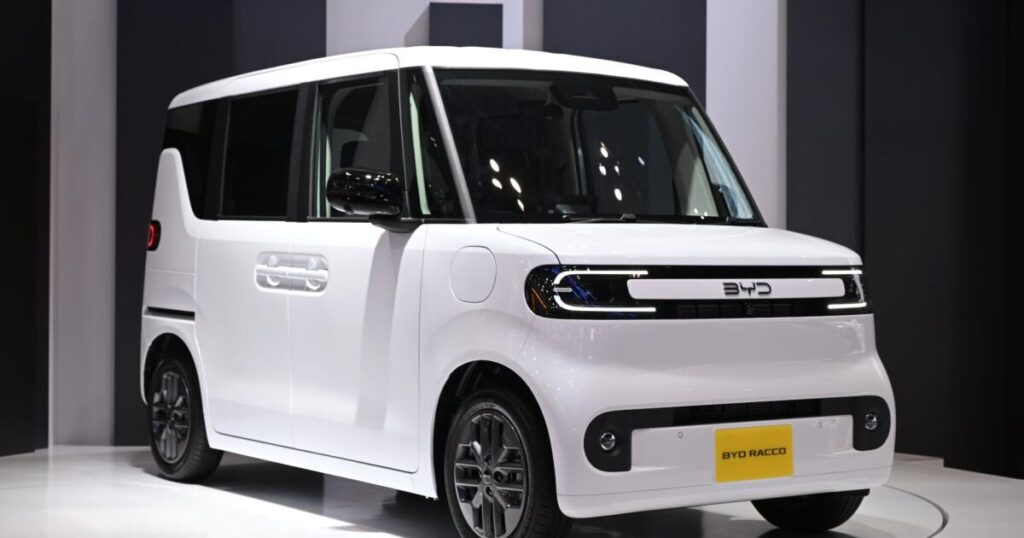
President Trump, apparently enamored by the pint-sized kei cars he saw during his recent trip to Japan, has paved the way for them to be made and sold in the U.S., despite concerns they’re too small and slow to be driven safely on American roads.
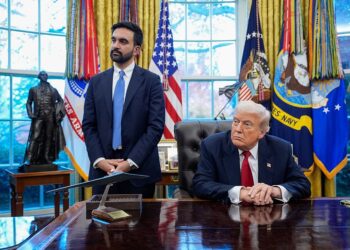
“They’re very small, they’re really cute, and I said, ‘How would that do in this country?’” Trump told reporters on Wednesday at the White House as he outlined plans to relax stringent Biden-era fuel-efficiency standards.
“But we’re not allowed to make them in this country and I think you’re gonna do very well with those cars, so we’re gonna approve those cars,” he said, adding that he’s authorized Transportation Secretary Sean Duffy to approve production.
While the ultra-compact cars are highly popular in Asia, they currently don’t meet federal standards for new vehicles in the U.S.
Duffy said Thursday he’s working with the National Highway Traffic Safety Administration to “clear the deck” for domestic manufacturing of mini-cars.
“Are they going to work on the freeways? Probably not,” Duffy said in an interview on CNBC, adding the tiny vehicles may be a better fit for urban settings and noting they’re “much more affordable than the other options that are on the market today.”
A law that allows cars older than 25 years to be imported to the U.S., even if they don’t meet crash safety standards, has led to a cult following among American enthusiasts.
However, they’re restricted to low speeds on private land in some states, and prohibited altogether in others, the main concern being that they’re too small, slow and weak to drive safely among the hulking trucks and SUVs ubiquitous on American roads.
“The reason Japanese carmakers don’t make or sell kei cars in the U.S. is business feasibility,” said Bloomberg Intelligence senior auto analyst Tatsuo Yoshida. The market exists but remains niche, Yoshida said. “Pricing and costs don’t match.”
Kei cars, which are tailored to narrow roads with an affordable price tag to match their size, account for about one-third of all new-vehicle sales in Japan. The name — kei — is Japanese for “lightweight” and refers to a tax-advantaged class of vehicles subject to strict limits on horsepower and size.
In response to Trump’s latest order, Duffy said the rule changes will allow Toyota Motor Corp. and other carmakers to build and sell mini-cars in the U.S.
A spokesperson for Toyota declined to comment.
Trump’s seeming embrace of kei cars is the latest instance of passenger vehicles being used as a geopolitical bargaining chip between the U.S. and Japan.
Passenger vehicles were a core issue in U.S.-Japan trade negotiations earlier this year, but they became useful leverage when Japan floated the idea of importing and selling American cars.
The prospect of selling large, U.S.-made pickup trucks in Japan resonated with Trump, as did the notion of Toyota and Honda Motor Co. importing some of their U.S.-assembled cars into Japan.
Takahashi writes for Bloomberg.
The post Trump wants Asia’s pint-sized kei cars to be made and sold in the U.S. appeared first on Los Angeles Times.