After Sen. Lindsey Graham (R-South Carolina) died suddenly on Saturday night at age 71, the preliminary report from the D.C. medical examiner’s office found the senator suffered an aortic dissection — a dangerous condition in which a tear forms in the body’s main artery. It can kill someone quickly if untreated.
Every year, between 5 and 30 out of every 1 million people experience an aortic dissection, according to Cleveland Clinic. Here’s what to know.
What is an aortic dissection?
Aortic dissections occur when a tear opens up in the aorta, which is the largest artery in the body and supplies oxygen to all of the body’s organs.
The aorta is composed of several layers, “like a roll of paper towels,” said Thomas MacGillivray, the chairman of cardiac surgery at MedStar Washington Hospital Center. The blood flows into the aorta’s outer layers, affecting the flow of blood to the organs and sometimes causing the aorta to rupture completely.
The most common symptom of an aortic dissection is a sudden, sharp chest or back pain. Other symptoms can include fainting, dizziness or shortness of breath.
Greg Katz, a cardiologist at NYU Langone Health, said the condition can sometimes be misdiagnosed as or confused for a heart attack, as occurred when the actor John Ritter died of an aortic dissection in 2003. In some cases, patients have reported feeling unwell or having chest pains in the days before an aortic dissection, Katz said.
Other times, the symptoms can occur without warning, MacGillivray said.
“It happens suddenly,” he said. “Like the flip of a switch.”
How are aortic dissections treated?
Aortic dissections can kill quickly; 40 percent of people with the condition die almost instantly, according to the University of Chicago. If a living patient is taken to the hospital within a few hours, however, they can survive with prompt treatment.
A doctor will generally perform open-heart surgery on a patient with an aortic dissection and replace a section of the aorta with an artificial blood vessel, MacGillivray said.
When performed on a healthy patient, the procedure is “a common operation that has a very low risk,” MacGillivray said.
If a patient has suffered an aortic dissection, timely surgery can still make a lifesaving difference. The survival rate for patients who receive surgery within a few hours of an aortic dissection is about 80 to 90 percent, according to MacGillivray.
What causes aortic dissections, and can you avoid them?
High blood pressure is the most common risk factor for aortic dissections, Katz said. Some genetic conditions that can be passed through families also increase the risk of an aortic dissection. An aortic aneurysm — a bulge in the artery wall that weakens the artery — can also lead to an aortic dissection.
The condition more commonly occurs in older patients and male patients. Smoking and high cholesterol are other risk factors, according to Cleveland Clinic.
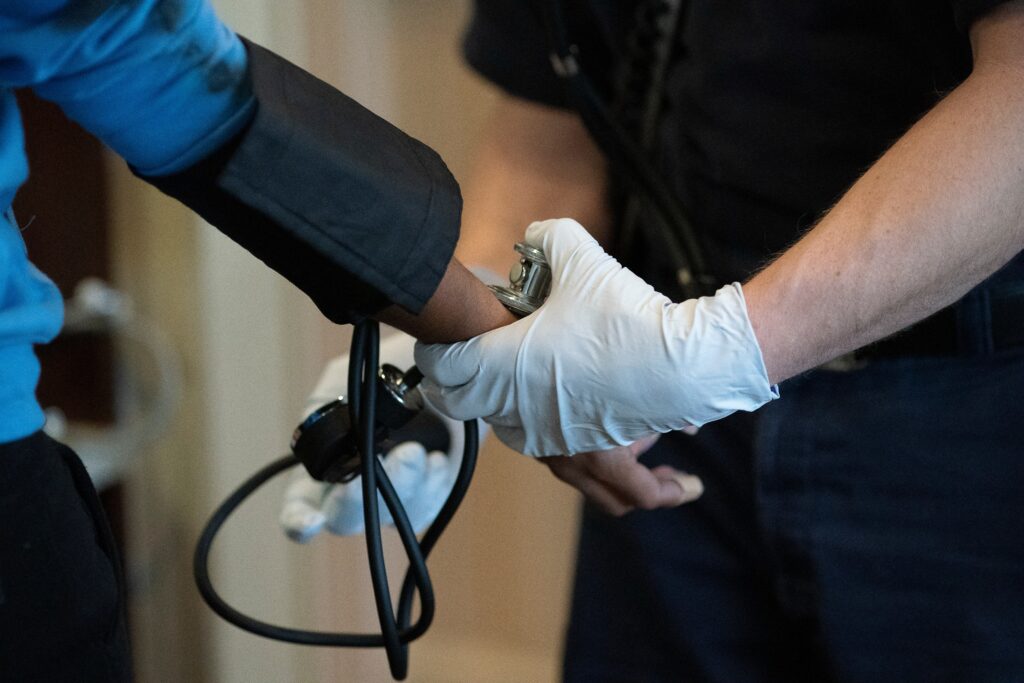
The best way to prevent an aortic dissection is to stay on top of your regular checkups to monitor for risk factors such as high blood pressure, and to seek treatment if it is abnormally high, Katz and MacGillivray said. If you have a family history of aortic dissections or aneurysms, you should get screened for aortic aneurysms, which can develop without symptoms, MacGillivray added.
If you experience sudden, severe chest pain or other symptoms of an aortic dissection, you should immediately call 911 and go to the hospital, MacGillivray said.
“Every minute, every hour counts,” he said.
The post What you should know about aortic dissections appeared first on Washington Post.