David H. Petraeus is a retired U.S. Army general who commanded coalition forces in Iraq from 2007 to 2008. He served as head of U.S. Central Command from 2008 to 2010 and CIA director from 2011 to 2012. He is a partner with the KKR investment firm.
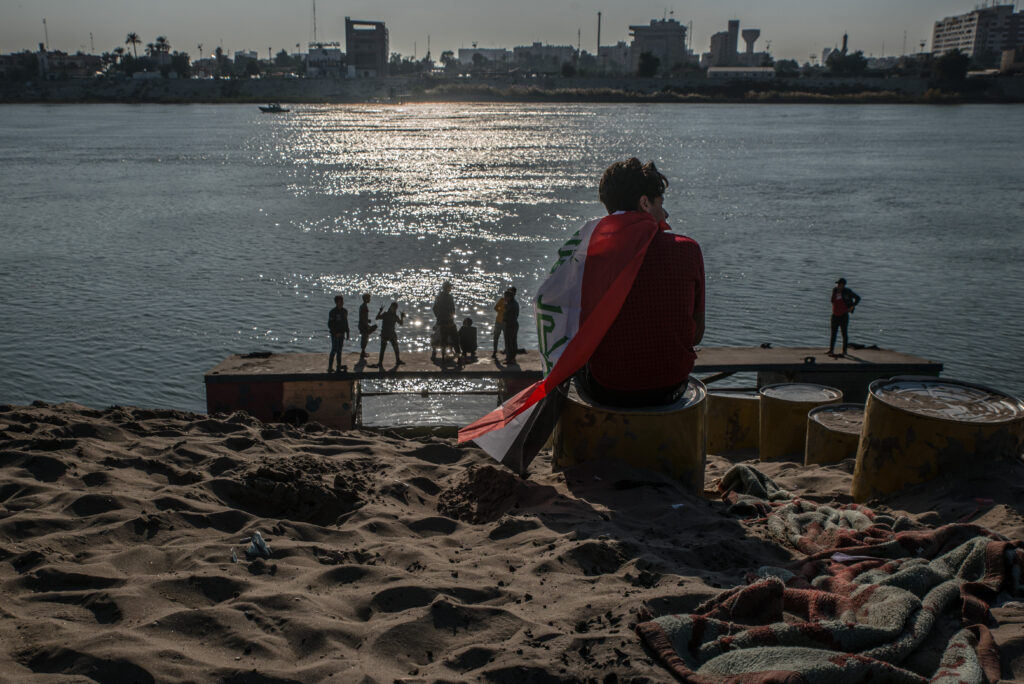
Rarely does a nation emerge from decades of dictatorship, foreign intervention, insurgency, terrorism, civil war, corruption and external interference with a genuine opportunity to redefine its future. Iraq may have reached such a moment.
The opportunity is by no means assured. Indeed, history suggests that pivotal moments are more often squandered than seized. But recent developments — including an unprecedented anti-corruption campaign, efforts to reassert the state’s monopoly on force, and initiatives intended to strengthen Iraq’s sovereignty and diversify its international partnerships — suggest that Iraq has entered its most consequential period since the defeat of the Islamic State.
In a recent column for The Post, I suggested we could be witnessing the return of the Iraqi state. Subsequent events have reinforced that assessment. The most important question now is not whether Iraq has an opportunity. It’s whether Iraq can capitalize on it.
The answer will not be determined by any single arrest, investment agreement, diplomatic summit or military operation. Rather, it depends on whether Iraq can prevail in a series of strategic contests whose outcomes will shape the country for years to come.
And as Prime Minister Ali al-Zaidi prepares to meet President Donald Trump in Washington this week, a second critical question presents itself: How can the United States assist Iraq as it seeks to prevail in these strategic contests?
The most fundamental contest concerns whether the institutions of the Iraqi state can become stronger than the informal networks that have long rivaled them.
For much of the past two decades, Iraq has been shaped by competing systems of power: the formal institutions of government on one side, and informal networks of corruption, political patronage, militia influence, illicit finance, criminal enterprise and external support — particularly from Iran — on the other. The current anti-corruption campaign matters not simply because prominent individuals have been arrested, but because it appears to be reaching beyond individuals toward the networks themselves.
Closely related is the contest over the state’s monopoly on the legitimate use of force. No sovereign nation can endure if armed organizations retain independent military capabilities. The prime minister has set a Sept. 30 deadline for all non-state groups to disarm. Iraq’s determination that only the state should bear arms therefore represents one of the most consequential tests facing the government.
Governance is another contest. Institutions ultimately derive legitimacy not merely from legal authority, but from performance. Courts must administer justice fairly. Ministries must provide reliable public services. Customs authorities must collect revenue honestly. Iraq’s institutions must outperform political patronage in addressing the needs of its citizens. Governments earn confidence through competence.
Next is sovereignty. Iraq cannot fully exercise strategic independence while remaining excessively dependent on any single external actor. Geography alone ensures that Iraq and Iran will remain important neighbors. But Iraq’s sovereignty will be strengthened as it diversifies its energy supplies, expands partnerships with Gulf states and other international investors, captures more of its natural gas, advances projects such as the Development Road and broadens its economic relationships.
The government will also need to adapt. Every successful reform effort provokes resistance. Corruption networks evolve. Militias adjust. Technology continually changes the character of competition, from financial systems and information campaigns to increasingly sophisticated autonomous systems and drones. The institutions that prevail will be those that learn faster and adapt more rapidly.
A final test may prove most important. Can Iraqi national identity continue to grow stronger than sectarian and factional loyalties? Durable states are sustained not only by constitutions and security forces, but by citizens who see themselves as participants in a common national enterprise. Iraq has made remarkable progress since the darkest days of sectarian civil war. Whether that progress endures will depend in no small measure on whether national identity continues to eclipse narrower allegiances.
These challenges intersect. Success in one strengthens the prospects for success in the others. Failure in one complicates the rest. Together, they will determine whether Iraq’s present opportunity becomes a durable transformation.
Twenty years ago in Iraq, a brutal civil war between Sunni and Shiite Arabs threatened to tear the country apart before the U.S.-led “surge” and the accompanying political, military, economic and diplomatic initiatives dramatically reduced violence and restored a measure of stability. Today, the struggle in Iraq is over whether state institutions can become stronger than the informal political, economic and armed networks that have constrained Iraq’s sovereignty.
The United States cannot — and should not — attempt to accomplish these tasks for Iraq. Only Iraqis can do that.
America can, however, assist Iraqi efforts where such assistance is requested and welcomed. It can continue helping Iraq develop professional security institutions, deepen intelligence cooperation, encourage U.S. investment, and support Iraqi efforts to strengthen governance, judicial institutions, transparency and public administration. Such cooperation should reinforce institutions rather than individuals, professionalism rather than patronage and sovereignty rather than dependency.
Doing so would advance not only Iraq’s interests, but America’s as well. A stronger, more sovereign and more stable Iraq would reduce opportunities for the resurgence of extremist organizations, constrain malign external influence, expand economic opportunity for American and Iraqi firms alike, and contribute to a sturdier at a time of profound strategic change across the Middle East.
Pivotal moments in history are rare. They create opportunities that, once lost, are seldom regained. Iraq appears to have reached such a moment. Whether it becomes a true turning point will depend principally on Iraqis themselves. As Prime Minister al-Zaidi meets President Trump, leaders in Baghdad and Washington have an opportunity to reinforce a partnership that serves the interests of both countries. They should recognize this moment for what it is — and act accordingly.
The post David Petraeus: Iraq faces a pivotal moment appeared first on Washington Post.