Amazon is preparing to expand its nationwide delivery network and give up its long-standing partnership with the U.S. Postal Service as talks stall with the mail agency, according to three people with knowledge of the matter, a move that could make the e-commerce goliath the most ubiquitous delivery service in the country and wreak havoc on the postal agency’s long-term financial viability.
Amazon — whose founder, Jeff Bezos, owns The Washington Post — has been in talks with the Postal Service over what the mail agency calls “negotiated service agreements,” which set rates and hasten delivery for its largest clients. The company had hoped to come to a new agreement that would have locked in favorable rates and set higher benchmarks for package volume, but formal talks have largely concluded without a deal, the people said, speaking on the condition of anonymity to share confidential business information.
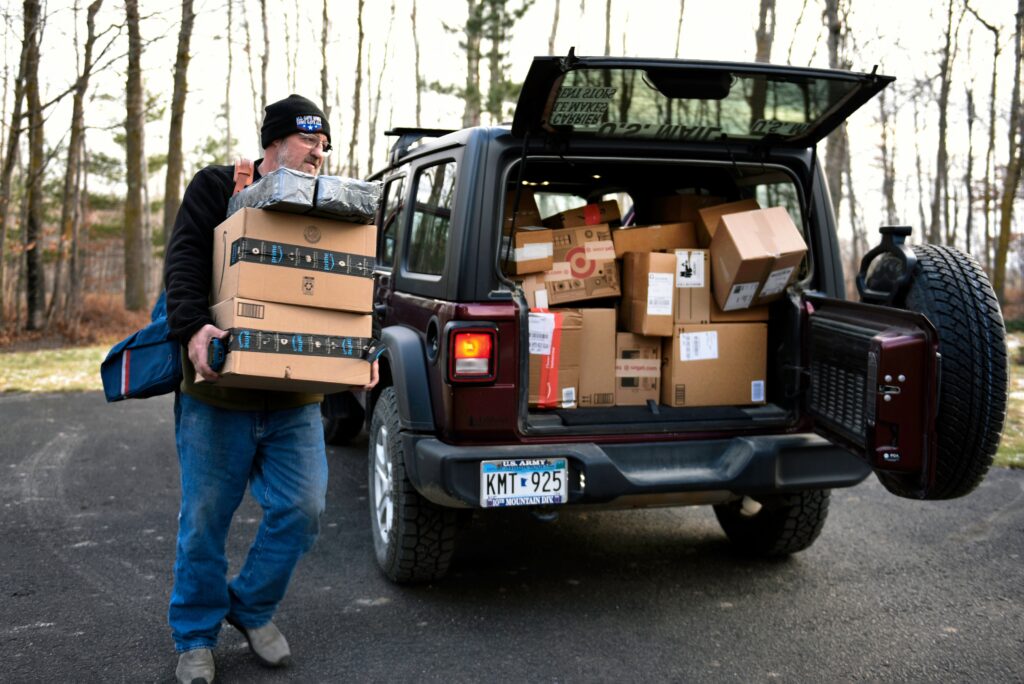
The Postal Service instead plans to hold a reverse auction next year to offer access to mail facilities to the highest bidder, making Amazon and other businesses compete for postal capacity. In response, Amazon is readying plans to pull the billions of packages it sends through the Postal Service by the end of 2026, the people said.
They cautioned that the plans are not final and could change. Postmaster General David Steiner met virtually with Amazon chief executive Andy Jassy on Nov. 14, and the company hopes to reach an agreement, the people said.
Amazon has long been the Postal Service’s top customer, providing more than $6 billion in annual revenue in 2025, said two of the people familiar with the talks. That would account for roughly 7.5 percent of the agency’s revenue in the past year. The Postal Service does not disclose its financial relationships with major shippers.
The loss of Amazon’s business could spell disaster for the mail agency, which in recent years has drawn more revenue from packages than paper mail. It has posted multibillion-dollar losses in nine of the past 10 years, even as it has hiked prices. The people said industry groups have begun huddling with key lawmakers to craft a rescue package for the Postal Service, which received $107 billion in financial assistance from Congress as recently as 2022.
Partnerships with large shippers such as Amazon are the backbone of the Postal Service’s “coopetition” business model, in which its prime competitors send certain parcels through the postal system and deliver others independently. Amazon had sought a four-year extension of its contract, two of the people said. Its agreement expires Oct. 1, 2026.
Amazon spokesperson Steve Kelly in a statement called the Postal Service a “long-standing and trusted partner” and said the company remained committed to working with the agency. The company was seeking ways to “extend our partnership” and “increase our spend” with the Postal Service as part of the recent negotiations, he said. The Postal Service declined to comment.
The system has benefited both sides: The deliveries are profitable for the Postal Service, while private-sector shippers off-load shipments that would cost more to deliver on their own.
President Donald Trump frequently panned the arrangement during his first term. He derided the Postal Service as “a joke” and Amazon’s “delivery boy.” During the covid-19 pandemic, Trump threatened to block emergency financial assistance for the mail service unless it quadrupled its package prices. Congress ultimately approved additional resources for the agency. Earlier in his first term, Trump told then-Postmaster General Megan Brennan to double the rates for Amazon and other shippers.
Much of Trump’s effort was aimed at punishing Bezos, The Post has reported, whom Trump considered a political enemy. Trump has largely refrained from attacking Bezos publicly in his second term, and Bezos attended Trump’s inauguration in January, along with other tech figures.
A representative for Bezos did not respond to a request for comment.
Shortly before he took office again, Trump and top advisers discussed attempting to privatize the Postal Service, or merging it with the Commerce Department.
The negotiated package service agreements have prioritized major corporations and other large parcel shippers, rather than individual retailers and small businesses. Steiner said at the Postal Service’s most recent public meeting that he aims to democratize those agreements and open them to regional shipping firms, traditional brick-and-mortar retailers, and midsize and small businesses.
He plans to hold a reverse auction in early 2026, the people said, selling access to postal facilities to the highest bidder, rather than directly to Amazon, and making the company compete with national retail brands and regional shipping firms. That proposal largely ended the Amazon negotiations, which had been ongoing since February, two of the people with knowledge of the talks said.
“Almost everybody nowadays does home delivery via internet sales, but you have UPS and FedEx and other businesses that have a piece of that market,” said Leo Raymond, managing director at Mailers Hub, a postal industry advisory firm. “There’s no business out there that can replace Amazon for the Postal Service. Amazon, with their own network, could hurt UPS and FedEx, too.”
Amazon was “surprised to hear [the Postal Service] want to run an auction after nearly a year of negotiations,” Kelly said.
“Given the change of direction and the uncertainty it adds to our delivery network, we’re evaluating all of our options that would ensure we can continue to deliver for our customers,” the spokesperson said.
The specter of the postal breakup marks new ambitions for Amazon to dominate another facet of the U.S. economy. Amazon dubs itself “the everything store” for its seemingly endless product inventory in a nationwide network of hulking warehouses. Amazon Web Services is an industry leader in web hosting, so interwoven in global markets and consumer products that a temporary outage in October caused snags from Wall Street to internet-connected smart beds. It has expanded its entertainment streaming business with live broadcasts of the NFL and the NBA. In 2022, it acquired health service platform One Medical for $3.9 billion.
A bespoke delivery service that processes upward of 6 billion packages per year in the U.S. would be an existential threat to the Postal Service. The lost revenue could throw the agency’s shaky finances into a tailspin, experts say. The mail agency posted a $9 billion loss in the 2025 fiscal year.
“I’m scared to see them leave,” said one industry executive, speaking on the condition of anonymity to offer a candid assessment. “What the Postal Service will be left with is the absolute dregs.”
Amazon could prove to be a formidable postal competitor. The company is largely free of the union labor contracts that elevate costs for some other parcel shippers. Much of its existing last-mile delivery network is made up of gig workers and independent contractors. The company could also seek to pry away business from the mail service; some small and midsize retailers already stock merchandise at Amazon warehouses.
“If any of the major last-mile delivery customers pull out and start building out their own network, which is what Amazon is doing, that is a fundamental threat to the Postal Service,” said Elena Patel, a senior fellow at the Brookings Institution, and a former economist for the Postal Service’s independent regulator. “And it’s a weakness that’s been sitting there the whole time.”
The Postal Service has spent the years since the covid-19 pandemic raising prices and eliminating the discounts it once offered major shippers that preprocessed packages to save money on mail-handling steps.
That led UPS to cut ties with the agency, though the shipper signed a new postal contract in October. It also led Amazon to expand its own delivery footprint, enlisting a legion of gig economy delivery drivers and broadening the reach of its own parcel fleet.
The post Amazon eyes expanding delivery network after talks with USPS stall appeared first on Washington Post.