The ocean covers 71% of the planet, and humans have colonized only a small fraction of it.
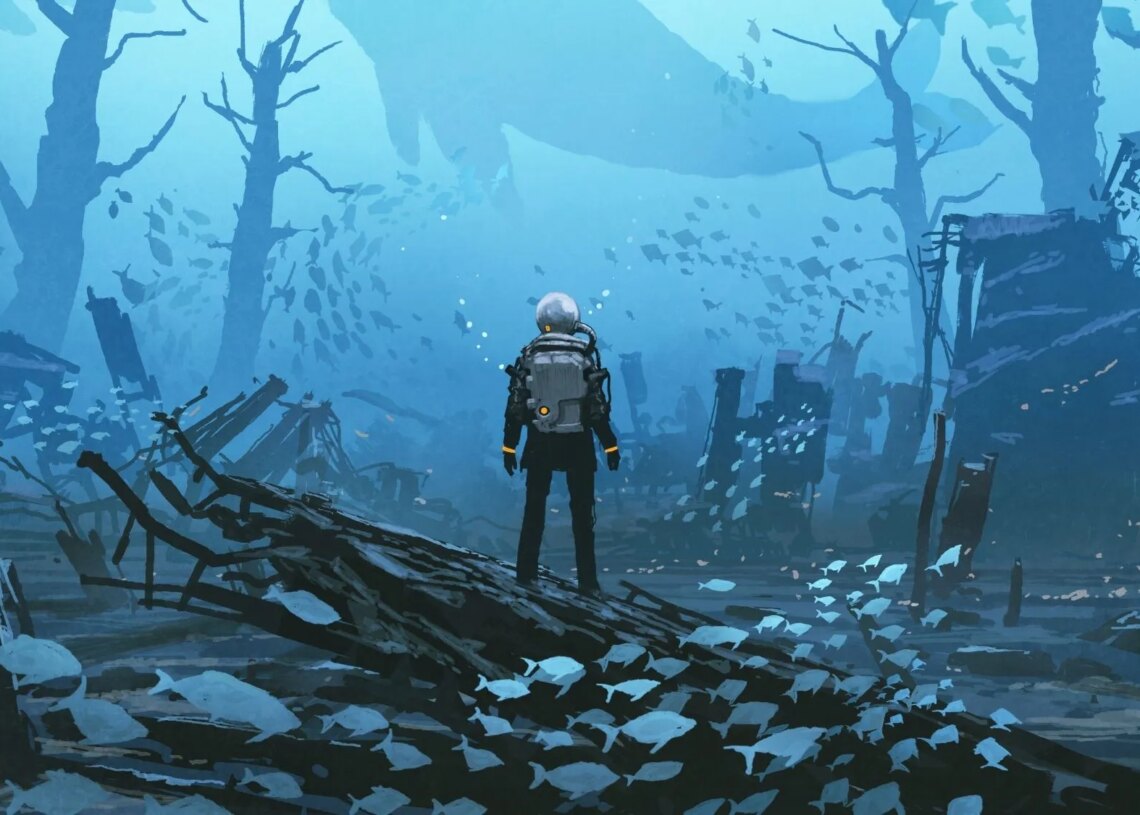
That gap has been on DEEP’s mind since the UK-based ocean engineering company launched in 2021. Its answer is Vanguard, a pilot subsea habitat now installed at Tennessee Reef in the Florida Keys National Marine Sanctuary, sitting 17 meters (nearly 60 feet) underwater and marking the first open-ocean human habitat built, tested, and deployed in the United States in four decades. Up to four crew members, called aquanauts, will live and work inside it on missions of five or more days.
Subsea living runs on a strange loophole in human biology. Spend 24 hours underwater, and your body’s tissues max out on dissolved nitrogen — fully saturated, no more absorption. After that point, staying longer doesn’t add to the decompression debt on the way back up. So crew members enter Vanguard at ocean pressure, decompress gradually overnight inside the sealed habitat, and by morning they can slip out through the moon pool, a floor hatch that opens directly to the seafloor, for dives that last several hours. Recreational scuba divers get about 60 minutes before they have to surface.
The Future of Ocean Research May Involve Scientists Living Beneath the Sea
For marine scientists, this is a fix for something that’s long frustrated the field. Every sample brought to the surface quickly decompresses, corrupting the molecular and cellular data before anyone can do anything useful with it. DEEP’s director of scientific research, Dawn Kernagis, told ScienceAlert that studying specimens at depth in near-real time could mean revisiting decades of findings built on data that was already degraded before it reached the lab. Kernagis trained as a NASA aquanaut through the NEEMO program, so she’s not theorizing about a problem she’s never experienced personally.
The ambitions and the partner list go well beyond coral monitoring. DEEP’s partners include the Unique Group, which serves the oil, gas, renewable energy, and defense sectors, and Bastion Technologies, which operates across the American aerospace, oil and gas, and defense industries. Kernagis confirmed that human-machine teaming — how divers interact with autonomous and remote underwater vehicles — is a specific area of interest. The ocean floor has a long defense history, and Vanguard isn’t pretending otherwise.
The bigger goal is Sentinel, DEEP’s planned follow-up habitat system designed to enable semi-permanent deployments across the continental shelf by 2027. Vanguard is the test run. Missions are expected to support coral reef restoration, climate impact studies, long-term ecosystem monitoring, and training for extreme environments, including, perhaps eventually, astronaut prep. The ocean and outer space have always been strange mirrors of each other. The people trying to live in both keep running into the same problems.
The post Scientists Are Testing a New Underwater Habitat Where Humans Can Live on the Ocean Floor appeared first on VICE.