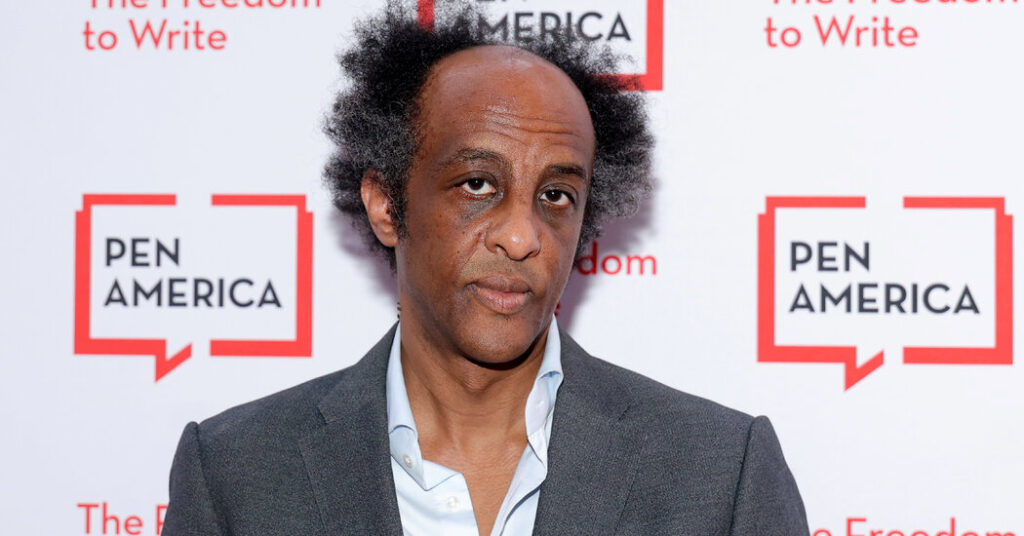
Dinaw Mengestu said that he resigned as president of the literary nonprofit PEN America on Thursday, seven months after being elected to the role.
“That decision is obviously not something I came to lightly, having remained on the board through numerous challenges,” Mengestu, who had served on the board for about a decade, said in an email.
Mengestu declined to provide further details. PEN America confirmed that he had resigned and also declined to say more.
The organization has been on shaky ground in recent years because of backlash from writers and activists over its response to the war in Gaza. In the face of a boycott by writers accusing it of anti-Palestinian bias, PEN America canceled its annual book awards and global literary festival in 2024.
When Mengestu, an award-winning Ethiopian American novelist, was elected in December, he told The New York Times that it was important to “mend and rebuild” relationships with writers who felt the group had not done enough to support Palestinian authors.
“We have worked to help relocate Palestinian writers and artists to other countries,” he said. “For those with no way of remaining in Gaza, we were able to work to help them rebuild new lives.”
On Thursday, PEN America published an article about Israeli and Jewish writers who said they had experienced harassment and challenges being published since the Hamas-led attacks on Oct. 7, 2023, and Israel’s retaliation.
Toward the top of the article, the organization emphasized its opposition to cultural boycotts as a means of protest.
“PEN America upholds a longstanding position opposing any efforts to inhibit the free international exchange of literature, art, knowledge or culture, including cultural and academic boycotts,” the group said.
It added, “PEN America also recognizes that participating in or advocating for boycotts is an exercise of free expression, and we defend the rights of writers to do so without facing retaliation.”
Last year, Mengestu insisted that the group’s work promoting free expression be done in partnership with the literary community and other PEN International chapters.
“There’s a strong antidemocratic stream moving throughout the world,” Mengestu said. “If there’s a moment when we can’t become a purely internal organization, it’s now.”
Past presidents of PEN America include Jennifer Finney Boylan, Salman Rushdie, Ayad Akhtar and Jennifer Egan.
Suzanne Nossel, the former chief executive of PEN America, resigned in 2024 after more than 10 years in the role. Under her leadership, PEN America transformed from a niche literary society into a civil rights powerhouse, which has left the organization more vulnerable to criticism.
Jennifer Schuessler contributed reporting.
The post PEN America’s President Resigns After 7 Months in Role appeared first on New York Times.