Graham Platner’s implosion in his race in Maine for a U.S. Senate seat looks like another chapter in the Democratic Party’s identity crisis as well as in the tumult of current American politics.
The writer John Judis has tracked the trajectory and shifting identity of the Democratic Party for decades — particularly in his books written with Ruy Teixeira, “The Emerging Democratic Majority” (2002) and “Where Have All the Democrats Gone?” (2023), and now in his newsletter, Foreign & Domestic.
Through the lens of that long timeline, he assessed Mr. Platner, the rocky path of recent politics and democratic socialist stirrings on the left in a written conversation with John Guida, an editor in Times Opinion. It has been edited for length and clarity.
John Guida: Is the Platner debacle just another example of the Democrats’ eagerness — perhaps overeagerness — to redefine themselves as a forceful, scrappy party for working-class Americans?
John Judis: Perhaps so. Left-wing intellectuals, if I can use that term to apply to consultants, activists and writers like me, were looking for a candidate who could bridge the gap between cosmopolitan voters in big metro centers and the voters in small cities and towns and rural America. Platner, the gruff oysterman, looked like the guy. Scandals aside — and clearly he should have been vetted more closely — they may have been wrong about his appeal. In polls before the most recent episode, he was doing worse in rural Maine than Sara Gideon did in 2020 when she got routed by Susan Collins.
Platner strengths in articulating the anger many Democrats felt toward Trump, whom he has suggested is a fascist, may have hindered his attempt to reach out to voters who either still liked Trump or weren’t ready to group him with Hitler and Mussolini. Platner also embraced positions on immigration and transgender athletes that were unpopular in rural Maine. The result was that he ended up as the candidate of greater Portland but not of Downeast.
Guida: Your books with Teixeira track a shift in the Democratic Party from the early 2000s almost to the present. It’s a story of great promise giving way to decline and erosion. Aside from the Platner flop and Democratic attempts at reinvention, where has that left us?
Judis: American politics has become a teeter-totter in which the parties regularly exchange control, and where the reigning party, after winning control, proceeds to undo whatever its rival has achieved. Elections are won, too, by one party pointing out the evils of the other. That is happening today and will likely continue through 2028, as Democrats seek to capitalize on voters’ disapproval of Trump and his administration. Politically, the results have been a growing number of disillusioned voters. In surveys, those who identify as independents now outnumber Democrats and Republicans.
Guida: In a recent article looking at the midterm outlook, you identified a significant structural obstacle for Democrats and advantage for Republicans: political geography. You noted that this problem is particularly acute for control of the Senate, because there are so many places in the country — rural places in particular — where Democrats struggle to compete. You have previously referred to a cultural divide between cities and rural Americans. Can Democratic candidates overcome this?
Judis: In purely numerical terms, the Americans who live in the great metro centers like Chicago or Boston, and their suburbs, make up a sizable percentage of the electorate — somewhere between a third and a half, depending on the census categories. That’s why Democrats, with their hold in the metro centers, have been able to win the national vote in seven of the last nine presidential elections. But presidential elections and the composition of the Senate are decided on federal grounds, which give states with smaller populations a disproportionate role in choosing presidents and senators. Most of those states are rural, with small towns and cities.
As I noted in that article you mentioned, 20 of the 25 states with the highest percentage of rural voters are dominated by Republicans. In addition, states like Ohio that don’t have single huge metro centers have also gone Republican. Voters in rural areas and small towns and cities tend to be on one side of the raging culture war over immigration, gender, guns, flag and church. Some still blame the Democrats for the loss of jobs from NAFTA or China. Voters in states that rely on the oil and gas industry worry about Democrats’ reducing the use of fossil fuels. North Dakota had two Democratic senators until the early 2010s, when oil and gas boomed. Republicans benefited from their support of the extractive industry.
There is no easy way to overcome this, but the first step should be what my friend Robert Wright calls “cognitive empathy” with those who voted for Trump and with those who are uncomfortable with the more extreme Democratic stands on fossil fuels, illegal immigration, abortion and transgender rights.
Guida: In “Where Have All the Democrats Gone?” you and Teixeira wrote that Democrats were under the sway of a “shadow party” — “the activist groups, think tanks, foundations, publications and websites, and big donors and prestigious intellectuals who are not part of official party organizations, but who influence and are identified with one or the other of the parties.”
Judis: Candidates pay little heed to party platforms or national committees. Because of our broken campaign laws, big individual donors and PACs, rather than party organizations, play a large role in funding candidates. As a result, many of the attempts to influence candidates and voters are done by media outlets, think tanks, foundations, policy groups, activist organizations and celebrated intellectuals and influencers. They constitute the “shadow party” of both major parties.
In the 2024 presidential election, Democrats warned — correctly, as it turned out — that the Heritage Foundation’s Project 2025 would have a lot of influence over a second Trump administration. This year, Democratic primaries are being fought over the influence of AIPAC on candidates.
Guida: In recent newsletters, you wrote about socialism, democratic socialists and the Democratic Socialists of America — like Mayor Zohran Mamdani, but also young candidates like Darializa Avila Chevalier and Melat Kiros who won recent primaries in New York and Colorado. You are, on the whole, sympathetic to them, and to democratic socialism. You even joined the Democratic Socialists of America. Within the context of Democratic politics and the need to redefine the party to appeal to more people and places, do you see democratic socialism as being in tension with efforts to expand the party’s appeal?
Judis: I’m sympathetic to most of these candidates, and I did decide to rejoin after I witnessed their role in getting Mamdani elected, but I have mixed feelings about the politics of some of the candidates and of D.S.A. itself. To their credit, these candidates are speaking not only to the anger that voters feel toward Trump and his administration, but also to what voters perceive as the failure of past Democratic programs to deal with the country’s problems. Obamacare is, at best, a Band-Aid on an unfair and unwieldy health care system; Democrats’ tax policies fail to redress the growing inequality of wealth and power; Democrats’ military and diplomatic support for Israel fueled a murderous assault in Gaza and a reign of terror in the West Bank. The democratic socialists have spoken to these failures.
Guida: Do you think there are limits to the D.S.A.’s appeal?
Judis: D.S.A. and their candidates are very much a product of what can be alienating in the culture and economy of the great metro centers. D.S.A. itself is on the cliff edge of these views. For instance, Chevalier, a candidate I would not have voted for, and D.S.A. back open borders — a position that would undercut the labor unions it says it supports — and voting for noncitizens and the abolition of prisons. Some of its extreme stands on cultural issues would not put D.S.A. candidates in good stead outside of a score of ZIP codes.
Guida: You wrote recently that we are in a “Polanyi moment” — similar, you said, to one in Europe in the 1920s and ’30s. Why is the political economist Karl Polanyi relevant again?
Judis: In 1944, Polanyi wrote a book, “The Great Transformation,” in which he tried to account for the collapse of capitalism during the 1930s and the New Deal era. He attributed its failure in countries like the United States to the dominance of pro-business laissez-faire policy and internationally to the breakdown of the gold standard, which led to unemployment in the U.S. and European countries and autarky internationally. The response, Polanyi pointed out, was the reassertion of government power in the national interest. That took a right-wing form in Germany and Italy and a left-wing form in the United States.
We have been experiencing a similar breakdown of deregulated or underregulated capitalism (climaxing in the Great Recession) domestically and of the international order developed in the decades after World War II, from the International Monetary Fund and World Bank to the World Trade Organization. Just as the breakdown in the ’30s spawned big government on the left and right, it has done so in the last decade, with Trump and MAGA’s right-wing populism and the left-wing populism of Bernie Sanders.
Guida: Bernie Sanders (among others) has tried to rehabilitate the word “socialism” — perhaps “democratic socialism” to be precise, but not everyone is precise. On the whole, American history has not been kind politically to socialists. For a Democratic Party trying to redefine itself, is anything with “socialist” in the label (democratic socialist or otherwise) effective messaging? Is there any upside or is it all baggage?
Judis: I was a socialist revolutionary in the 1960s and early ’70s, but I never expected to be answering questions about whether politicians should run as “democratic socialists.” Several things have changed. The Cold War’s end removed the ironclad identification of socialism with Communism. Sanders and his successors have redefined socialism to be a variant of European social democracy — with the private economy regulated in the public interest; public ownership of industries only when absolutely necessary for the public interest; and a robust safety net that regards health care as a right, not a privilege.
Finally — and most important — the breakdown of capitalism during the Great Recession and the subsequent diminishing opportunities for white-collar as well as blue-collar workers have created skepticism, especially among young people, about capitalism. In my experience, most of these voters who say they approve of democratic socialism see it as Sanders or Mamdani has described it, not as Karl Marx foresaw it.
Guida: What about Americans over, say, 50?
Judis: Many of them still see socialism as the Soviet Union or China and want no part of it. Many Latin American émigrés identify it with Cuba or with Venezuela. I wouldn’t recommend a Senate candidate in Florida running as a “democratic socialist.” It would invite misunderstanding. And “big government” remains a boogeyman for many Americans, and particularly small-town and rural Americans. Nationally, I think we are at least a decade away before you might see a Democratic Party platform embracing democratic socialism. But the advantage of democratic socialism as a politics is that it focuses on political economy and not on the cultural issues that divide us.
Guida: Graham Platner flamed out, but not before he generated great enthusiasm in Maine. There is a hunger for new voices on the left. Who are the politicians and candidates on the left who give you the most hope about the Democratic Party for the future?
Judis: In American politics, presidents and their administrations set the tone for their parties. I think what the Democrats need is a politician who can redefine their priorities in the mind of the public: leftward on economic policy, but maybe not so far as to raise the specter of big government and higher taxes; and moderate, centrist, sensitive to public opinion on the big cultural-economic issues of immigration, gender, race and religion that divide our country. A Democratic candidate might need a “Sister Souljah moment.”
Platner, like John Fetterman, sported a blue-collar look, but I don’t think that’s important. In Wisconsin, Democratic Senator Tammy Baldwin, a lesbian from Madison, has often overperformed her fellow Democrats in rural counties by employing a “go everywhere” strategy. The Democrats’ presidential candidate in 2028 will have to exhibit forcefulness — the “politics of joy” won’t play in the wake of Trump. Important, too, will be articulating the anger voters feel against Trump without demonizing his supporters. Lastly, I’d say it will be important to display credibly a determination to fix things, including a government that has been broken by the second Trump administration — and an actual record of accomplishment would help.
John B. Judis is a co-author, with Ruy Teixeira, of “Where Have All the Democrats Gone?” and writes the newsletter Foreign & Domestic. John Guida is an editor in Times Opinion.
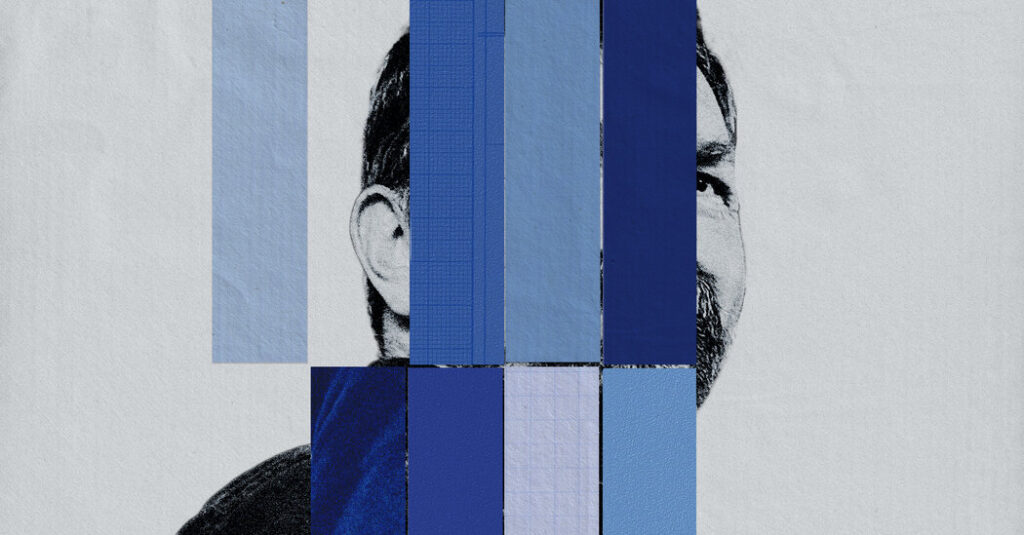
Source photograph by Amanda Sabga/Reuters.
The Times is committed to publishing a diversity of letters to the editor. We’d like to hear what you think about this or any of our articles. Here are some tips. And here’s our email: [email protected].
Follow the New York Times Opinion section on Facebook, Instagram, TikTok, Bluesky, WhatsApp and Threads.
The post Why Democrats Are Tripping All Over Themselves appeared first on New York Times.