This is an edited transcript of “The Ezra Klein Show.” You can listen to the episode wherever you get your podcasts.
Here’s the good news: Green energy is getting better and cheaper, faster than we had ever dared hope.
This next sentence was unimaginable even a few years ago: In April, the energy think tank Ember found that all of the new electricity demand around the world in 2025 was met with green power. That is wild.
But here is the bad news: Climate change is accelerating. We’re discovering new ways that the climate system is more fragile, more sensitive to emissions, than we previously had thought.
We have not been talking that much about climate change lately, but that doesn’t mean it has stopped happening. Europe is in the midst of an extraordinary heat wave. The world is staring down the barrel of a powerful El Niño.
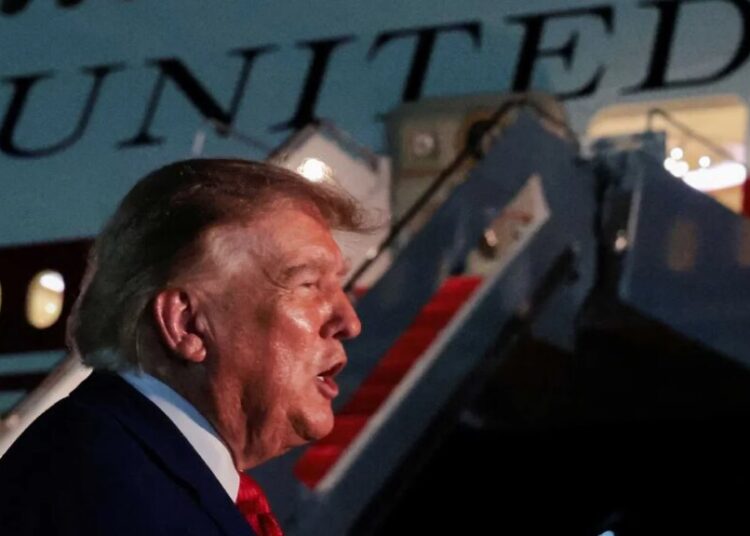
And climate politics is in almost total disarray. Donald Trump has gutted the Inflation Reduction Act. His administration is accelerating fossil fuel production and kneecapping green energy.
Archival clip of Donald Trump: Wind — it doesn’t work, I will tell you, aside from ruining our fields and our valleys and killing all the birds and being very weak and expensive.
But here’s the possibility, a bit of optimism: The advances in green technology make a new climate politics possible — one that doesn’t just talk about sacrifice and disaster prevention but presents decarbonization and green energy as a way station on the path to somewhere better.
Clean energy abundance, a new form of energetic wealth, the possibility of the left actually offering a future of more and better — not less and worse — was a hard case to make even a few years ago. But now we cannot only imagine it, we can see it, touch it, live in it. It is here.
So how do we talk about it? How do we make it happen?
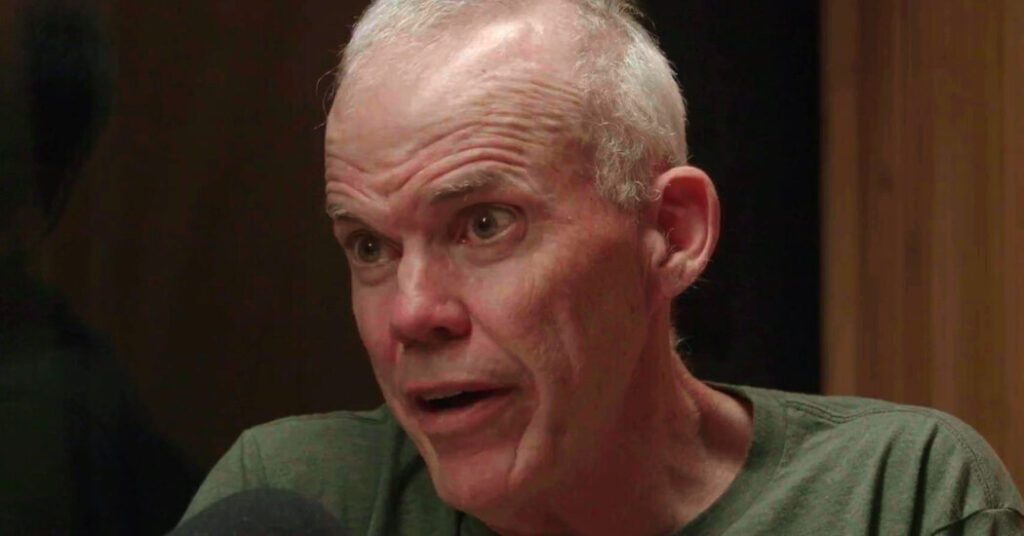
Bill McKibben is the Schumann Distinguished Scholar in environmental studies at Middlebury College, the co-founder of the climate action group 350.org, as well as Third Act, which is organizing people over 60 on climate change. He is a contributing writer at The New Yorker. He writes the Substack, The Crucial Years, and his most recent book is “Here Comes the Sun: A Last Chance for the Climate and a Fresh Chance for Civilization.”
Ezra Klein: Bill McKibben, welcome back to the show.
Bill McKibben: Very good to be back with you.
You have a line that people still think of clean energy like Whole Foods energy — it’s virtuous, pricey, a bit of a flex — when, in fact, you say it has become the “Costco of energy.”
Tell me about that.
Cheap, available on the shelf in bulk, ready to go.
The stuff that we spent my whole lifetime calling alternative energy from the sun and the wind is now the obvious, common sense, straightforward way to produce power. Sometime earlier this decade, we passed some invisible line where it became cheaper to produce energy from the sun and the wind than from setting stuff on fire.
That’s a big line, by the way. Darwin said fire and language were the two things that marked our species. But now we live on a planet where the cheapest way to make energy is to point a sheet of glass at the sun.
I want to create a distinction here because sometimes the numbers we use can shift back and forth. There are a lot of things we use energy for.
Solar energy, generally speaking, becomes electricity, which can also be stored in batteries. We make ammonia, fuels, jet fuel, cement, etc. And those things you cannot, for the most part, use the sun and the wind for.
Those are the things we know how to fix and the things we don’t.
Well ——
I see you getting skeptical.
We’re very quickly moving in all those directions, too. The thing that is easiest is electric power, but electric power is quickly going to have to supplant liquid fuel for driving cars. That’s the biggest thing we use liquid fuel for — and for running a furnace in your basement.
But you don’t need it anymore because you can stick in a heat pump, and it’s cheaper, more efficient and really a bit of a miracle. It’s able to use electricity to take latent heat out of the air and turn it either to the heating or the cooling that you’d like in your house.
Mark Jacobson at Stanford, who’s been the authority on this ——
The most optimistic on renewables of the major modelers ——
The most optimistic of the major modelers — and the one whose predictions have come by far the closest to reality over the last two decades. He’s very clear. He’s modeled the data for, I think, now 150 countries, showing how you can provide all the power you need from sun, wind and water.
For electricity.
Yeah, for electricity. And then you have to use the other suite of new technologies. If sun and wind and batteries are the trinity of generating capacity, the trinity of consumption — for Americans, anyway — they are the E.V. or the e-bike, the heat pump and the induction cooktop to replace the open campfire in your kitchen.
We used to have this whole set of things we called hard-to-abate sectors — things like steel making. In the last couple of years, people have started figuring out how to do this with electricity.
The one thing that seems hard to imagine is transcontinental jet travel. Although, the Chinese are now playing around with medium-haul battery-powered jets. Up in Vermont, where I live, one of our big new companies, Beta Technologies, is doing short-haul aircraft that run on electricity.
All of a sudden, there really is an abundance of energy. So we’re not short of energy, but we are short of time. If we’re going to make any real difference in the single most critical question that humans face — which is the rapid heating of the Earth — then we have to do this very fast, faster than economic forces and things by themselves would produce.
One of the amazing places you see something happening that feels almost unimaginable in America right now is in Australia, where the solar revolution has moved into something that almost sounds utopic.
What’s happening in Australia?
Australia is now producing so much solar power and wind power that in the middle of the day, they have more than they need. So they’re trying to get people to switch some of their demand to the middle of the day. The way that they’re doing it is saying to Australians: You get free electricity between noon and 3 p.m.
You can imagine Australians are busy digging out the owner’s manual for their dishwasher because it turns out that there’s a way to make it run at a particular time, which none of us have ever investigated because we haven’t needed to. The same thing with the EV.
But they’re also out there buying storage batteries, which are now cheap, so they can fill them up in the afternoon and run the household at night. That’s a miracle.
The first solar cell was invented at Bell Labs, 20 miles from here, in 1954. There are people listening to this program who were old enough in the 1950s to be putting dimes in pay phones, and if they did, they helped fund the development of the first solar cell.
Now, when we built the first one — since we’re sitting here in the Times building — next to the story of the first solar cell on the front page of The Times, directly next to it, it butts into a story about the first field trials of the polio vaccine.
That gives you some idea of the strange twists of history — since we’re currently living in an America that’s trying not only to get rid of the wonders of clean energy but also the wonders of vaccines. But at the time, this was the most expensive power in the world. The only thing you could use it for was satellites.
But iteratively, we’ve gotten better and better in a dance between activism and engineering that finally has now produced this thing that has literally become, for parts of the day on one of our continents, too cheap to meter.
Activism, engineering and — I know you’re sort of including this in there — state policy.
A number of governments around the world — Germany was a key mover here, America has been on and off a key mover here, and China pumped money into creating a market for something that was not yet economically feasible just on its own cost — pulled forward all this technology, so now it is increasingly economically feasible on its own.
I do think there’s an interesting, underlying thing worth thinking about there, which is that we often treat technology and policy as separate spheres from each other, but they’re not. Policy can create technology.
Let’s go back to the great missed opportunity, which was the 1970s. Jimmy Carter was facing an oil crisis, and with the first intimations of some of the climate effects of fossil fuel, decides that solar is the way out. He famously puts solar panels on the White House. But he goes to give a speech where he says — prophetically, sadly, as it turns out:
Archival clip of Jimmy Carter: A generation from now this solar heater can either be a curiosity, a museum piece, an example of a road not taken, or it can be just a small part of one of the greatest and most exciting adventures ever undertaken by the American people.
He actually says that?
He put money that was sufficient, people thought, to power the research and development such that America would have 20 percent of its energy coming from solar power by the year 2000. Had that happened, we would live on a different planet, a cooler one.
Instead, of course, Ronald Reagan ripped the solar panels off the White House. More important, he ripped that money out of the federal budget and committed us to the project of ever more drilling — which is what has landed us where we are now.
Let’s talk through some of the objections or concerns people have here. Australia — a lot of sun, very warm.
Half of America, 180 million people, live at the same latitude as Australia.
But here’s something that will at least give you some sense of possibility: California is the place in the U.S. that committed most thoroughly to building out renewable energy.
Sometime in the last two years, they’ve passed a real tipping point. Most days now in California, they produce more than 100 percent of their electricity for long stretches of the day from clean energy. When night falls on the Golden State, often now the biggest source of supply to the grid are batteries that have spent the afternoon soaking up excess sunshine.
The bottom line is that California, the fourth largest economy in the world, is using 60 percent less natural gas to produce electricity than it was two years ago. That’s a very big shift in a very big place.
You had a comparison here I thought was very vivid, which is that the amount of battery power and storage that California has added in the past three years is equivalent to having built 12 new nuclear power plants.
And if California built 12 nuclear power plants, we would talk about it.
[Laughs.] All the time.
It would be a big political topic.
Yes, indeed. Batteries are like large beige boxes, so they’re not as interesting. But yes, batteries are quickly turning night into day.
And sun is not the only thing we have going for us. Wind power is now essentially as cheap as solar power, and wind power is beautiful in that it complements the sun perfectly.
It complements it geographically. Higher latitudes with less sun tend to have more wind. It complements it temporally. In the winter, when the sun is lower in the sky, we tend to get more wind.
If we build these things in tandem, and then we put batteries next to them, we’re talking 24/7 power.
The concern you hear about is that it is 24/7 power sometimes, in some places — not everywhere, not in all places. The batteries that we have at scale do not hold power forever, so you still have significant intermittence issues.
When I talk to climate models, they worry about this.
Sure, but let’s be clear: If the last five years were about sun and wind, the next five are about batteries, and this technology is now moving at an extraordinary pace.
All of a sudden, we’re assembling battery packs that last usually eight hours, so we’re going overnight. But people are increasingly putting up batteries that can hold power much longer than that. The technologies that accomplish them get more remarkable with each passing month.
One of the big, new batteries going in for a big data center in the Midwest uses the oxidation of iron, essentially rust, as the storage mechanism for electric power.
The Chinese have now moved — not entirely, but increasingly — from lithium to sodium, the fifth most common element in the Earth’s crust, I think.
So technology is increasingly making this much, much, much easier to imagine.
Let’s talk a bit about the global energy picture that’s been built on these technologies.
In April 2026, the global energy think tank Ember released their Global Electricity Review — as you know better than me, a big moment every year for energy wonks. It found that 75 percent of global electricity growth in 2025 was met by solar alone, which is amazing.
Renewables were over one-third of power generation, for the first time overtaking coal, and — I found this kind of wild — I think it defies a lot of people’s expectations — in 2025, in China and India, fossil fuel generation fell for the first time.
I often hear when you start talking about energy and climate politics in America, people say: Well, China and India aren’t going to do it, so it doesn’t matter what we do.
But China has been probably the world’s most important driver of electrotech.
Let’s be clear about this: Not only are they the biggest driver of electrotech, they’re using it to assume a position of technological and economic primacy on this planet that will probably come with a political primacy, too.
They’re doing it with things that, if you’re an American patriot, we should own. We talked about the first solar cell in 1954. The world’s first industrial wind turbine was 20 miles south of my house in Castleton, Vermont, on Grandpa’s Knob.
Watching the Trump administration over the last 18 months, I don’t think there has ever been an act of national economic self-sabotage that quite compares with our decision to deliver lock, stock and barrel the future to our theoretical main adversary.
And now the Chinese, by the way, have a huge supply of cheap, clean energy that they can use for anything that they want. You’re more hooked into the world of A.I. than I am, but you know that electricity is the sine qua non of getting this done. They have endless amounts of cheap electricity.
The pace at which the Chinese have worked is astonishing. This time last year, the Chinese were putting up three gigawatts of solar power a day. A gigawatt is the rough equivalent of a large coal-fired power plant. So they were putting up one of those made out of solar panels every eight hours.
People, I think, can barely grasp the speed at which this has been happening.
The good news is that it’s leaking out in all kinds of places. Pakistan, across the border, is arguably the place hit hardest by climate change on this planet. But geography played them one good trick and gave them a border with China, across which, over the last 18 months, have come an astonishing number of solar panels.
If you go look at Google Earth images of the rooftops of Lahore, Karachi, Islamabad, they’re just a sea of solar panels. This wasn’t a government program. This was people fed up with expensive and unreliable electricity who bought cheap Chinese solar panels and went on YouTube and TikTok to learn how to put them together.
We often talk about this energy transition only in terms of climate change, but pollution is part of it, too. I was in Lahore, I want to say probably in 2019, and breathing scorched your throat. It was acrid.
One of the things that was actually hard about being there was just thinking about all the kids I was seeing on the back of the motorbikes with their parents and thinking about their breathing this in all of the time.
But you saw this in China not long ago. We used to talk constantly about pollution in China, and now we’re making, in many places, such fast progress on pollution that, my understanding, it has actually somewhat accelerated warming.
Let’s do the good part of this first. I remember being in Beijing on days when you literally couldn’t see across the street. In 10 years, they’ve gotten markedly cleaner.
Sixty percent of the cars sold in China last month came with a plug. They’re driving E.V.s. So not only is the air much cleaner — I haven’t been to China this year, but I’ve talked to friends recently in Shanghai who are saying the biggest change is that it’s way quieter than it used to be because so much of the traffic is electric.
Does this make a big difference? You talked about Lahore. New Delhi has five million schoolchildren. Two and a half million of them have irreversible lung damage from breathing the air. We don’t need that anymore. We can deal with this and deal with it quickly.
As you say, China and India are figuring that out. Pretty much every place is starting to figure it out.
As of last month, the country that looks like it’s the new Pakistan in terms of the speed of its deployment of renewables is the Philippines. They were hard hit by the shutdown of the Strait of Hormuz. This became the clear, obvious way out.
Everybody is figuring out a) they don’t want to rely on something that can be bottled up behind a waterway no one had ever thought about before this, and b) they don’t want to depend for energy on a country as erratic and unreliable as the United States.
I want to take this in some pieces, but I want to stay for a minute on the differences in living in a clean energy, electrified world. I want to spend time on it because, for a very long time, the ask has been a kind of sacrifice. And we’ve not talked very much about what could be better if we get this right.
Let’s just talk about it for a minute. We live in a country built by the automobile: the defining feature of America in the 20th century.
For people who like cars, once you’ve been in an E.V., you’re not going back to a gas car. They’re quiet. They have almost no moving parts, so they barely need to be repaired. Even better than the E.V. is the e-bike, which I think may turn out to be the transformative invention of our time on Earth.
Boy, that’s a big statement right there. [Laughs.]
It’s funny — you may be too young to remember this — 20 years ago or something, everybody was saying: There’s a fancy new invention coming that’s going to change everything. And it turned out to be the Segway.
The Segway. I do remember this.
That was the most disappointing — well, the e-bike’s different than that.
Kids, look up a Segway if you want to see what we’re talking about. It’s an interesting visual.
Everywhere around the world, you can, for a few pennies’ worth of electricity, go miles and miles and miles on a bike. It’s pretty remarkable technology.
Funny, I often don’t get the e-bike. I do a lot of city biking around New York, and it’s a testament to the technology of the e-bike that I often don’t choose it because it is too fast, too capable. It also takes away the fun of riding your bike.
Yes, and you’re a Puritan.
No, I actually mean I find it a little bit unnerving to move that fast on New York City streets. [Laughs.] I don’t fully trust myself and my reflexes.
I want to move to — I don’t want to call this technological utopianism. I feel like every time you talk about a way technology can make people’s lives better, it’s like: Are you a technological utopian? Are you now or have you ever been a technological utopian?
But a lot of what we can’t do that we would like to do is because the energy to do it is too expensive. A lot of the world lives under water scarcity. The cost of desalination is very heavily the cost of energy that goes into desalination.
A lot of the world lives under food scarcity. The cost of vertical farming is very heavily influenced by the cost of energy because a huge amount of the price of it is light.
There are a series of climate changes, which we’ll talk about. Given the path we are on, there is a world in the future where we need to begin capturing carbon in the atmosphere. That is not economical to do. It has other problems, but it is not economical to do if you do not have cheap and abundant clean energy.
I pick these three because I think they’re interesting in a very particular way. One, they could really improve the lives of people: having enough water, having enough food, not living in a heat trap.
But the other is that they’re ways where technology and a more harmonious relationship with the Earth can actually connect to each other.
For instance, farming is a good example where, if we were able to do more farming vertically, we would not have to use as much land for agriculture as we currently do. There are things that would become possible that are not now possible that are really profound.
Absolutely. Even now, you can see small miracles. In this book of mine, I describe being in a warehouse — this would have been 18 months ago, in a beat-up industrial district of Oakland — and behind one door there were these two guys, one of whom had come from Tesla, who were pioneering how to make magnesium.
Magnesium is a structural metal. It works as well as steel or aluminum, but there’s been a high energy cost associated with making it. But it has other technological advantages. For instance, unlike aluminum, you can interrupt the smelting process. It doesn’t freeze into a crystalline state if the temperature deviates a few degrees.
So what these guys had figured out was that in a place like California, which now has a big surplus of electricity in the afternoon, and hence it’s very cheap, they could run their smelter during the afternoon, turn it off at night, come back the next day and run it again.
They were making metal out of sunlight and seawater. That gives you some sense of the possibilities. There are 10,000 stories like that around the world.
Widen that out for me. What do you think becomes possible here, or in other countries, in a world where there is more accessible energy?
More accessible energy is the sine qua non for getting anywhere near what we’ve called the sustainable development goals around the world.
You really get a sense of this when you get to Africa, where there are still around 600 million people with no real electricity.
I remember being in a village in Ghana, far away from Accra, where they never had power. They’d put up one of these community microgrids the day before with 50 panels and rudimentary wiring out to each of the very small homes in this village.
I was sitting the next day with the village elders, talking. They kept handing me bottles of cold water to drink, which I was grateful for. I’m a Vermonter. The equatorial sun is not my thing.
But it took me, in my clueless Western way, 15 minutes to figure out why they were so proud to be handing me bottles of cold water. Until the day before, there really hadn’t been anything cold in that place. No one had ever had a refrigerator.
Now the most important use for that refrigerator was going to be storing vaccines. But the other use was going to be providing cold water some of the time and, in fact, ice cream, because there were kids having their first taste of it that day, too. You really get a sense of what a miracle this is.
One of the other dimensions of that is that it makes it possible for a village with a little bit of money to do it on their own.
It does not need to be granted to them by a centralized authority. There are many, many, many places in the world where the reason they don’t have power and another place does, even in that same country, is that they are part of the disfavored ethnic minority or there just weren’t enough of them there to put them up in the priority list of where the infrastructure goes.
So when you don’t have large capital investments as what you need in order to have steady energy, really remarkable things become possible.
Some of those things you wouldn’t think of right away.
I was in another village that had had electricity for six months. I asked some of the older people in the village what had changed, and one of the things they said was: Our families that moved to the city will come out and visit us now because it doesn’t get dark the minute the sun goes down — or because we have a fan.
Those sorts of things are enormous differences for people.
I do want to spend some time in the space of possibility, and in the space not of the technologies that clean energy make possible now or in the next year or two, but if you imagine something we don’t imagine that often, which is the wealth of clean energy, clean energy abundance: every person in the world — but let’s for now talk about Americans — every American having access to much more energy per American than we do now.
It’s easier for people to imagine cheap energy, like what we’re talking about with Australia, than what that kind of clean energy abundance makes possible that is not now possible.
When you think of that world, what is in it that is not in our world?
Truthfully, I don’t think Americans, in our personal lives, need access to much more energy than we have now. We already use huge quantities of it, and we use it strangely. We build enormous houses that turn out to not even make us very happy because our families are all off in separate ends of them, and so on and so forth.
For me, the pleasure is not imagining ——
Now who’s a Puritan, Bill? [Laughs.]
The pleasure comes in imagining, by contrast, how it allows us to imagine a different political world. If you depend on a resource that’s only available in a few places, then the people who control those few places end up with way too much power.
Our biggest oil and gas barons in this country were the Koch brothers. They used their winnings, I think, to erode the foundations of our democracy over the last three decades. If you wonder why it was so easy for Donald Trump to kick them over, it’s because they were rotten to start with.
Vladimir Putin’s winnings in the hydrocarbon casino have funded a land war in Europe in the 21st century. The king of Saudi Arabia.
So one of the abundances that comes with clean energy is a liberation from the concentrations of power that we’ve grown accustomed to with dirty energy.
I have to be honest, I’m pretty skeptical of this vision. I want to believe it. It’s, of course, true that many oligarchs and authoritarians in the world have derived their power and their wealth from fossil fuels. That’s inarguable.
But you look around, and has Xi Jinping lost power as China has become more of an electrotech state? The richest man in the world, Elon Musk, is one of the great clean vehicle entrepreneurs.
[McKibben shrugs.]
Oh, come on, Bill. That’s ridiculous. You don’t have to like the guy, but if you’re not going to give Tesla its due on the E.V. transition ——
A Tesla now is like the 75th best E.V. you could ever purchase.
But the only one in America that makes money, which is important.
The only one in America that makes money because we don’t let many competitors from the rest of the world ——
Well, I agree. Listen, we can talk about whether or not we should bring in Chinese E.V.s, but what I’m saying is that there will be concentrations of money, of wealth.
Yes, that’s true. But there won’t be concentrations of wealth in the same way.
One of the questions that people always ask is: Why doesn’t Exxon just go into the solar panel business? Especially now that we know that Exxon knew all about climate change back in the 1980s. They had their own good internal research that let them know what was coming, and would have given them a hefty lead in getting ahead of this curve.
The C.E.O. of Exxon explained the answer to that the year before last. He said, essentially: We’re never going to do this because it doesn’t offer above-average returns for our investors.
And he was right. Because once you’ve got the solar panel up, when the sun rises in the morning, it delivers your energy for free. And from Exxon’s point of view, that’s the stupidest business model of all time.
I’m going to hold my skepticism on at least some of that. But one thing you now hear people talking about — and I’m curious to know to what degree you buy this — is that for a long time, the topic was climate politics, and now it’s climate economics.
Obviously, Donald Trump came into office a second time and gutted much of the key wind and solar subsidies in the Inflation Reduction Act. When I talk to people around these industries, they’re upset about that, but it has not wrecked the industry or the transition in the way it might have another time.
Or do you feel it has?
That’s the hopeful vision. There’s been some data, even in the last couple of weeks, looking at the number of projects that have been canceled. I think what we’re seeing for the moment is still the momentum that was built up in the Biden years. And I think what we’re going to see pretty quickly is just how effectively the Trump administration has quashed a lot of that momentum.
Why would that be true if the economics are as good as you say they are? Because there’s a tension there between saying this is a Costco of energy, it’s cheaper than anything else, and also taking away government subsidies can destroy it.
Well, it’s not even just taking away government subsidies.
First, let’s talk about the economic part. The economics of renewable energy are different than the economics of fossil energy. All the cost comes up front. With a solar panel, once you’ve got it up, the electricity is free. So getting people enough money so they can finance that solar panel and get it up is important.
But taking away those subsidies wouldn’t have been completely fatal. What’s been fatal is the full-on absolute onslaught of the federal government against renewable energy.
In fact, the U.S. taxpayers have written checks for billions of dollars to buy back the wind leasing rights that companies had paid for in the Biden administration — completely in an effort to make sure that the wind industry never expands offshore.
Federal lands have been essentially put off limits to solar panels.
Off federal lands, the federal government, looking at onshore wind, which powers much of the Midwest, in the last year stopped giving out any new permits on completely absurd and spurious grounds that it might do something to radar.
None of this is true. It’s all just carrying water for the fossil fuel industry.
As you’ll recall, fairly publicly, candidate Trump declared to the fossil fuel industry: If you give me a billion dollars for my campaign, I’ll give you anything you want.
This is a good transition into where climate politics stands.
The ferocity of the movement between where climate politics stood in the Biden years, not just the Inflation Reduction Act, but the way it existed as a constant concern, as a lens through which much of the world was seen ——
All the Fortune 500 companies were happy to at least talk a good game here ——
To what has happened since. It’s not just the demolition of those subsidies, not just the closing of federal lands to solar panels, but what I’ve heard people describe as climate hushing.
So you don’t hear Democratic politicians talk about climate nearly as much as they did before. You do not hear the Fortune 500 companies doing this. And this is true not just for centrist or moderate Democrats but also for those on the left.
The perfect example is close to home: Kathy Hochul, the governor of New York, has essentially gutted the state’s climate policy over the last few months. Again, out of some combination of fealty to donors and worries about “affordability” as the new mantra.
Well, you did air quotes around affordability, but I think Democratic politicians do actually have worries about this.
Oh, I agree.
And not just about affordability, but a generalized sense that climate was something that was putting them out of step with voters. Not because voters don’t care about it in a poll.
The versions of this I’ve heard from Democrats are that, first, it seemed that they got a lot of survey data, and they were persuaded by people that the picture the electorate had of them was that they care about climate but not the day-to-day struggle of people working on the pocketbook.
And the second dimension of it was simply that when oil prices went up, when prices in general went up, that really dissolved the willingness people had for sacrifice or limitations.
There are other factors here, too. Like the movement politics around climate achieved most of what it had set out to do with the Inflation Reduction Act. That was the kind of natural endpoint of a lot of the work that people had been engaged in for decades. So a lot of people sort of disarmed, put down their rifles and went off to do the work of building out this new future.
One of the few advantages of being an old person and having been around this story for a very long time — I wrote what’s often called the first book for a general audience about what we then called the greenhouse effect back in the 1980s — is that I’ve seen these cycles come and go.
We had intense interest in 1988 and ’89. My book “The End of Nature” ended up in 24 languages. Then that dipped as the oil industry geared up for the Kyoto talks and went into a real lull as Bush and Cheney took over American policy.
Al Gore managed to gin it up again, but then it subsided after the failure at Copenhagen.
We built a big movement that made climate change important and helped yield the Paris accord. When that momentum began to flag, Greta Thunberg and her movement emerged. That scared the hell out of Fortune 500 companies, and they got on board.
Now the fossil fuel industry has successfully fought back in this country. Let’s be clear: Pretty much the rest of the world remains committed to working on climate and on a quick energy transition.
Oh, there’s been a fair amount of regression in Europe.
We’ll see. The Brits are about to name a new chancellor. My money is on Ed Miliband, who has been the most effective energy and climate guy in the U.K. But we’ll see.
At any rate, I think that this particular cycle of climate hushing is coming quickly to an end. In Europe, we’ve just gone through a heat wave so epic that it’s rewriting the politics as it happens. Lots and lots and lots of people dead.
The Earth is about to enter a 12- or 18-month period unlike any in its history. The El Niño that’s gathering force in the Pacific as we sit here today looks like it’s going to be the strongest thing of its kind in a very long time. That means that the Earth in 2026 and, definitely in 2027, is going to see temperatures higher than humans have ever witnessed.
I think people have heard the term, but can you describe what an El Niño is?
El Niño is the periodic phenomenon where heat is released in large quantities from the Pacific, and that heat then expresses itself all over the planet.
It comes at a time when, in this country, we’re already vulnerable. We just had the hottest winter across much of the United States by a large margin. I was in Colorado yesterday, where there was no snowpack this winter to speak of, and where the day before yesterday, three firefighters died on the Colorado-Utah border fighting what I think is going to be one of the earlier fires of the year. I think we’re going to see, I’m afraid, an extraordinary plague of flame.
When I grew up in California, fires happened. They were not a constant, frightening fact of life. I had family lose their homes in the L.A. and Altadena fires. And it has made California into a fundamentally different place to live.
Let’s talk about climate in two dimensions. The first is the stuff that we can see every day. Warm air holds more water vapor than cold. That means that in arid areas, we’re now seeing lots more evaporation and drought, and with it, fire. Those fires are now in places that we just would never have thought even possible to catch on fire.
Once that water is up in the air, it comes down, and it comes down in deluges in wet parts of the world.
In my town in Vermont, we have had two of the worst floods in our history in the course of this decade. The last one isolated our town for days, weeks. The road both east and west of town was destroyed by the river. So there’s that kind of damage that we can see, and it is enormous, and it’s much worse in the poorest parts of the world that have done nothing to cause the problem.
Then there’s now an emerging understanding of the damage we’re starting to do to the most fundamental physical systems on the planet. The jet stream draws its power from the temperature differential between the Equator and the poles.
Can you just start with what the jet stream is?
The high altitude movement of air and, hence, weather around the planet.
Because we’ve now raised the temperature of the poles so dramatically, the jet stream has gone wonky. It gets stuck in weird, high amplitude positions. That allows, among other things, for these extraordinary heat domes like the one that just settled over Europe and the ones we’ve seen in the U.S. in recent years.
Probably even more remarkable are the series of currents, including the Gulf Stream that we call the Atlantic Meridional Overturning Circulation, AMOC, and together, they’re almost a hundred times the flow of the Amazon River. They’re the biggest heat distribution engine on planet Earth.
We’ve always known that there was danger here as fresh water pours off a melting Greenland. It changes the salinity and hence the density of seawater in the North Atlantic, and it’s that density difference that drives this giant gyre. We used to think that this was a problem for the next century.
The scientist who is maybe the leading authority in all of this said a few weeks ago, in response to the latest series of papers, that he thought there was a 50 percent chance of the large-scale damage beginning the collapse of those currents in the decades ahead. If that happens, it will be the biggest civilizational event in human history.
What happens if that happens?
Well, the first thing is that Western Europe suddenly gets paradoxically very cold. If you look at a map, Milan is on a latitude line with Montreal, but it’s kept artificially warm by the flow of heat coming up through these currents. That contrast between the Southern Hemisphere and the Northern Hemisphere starts to produce the capacity for storms of a violence we only imagine in movies. Everything changes.
I think we’ve now set up that there are three forces happening simultaneously.
One is that we are on a worse track on warming than we had even believed ourselves to be. That’s one piece. At the same time, climate tech, energy tech, whatever you want to call it, has also accelerated faster than anybody had dared hope.
But then there is this intermediary force, which is “climate politics,” or “energy politics,” for lack of a better term. And that is where I think there is a lot of dispiritedness.
I get this feeling that a lot of people in the climate movement don’t quite know where to go next. Something that I think is quite tough for movements — I think it happened to liberalism, in general, after Obama and when it then hit Trump — is finding a very high level of success, the IRA in this case, only to then, almost immediately, see that undone in a backlash of politics.
All of that traction pulled back can leave movements a little bit shattered. I guess I’d ask the question this way: What lessons are there to learn?
If what you’re saying comes true in its own kind of horrible way, that kind of politics is going to come back. But having just lived through this rise and fall, what has been learned?
If you think about the climate story, the first 35 years of it, post-Jim Hansen’s testimony in Congress in 1988, those 35 years are spent in a world where fossil energy is relatively cheap and renewable energy is relatively expensive.
So much of the work of climate movements has to be devoted to, in essence, making fossil fuel more expensive. That’s what carbon taxes and prices were. That’s why we ran this giant divestment campaign that has reached $40 trillion in endowments and portfolios that began to get out of coal and gas and oil.
We wanted to raise the cost of capital. Those things remain important work, but now we live in a world where clean energy is cheaper. That means that the forces of economic gravity are working in more or less the right direction now.
That explains, I think, why there’s been the extraordinary political reaction from the fossil fuel industry that there has been. That’s why they were suddenly so in bed with Trump.
Remember, prior to this, even the Exxons of the world had been talking about climate change as a real challenge. They’ve now seen the future.
BP — “beyond petroleum.”
The future is: We actually can go beyond petroleum. We don’t need it anymore, and we’re beginning to dispense with it. One of the most interesting parts of the Iran war has been that oil prices didn’t get any higher than they did. The price of oil topped out at $130 a barrel.
That’s largely because the Chinese are using something like five million barrels a day less than we thought they were projected to be using.
Some clever Democratic politician at a certain point is going to say to people: Look at Australia. They’re getting free electricity. They don’t have more sun and wind than we have. They live on the same planet that we do. We could be doing the same thing if we had a sensible energy policy.
And I think that that’s going to become an ever more enticing argument. Because the rest of the world is not waiting around.
They are moving, especially Asia. And Asia more or less defines humanity. It’s 60 percent of the world. They are moving very, very quickly in this direction.
Some of the parts of climate politics that have ended up proving the most politically difficult are the places where people feel their autonomy is being taken away.
In California, where it looks likely that Xavier Becerra is going to be the next governor, I think it is unlikely, given things he has said and given where the politics have gone, that the aggression on phasing out internal combustion engine cars that you saw under Gavin Newsom is going to move forward.
We’ve talked about Kathy Hochul, here in New York, who has been shifting out of some of the major climate projects and targets.
The thing that I have heard from many politicians who actually are good on this issue and do care about this issue is that they are trying to figure out the balance — some of what the Inflation Reduction Act was trying to strike — between: Can you move the transition fast enough by giving people things that they want — subsidies for heat pumps and solar and so on — without doing the things that people have often found are more politically dangerous — which is people feeling like you’re taking something from them? You’re taking their autonomy, you’re taking a technology they like.
As good as E.V.s are, people do still have range anxiety — or they just have attachment to cars they currently have. There’s a lot of desire people have for options, but they don’t want to be told what to do.
And at the same time, to get where we need to be as fast as we need to get there, it is hard to say that is all going to happen through carrots, subsidies and stories that everybody can agree on.
Look, let’s again stipulate that we’re mostly just talking about the U.S. here, which now is about 11 percent of the global emissions on the planet. The other 89 percent of emissions, countries are, to one degree or another, really working at it.
These are countries where policy seems, in some cases, to be a little easier to figure out, either because, like in China, no one gets a say except Xi Jinping, or because they’re just working more robustly.
This is actually a question you would know the answer to that I didn’t look at in prep for this.
The U.S. is not on its Paris pathway. Are other countries? Do you see a fidelity to climate promises there that you don’t here? Because my understanding is they’re not being great.
Well, you see a lot of countries that are setting up the conditions now that are going to allow them to change much more quickly. In fact, there’s new data today showing that the U.S. is the main place in the world where emissions are increasing now, which is just unbelievable.
Let’s be clear, the U.S. has already put more carbon in the atmosphere than anybody else, and no one, including China, is ever going to match us historically. And it’s all still up there. The stuff that came out of the tailpipe of my family’s Plymouth Fury when I was getting my learner’s permit in the 1970s is still up there in the atmosphere trapping heat.
So it’s unbelievably shameful that we are the outlier here, especially given that we invented the necessary technology.
But I do think that it’s not going to be a matter of much longer before politicians start emerging who understand the ways to talk about and act on this issue.
I think it is probably going to be more carrots than sticks, but I think the real thing that happens is that every time a solar panel goes up, every time an E.V. drives out of the showroom, every time someone switches to an e-bike from a car because they figured out they don’t need 3,000 pounds of sheet metal to get their kids to school — every time that happens, the political power of the fossil fuel industry incrementally decreases.
We’re going to come to, at some point, a place where their political power is broken. And when that happens, we will finally, in this country, be able to have a more rational discussion of what our choices are and how we move forward. I take that as our work at Third Act and my work elsewhere to figure out how to do the things that break that political power. Because it has been the golden thread of obstruction all the way along.
So that is still the way you see it, that the core obstruction here is the political power of the fossil fuel industry, not the preferences or resistance of voters who may not want to do some of the things — who don’t want to replace their furnace, who don’t want to replace their car, who don’t want to be told that the way they’re doing energy has to change.
Yes. There’s always going to be some of that, but I don’t think those are that hard. If you get people — I’ve done this 100 times — if I put my neighbors in an E.V. and let them drive it, they’re like: This is great.
If we have people over for dinner and show them the induction cooktop, which you can buy for 60 bucks online and which boils water faster than you can boil it on a gas stove, very few people are like: I must have an open flame in my kitchen to make me happy.
China has come up a lot in this conversation, and there’s a tension in the way the left sees and treats China, particularly on renewable energy.
You can imagine a world where what China has done is hailed as heroic, and we embrace it. We import their cheap electric vehicles, which work really well and are much cheaper than what we make.
We embrace how rapidly they have pushed the world forward on solar energy and other forms of green energy infrastructure, and we adopt it.
What we’ve actually done — and this goes back to the Biden administration, not just Trump — is tariff a lot of that, particularly the E.V.s. We’ve treated China’s dominance or primacy over the solar supply chain as a threat that needs to be combated, not as a kind of global cooperation to be embraced.
Is that a mistake?
It’s understandable, for instance, why we tariff E.V.s from China. If we let them in right now, our car industry would be over overnight. You can get a great Chinese E.V. for 20 grand now, as good as any car you’ve ever seen. So it made sense to erect a tariff wall to try to preserve our auto industry.
What makes no sense is to erect the tariff wall and then behind it keep everything the same. The only rational reason for building the wall of tariffs would be to spend the next three years busily incentivizing and building an American E.V. industry that can compete. And there’s no reason that it can’t.
In fact, these cars are actually relatively easy to figure out how to build. They have so few moving parts. Detroit is capable of this, but we’re just using ——
Well, they’re losing a lot of money trying it right now.
Well, they’ve lost a lot of money because we changed policy.
There’s no technological barrier to us. It’s not like the Chinese have some incredible technological insight that we haven’t come up with.
No, they have manufacturing ecosystems that we don’t have.
That’s right. They’ve done that hard work to get that done. But we are completely capable of doing that. And that was really what the IRA envisioned.
The IRA is, among other things, one of the worst-named pieces of legislation in American history. You could have called it the Trying to Catch Up to China, Finally, Act, and that would have been a much clearer name for it.
But that doesn’t quite answer the question behind it, which is: What should the relationship and what should the orientation toward China be?
In Washington right now, not just under Trump, but this is true for Democrats, there has been a real rising level of antagonism toward China — a sense that we are locked in a profound competition, such that advances that come from China are not celebrated.
Each one is a new kind of threat. If they’ve gotten better at solar panels, instead of that being a boon for the global environmental ecosystem, we treat that as a danger to American supply chain capacities.
I think that’s a huge mistake. China has extraordinary capacity to build, say, solar panels. They’re now shutting in some of that capacity to try to drive the price up a little bit because this stuff got so cheap.
But instead, imagine a world where we just decide this is going to be a priority, and we work together to globalize those factories, run them 24/7, turn out solar panels by the gazillion, stack them on every railroad siding and wharf on planet Earth and tell people to come take them away to make their own Pakistans.
You have begun to diffuse some of the potentially very dangerous competition between these two countries. You’ve done it in a project that helps the rest of the planet in ways that you can figure out how to share the credit.
The other option is to inhabit an Earth where we continue in competition with these guys, even as the sea level rises around us.
I think it’s a no-brainer, I have to say.
There is both the question of having the technology and this question of deploying the technology.
So even before Trump, you have a problem that is beginning to affect the rollout of the IRA, which is, it is hard to build a lot of what needs to be built.
The solar rollout was going really, really well. Wind turbines were tougher. A lot of wind was undershooting the expectations of modelers.
And the other big problem we’re facing is transmission lines. If you build a big solar array or wind farm, you have to get that energy from where it’s generated to where it’s going. We’ve seen the construction of interstate transmission lines fall.
There was an effort — this was the big Manchin compromise sidecar that progressives fought and helped kill — that had both the acceptance of a large natural-gas pipeline, but also would have had pretty big reforms on how you site interstate transmission lines.
That didn’t pass, and so the transmission lines problem has just kind of festered. We have the technology, but we have to build and move it in a way that is less sexy than sometimes just thinking about the solar panels can be.
What do we need to do there?
A few things. One, the Biden administration was deeply committed to building this stuff, and they were actually getting a lot of it done. They had a team of people in the White House who were shepherding each one of these transmission projects through its various hoops. That was important work, and it’s sad that it disappeared.
Obviously, the Trump administration is not going to allow any of this. They’ve shut it down everywhere.
But there are, for the moment, a few technological aids here. We’ve actually figured out how we can more or less double the flow of electricity across a lot of transmission lines just by changing the wire that hangs from those poles, and that presents very few permitting problems, and it’s beginning to happen in lots of places.
It’s also true that people are starting to learn how to use batteries to island energy, as it were, and perhaps reduce some of it.
But people are also coming up with other workarounds that are stranger. There are parts of the country now where people near big solar installations are filling batteries on the backs of train cars and then rolling them to the nearest metro area, back and forth, back and forth, to provide power.
In the end, when we have some kind of sane politics back in Washington, there’s going to need to be a way forward here where we figure out how to do this. How that deal gets structured will depend, as it always does, on the strength of the competing political forces.
Well, I want to ask you what that deal should be. One of the reasons I’m bringing up transmission lines is that this all gets bucketed under this term “permitting reform.”
Yeah.
Permitting reform is, I think, generally understood as first, a right-of-center thing, and then sometimes it’s a bipartisan deal-making space. What I’ve actually not seen that much of is people in the climate movement and the broader left saying: This is what I think it should look like. This is my priority for permitting reform.
Sure. In a rational world, a rational country, you’d have a permitting reform or permitting system that prioritized clean energy over dirty energy.
There’s no good reason to be building gas pipelines anymore in this country. In the political world in which we live, there’s probably some compromise that has to be reached there between the oil industry and sanity.
In the meantime, there’s a lot that we can do. Third Act is this movement that I and a few others started a few years ago to organize old people, like me, people over the age of 60, for action on climate and democracy.
And I’ll tell you what we’ve been doing for the last 10 months or so: one, getting states to make it much easier for people to put solar panels on their roofs. Americans pay three to five times as much as Europeans or Australians for a home solar system. Not because of the cost of the panels — even with tariffs, it’s de minimis. It’s because we have way too much bureaucracy here.
Every jurisdiction — and there are 15,000 of them in the United States — every town, every county, has its own zoning code, its own team of inspectors. They want to climb up on the roof, and they want you to send them diagrams, and this is not how it works in the rest of the world.
In the rest of the world, buying a solar panel is like buying a refrigerator. You call up a guy Monday. By Wednesday, he’s up on your roof hammering away. By Friday, you’re connected to the grid. That’s why 40 percent of homes in Australia have solar panels. That makes it very cheap if you go fast like that.
There’s an app for this. The National Renewable Energy Laboratory, before it was trashed by the administration, produced what’s called SolarAPP+. It’s an instant permitting app. You type in the address of the house you want to put it on, the kind of equipment that you’re going to put up there, and if the computer likes it, it gives you a permit, and you’re up on the roof ready to go to work.
We’ve managed to get that legislation going in a bunch of places now.
Even more striking, though less numerically significant, is what Third Act and a few others managed to do over those eight months with what we’re calling balcony solar or plug-in solar.
If you’ve been to Europe in the last five years, you have maybe not even noticed, but five million Europeans have paid a few hundred dollars and come home with a solar panel designed not to go on the roof but to be zip-tied to the railing of your apartment balcony.
On the back is a plug, which you plug into the wall, no electrician required. It often produces 20 percent of the power an apartment uses — so not everything, but not nothing, either.
This was illegal in the U.S. pretty much everywhere until this spring, and in the last 12 weeks or 14 weeks, we’ve managed to now get 10 states where we’ve authorized this.
It’s not going to change everything, but by next year, there will be a big market for cheap solar panels that apartment renters can use.
I don’t think of Europe as a low regulation, low bureaucracy society.
Those Germans, very loosey-goosey with the rules.
Exactly. So why has it been easier to do solar panels there than here? What’s behind that?
I think that they’ve had less power from the fossil fuel industry and the utility lobby. There have been a couple of times in the last few months when I’ve been listening to your podcast, and I’ve been loving what I’m hearing, but I’ve also been wanting to shout: No, no, no!
You did this great interview with this woman who was talking about the misogyny of the MAGA movement and things. But it evolved into a really interesting discussion of aesthetics and political aesthetics and what they look like.
One of the things that a progressive political aesthetic is going to look like in the years ahead is not going to be like Corinthian columns versus Dorian. It’s going to be solar punk. It’s going to be people with ——
You’ve seen the cover of my book.
Solar panels everywhere. Exactly right. It’s going to be beautiful.
I want to hold here because this is something that I have a lot of interest in. I agree that aesthetics are central to politics.
I also agree that the natural aesthetic for the left to move to is solar punk, and I can tell you that a huge number of people on the left had a viscerally negative reaction to the techno solar punk aesthetic of the book. They don’t like seeing the satellite there. They think solar panels are ugly.
One of the natural spaces that the left could find both optimism and aesthetics and an appreciation for human excellence and ambition and ingenuity is around this basket of futurism.
But I think people associate it with Elon Musk. They associate it with Silicon Valley.
So we need to start some other associations.
There is a complicated relationship between the left and technology.
Here are some ways to start thinking about that. As I say, I’ve lived my life in rural America. One of the things that people sometimes say in my neighborhood is: We don’t want to use farmland for this.
So first you start just by talking about what that means. At the moment, we use a huge amount of our farmland for energy. Corn is the biggest crop in America. We grow something like 95 million acres of it. Thirty million of those, more or less, we use for ethanol. It is incredibly stupid that 30 million acres produce something like 3 percent of all the energy that America uses.
If we covered that same 30 million acres with solar panels, we’d produce pretty close to 100 percent of the energy we currently use. Photosynthesis is a miracle, but it’s not as efficient as a photovoltaic system.
You don’t want to cover Indiana and Iowa stem to stern in solar panels. We’ve got lots of rooftops and parking lots, but we can use some of our land for this. No one’s talking about more than 1 percent or 2 percent of our land, and it’s a very good crop to be growing. Clean electrons are way more useful than corn syrup. We need more of it.
Once you start this conversation, you can go on to say a couple of things. One of the virtues of this crop is to make them work.
You don’t need to pour nitrogen and phosphorus on solar panels, the stuff that washes down the Mississippi River into the Gulf of Mexico and forms this giant anoxic dead zone in the Gulf of Mexico. And you’re left with half the field to do something else.
It’s now traveling under the clunky name of agrivoltaics, but this is actually the biggest new canvas for human ingenuity that we’ve had in a very long time on this planet, and people are doing fascinating things with it. Turns out that in an overheating world, there are a lot of things that would like some shade.
One of those things are deserts. As you retain a little bit more moisture, it’s possible for that crust and the biotic crust in the desert to reform and grow, holding sand in place. This is the first place the Chinese are having some luck stopping the giant sandstorms that have plagued northern China.
But you can do lots of other things. In Vermont, where I live, one of the things that we’ve done in a lot of solar farms is interplant the rows with wildflowers and weeds that are attractive to native pollinators. And the numbers are astonishing — you find 10 times more of these insects than you did in the farm field that was there before.
And what does that mean? It means that the surrounding farms and orchards see a big increase in pollination and in fruit set.
Human ingenuity can take these things and make them beautiful. When I talk about aesthetics, we just need to start allowing people to picture this stuff in different ways.
Part of that means allowing them to understand that it can be owned by communities, that it doesn’t have to be owned by just utilities. We can have a real mix of this kind of stuff around the country.
One of the dimensions I find interesting in this conversation and in your work is this new story that’s emerging that, yes, there is this terrible calamity building and currently unfolding. But also there is this way to solve it that is moving toward a future that is better, not just because of the absence of catastrophe, but because of the presence of new possibilities.
Absolutely. We don’t know how prehistoric people thought about the world. Being prehistoric, they failed to write it down. But we know that every pile of rocks that they built, anything like Stonehenge, aligned with the equinox or the solstice. We know that the minute we started making myths on this planet, culture after culture, the very first thing people had to explain was: How does this thing rise over here in the morning, set over here in the evening and get back over here next morning?
The sun is the most charismatic object in our corner of the universe.
In the Bible, “Let there be light” comes first.
Exactly right. Actually, that’s a good place to go with this story.
I was in Rome last September. The new pope summoned over a bunch of people for a conference to mark the 10th anniversary of Francis’s great encyclical on climate change, “Laudato si’.” And when he gave his talk, he talked about how they were going to keep going with Francis’s work on climate, a lot of good stuff about stewardship and creation.
And almost in passing, he adds: And sometime this year we’re flipping the switch on our big, new solar farm outside Rome — at which point, apparently, Vatican City will become the first fully solar-powered nation on Earth.
So when it was my turn to talk, I said: That was excellent, Your Holiness.
It provides us not only with a technological hope, it’s very nice, but also a mantra under which to operate henceforth. Let’s just keep saying: Energy from heaven, not from hell.
I think this is an easy sell. I think that people are going to get more and more and more intrigued with the possibility that we’re going to be able to run the planet on new terms going forward.
I don’t want to let you be quite this optimistic here.
Well, I’m capable of great pessimism, too.
There you go. I don’t think even you think it’s as easy a sell as you’re describing there.
So when you’re out there doing your activism, and you hear from someone who says: Look, I believe in climate change. I don’t like it. I don’t want it. But energy is already too expensive, and I’ve seen a lot of things fail. And I’m worried Democrats are worried about the penguins and not about my life.
What do you think a political leader should say?
I’ll tell you what I say: Here, I’ll show you my electric bills, and you’ll quickly figure out that I’m paying a lot less than you are for power because I’ve had solar panels on my roof for a long time. I’ll show you how my house or my car or whatever works, and you’ll see that there’s nothing strange, foreign or weird about it.
I think that the politician who starts figuring out how to make that case will find a mother lode of new political energy to mine. It moves us past some of the places where our politics has gotten so hung up and stuck in recent decades.
The fact that Republicans find themselves hating clean energy is just a function of the fact that 20 years ago, the oil industry decided to purchase the Republican Party — and did so successfully — and that set up a whole series of things. But there’s no intrinsic reason for that to happen, just the opposite.
I actually think that the next great leader in American politics is going to be someone who starts figuring out how to appeal to our better angels — not without an appeal to our own needs but in a different register than we’ve heard before.
That’s what, for instance, interests me about the mayor of this city, Mr. Mamdani. Not so much his policies, but his ability to figure out how to start making people feel interested and excited going forward.
I think that people will make the economic argument about where we can go and so on, but I also think that someone is going to start seizing on the idea that the planet now has, for the first time in a long time, a group project to work on. That project is the rapid electrification of this planet, which would have huge advantages for people around the world and for our climate future.
I don’t think those things are impossible to imagine. I’ve always thought that of all the forces that animated the first Earth Day in 1970 — which remains the biggest political demonstration in American history — 10 percent of the then population of the U.S. in the streets. The oil spill in Santa Barbara and the Cuyahoga River and things catching on fire were key to that.
But I think the most important thing was the pictures that had come back from Apollo 8, which showed our planet floating out there in space. I think someone is going to recapture some of that energy and some of that hope and do great things with it now that there’s no longer any technological or economic obstacle in the way.
That’s a good place to end. Always our final question: What are three books you’d recommend to the audience?
There were two books this spring that I really enjoyed. Terry Tempest Williams, a great nature essayist, wrote a book called “The Glorians,” and Rebecca Solnit — pound for pound, maybe our best political essayist — and her book, “The Beginning Comes After the End.”
But because, as Samuel Johnson, I think, once said: “The natural flights of the human mind are not from pleasure to pleasure, but from hope to hope.” there are three books that are coming out this fall that I’ve gotten to read the galleys for that I think are crucial.
Leah Stokes, maybe our leading expert on utilities, played a huge role in getting the IRA through and tells that story in a book called “The Carbon Wave.” It’s a great insider political account, and it’s also a beautiful story because she was writing much of the IRA while she was in the neonatal intensive care unit with her newborn twins.
Amy Westervelt, a tremendous freelance reporter on a lot of climate and energy issues and on larger things, has a new book called “Brought to You By: How Corporations Warped the Truth, Conned the Public and Broke Democracy,” which tells the story that we didn’t really get to in here today, about how the oil industry has spent the last 40 years doing its level best to destroy our information system.
The first big lie and the one that really set the template for so many of the lies that mark our politics was the lie that physics wasn’t real and we didn’t have to pay attention to it.
The final book is from Astra Taylor and Naomi Klein — who you had on for a very memorable interview earlier this year and who I think is the finest mind on the left in the world. They have a new book together called “End Times Fascism: And the Fight for a Living World.” That’s coming out in the fall, and I think it will be a playbook for how a lot of progressives respond to the fix we find ourselves in.
Bill McKibben, thank you very much.
Thank you, Ezra, very much.
You can listen to this conversation by following “The Ezra Klein Show” on the NYTimes app, Apple, Spotify, Amazon Music, YouTube, iHeartRadio or wherever you get your podcasts. View a list of book recommendations from our guests here.
This episode of “The Ezra Klein Show” was produced by Jack McCordick. Fact-checking by Michelle Harris and Julie Beer. Our senior engineer is Jeff Geld, with additional mixing by Johnny Simon. Our recording engineer is Johnny Simon. Cinematography by Kyle Kelley and Marina King. Video editing by Brandon Belk-Yee, Dani Dillon and Julian Hackney. Our executive producer is Claire Gordon. The show’s production team also includes Marie Cascione, Annie Galvin, Rollin Hu, Kristin Lin and Emma Kehlbeck. Original music by Pat McCusker. Audience strategy by Shannon Busta. The director of New York Times Opinion Shows is Annie-Rose Strasser. Transcript editing by Sarah Murphy and Marlaine Glicksman.
The Times is committed to publishing a diversity of letters to the editor. We’d like to hear what you think about this or any of our articles. Here are some tips. And here’s our email: [email protected].
Follow the New York Times Opinion section on Facebook, Instagram, TikTok, Bluesky, WhatsApp and Threads.
The post The Very Good and Very Bad News on Climate appeared first on New York Times.