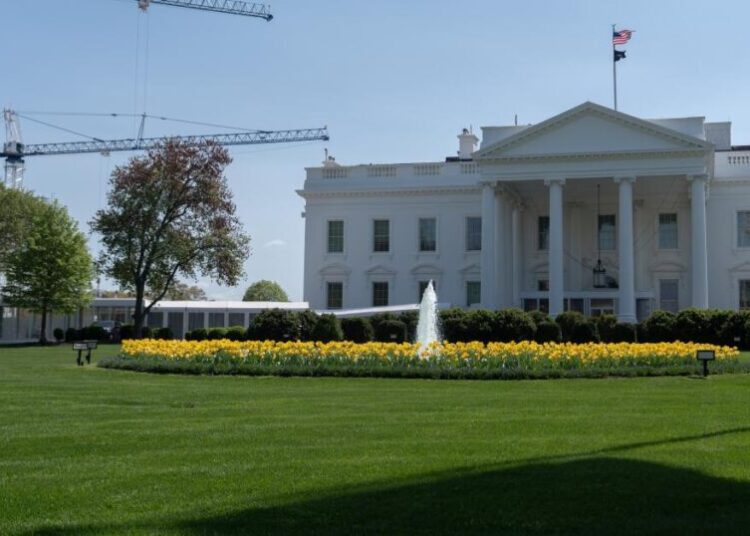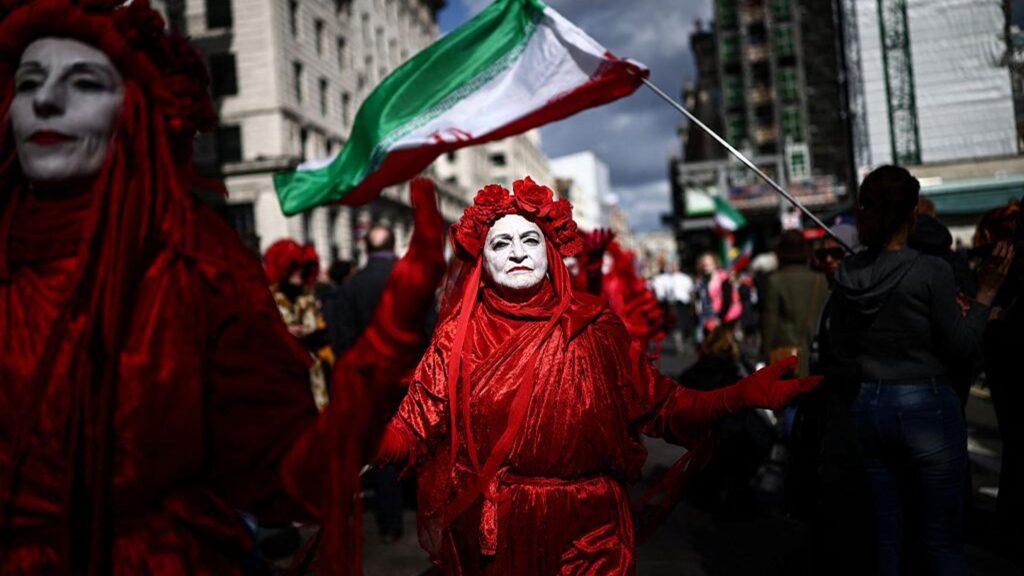
On Wednesday, President Donald Trump told reporters at the NATO summit in Ankara that the initial agreement to end the war between the United States and Iran—which had largely halted the hostilities—was “over.” Washington and Tehran have traded military strikes over the past two days.
Fears of a reignited conflict are rising, even as the true cost of war is only beginning to be tallied. Alongside the thousands of deaths, the destruction of infrastructure, and the global economic costs, the war is exacerbating existing climate vulnerabilities and exposing the people of the region to an increasingly dangerous and nearly uninhabitable reality.
A combination of conflict and climate change has most acutely affected Iran and the broader Middle East and North Africa. Water is rationed, temperatures are breaking records, and droughts have been increasingly severe. Temperatures in the region are expected to rise by twice the global average during the 21st century. Syria, Libya, and Yemen have already enduredcivil wars and protracted humanitarian crises. Climate change and conflict share a complex, multidimensional relationship, each capable of exacerbating the other.
Iran war and climate crisis
The war with Iran has reinforced this threat-multiplying dynamic, displacing millions throughout Iran and Lebanon. On Mar. 7, Iran accused the U.S. of attacking a desalination plant on Qeshm Island in the southern province of Hormozgan, near the Strait of Hormuz. Iranian Foreign Minister Abbas Araghchi claimed the attack had disrupted the water supply for 30 villages.
The very next day, Bahrain accused Iran of firing a drone that damaged a desalination plant—a facility absolutely critical to the tiny Gulf state for converting seawater into drinking water. Around the same time, the United Arab Emirates reported an attack on the Fujairah F1 power and water plant. Iran, meanwhile, claimed that two water reservoirs were damaged and thousands of people lost access to drinking water following American strikes on the southern Iranian towns of Jask and Sirik in early June.
Desalination meets more than two-thirds of total water demand in some countries in the Middle East and North Africa, a region under extreme climate change-induced water stress. And such attacks are not merely tactics of war, but the brutal intersection of the logic of war and the logic of climate vulnerability.
Scholarly research demonstrates that water scarcity induced by climate change and conflict exacerbates security vulnerabilities across the Middle East and North Africa, a dynamic that has fueled increased conflict, fragility, and violence in the past. Water resources in the region were already critically strained before the war; Gulf states, Iran, and Iraq had experienced some of the worst climate-induced droughts on record.
Beyond targeted attacks on desalination plants, strikes against civilian and industrial infrastructure since war started—including strikes on oil facilities and chemical plants—have polluted the region’s already fragile waterways. As World Health Organization Director-General Tedros Adhanom Ghebreyesus has warned, attacks on petroleum facilities in Iran at the outset of the war, including those targeting the Shahran oil depot and the Shahr-e Rey refinery in Tehran, risked “contaminating food, water, and air,” with potentially severe health consequences for children and the elderly.
The conflict is also deepening these vulnerabilities by diverting governments’ attention, capacity, and funding away from the climate resilience and adaptation investments their populations urgently need. The war has caused at least $58 billion in damageto energy infrastructure across the Gulf, and slashed tourism revenues by around $600 million a day since hostilities began. The result is regional governments left with fewer resources to adapt to the worsening climate crisis, including efforts to combat water scarcity.
All this is unfolding during the “great aid recession,” with eight of the ten largest humanitarian donors having cut funding since 2022. The result is populations ever more vulnerable to tensions over water, energy, and food access, tensions that risk stoking displacement, particularly among the more vulnerable groups: refugees, farmers, and women.
Wars and greenhouse gases
The greenhouse gas emissions generated by the war add yet another dimension to an already grave situation. The conflict’s military activity is compounding the medium and long-term climate pressures already bearing down on the region. Estimates suggest that in its first two weeks alone, the war produced five million tons of CO2 emissions, more than the combined annual emissions of 84 countries.
The sources are varied: the destruction of homes and buildings, the burning of fuel reserves, the fuel consumed in combat operations, the embodied carbon of military equipment, and the production and use of missiles and drones. And eventual post-war reconstruction efforts will further add to the emissions.
Even after the war ends, experts expect military spending to rise, driven by an increasingly volatile geopolitical landscape. Higher military spending means higher military emissions. The White House’s $1.5 trillion Pentagon budget request, submitted weeks after the war began, would generate an estimated 267 megatons of carbon pollution. All of this imposes a double burden on the climate crisis: more emissions and less investment available for the transition to renewables or the adaptation of societies to effects of climate change they already face.
A durable end to the war remains an urgent priority, but the risks do not end there. Climate change will continue to exacerbate conflict long after the guns fall silent, with profound implications for human security, national stability, and international peace.
The conflict deepens these implications on three fronts: the targeting of desalination plants and the disruption of clean water access are pushing an already water-scarce region closer to the edge; governments are redirecting resources away from necessary investments in adaptation and resilience; and the conflict’s CO2 emissions are amplifying the very climate pressures driving that scarcity.
The combined pressures of war and climate are already reshaping the movement of people across the region. Thousands of migrant workers from South Asia returned home following the outbreak of war, affecting the role of remittances in their local economies. Still, the majority of workers in the Gulf countries have chosen to stay given the absence of better economic opportunities in their homelands.
The region was already home to 24.3 million forcibly displaced people before the war began. According to the United Nations refugee agency, an additional 3.2 million people have since been internally displaced in Iran and more than one million in Lebanon. The conflict is yet another stark example of how the logic of war is increasingly colliding with the logic of climate vulnerability—a collision that persists despite the continued denial of climate reality by some of the world’s most powerful leaders.
Understanding this dynamic can help us better grasp why desalination plants in Iran and Bahrain or cultivated land in Lebanon are becoming ever more common targets of military strategy. In a region where climate change has already strained access to critical resources for millions, every day that the conflict remains unresolved is another day the people of the region must confront threats to their very survival.
The post How the Iran War Worsens the Climate Crisis appeared first on TIME.