The Trump administration kicked off what could be a contentious process to rework the trade deal that governs North American business this week, as it began holding hearings about the U.S.-Mexico-Canada Agreement that President Trump signed into law in 2020 during his first term.
Farmers, academics, trade groups and others assembled in a government building south of the National Mall on Wednesday for the first of three days of hearings to share their assessment of the deal. They are hoping to shape the administration’s priorities as it prepares to negotiate with Canada and Mexico in the months to come.
Many of those testifying said there was room for improvement with the trade deal, which replaced the North American Free Trade Agreement and must be reviewed every six years. But they also cautioned the Trump administration against taking steps that could destroy the benefits of a trade agreement that has allowed many critical goods to flow tariff-free across the continent.
“The overriding aim of the review and the revision ought to be to enhance competitiveness, not to jeopardize it,” David Gantz, a fellow at the Baker Institute for Public Policy, a think tank, said during testimony on Wednesday. He referred to a quote from the medical profession as guidance: “First, do no harm.”
The remarks hinted at a certain anxiety among many companies and trade groups about the forthcoming negotiation of a trade deal by a president who often derides free trade. The prospect of a U.S. withdrawal from the agreement has worried those in industries including automobiles, farm goods and textiles that depend on the trade agreement and have shaped their businesses around its rules.
This week, Jamieson Greer, the U.S. trade representative, told Politico that Mr. Trump could decide next year to withdraw from the U.S.M.C.A., saying that the president only wanted “deals that are a good deal.”
On Wednesday, Mr. Trump said that the deal “expires in about a year, and we’ll either let it expire or we’ll maybe work out another deal with Mexico and Canada.” He added that Mexico and Canada had “taken advantage of the United States like just about every other country.”
Ahead of the 2016 election, and even once in office, Mr. Trump repeatedly threatened to scrap NAFTA altogether.
Mr. Trump often described the 25-year-old agreement as “the worst trade deal ever made,” saying it allowed jobs and manufacturing to leave the United States for Canada and Mexico. In his first term, Mr. Trump came close on multiple occasions to withdrawing the United States from the agreement. As the negotiation neared an end, he threatened to jettison Canada and turn the agreement into a bilateral deal between the United States and Mexico.
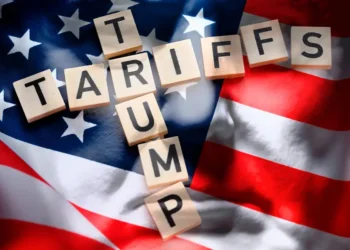
Fast forward to 2025, and Mr. Trump is again decrying any type of trade deal that allows countries tariff-free access to the U.S. market. He has brought tariffs on every American trading partner, including Canada and Mexico. Within the first weeks of his second term, he imposed tariffs on both countries for their role in facilitating the flow of fentanyl into the United States. He then ratcheted that up with additional levies, including after Canadian officials aired a television commercial critical of the tariffs.
Mr. Trump has suspended many tariffs on Mexico, in part because he enjoys a strong relationship with that nation’s president, Claudia Sheinbaum. He has been more aggressive in his treatment of Canada. Mr. Trump has cut off trade talks and said that the United States should not import Canadian cars, lumber or other goods and that the country should be the 51st state.
People familiar with the administration’s discussions say officials have considered turning the three-country agreement into two bilateral deals, reflecting their view that negotiations with Mexico have been easier than those with Canada. Mr. Greer confirmed the idea in his Politico interview, saying that the United States’ relationship with Canada is “totally different” than the one it has with Mexico.
Kim Glas, the president of the National Council of Textile Organizations, a trade group that represents U.S. manufacturers, warned that such a decision could have “unintended consequences.” Ms. Glas argued that improvements could be made to U.S.M.C.A. to allow domestic manufacturers to better compete. But she said the most important message her industry wanted to impart was that the trade deal should be preserved.
She argued that the mix of factories and resources that the three countries offer allow textile manufacturers to produce inexpensive and quality products that can compete with goods made elsewhere. “U.S.M.C.A. is a critical agreement to the U.S. textile industry to compete against China and Asia,” Ms. Glas said.
Other witnesses at the hearing Wednesday echoed similar views, while suggesting reforms to benefit their industry or the U.S. economy.
Lori Wallach, the director of the Rethink Trade program at the American Economic Liberties Project, said that U.S.M.C.A. made “important improvements” from NAFTA, but that further reforms were needed to stop a “race to the bottom” among the countries.
Ms. Wallach said that the U.S. bilateral deficit with Mexico had risen under U.S.M.C.A. and that Mexican wages were still significantly lower than those in China. Rules that encouraged a greater proportion of goods to be made by workers earning high wages could help redirect more production to fairly paid workers in the United States, she argued.
Many farm groups suggested only limited revisions to the pact. They described Mexico as an “indispensable” market for American barley and corn and an important provider of fresh fruit and vegetables for American grocery stores. But growers of avocados, bell peppers, squash and other produce from California and Florida complained about a flood of low-priced products from Mexico, saying that American farmers needed more trade protection, particularly at peak times of year.
Mr. Trump and his advisers have criticized Canadian and Mexican imports for putting U.S. factories out of business, particularly in the auto sector. They have also criticized Canada’s barriers against U.S. farm goods and expressed concern about Mexico serving as a backdoor for Chinese goods to come into the United States. Though the president himself negotiated and signed U.S.M.C.A., he said this year that he wanted to make it a “much better deal.”
So far, the companies that depend on U.S.M.C.A. have emerged as winners from Mr. Trump’s global trade regime. Though the president imposed nominally high tariffs on Canadian and Mexican exports, as he did for other countries globally, most exports from the countries come to the United States duty free because of tariff exemptions for products that trade under U.S.M.C.A.
That has encouraged many more companies to adopt the trade agreement’s rules when shipping to the United States from Canada and Mexico.
Analysts have questioned whether this reflects the Trump administration’s support of the pact — or if Trump officials simply haven’t gotten around to revisiting the deal yet. The text of the U.S.M.C.A. requires representatives from the three countries to meet to review the agreement in July 2026.
At more than 2,000 pages, the U.S.M.C.A. is a complicated document laying out rules for everything from financial services and food safety standards, and it bears the imprint of many interest groups.
The revised agreement included provisions sought by the Trump administration, including rules incentivizing automakers to manufacture a greater proportion of cars in the United States. It contained components inserted at the insistence of congressional Democrats whose votes were needed to pass U.S.M.C.A. into law, like a system to identify and prevent labor violations in Mexico.
The deal also contained provisions lifted from the Trans-Pacific Partnership, a multicountry trade deal negotiated during the Obama administration that both parties ended up criticizing. Both Canada and Mexico were a party to those talks.
Ana Swanson covers trade and international economics for The Times and is based in Washington. She has been a journalist for more than a decade.
The post As Trump Threatens to Leave North American Deal, Groups Urge Him to ‘Do No Harm’ appeared first on New York Times.