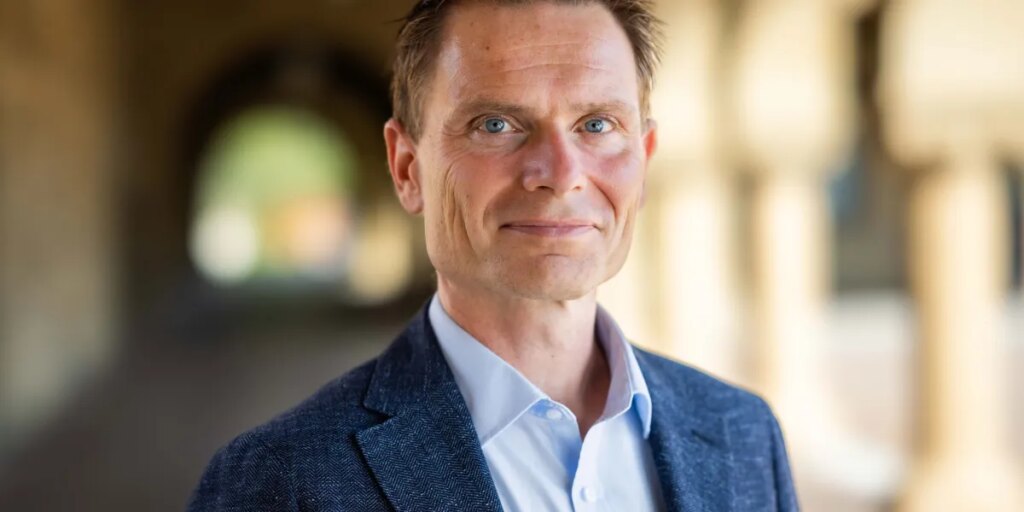
The Stanford economist and remote work researcher who helped explain the Great Resignationsays many companies are never going back to being fully in-office, and the flexibility offered by remote work is a major reason why.
Despite years of high profile return-to-office mandates from companies including Amazon and JPMorgan Chase, this summer has proven to be the perfect example of remote work’s advantages, said Stanford professor Nicholas Bloom, who has been studying remote work for two decades.
Because of the combination of World Cup matches, punishing heat waves, and higher gasoline prices due in part to the Iran war, employees are increasingly looking to avoid the office when they can.
It’s partly this kind of flexibility workers have sought out that has convinced Bloom working from home is going to rebound despite the opinions of loud critics like JPMorgan’s Jamie Dimon.
“There is absolutely no way we are now going back to 2019 on WFH,” he told Fortune. “The Pandora’s box of working from home has been opened and many firms are now permanently adopting hybrid for professionals and managers.”
Some employers, including those who have been anti-remote in the past, are starting to acquiesce to employees’ requests for more work from home opportunities as a result of this summer’s events. Late last month, the Financial Times reported JPMorgan and Goldman Sachs were temporarily allowing their employees to request remote work on match days during the 2026 FIFA World Cup. Several games during the tournament, which ends on July 19, have ended close to midnight on the East Coast, often on weeknights.
“If it’s a weather event, sports event, protest, disaster or pandemic you see WFH as a way to flex on commuting,” Bloom added.
Bloom’s comments also come as a recent study of Census Bureau data by the Federal Reserve Bank of Minneapolis revealed hybrid work in the U.S. has mostly stabilized. Even as remote work has declined from its pandemic highs, the data shows nearly 22% of workers still worked at least partly from home in 2025, only 1 percentage point less than the number who partly worked from home during the year prior.
Apart from the World Cup, scorching temperatures and high gas prices have also played a role in pushing workers to stay at home when they can. The average temperature for the continental U.S. was 70.6 degrees Fahrenheit in June, above the 20th century average, according to the National Oceanic and Atmospheric Administration. Some cities like Washington, D.C. also hit record temperatures over the Fourth of July weekend.
As July temperatures have risen steadily over the past several decades due to climate change, the heat has turned some Americans’ commute, particularly those who bike, walk, or rely on public transportation, into a sweaty affair.
For those who drive, the U.S.’s renewed strikes on Iran and a declaration by President Donald Trump that the ceasefire is “over” have brought back worries that gas prices could spike and raise the costs of their commutes as well.
AAA’s national average price for a gallon of regular gasoline was $3.84 as of Thursday, which was flat compared to last week but still about 70 cents above the $3.16 price from a year ago.
For commuters, those costs add up quickly, Bloom said. He estimates Americans driving a typical 30-mile daily commute spend an additional $5 to $10 a day when gasoline prices rise, which is yet another financial incentive to stay home.
Instead of viewing remote work as just an employee perk, Bloom argues companies could benefit from treating it as a way to maintain productivity in harsh conditions. Unexpected events from severe weather and surging fuel prices to the World Cup don’t have to equate to lost productivity and disgruntled workers, when employees can just log on from home, he argued.
Bloom also believes new technology will also soon make virtual conferencing much more effective.
He called out startups such as Noro, which builds life-size video conferencing displays that make remote meetings feel more natural than a Zoom call and ensures workers are engaged by capturing their full body.
“When you can see [somebody’s] full body you know they are paying attention as they can’t be emailing, texting or watching soccer while they are on the video-call,” Bloom wrote. “It has a huge impact on an online meeting if everyone is paying attention rather than 50% of people multitasking.”
The post Hybrid‑work expert Nicholas Bloom says World Cup chaos and pricey commutes are turning July into the summer of remote work appeared first on Fortune.