Subscribe here: Apple Podcasts | Spotify | YouTube
In this episode of The David Frum Show, The Atlantic’s David Frum discusses the recent allegations toward Democratic Senate candidate Graham Platner. David warns Democrats that if they don’t exercise caution with candidate selection, they risk losing winnable races in the 2026 midterm elections.
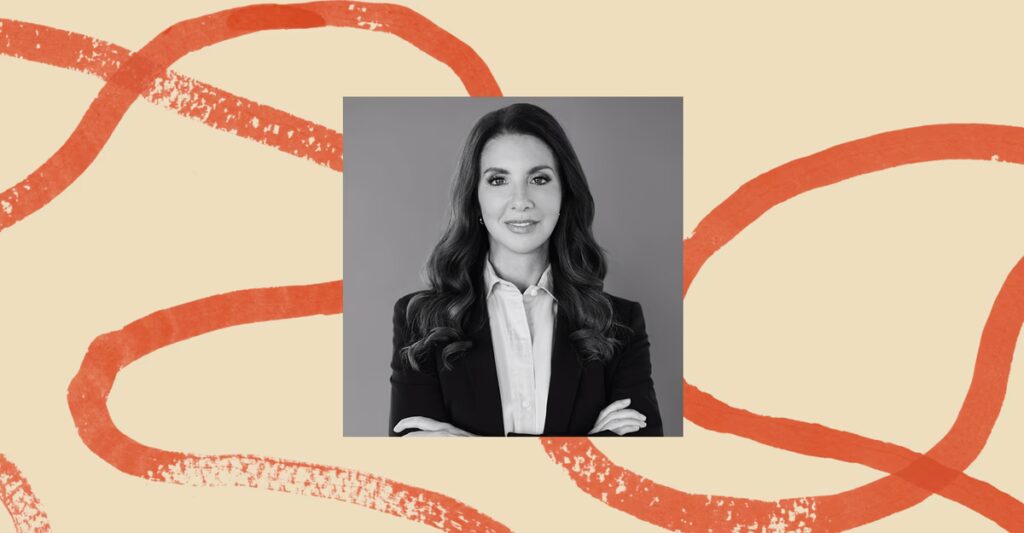
Then, David is joined by Shannon Watts, the founder of Moms Demand Action, to discuss an increasing hostility toward women manifesting itself in the progressive wing of the Democratic Party. David and Shannon discuss misogyny on the left and right wings of American politics, increasing voter rancor to the perceived “establishment,” and the possibility of a Tea Party–style movement brewing on the left.
Finally, David discusses Killing Baby Hitler by Michael Tomasky and the dangers of “alternative history” as an intellectual exercise.
The following is a transcript of the episode:
Frum: Welcome to The David Frum Show. I’m David Frum, a staff writer at The Atlantic. My guest this week will be Shannon Watts: political activist, organizer, founder of the gun-safety group Moms Demand Action. The book under discussion this week will be Killing Baby Hitler by Michael Tomasky. But before either the dialogue or the book discussion, some opening thoughts on the discussion you are about to hear.
My dialogue with Shannon Watts was recorded two weeks ago. The dialogue addressed generally some troublesome attitudes toward women in the progressive world. Shannon, a formidable progressive organizer and activist, had spoken forcefully about her concerns on social media, and on her Substack and in her podcast.
One of the matters Shannon and I touched on in our dialogue was the case of Graham Platner, the Democratic nominee for Maine’s 2026 Senate seat. At that time, The New York Times had recently reported on a number of women who suffered “unsettling behavior” by Platner, including one woman who went on the record detailing that Platner had grabbed her hard enough to leave marks and on one occasion locked her in a room.
Of this charge, Platner told MSNBC’s Chris Hayes: “Anything alleging physicality, anything alleging that I knew what my tattoo was, these are the statements of someone who is politically motivated.” People close to the story suspected and communicated that this was probably not the end of allegations against Platner. But suspicions are only that, and Shannon and I took care to restrict our discussion to the published record as it then was.
On Monday, July the 6th, Politico published a report that alleges that Platner sexually assaulted a named woman. Platner denies this allegation as well. He says that any allegation of nonconsensual behavior is, “categorically untrue.” Platner has suspended campaign events. Maine law allows another week for Maine Democrats to replace Platner on the ballot.
These new developments bring into fuller view some questions that could only linger in the shadows when Shannon and I spoke. These new developments also make more urgent the topic of my conversation with Shannon. The red flags waving so brightly today were fully visible a month ago. Platner’s promoters were excited by his transgressive personality. It is not credible that they are surprised by his transgressions.
To hold President Trump to account, Congress must change hands in November. But there is unfortunately a faction of Democratic progressives who are much more energized by their factional fights than by the defense of American democracy. In 2018, the anti-Trump coalition won House seats like George H. W. Bush’s former seat in Houston, Newt Gingrich’s former seat in suburban Atlanta, and Eric Cantor’s seat near Richmond, Virginia. As we head into 2026, however, and 2028, the presidential year, some progressive Democrats have decided that 2018 and President Biden’s success in 2020 represent failure, not success. They want a smaller, more ideological coalition defined by disillusionment with the American economic system and hostility to the state of Israel. To date, they have had some success in nomination fights in ultra-blue House districts where the winner of the Democratic primary is virtually guaranteed to win the general election.
Those fights don’t gain any additional seats for the anti-Trump coalition. On the other hand, they don’t put seats at immediate risk either, except indirectly by tainting the broader national anti-Trump coalition brand with the extreme ideology and sometimes off-putting personal records of some of these factional progressive candidates.
But the Senate is a different story. The path to beating the Trump majority in the Senate is difficult and narrow. There is no margin of safety for the anti-Trump coalition. Yet progressive Democrats, for factional motives, put the Maine Senate seat at risk by nominating Platner, and Michigan Democrats seem determined to replicate the same mistake, or worse, in a state that voted for Donald Trump in 2024.
Democrats should learn a lesson from the negative example of their Republican adversaries. Over the past decade and a half, Republicans have thrown away winnable Senate seat after winnable Senate seat by bad candidate choices. Remember the “I am not a witch” lady, who threw away Delaware’s seat for the Republicans in 2010? Remember the “women don’t get pregnant from ‘legitimate’ rape” candidate in Missouri in 2012? Remember Mark Robinson, Herschel Walker, Richard Mourdock, and Roy Moore? Remember how you, if a Democrat, shook your head at a Republican Party that got captured by crazy people? Remember how you wondered why responsible Republicans so easily surrendered their party to fanatics, grifters, racists, anti-Semites, crackpots, and sexual abusers? How you vowed that I’d never allow that to happen to my party? I have news for you. It is happening to your party. Not everywhere in your party, but in enough places to lose the Senate in 2026 and put at risk the presidency for 2028. This is your time for testing and time for choosing. What are you going to do about it before it’s too late?
And now my dialogue with Shannon Watts.
[Music]
Frum: The day after the Sandy Hook school massacre, Shannon Watts posted a message of grief and fury on her Facebook page. That single post launched Moms Demand Action and made Shannon Watts one of the country’s most powerful voices for gun safety. She led the organization for 11 years before stepping down to throw herself into Democratic Party organizing. In 2024, she convened what was billed as the largest Zoom gathering in history, mobilizing over 200,000 voters and raising more than $11 million for Kamala Harris. Her 2025 book, Fired Up, was an instant New York Times and USA Today bestseller. She has since extended the themes of that book into her Firestarter University and her in-person bonfire communities nationwide. Her 2019 debut book, Fight Like a Mother, told how a stay-at-home mother of five in a blended family remade herself into one of the most dynamic forces in American politics today. Shannon Watts, thank you so much for joining me today.
Shannon Watts: It’s an honor, David. Thank you.
Frum: So I want to talk about—this is one of your big themes now—the role of women in politics: what women add to politics when they are present, what women subtract from politics when they are not included on an equal basis. And I want to start this with a very pretty specific focus.
Now, we all know—we all should know, we all can see—that male resentment is one of the bulwarks of power that President Trump has used and mobilized. It’s a big theme, maybe even more explicit with his vice president, J. D. Vance, who has derided women in so many of the interviews that got him to Trump’s attention and made him the vice president. Sex, gender: big, big source of power and recruitment for the MAGA movement.
But one of the things—I’m a follower of you on Twitter, X—and I notice you are becoming uncomfortably aware of similar kinds of emotions in the liberal and progressive world. I’m not a native of that world. I didn’t grow up with that politics. So maybe you could explain to me what you think is going on. What are the tensions and flashpoints that you see going on in the liberal, progressive world between men and women’s power?
Watts: Well, you know—just to go back to the beginning—when I started Moms Demand Action, the reason I did that was because when you looked around at who had the levers of power at their disposal, it was not women, right? It was the gun lobby. Which, the average gun owner in this country is a white man over the age of 50. And to take on the wealthiest, most powerful special interest that’s ever existed, I felt intuitively would involve women. And that’s because women are so often expected to be moral and effective, and if you look at activism throughout the centuries in this country, you know, you’ll see that it’s often women who are at the forefront. All the way from Prohibition, when women were allowed to advocate for something that was considered sort of a Christian value, and, really—that toothpaste could never be put back in the tube, right? All the way up to the water crisis in Flint, Michigan.
And I was inspired by Mothers Against Drunk Driving: this group of angry, outraged women whose souls had been insulted by the fact that people were drinking and driving with impunity and just ruining lives. And so when I started Moms Demand Action, I just felt intuitively that it was women who were the right people to take on this mostly male gun lobby. And I think that was borne out.
When they saw us coming, they were either very excited or very scared. (Laughs.) Which is exactly, right, the emotion that you want. And I felt that tension immediately. Not just in the zeitgeist, right? I mean, I immediately started getting threats of death and sexual violence—not just me, but our volunteers—from men. And I expected gun extremists to be upset that women were advocating for what they felt was curtailing their rights, what we felt was making society safer and more free.
But there was also this interesting dynamic in our own party: of men feeling like we needed to be ideologically pure, that we need to just share our network and our capabilities with them, and a lot of criticism when it came to wanting more power. I saw that play out certainly online in the election. When Hillary Clinton was a candidate and there were all these Bernie bros who were, again, angry about sort of the need for ideological purity. And I think it also came down to women having too much power.
And I’ve just seen that intensify over the years. And here we are now in 2026, and I think in part because Donald Trump is president—and because misogyny has been so widely embraced, and because we’re having so many conversations about masculinity—we are becoming beholden to this idea that it’s dangerous when they do it; it’s necessary when we do it. And it just seems to be bleeding into our party.
Frum: Can you give some specifics of how you see this working? There seems to be something about this that is quite reminiscent of MAGA world. Language, attitudes of violence and dismissal. Comments on women’s physical appearance, if they’re not attractive enough or too attractive. It seems maybe this is a phenomenon of the online world only, but it seems to be playing a powerful force. And you see it in many, many of the primary contests of the 2026 season.
Watts: I agree with that. I mean, I thought in 2016 we would all be on the same page: that it was important to finally have a woman president, that Hillary Clinton was perhaps the most qualified person who’d ever run in our nation’s history, and that men, particularly on our side, would be supportive of that. And instead what we saw was a lot of backlash or a lot of criticism. As we all know, sexism, misogyny, means that women can never be qualified enough and never smart enough, never attractive enough. And again, I think that’s sort of expected—
Frum: Or possibly too smart and too attractive. That’s also bad.
Watts: (Laughs.) That as well, right? It’s the double bind. The tension that I’ve seen very specifically is that if women are allowed to be ambitious, strategic, flawed, but most of all pragmatic. Women are not allowed—women are the backbone of the Democratic Party, and particularly Black women. And they’re very well known to be moderate, to be pragmatic, to understand and be able to tolerate incrementalism, which is such a dirty word.
It used to be just sort of between the younger and the older generations, but now I see it between moderates and centrists and what is called the left. And this idea that we are letting perfectionism be the enemy of good. And that you have to be ideologically perfect and pure in order to be accepted and appreciated.
Now, that said, the interesting part of this is I think you could make that argument about someone like AOC [Alexandria Ocasio-Cortez]. And yet recently she has been under attack by people on the left, mostly men, who see her as having betrayed them for even being 10 percent less ideologically pure than they are.
You know, I will just say that I have been shocked to watch my party embrace what I believe is blue MAGA. And the amount of hate and vitriol I have endured online, on X, because of my opposition to Graham Platner; that has been equally shocking to me. This man is clearly immoral, unethical; he’s untrustworthy, he’s untested, he’s unvetted. And he is not qualified. I believe in redemption as much as any other person. I believe that when someone says they’re sorry, when someone has regrets, that we should support them and that they have another chance to make amends and to live a good life. That doesn’t mean they deserve a seat in one of the most powerful political bodies in the world. But I think for me this was the true wake-up call that the Democratic Party was in significant trouble. Is in significant trouble.
And to disagree with this person who has become the candidate is as though you are committing treason, or you are a traitor to the party. And I’ve been told—again, you read my introduction. I started the largest nonprofit in the nation. I raised $11 million for Kamala Harris. I’m a lifelong Democrat who’s never voted for a Republican. I’m significantly to your left. I’m basically a leftist, but do not want to be a part of that wing of the party. And yet I’m being told I might as well become a Republican.
Frum: Well, I’ve lived through this very much in the Republican world, in the days of the Tea Party. And I wrote a blog post on the day that the Affordable Care Act passed the House and was on its way therefore to the Senate and to the president’s signature. One of the points I made in this article was: We have a rule in the Republican Party of 2010, ’12 that the far right can say anything it wants about the non–far right. And there are no limits on their tactics. And they can primary them, they can do anything. But there’s no reciprocal right.
And not only that, but—this is the thing that got me into a lot of trouble—that you can’t even say to them, Your tactics were misguided. Because there was this big argument at the time. Should you negotiate over the Affordable Care Act and try to get—I mean, Obama was signaling he was prepared to give away a lot of stuff to get this signature measure through the Senate and House. Should you negotiate with that, or should you fight to the end? And the argument was made: Fight to the end. And the argument failed, and they got nothing. And the Affordable Care Act passed and remains the law of the land to this day, with many subtractions of funding by the Trump administration, but still there. Who made this rule that the criticism can go one way but never the other way?
And that seems to be very much what is going on in the Democratic Party. It’s not treason for Graham Platner to challenge Janet Mills. You know, he’s allowed to do that. And for the people who like Janet Mills better, either for pragmatic reasons or moral reasons, to say, We don’t trust you, and we don’t like you. Oh, well—now the ratchet has closed, and you owe us a duty of loyalty that we would never give to you.
Watts: I think that’s what’s so interesting about what we’re seeing, and we don’t know if it’ll work yet. I suspect that it won’t. But, as you know, the saying goes: Politics is a game of addition and not subtraction. And the left is so rabid on its insistence that we support these unqualified, untested primary candidates. And their vitriol is pushing people away.
And in particular, I believe it’s pushing women away. And even more specifically, women who are my age, right? Women who are over 50, women who are swing voters, women who will, by the way, determine the election outcome in Maine. And I don’t know how you bring a party together. I don’t know how a person wins if their whole strategy is to alienate the most important voters and then angrily expect them to vote for them in the general election.
And to your point: Democracy depends on self-restraint. And if our argument is that by copying Donald Trump’s anti-institutional behaviors, learning from his strategic strengths, that’s fine. But I think the central idea here is whether Democrats can be more forceful the way that Donald Trump is, while still preserving the norms and institutions that they say are worth protecting. But I guess I’m starting to question that.
Frum: As you and I speak, Vice President Vance has just released a new memoir. I don’t have a copy of it yet, and I haven’t read it. But according to the reports that I’ve seen, he has expressed some measure of regret, self-criticism—maybe self-criticism more than regret—for his remark that women who didn’t vote Republican were childless cat ladies. And I remember when he made this before he, I think, entered the Senate. He was doing a lot of right-wing podcasts. And one of the things—I watched him say it—one of the things that struck me is just the cruelty of the remark. That there are a lot of childless people who don’t want to be childless. And, I mean, there are many childless people who do, but there are many who don’t. And it reflects some kind of medical tragedy or personal tragedy, or the loss of a child in some way, or the loss of a pregnancy.
And it’s not something that people who seek political office would normally make a joke about—a demeaning joke about. So why would you make fun of this? But he did, because that’s maybe less his nature than what he cynically judged the nature of the audience he wanted to be. Well, I’m seeking the votes of cruel people, so I perform cruel, and then I’ll get the votes of cruel people. And indeed it has worked out for him. And now he has his eye on a higher audience, where the cruel people don’t have the decisive vote, and so he retracts the remark.
But that instinct, that kind of behavior—that’s not unique to any one political faction in the country.
Watts: No. And you know, as Sarah Longwell of The Bulwark astutely pointed out, every single focus group she does about J. D. Vance, the one thing that comes up among conservative and progressive women alike is that comment that he made. And it’s sort of indelibly, I think, in all of our minds—certainly to me, as a woman—disqualifies him from being president. I don’t think the apology is heartfelt. I think it’s pragmatic.
I’m the mom of five children, four of whom are now grown women, ages 29 to 37. None of them are married. None of them have children. They’re all very successful, bright, happy people. And they were incredibly insulted. They’re not even that politically active. And yet that resonated with them. This idea that they were less than, or unhappy, or not equal citizens because they don’t have children, because they don’t have partners, was incredibly offensive.
And I think it will be so fascinating to watch, because obviously Donald Trump won. And so these behaviors, these comments, didn’t necessarily impact him, even with Republican women who voted for him. But the more we see this play out—the more it infects our society, the more it becomes a problem in both parties—the more I wonder if there will be a backlash.
Frum: And what do you mean by that?
Watts: Finally women saying, This is enough. You’re talking about taking away our right to vote. You’re talking about valuing trad wives. You are talking about going back to sort of 1950s ideals for what and who women are. And that’s just not going to resonate in this day and age. I’m hopeful we’ll see that in each voting election. I’m particularly disappointed about how white women vote. But I think as women get more power and become more disgusted by the fact that this isn’t just political; it’s becoming part of our mainstream. It’s infecting our families and our workplaces, because it was allowed. And it started off as something that seemed like a joke, or seemed like an extreme part of the culture. Has actually become more embedded in the fabric of our society.
Frum: Yeah. Well, it may be that there are things that are bigger than politics. So you know, in the world of 1955—when there’s still lots of jobs in steel mills and assembly lines and factories, and the rewards to physical strength were great, and the rewards to education were comparatively low—even if the woman finished high school and got some college and her partner did not, he still could get a unionized job in a factory that paid more than her job as a file clerk or a teacher, maybe. And so the man offered more economic clout; the woman would offer soft skills, would offer agreeableness. The man didn’t have to be so agreeable, and the partnership worked, or it didn’t. But the partnership was formed.
And I think as we’ve seen the returns to education are rising, and women are succeeding better at getting the education. In the age of artificial intelligence, I think probably what will rise even faster are returns to soft skills, agreeableness. The computer will be able to answer all our questions, but it may not do so in a way that other human beings want the questions answered. And so the ability to work in groups and to work well with others. And again, these are classically, and I think probably more fundamentally, excellences at which women have fared better than men.
And as men lag behind, progressive men feel the shift in the sexual marketplace just as much as conservative men do.
Watts: Yeah; I agree with that assessment. And I also think that women have become—if you look at female power, right, women power—that liberal women in particular have become influential, more so than maybe on the conservative side. In media, in philanthropy, in nonprofits and academia, advocacy organizations, electoral politics. And I think ultraprogressive men are just so deeply suspicious of institutions and power structures. And so when women become visible leaders in these institutions, they become these symbolic targets.
But I think what we’ve seen on the left is that, like, this ideological purity becomes the source of social capital. When you publicly criticize prominent liberal women, it’s a way of signaling your credentials, your moral seriousness. And it’s not necessarily about the woman itself. I think it functions as a performance for an audience.
Which brings us to the other point—which is there is something in 2026 that there wasn’t in 2016. Which is an economic incentive to behave this way online. I think Hasan Piker is a perfect example of this. He has said some of the most outrageously misogynistic, bigoted, racist, dangerous things. And he’s rewarded for that. And when you get rewarded for that—for likes, for clicks, for money, whatever that is—I think it’s very damaging and corrosive.
Frum: And who builds these systems to reward this kind of behavior?
Watts: (Laughs.) It’s a great question. I mean, look; obviously it’s male leaders. Whether they’re in our country—you know, something I learned while working in gun safety is that a lot of the chaos created online is by foreign entities who know the buzzwords to get us arguing amongst ourselves. Including guns, including abortion. That those things just become sort of this way to outrage and anger people.
And then again, the people in our own country who are funding those things—everyone from Elon Musk to other prominent people both on the right and left, right? Who are investing in what’s now called the manosphere.
Frum: What goes through your mind when you hear the phrase—and we hear it a little less than we did a few years ago, but we still hear it—when you hear the phrase or word Karen? What goes through your mind?
Watts: (Laughs.) It’s interesting, because there’s no similar derogatory term necessarily for men. And I think what’s so funny is—as progressively liberal as I am, as accomplished as I am in the Democratic Party—I think most men on the left and women would consider me a Karen. In part because I haven’t made, you know, Israel my entire identity. But I believe that that is just misogyny masquerading as political righteousness.
Frum: Can I dig a little deeper on that? Because as I remember the origin of the term—and it’s probably now a decade old, maybe a little older—that the character, the paradigmatic, characteristic activity of the Karen, was asking to see the manager after she felt ill-used. And you think, Well, if you feel ill-used, why shouldn’t you? And maybe you’re wrong, and maybe you’re oversensitive. There are oversensitive people.
There are also people who have been genuinely been ill-used and have a right—and why, as you say, there is no term for a man who maybe is too picky about what he asked for and demands some kind of satisfaction? We don’t have a word for that. We can describe the behavior, but we don’t mock it. But there’s something about “the woman should have just accepted the ill use and not complained.”
Watts: Yeah. I mean, you’re sort of touching on something else, which is how the pendulum has swung back and forth. Obviously 2020, and after the murder of George Floyd and during the pandemic in a post-polarized, post–social media world, I think that what we saw online and in real life, the pendulum swung very far to one side. And now it has swung to the other side. And the hope is that it comes to the middle, but it still seems to be stuck, I think, in such backlash to what was seen as “the Karens” of 2020.
And I’m as guilty as anyone, I think, of having participated in “wokeism.” But I think to look at it with scorn or regret is to not see—that is how progress is made. That you go far to one side and then the other, and eventually you come to the middle. But I worry that the lesson that we’ve learned from the last 10 years is that in order to have power, we must debase ourselves. And for me, that includes buying into the misogynistic tropes that we’re talking about.
Frum: You mentioned Israel a moment ago. Without shifting our discussion too far in that direction, one thing I wonder that is going on in the progressive-versus-liberal world is now—this doesn’t have to be true, but it does seem to be true that since October 7th—a lot of the anti-Israel passion has expressed itself in acts of symbolic violence that often spill over into intimidation, harassment, and actual violence. And human beings find violence very exciting. The Coliseum stayed in business for 500 years, bums in seats twice a week, watching people hack each other to death. There’s something about us that is, God forgive us, that evolved to enjoy that. And there’s something about the spectacle of violence that is exciting. Your basketball team wins, you set a school bus on fire. I don’t know why that seems like the right—why you’re not all dancing, I don’t know, but setting a school—but there’s something about it. But there’s something about this story since October 7th of 2023 where you have unleashed this kind of politics. And am I overgeneralizing if I say that men tend to find symbolic violence and edging into actual violence more exciting than women do?
Watts: No; that’s exactly right. That’s exactly right. Look, I’ve watched this—without going, as you said, like this isn’t the point of the conversation—but I will just tell you that, you know, I had a close group of five pretty famous friends. And all Democrats, all incredibly progressive. And what happened on October 7th just blew our friend group apart, because half of them were radicalized to be anti-Israel, and the other bordered on being Islamophobic. And I just have watched this all unfold and being incredulous about how it has, I think, impacted our party. I’m not Jewish. I’m Gen X, and I was raised to believe that Israel was a paragon and a democracy. Shining example of democracy in the Middle East, and felt about it the same way that I felt about America. And just because Donald Trump is our leader and a horrible leader—and I believe [Benjamin] Netanyahu is not a good leader either, but that doesn’t mean the entire country shouldn’t exist.
And it’s been shocking to me to watch what—I believe this is a psyop, what we’re seeing so many on the left fall for. That it has just become their entire identity. And it’s impacting local races, where these elected officials will have no jurisdiction over what’s happening in Israel or what’s happening on a on a national or global level. And it’s just bizarre to me to watch this become a litmus test for the candidates in our party.
Frum: I had the opportunity to just listen to one of the real rising talents in the Democratic Party. This was a private group, so I won’t use his name, but a real rising star and who comes from a purple area. And somebody in the group asked him—what was the secret of success running for office, a federal office, in a purple area? And his answer was: Run for the federal office as if you were running for mayor. Know every local problem. Know every local constituency, know where every school is, know where every school crossing is, know where every hospital is, know every crop that’s grown. Know everything, and be the advocate of every important interest group in your constituency as if you were running for mayor. And I think a lot of the new progressivism say, No! No, run as if running for Secretary General of the United Nations. And you know, Cars are whizzing through the school crossing. Well, the answer is, We need more focus on Palestine.
Watts: Exactly.
Frum: Maybe a speed camera to enforce the 15-mile-an-hour limit. More Palestine.
Watts: Yes. And that’s been bizarre to me to watch. Because I don’t know how you criticize what’s happened on the right and not see that it’s happening in your own party, and that you perhaps have bought into it yourself.
Frum: For me, having again lived through the Tea Party experience, one of the things about the Tea Party years, and then into the Trump years. And there’s so many camps. Mark Robinson in North Carolina—remember him? That one of the ways of proving that: People say, Are you one of those, like—are you a real MAGA person? Are you one of those opportunistic party regulars who used to like Romney and now likes Trump? We can’t really trust you. One of the ways we know you’re for real is if you’ve done something really horrible in your personal life. Have you stolen some money, perhaps, or cheated a client, or abused a woman, or been married to two different people at the same time? Because unless you’ve done something like that, we don’t feel we can trust you.
And that’s what the whole [John] Cornyn–versus–[Ken] Paxton race has been about. You don’t share the politics of either man, but imagine you did; say, what if you believed in, you wanted lower taxes and more highways, less mass transit. What’s wrong with John Cornyn? Did the job, reputable person, shows up to work every day. No scandals ever in his career. But how can you trust him if there are no scandals in his career?
Watts: David, when you say this, and you bring up having witnessed the rise of the Tea Party, it brings up for me—you and I had, I don’t know if you remember this, but we had coffee in Washington, D.C.
Frum: I do.
Watts: And I was, you know, in the midst of Moms Demand Action. Probably right in the middle of it. And we were talking about guns. And I asked you—you know, as you watched the Republican Party embrace gun extremism—what was that like, and what were you thinking?
And I hope I’m not out of turn by saying what you said to me. But it was basically like: We accepted that as sort of “This wasn’t a big deal; this was a minor thing; we’ll just let this go because there’s so many other priorities we have that are more important.” And little by little it became this bigger monster.
And so two things, I guess I would say, is like: How do you see that now in the context of where we are? But also, don’t you think Democrats are in danger of the same thing? Just sort of ignoring things that seem less insidious that quickly get out of control.
Frum: I do remember that conversation very vividly, and you were very nice to make time for me. And I think if I remember what my answer was, my own view: If you’d stopped me in 1996 and said, What do you think of the gun issue? I’d say, Well, I think if you want a long gun of any kind, you should be able to have it. Shotgun, hunting rifle. I mean, you know, hunting is not my cup of tea, but, you know, it’s obviously deep in American culture. If you need something to protect yourself, you should go through some tests. We need to make sure that you won’t misuse it. You should have some training, probably. But otherwise, yeah—broadly in favor of some kind of gun right. But mostly it’s not one of my top-five issues.
So what I would have said then is: So, as part of coalition politics, I’ll just keep quiet that I prefer a more restrictive gun policy than most of the people in the party, and count on them not to push this too much.
And then, as the courts begin to become more and more radical on the gun issue, and to say, Having a handgun is a fundamental personal right, and it’s not something that can be regulated any more than you can regulate speech or worship. We don’t allow the government to license churches. Why would we allow them to license guns? And I got more and more disturbed. But again, in the interest of coalition politics, because there are other things I cared about more, I just didn’t say anything about it.
And then Newtown happened. And I remember exactly where I was when I heard that news. And like you, I’m a parent. And I just had the vision of those parents. And it just, I said, You know, I’m just not going to keep quiet about this anymore. And again, especially this day and age, if something gets teenage boys outside and away from their screens, and they sit in a duck line and they discover some nature—that’s, to my mind, a good thing. But the idea there are guns everywhere, and you have a right to take them with you, is horrifying to me.
But what had happened was—because people like me had kept quiet in the name of coalition politics for so long, when the break came and when the moral test came, when Newtown came. And I forgot who was the person who said, “If a society can accept this, it’ll accept any atrocity.” And we saw. We accepted Newtown, and of course then many more atrocities were to come.
But look—we’re grown-ups. Big country. You can’t have a party purpose-built just for your preferences. If there are two parties, you’re gonna have to deal with a lot of people who are different from you. Then there comes a point where you have to say, You know what; we can’t let just, like, the most antisocial people rule the party.
Watts: I think that is my whole point. Which is, I am trying—and I know there are other people who feel the same way as I do in the Democratic Party—I am trying to say: Stop this behavior. Don’t embrace this behavior before it gets to that point. As you can imagine, that doesn’t make me very popular, because I don’t want to ignore the thing that seems small now that will eventually become embedded in the party.
Frum: There are tape recordings of the private speech of Richard Nixon and Lyndon Johnson. A C-SPAN played the Johnson tapes a while ago, and it was fascinating. And these men, and I presume the many presidents who are not recorded, could be unbelievably foulmouthed, unbelievably cynical, unbelievably dismissive. And yet they felt, when they were in public, when people were watching, that that kind of behavior they did in private as tough-minded and maybe nasty politicians. You straightened the tie, you put on the suit coat, you combed your hair, you went in front of the cameras—and then you expressed what was the right thing to say, even if you were a different person on the inside. And maybe the habit of knowing you needed to say the right thing when you were in public: Maybe that changed you. Maybe that made you a better person than you otherwise would have been if you were allowed to be the person you were at your worst.
And I think one of the things that has really changed over the past decade is: If you had the Donald Trump tapes, they wouldn’t be worse. (Laughs.) Because he says it all. He makes fun of the horrible death, at the hands of a troubled child, of Rob Reiner and his wife in the most, I mean, one of the most heartbreaking. This is one story you—I think you probably knew them a little bit. I knew them a little bit. This heartbreaking story. The president of the United States: You would think if he said anything about this heinous family tragedy, say something fitting and becoming. And instead we get what we got.
And that behavior does communicate. Because a lot of people think, Well, maybe that not only is appropriate, maybe that works. Maybe that works better than pretending to observe all the decencies of life.
Watts: Yeah, I think that the bar has been so lowered that we’re seeing Democrats say: This is a winning strategy; we have to fight fire with fire. But it goes back to what we were talking about before, right? That democracy depends on self-restraint. These unwritten norms, as you said, of behavior in public. Of accepting election results, of tolerating opposition. And I think once those norms erode, rebuilding them is very difficult. And that is the road that Democrats are going down. My guess is that we will pay the price in the general election, but I’m just as scared as what happens of losing in the general elections as I am of winning.
Frum: At the end of these interviews, I do a book segment. And one of the books I talked about was a book called Ask Not, which is a very gripping and upsetting history of the Kennedy family over three generations and its treatment of women. And some stories you know; some stories you don’t know. Some stories may have been on the edge of your consciousness. But they add up. And I think the way America, or certain Americans, have for a long time made their peace with the Kennedy family is: Well, this is your private life. But is how you treat half the human species—is that really a private matter? Or does it tell me—is how you treat half the species relevant to how I judge the way you treat the whole of the species?
Watts: I would argue that that’s certainly the case. Especially when—this kind of brings us full circle—women are arguably the most important voting bloc in the Democratic Party, right? Since the 1980s, they’ve voted Democratic more than men. College-educated women have become one of the party’s strongest constituencies. Without women voters, Democrats would struggle to win any national election. And so in that way, it is very important, I think, the way that you treat women.
Also, it’s important to remember that women only hold about 25 percent of the 500,000 elected positions in this country. We’re less than 10 percent of Fortune 1000 CEOs. The largest Democratic donor networks are proportionately male. Most of the strategists, the pollsters, the media consultants, campaign managers: all men. And so, I do think when we’re talking about the levers of power women can pull. Whether it’s like me, to start an organization of women to take on a certain issue. I also think it’s being educated and rightly critical and assessing male candidates for how they will prioritize women who don’t have maybe even a quarter of the power that men do in our party. And to me, that’s just common sense.
Also to your point, I think this idea of never apologizing, never saying you’re wrong, never admitting defeat—we will regret that as a party if we take on that same ethos.
Frum: Shannon Watts, thank you so much for joining me today.
Watts: Thank you.
[Music]
Frum: Thanks so much to Shannon Watts for joining me today on The David Frum Show. As mentioned at the top of the program, my book this week is a novel, Killing Baby Hitler, by Michael Tomasky, published this year by OR Books. Michael Tomasky is the editor of The New Republic; editor also of Democracy Journal. He’s an old friend of mine. We recorded videos together here in Washington for The Daily Beast back in the 2010s.
The title of Michael’s novel tells you everything you wanna know about what this book is about. Michael is contemplating the familiar philosophical problem: Would it be morally permissible to travel back in time and kill an innocent baby if you knew, or believed, that baby would grow up to be the future Adolf Hitler? And that is the action of this novel, which is both a work of alternative history, science fiction, as well as that of philosophy. In the novel, time travelers do go back in time, do attempt to kill baby Hitler—but bungle the job, and instead abduct him and bring him forward in time and across the ocean to the United States and plant him there, unfolding a scenario in which all kinds of other disasters happen.
The main action of the novel is set in the middle of the 22nd century, a postapocalyptic world of environmental disaster ruled by economic oligarchs. Connections between human beings has dwindled away, replaced by romantic and sexual attachments between human beings and humanoid robots powered by artificial intelligence. It’s a pretty ugly world. And a reminder that: Subtract Hitler from history, and not all human problems go away.
Alternative history can be a useful tool for thinking with, if you’re very disciplined about it. But most of the people who do alternative history are not disciplined. There’s a famous essay by Winston Churchill written, I think, in the 1920s, in which he imagines Robert E. Lee winning the Battle of Gettysburg—which leads to the South winning the Civil War, which leads to Robert E. Lee bringing the South into the British Empire, which solves all of Churchill’s problems of imperial management in the 1920s. But Churchill doesn’t take very seriously the question: Well, what would it have meant for the United States to be carved up? For the South to emerge as a slave state? What would that have meant, for example, for the other slave states of the Americas? In the 1860s, Brazil and Cuba both had legalized slavery, and slavery was practiced throughout West Africa in more or less formal or informal forms as well.
If the North had lost, the institution of slavery would have persisted across much of the planet. What would that have looked like? And what would it have meant for the development of democracy? Churchill doesn’t think about these things. He’s got a fantasy about a rejuvenated British Empire, and that’s what he wants to play with. And that’s what often happens with works of alternative history. And that, I think, is what Michael is satirizing in Killing Baby Hitler. Problems don’t go away on the other timelines either.
It’s pretty easy to imagine, actually, Hitler being scrubbed from the historical record. And you don’t have to invent a time machine or posit a time machine in order to do it. Hitler fought on the Western Front from 1914 to 1918 almost continuously. He was exposed throughout to British fire. A bullet could easily have dropped him and removed him from the historical record without anyone knowing or guessing what role he might have played in the historical record. And because his role is so personal, you can well imagine that that record would’ve been very different if the bullet had found him during the First World War.
Dropping Hitler on the Western Front would not have eliminated the Great Depression from happening. It would not have solved the crisis of German democracy that followed from the Great Depression, and it probably wouldn’t have changed the basic political grammar of Germany, where the hard right was more likely than the communists to emerge the winner of a crisis of German democracy.
After that, though, your guess is as good as anybody’s. Would a hard right without Hitler governing Germany in ’33 have done anything as crazy as undertaking a Second World War against Britain, plus France, plus the Soviet Union, plus the United States? That’s madness. You have to posit a kinda psychopathic lunatic to do something as crazy as that. And while they might’ve been very anti-Semitic, again, to contemplate the Holocaust, that’s something that you have to be Hitler himself to do. So scrub him from the record, and things are very different. But how?
We can do micro-scenarios, but something as big as that is too big for the human mind to contemplate. And it might as well lead to, as Michael suggests, 30-foot alligators stalking Illinois in some kind of bizarre, twisted Blade Runner environmental scenario, as anything else.
You know, we, in our own time, have these imaginings. What if 9/11 had been headed off? It easily could have been. A slight degree more alertness by U.S. law enforcement. An interception at the airport, or had any of the other fateful chances of 9/11 happened a slightly different way. What would our world look like then? It’s infinity. You can’t think about it. It’s not really a historical problem. And so Michael comes up with this—his Doctor Who, Kurt Vonnegut, Mad Max future world—and says, it might have been this as well as anything you would have wished for. As bad as history has been, it could easily have been worse.
So focus on what you know, not what you can imagine, and work patiently in your track for the better world as you see it. Starting not from where we wish we were, but from where we are.
Thanks so much for joining me this week on The David Frum Show. As ever, if you are minded to support this program the best way to do that is by subscribing to The Atlantic. I hope you will share the program and subscribe on whatever platform you use. See you next week here on The David Frum Show. Bye-bye.
The post Is the Left Driving Women Away? appeared first on The Atlantic.