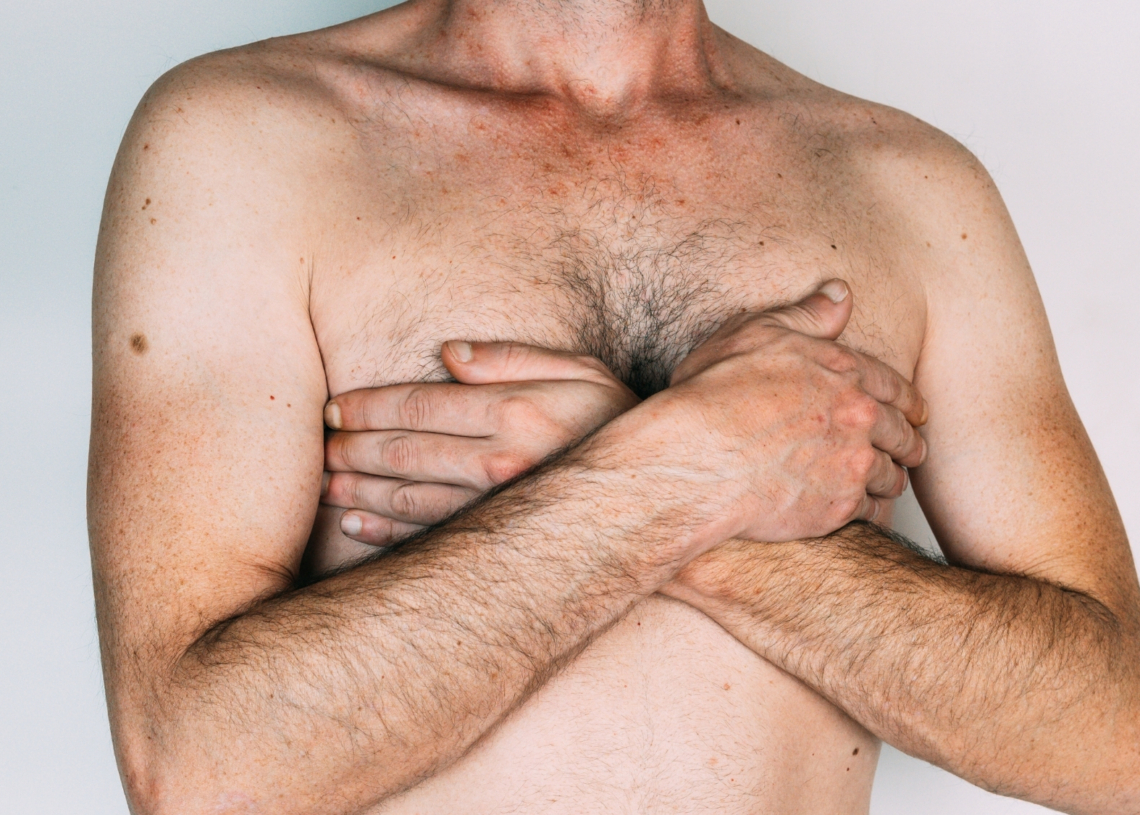
A man notices something different about his chest and does one of two things: convinces himself it’s nothing, or convinces himself it’s cancer. Either way, he probably doesn’t call a doctor.
The confusion between gynecomastia—actual breast tissue growth—and male breast cancer is a big part of what’s driving that silence, according to Anneliese Cadena, AGNP-C and Clinical Advisor at men’s health platform Feel30. Searches for “man boobs” hit approximately 307,000 last month, while searches for “male breast cancer” have surged 131% over the past year. Cadena says the two are consistently conflated, leading men to either dismiss symptoms out of embarrassment or panic unnecessarily over something harmless.
Men Often Confuse Gynecomastia and Breast Cancer. Experts Say That Can Delay Diagnosis.
Two things get lumped together under “man boobs,” and they are not the same. Gynecomastia is actual breast tissue growth—triggered by hormonal shifts, puberty, aging, certain medications, or underlying health conditions. Pseudogynaecomastia is chest fat, usually linked to weight gain. Between 32% and 65% of men will experience gynecomastia at some point. “Weight loss may improve pseudogynaecomastia,” Cadena explains, “but it won’t necessarily resolve true gynaecomastia because glandular tissue behaves differently.”
Male breast cancer, meanwhile, accounts for roughly 1% of all breast cancer diagnoses. It’s uncommon—but nearly half of men are diagnosed at advanced stages, compared to about a third of women. Research puts the average delay between symptom onset and diagnosis at 6 to 21 months. The embarrassment, in other words, has a direct clinical cost.
Cadena says the symptoms that warrant a visit are specific: a new lump, particularly firm or only on one side; nipple discharge, especially if blood-stained; nipple inversion; skin dimpling or puckering; persistent swelling; swollen lymph nodes under the arm; or ongoing pain in one area of the chest. “Most breast changes in men will turn out to be benign,” she says, “but breast cancer in men is often diagnosed late simply because people don’t expect it to happen.”
The increasing search volume, Cadena argues, is a good sign—men asking questions they previously wouldn’t. Earlier conversations lead to earlier assessments, and when necessary, earlier treatment. Historically, hoping for the best hasn’t been a great strategy.
The post The Difference Between ‘Man Boobs’ and Male Breast Cancer, According to an Expert appeared first on VICE.