In the mid-2010s, when they were still postdoctoral fellows at the Massachusetts Institute of Technology, Mathilde Poyet and Mathieu Groussin kept bumping into different sides of the same obstacle. Poyet, an ecologist and a microbiologist, was trying to study rare bacterial species, the kind that had never been grown in a lab before. Groussin, a computational biologist in the same lab, wanted to understand how humans and microbes evolved together over millenniums. Each was focused on microbes that make their homes in and on the human body, what scientists collectively refer to as the human microbiome. But the only samples they could find to work with came from the same small sliver of humanity, namely populations that were wealthy, Western and white.
“About 90 percent of all human diversity has been completely left out of the picture,” Groussin told me recently. It was as if someone had shone a bright flashlight on one small segment of a giant canvas and left the rest shrouded in darkness. The bright spot was well defined (imagine the face of a man). But they couldn’t really tell what they were looking at (whether that man was a monk, for example, or a matador) without seeing the rest of the canvas.
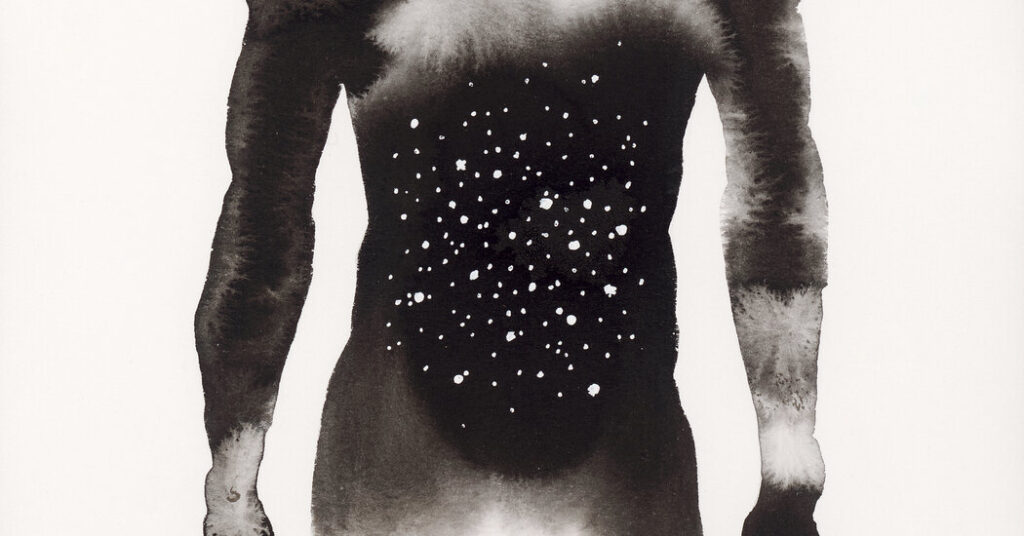
Scientists refer to this vast, unexplored terrain as biology’s dark matter. Our bodies are home to more bacteria — on our skin, up our noses, in our guts and mouths and around our genitals — than there are stars in the Milky Way. These microbes have evolved not only with us but inside us, and scientists who study them closely say that hardly a biological process or system exists in which they do not play a role. They helped create our digestive systems and our immune systems. They influence the size and shape of our bodies. At least some research suggests that they also affect our brains, moods, personalities and behaviors. And yet, most of them have still not been identified, let alone studied.
It was tantalizing to think about what a fuller picture might reveal. In recent years, scientists had linked the gut microbiome to a long list of conditions, including Crohn’s and irritable bowel syndrome, Parkinson’s, dementia and autism, and they were hopeful that a better understanding of those links would lead to treatments, if not cures. They were also sifting through the nearly unfathomable array of molecules that microbes produce, in search of biological treasures: not only potential medications but also compounds capable of breaking down pollutants or repairing damaged ecosystems.
But the unknowns still far outweighed the knowns: No one could say for certain what counted as a healthy microbiome or whether an unhealthy one could be altered intentionally. Nor was it clear whether changes to a person’s individual microbiome were a cause of illness or a consequence.
Poyet and Groussin suspected that the answers to those questions lurked not in the 10 percent of the canvas that scientists were looking at but in the remaining 90 percent. They had long, digressive conversations — in the lab and at home, over hasty meals and occasionally long walks — about how to uncover that bigger picture. So far they had been gathering data and samples piecemeal, from colleagues and collaborators. What they needed instead was a comprehensive approach: to collect as many microbiome samples from as many different communities in as many parts of the world as possible, and then to interview the people who contributed those samples about anything that might be affecting their internal microbial ecosystems, including their diets and lifestyles.
It was a crazy idea. They were bench scientists with almost no field experience between them. They were also lowly postdocs, which meant that the next chapter of their careers was already tightly scripted. They were supposed to start their own labs soon and would have to publish as many scientific papers as possible to secure the grant money that would keep those labs afloat. A project like this — a worldwide microbial sampling initiative — would mean delaying all of that, possibly for years. And if it failed, their academic careers might be over before they had even begun.
But once the notion occurred to them, they found it impossible to let go. They mapped out a crude plan, secured some funding and, before long, were flinging themselves far from the comfort of their lab benches at MIT. They went to Nepal and Iraq, Thailand and Malaysia, Rwanda and Tanzania. They trekked on foot for days to reach some communities and visited others that were only accessible by boat or helicopter. Between those expeditions they married, started a family and joined the faculty at Kiel University in Germany. By 2024, their laboratory was home to one of the largest and most diverse repositories of live bacteria in the world. They called it the Global Microbiome Conservancy.
“It’s similar to what you get with a seed bank, which is, in theory at least, the ability to reconstitute the organism, even after it goes extinct,” says William Hanage, an epidemiologist at the Harvard T.H. Chan School of Public Health. “But it’s even more thrilling in a way, because when you preserve a whole microbiome, the way they do, you’re basically rescuing an entire microscopic ecosystem.” Microbial rescue might sound odd. “Save the E. coli” doesn’t have quite the same ring to it as “save the whales.” But microbes face as much peril as any charismatic mammal. And microbiomes might hold as much untapped potential as any rainforest or Arctic wilderness.
Scientists are not the only ones excited by that potential. In the decade since Poyet and Groussin began their global quest, the idea that we might cure almost anything that ails us by tweaking our microbiomes has helped spawn a multibillion-dollar market (diagnostic tests, probiotic supplements, peptides) and an entire social media subgenre (#guttok). “A century or two ago,” Hanage told me, “whenever something happened in the body that we couldn’t explain, we attributed it to God. Now we blame the microbiome.”
But as scientists are discovering, the microbiome is no fixed entity. In fact, it varies so wildly among different people and places that not even basic concepts like “healthy” or “sick” are universal. “We built a statistical model that can accurately predict whether a person in the United States, Canada or Western Europe is healthy or sick based on the composition of their gut microbiome,” Groussin told me. “But when we apply that same model to people living in any other part of the world, it fails completely.” That variation is not a mere curiosity, he and Poyet say. It is the key to understanding how we influence our microbiomes, how they influence us and what that relationship means for human health.
When I first met Groussin in late October 2024, he had just flown more than 20 hours from Kiel, Germany, to Asunción, Paraguay, for what would be the conservancy’s second South American expedition. Poyet, who was six months pregnant with their second child, had stayed behind. “Please,” he implored me. “Mathilde is the true hero of this story. She led most of the work for this trip, including all the preparations. The only reason I am here instead of her is that she’s at home, gestating our baby.”
Groussin and his team were planning to travel another 10 or so hours to the Cerro Itá Guazú Indigenous reservation near the Brazil-Paraguay border, where they would collect blood, saliva, feces and vaginal secretions from as many people as were willing. But just about all the equipment they would need for that work — the chemicals and containers, the highly specialized storage tank, the 1,000 or so test tubes that they had already labeled — was stuck in customs, owing to a paperwork glitch. It was unclear when or whether that glitch might be resolved, but with a year of planning and no small investment of time and money at stake, their Paraguayan collaborators were anxious. “We are possibly very screwed,” Walter J. Sandoval Espínola, a microbiologist at the National University of Asunción, said as the two scientists and a half-dozen of their juniors gathered in front of the whiteboard that dominated an entire wall of Sandoval Espínola’s laboratory.
Groussin seemed unfazed. “We’ll figure something out,” he said, shrugging. “We’ve definitely been through worse.” A few hours later, they had bought, borrowed or jury-rigged most of what they would need, including a portable liquid nitrogen tank, several hundred test tubes that they would now have to relabel and dozens of lidded plastic bowls into which their study participants could defecate. The bowls were store-bought and see-through and would therefore have to be lined with paper or foil.
“People tend to be bashful about their poop,” Groussin explained. “If the containers are transparent, they’ll be less likely to return with samples.” He had other, similar concerns, which he enumerated for the group, as the hour grew late and the sky turned purple through the window behind him. They would have to make sure that a woman’s consent was permission enough to take vaginal swabs (in some places the men had been known to protest). They would also have to get tribal leaders’ permission to dispose of the leftover feces. “It would be unsanitary to leave it behind,” he said. “But taking it can also be tricky, because in some villages we’ve been to, the elders have worried about us doing witchcraft.”
Mauricio Molinas-Vera, a Ph.D. candidate in Sandoval Espínola’s lab who would serve as the team’s translator, had a different set of worries, chief of which was how to say “microbiome” in the tribe’s native language. “How do you describe it to young children?” he asked Groussin. “I just need the most basic explanation so I can communicate that in Guaraní.”
The question of what a microbiome is and how best to describe it has been complicated in recent years by what scientists are finding in the field and in their labs. Among other things, the conservancy has found that microbes talk to one another in ways that directly affect their ability to survive. Scientists have long known that bacteria are promiscuous with their DNA, passing it not only to offspring but also among random neighbors, like humans trading gossip. (The scientific term for this is horizontal gene transfer.) But as Poyet and Groussin reported in a 2021 paper in the scientific journal Cell, these exchanges are more frequent than previously thought. Gut bacteria can acquire as many as 100 new genes per year on average.
They also appear to serve specific purposes. In communities that consume a lot of fiber, they swap more genes involved in fiber breakdown. In places where antibiotic use is particularly high — where farmers treat livestock with antibiotics, for example — they exchange more antibiotic-resistance genes. And in cities, where humans live closer to one another, they trade more genes that help them spread between people. (The impact of these exchanges on their human hosts depends entirely on the microbes in question. Contagiousness and antibiotic resistance are bad when they help the wrong bacteria thrive. But when these same traits are conferred on any of the countless microbes that promote and protect human health, they are a net gain.)
This microbial dialogue also varies based on the human environment in which it unfolds. In nonindustrialized communities — those that don’t have indoor plumbing, many antibiotics or much processed food — human microbiomes tend to be robust and diverse, and their chatter relatively calm. In industrialized communities, they appear more frantic. Microbes not only exchange more genes more rapidly; they also elicit stronger responses from their human hosts, including more stress signals and more inflammation.
If you imagine the human gut as a neighborhood populated by a mix of microbial and human cells, then neighborhoods touched by industrialization appear to be marked by greater discord. The neighbors fight more (and more loudly); the police respond with greater, sometimes hair-trigger force; and the microbiomes themselves appear to be in decline. Fewer bacteria — and perhaps more important, fewer types of bacteria — reside there with each new generation. This thinning-out is so great that in Western societies even the microbiomes of healthy people can resemble those of people who are chronically ill.
It’s easy enough to guess at the causes of this waning. “Microbes don’t like antibiotics, for obvious reasons,” Groussin told me on the drive to Cerro Itá Guazú. “They don’t like C-sections, which rob them of the opportunity to colonize new human territory. And they hate ultraprocessed diets. All three of those are more prevalent in an industrialized world.” It’s also easy to speculate about the effects. Less diverse ecosystems tend to be less stable and more susceptible to all manner of invasion. But as scientists are now coming to realize, almost everything about the gut microbiome is context dependent.
“Bacteria that appear beneficial in one setting may be neutral or even associated with disease in another,” Groussin said. “We also see whole microbiomes that look sickly but turn out to be well suited to their specific environments.” He and Sandoval Espínola rattled off several such examples. An abundance of Treponema species in the gut is normal in some lower-income populations and a sign of sickness in many higher-income ones. The converse is true of Bifidobacterium, which has been linked to better digestion and less inflammation in Western gut microbiomes but is associated with a higher body mass index in Paraguay. And while the gut microbiomes of healthy people in developed or Western nations may look sickly, they also tend to harbor higher proportions of Akkermansia muciniphila and Faecalibacterium prausnitzii, which have anti-inflammatory powers.
Scientists can’t say for sure why that is, but Groussin and his colleagues say that the microbiome may be adapting in real time to its environment. “It would help explain a lot of these findings that seem so contradictory,” he told me. “But obviously we have to collect and study many more microbiomes from many more communities before we can really say that.”
The Cerro Itá Guazú Indigenous reservation sits across a rickety bridge at the end of a long mud road, beneath a distinct rock formation that the tribe recognizes as a sort of deity. The surrounding forest is a hotbed of guerrilla activity, and the nonprofit helping Groussin and Sandoval Espínola with community outreach had some concerns. We would have to leave the reservation before nightfall to avoid putting anyone at risk, they insisted. It was less than ideal for Groussin, who prefers to spend as much time as possible in the communities he visits. But this tribe was small, just 200 or so people. And the scientists’ ambitions were modest, in any case — they needed just 30 or so viable fecal samples in all.
When we arrived, nearly 50 people — mothers and grandmothers in floral skirts, farmers in dusty caps, squirming children in Disney tees and plastic sandals — were already waiting outside the community center. It was hot, and they seemed wary. The conservancy was not the first group of scientists to come seeking samples, some of them told me later. Most of those researchers had wanted blood or urine. Some had also taken plants and soil. But few had bothered to explain what they were doing, and not one ever returned to share any of their findings.
They took Groussin’s promise to do so with a grain of salt. A familiar joke passed among them as they waited. A man was so excited to hear back from a doctor who had visited the tribe and seen him for back pain that he forgot to be upset by the news that his kidneys were failing and that the doctor had only pain pills to give him. But with the nearest health clinic 30 kilometers away, with most births still taking place at home and with most of the community’s medical care still presided over by a lone curandera, or traditional healer, they would give this newest visitor the benefit of the doubt.
As the work began, three young women walked up to one of the scientists’ tables and announced, giggling but without a hint of unease, that they’d come to have their vaginas swabbed. It seemed like a good sign. Once, Groussin said, chuckling, he traveled halfway around the world and returned with just 12 samples because his study participants, though eager, were too nervous to defecate. This tribe appeared to have no such qualms.
Keeping human-dwelling bacteria alive once they exit their niches in the human body is tricky work. Scientists must make sure that fecal samples are delivered, classified, processed and preserved as quickly as possible after the fecal matter enters the oxygen-rich atmosphere, in part because oxygen kills the microbes that reside in our gut. Many microbiome researchers avoid these headaches by letting the microbes die and preserving only their DNA. But the live bacteria that Groussin and Poyet collect enable them to ask questions that DNA alone cannot answer. What compounds does a given microbe feed on? What molecules does it produce? How does it interact with its neighbors under various conditions?
The questionnaire that every conservancy participant must complete comprises more than 100 questions: what medications a person takes (antibiotic or antiparasitic drugs are disqualifying because of how they affect the gut); what foods they consume most often; and a long list of follow-up questions to which those answers give rise. Powdered milk counts as a dairy product, but “ice cream,” if it is made of just sugar and ice, does not. Drunk cold, the yerba tea that is a staple among the poor and Indigenous of Paraguay, is likely to be loaded with bacteria from the unfiltered water that most communities rely on. Taken hot, it probably isn’t. “Nutrition is the hardest biological data to record,” Groussin says. “How do you measure frequency, seasonality, chemical composition? It’s a whole other field of research that we don’t have capacity for.”
The residents of Cerro Itá Guazú are known to live off the crops they grow and livestock they raise, along with honey from the bees they keep. But as we waited for participants to return with their fecal samples, Groussin pointed to some trash scattered in the yards around us that complicated that picture. “There are clues everywhere about what’s happening in the microbiome,” he says. “People say they don’t drink, but then you find empty beer or liquor bottles. Or you think they are eating mostly what they raise or grow themselves, and then you see yogurt containers, soda bottles, potato chip bags in their garbage.” Ice-cream wrappers indicate refrigeration and thus, electricity. A motorbike suggests ready access to grocery stores (and therefore to processed foods). Showers and sinks (in some buildings, at least) signified that Cerro Itá Guazú was already transitioning from a rural community to an industrialized one.
If Groussin and Poyet’s research is any indication, the tribe’s microbiomes may already be thinning out. And if global demographic projections are to be trusted, the residents of Cerro Itá Guazú are hardly alone. Some 70 percent of the world population will be urban-dwelling by 2050, according to the United Nations.
The fear that rural and Indigenous microbiomes are being trampled by modernity has created a rush among some microbiologists to collect and preserve them. But Groussin and others say that such thinking is simplistic. Human development has never progressed neatly along a continuum from primitive to modern. Hunters farmed, and farmers hunted. Even now, urbanization proceeds in fits and starts. “There is no such thing as a pure or primitive state, when you really look,” Groussin said. “The Hadza in Tanzania are still known as a traditional hunter-gatherer tribe, but they use electronic lights to stun their prey before killing it with crude arrows. What does that make them? Should we not sample there because they take antibiotics for pneumonia?”
It would also be premature, and maybe ethically dubious, to assume that microbial extinction is a foregone conclusion. “That’s the same rationale used by anthropologists in the 19th century,” Groussin says. “They said, ‘These tribes will go extinct, so we have to take their art and artifacts and preserve them in our museums.’ It was very ‘Indiana Jones,’ and it’s something we want to be extremely careful not to replicate.’”
Before we left Cerro Itá Guazú, I visited the curandera, a stooped but animated older woman, who lived in a wooden hut just past the reservation’s one-room schoolhouse. She described the forest as a pharmacopeia, which she and others have relied on for generations to treat all manner of sickness. But lately, she said, that knowledge felt imperiled. Daughters were not as interested in learning from mothers. And even in remote Cerro Itá Guazú, her plant-based remedies now sat in tension with modern medicine and seemingly modern problems. Addictive drugs had made their way into the community and violent crime along with them, and these were not forces she could remedy.
The concept of microbial decline did not surprise or puzzle her. Of course something was dying inside us, she said. People were turning away from the sacred, and from one another. It did not take microscopes to see that.
Back in their lab at Kiel University, a decade into the conservancy’s global quest, Poyet and her team were making headway. They had found at least one microbe that gobbles up cholesterol before it can accumulate in the blood and churns it into coprostanol, which can be excreted in feces. In the Hadza tribe of Tanzania, among whom such microbes are present, heart disease is rare. But unpacking that correlation will take more work. “First we want to know what other bacteria do this and under what circumstances,” Ana Paula Schaan, a postdoctoral fellow in Poyet’s group, told me. “Then, we want to find out which people carry these bacteria and what determines their presence in the gut. Then, once we know how it all works, maybe, one day, we can leverage it for therapy.”
In the meantime, other scientists have been drawing from the conservancy’s biobank to pose questions of their own. Ran Blekhman, a computational biologist at the University of Chicago, is comparing the effect different microbiomes have on human gut cells. Urban microbiomes interact differently with those cells than rural ones, he says. He is still trying to figure out why and how. Jason Zhang, a microbiologist from Boston Children’s Hospital, has found that children with a high risk of obesity are missing a gut bacterium that scientists think plays a role in the production of GLP-1, a naturally occurring gut hormone and neuropeptide. And Rachel Carmody, a professor and scientist in Harvard’s Department of Human Evolutionary Biology, has used conservancy samples to study the impact that different microbiomes have on metabolism.
So far though, microbiome-based therapies are still a mixed bag. It’s clear that in some cases at least microbiomes can indeed be successfully altered: Fecal transplants are now a routine treatment for recurrent Clostridium difficile infection, which can be deadly, and most doctors agree that probiotic pills can help prevent the gut infections sometimes triggered by antibiotic use. But multiple studies show that vaginal seeding — the practice of slathering newborns delivered via C-section in microbes from their mothers’ birth canals — does not meaningfully alter the baby’s microbiome, nor protect her against autoimmune disorders. And nearly 20 years after scientists first mapped the connection between a person’s weight and their gut microbes, most concede that the link between bacteria and body weight is too complicated for any slimming panacea.
Likewise, Blekhman, Carmody and others say that in the United States especially, the ever-mushrooming wellness industry is both oversimplifying and overselling the microbiome itself. “You see all these companies and social media influencers pushing all these microbiome tests and supplements and specialized diets,” Blekhman says. But a lot of those products haven’t been proved to work, and some of the diets are outright dangerous (people have gotten very sick and some have even died from consuming raw milk or improperly fermented vegetables, for example). The only thing that scientists can say with confidence, Blekhman said jokingly, “is that fiber is probably good for you.”
In their ongoing efforts to understand more, Groussin and Poyet have expanded their sampling efforts to include not only healthy participants but also those who have things like inflammatory bowel disease or colorectal cancer. Their hope is that by comparing sick microbiomes — with one another and with healthy ones — they can tease out the most crucial differences between health and various disease states: Does the progression into illness vary by geography, or is it universal for a given ailment? Do certain bacteria or certain combinations of bacteria protect against, or perhaps trigger, certain health conditions? And if so, under what circumstances? “Considering how much healthy microbiomes can vary across geographies,” Poyet told me, “characterizing unhealthy ones seems like a necessity.”
She is also using a bioreactor, a kind of artificial gut, to better study the impact that antibiotics, dietary changes and other external forces have on the microbiomes she and Groussin have collected. The key to such work is, as ever, collecting as many microbiomes from as many different places as possible. “We are still encountering novel microbes everywhere we go,” she said. “Based on the data we have right now, we are nowhere near the saturation point.”
In late 2024, as Groussin made his way across Paraguay, Poyet was in fact planning the group’s next expedition, to eastern Borneo. She and Groussin were hoping to collect microbiome samples from a tribe of seafaring nomads known as the Bajau, who have lived for many centuries on small houseboats in the remote waters of the Malay Archipelago. The Bajau are famous for their enormous spleens, which enable them to hold their breath as long as 13 minutes and to freedive and spear fish at depths greater than 200 feet. Scientists have long put these distinctions down to genetics. But given all that they have learned about its seemingly infinite variability, Poyet, Groussin and other microbe hunters thought the microbiome might also play a role. They would make this trip in 2025, and collect samples from the tribe, and so begin the long process of trying to see if their hunch was correct.
As bewildering as microbiomes are turning out to be, a consistent pattern has emerged from the conservancy’s many expeditions. Based on what they and others have seen, Poyet and Groussin know that as they move from rural or nonindustrialized communities to urban or industrialized ones, the microbiomes they are collecting will change. They also have some inklings as to why. Cleaner water means fewer pathogens and fewer gastrointestinal illnesses, and more processed food leads to more chronic conditions like obesity and diabetes. While calorie counts tend to increase along this continuum, fiber intake usually declines, and as it does, microbiomes tend to depopulate and become more vulnerable.
I tried to picture this microbial decline as we left the Cerro Itá Guazú reservation and headed toward the villages near Asunción. I imagined trillions of gut bacteria signaling furiously to one another as their communities were starved of fiber, or various microbial species fighting for primacy in a sudden storm of added sugar. I thought about how that turmoil might give rise to rampant inflammation, or worse. I knew that other forces were also almost certainly at work. Groussin had been careful to explain how microbiomes were adjusting in real time to the environmental and cultural realities he and his colleagues were racing to capture. But it was hard not to think of the internal strife he had described as a metaphor for something larger. If our gut microbiomes were in decline, our human communities seemed not to be doing much better.
Poverty was no less prevalent in the villages we visited than it had been on the reservation. Hunger did not appear to be a problem — many households had a cow or two and a few chickens, and at least one community had pooled its resources to buy rice and other staples in bulk — but good nutrition was a challenge. The national government had recently suspended a program that provided breakfast and lunch, and nutritious snacks in between, to all school-age children, and some communities worried about malnutrition as a result. Health care and municipal services were, for the most part, as flimsy as nutrition. One hospital we visited teemed with nurses, but residents said it was usually short on even the most basic medicines. Water was available from the tap for just a few hours a day, and usually at very low pressure. Hygiene was poor as a result, and parasites and gastrointestinal issues distressingly common.
Sandoval Espínola was hoping that basic microbiome data would be enough to nudge policymakers to address some of these public-health issues at scale. Among other things, he and his colleagues had already found Collinsella bacteria, associated with chronic diseases in the United States and Western Europe, to be surprisingly abundant in the gut microbiomes of Asunción. “It will take more work to see if that correlation is the same here,” he said. “But if we can tell government officials that certain marginalized communities have high bacterial markers for cardiovascular disease or diabetes, we might finally persuade them that those communities need more nutritious food, not just high-calorie diets.” Diabetes and heart disease are expensive conditions to manage. Faced with an epidemic of either, even the most obstinate leaders would choose prevention over continued neglect — or so he hoped.
In the meantime, he and his clinical partners had developed a service where, for $250, patients in Asunción could have their gut microbiomes sequenced and receive a color-coded score (red is bad, yellow is average, green is good) and a report on how to improve it. “There is no such thing as a normal gut microbiome,” he told me, acknowledging what had become a common refrain on the trip. “But if you know that certain patterns tend to correlate with poor diets or diabetes or cardiovascular disease, you might be able to intervene earlier.”
As proof that the program was working, he shared the story of one woman who opted to have her microbiome sequenced after several doctors failed to pinpoint the cause of her intractable diarrhea. “She turned out to have an excess of Fusobacterium, which has been linked to mouth infections, at least in some populations,” he said. “One trip to the dentist, and her condition improved almost immediately.” The service was still a luxury of sorts. Samples had to be processed and analyzed in the United States, and most of Asunción’s residents could not afford the expense. But interest was exploding, and one of Sandoval Espínola’s many goals was to reduce the cost so that more Paraguayans could try it.
For his part, Groussin knew that most of what we were seeing in the communities — bad food policies, poor municipal services — would eventually turn up in the guts of his study participants, and he longed for more fine-grained survey data to help make sense of it all. “It would be good to have, like, a 20-year history of all the changes in your community,” he said. “When did you get indoor plumbing? How did missionaries, cellphones, motorbikes change the way you live?”
He and Poyet had begun to talk about how they might capture that kind of information. They discussed going back to the places they had already been and collecting new samples from the same communities so that they could see how their microbiomes were changing over time. What they really needed, it seemed, was not just a conservancy but a full-fledged global microbiome observatory that monitored these internal ecosystems over time.
They had little doubt that the microbiome would ultimately change the way we understood our bodies and approached our health. Groussin suspected that as public understanding caught up with scientific knowledge, the microbiome itself would become less like a crude god that people blamed or bowed to and more like a deeply attuned, highly individualized internal barometer that we did our best to monitor and maintain. But that shift would be gradual, and it would not change Groussin and Poyet’s true goal. They did not just want to collect microbes or hunt for potential miracle drugs. They wanted to understand the human-microbe interface in all its strangeness and beauty.
Jeneen Interlandi, a staff writer for the magazine and the Opinion section of The Times, writes about public health.
Alessandro Cinque is an Italian photojournalist based in Peru whose work focuses on environmental and social issues across Latin America. He recently published his first monograph, “El Precio de la Tierra,” which documents mining’s effects on Indigenous peoples across the Andes over nearly a decade.
The post The Unknown Universe Inside Your Gut appeared first on New York Times.