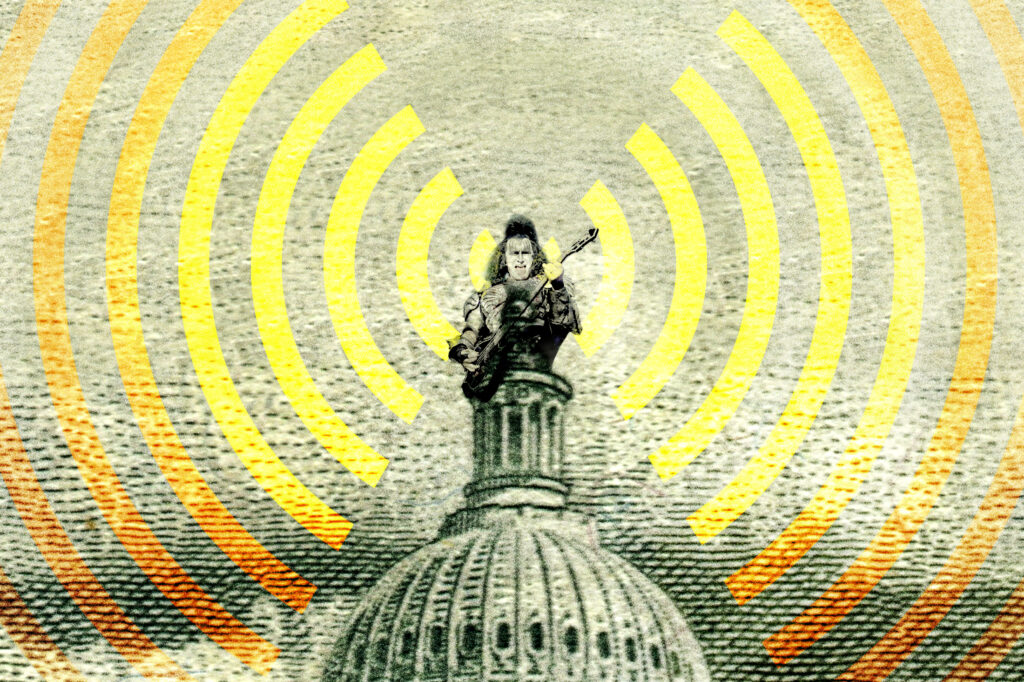
Gene Simmons is the bassist and co-lead singer of Kiss.
I’ve been a member of the hard rock band Kiss for more than 50 years. In that time, we have entertained millions of fans around the world and sold more than 100 million records.
But I still remember our first gig — in front of fewer than 10 people at club in Queens. It paid just $50. We loved the experience, though, and that encouraged us to take creative chances. With our platform boots, black-and-white face paint, elaborate outfits and pyrotechnics, we eventually broke through.
Yet, for all the success Kiss has enjoyed, I worry about the challenges facing the next generation of recording artists. My own children, Sophie and Nick, are successful musicians in their own right, but the obstacles they face are much different from the ones we had to overcome.
Chief among them is the broken radio business model. When Kiss started, radio stations offered publicity for up-and-coming artists. Consumers would hear a song on the radio. If they didn’t like it, they could change the station. If they did like it, they might go buy an album.
Local radio stations offered music for free and made their money by running advertisements. It was a fair trade for local stations and artists looking to make it.
That’s not how it works anymore. Listeners are more likely today to discover new music on Spotify, Apple Music, YouTube or TikTok. At the same time, more and more local stations have been bought up by big corporations like iHeart or Audacy. They still play music without paying artists — often hits that listeners already know — in order to generate ad revenue. But almost no one listens to the radio today and then buys an album because they hear a song they like.
In 2024, those radio corporations made almost $14 billion in advertising revenue. Artists got nothing — not a penny — from the radio giants that used their music.
It’s past time for Congress to fix this. After all, the public airwaves belong to the American people, not to the corporations who use them to make money. Every other music delivery platform — streaming, social media, cable TV — pays artists for the use of their work.
Why do radio corporations still get a pass?
On Tuesday, following the Kennedy Center Honors, I will testify before the Senate about a bill that would force terrestrial radio corporations to compensate artists fairly.
The American Music Fairness Act will close the radio loophole and finally compel these companies to pay performers for the music they use. The legislation will protect small, independent broadcasters — those not owned by huge corporations — while generating hundreds of millions of dollars in new economic activity.
That could make a real difference in the lives of artists who are still trying to make it in the music industry, as well as thousands of backup singers, musicians, sound engineers and others whose names you may not know, but whose efforts are essential for bringing an album to life. They deserve to get paid fairly for the work they do. Under this bill, they will — because it would require broadcasters to pay performers for terrestrial radio play like they already do on the digital side.
Republicans and Democrats might not agree on much these days, but they should agree on this: Every American who works hard deserves to have that hard work rewarded with fair pay.
I’m confident that if Congress sends the president this bill, he will sign it into law. After all, this is the same president who signed the Music Modernization Act in 2018 to update copyright protections for the digital era. The same president I’ve known for decades — long before he got into politics — as someone who appreciates not only art, but the artists who make it possible.
The post Congress, please close radio’s music loophole appeared first on Washington Post.