
Deliberating over the Atlantic 10 list is, in some ways, a test of memory. Does a novel we read in January still thrill us? Does the reportage that impressed us midyear still feel surprising when we turn back to it in the fall? We’re asking ourselves, in short, which books have kept our attention, sometimes months after we’ve first encountered them. This exercise helps ensure that the books we select aren’t just gorgeously written, inventive, or clarifying, but that they will also linger in the reader’s mind long after they’ve turned the last page.
The subject of memory also energizes most of the books we chose this year. Several works look back vividly and honestly on the convulsions of the past. A biography of a major figure unearths neglected aspects of his life and identity; another work of nonfiction immerses readers in an American class at risk of being forgotten. And a few novels nod to the future, imagining how life will change—or already has—as technology advances and calamities accrue. Regardless of the era they illuminate, all of these books draw in fine detail their characters’ thoughts and behaviors, their unique accomplishments and their all-too-human errors. Each work distinguishes itself as worth reading and remembering for years to come.
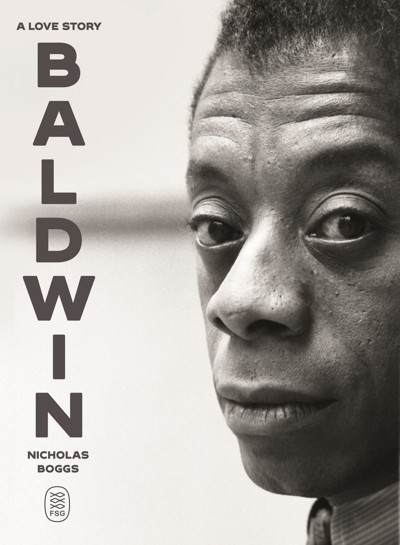
Baldwin: A Love Story, by Nicholas Boggs
Although his oeuvre was preoccupied with love in all its shades, the image of James Baldwin that endures in American memory is profoundly isolated and aromantic. The public embrace of Baldwin as the scribe of the civil-rights movement has involved a kind of willful amnesia regarding his queerness, and, in turn, an erasure of the muses—romantic and platonic—who inspired him. But Boggs’s new book focuses squarely on the men and women whom Baldwin loved and who loved him back: a group of friends, family members, mentors, flings, and unrequited flames who helped make the man. The result is the rare biography that manages, decades after a subject’s death, to break meaningful ground. Boggs’s reporting and research bring to life Baldwin as a person of profound compassion, who nevertheless struggled to find his place in a world where he bore the stigmata of both his race and his sexuality. The protagonist of A Love Story is a lover boy, a libertine, a gossip, a flirt. Boggs’s chronicle reveals how Baldwin’s search for the trinity of eros, phileo, and agape animated his most important works.
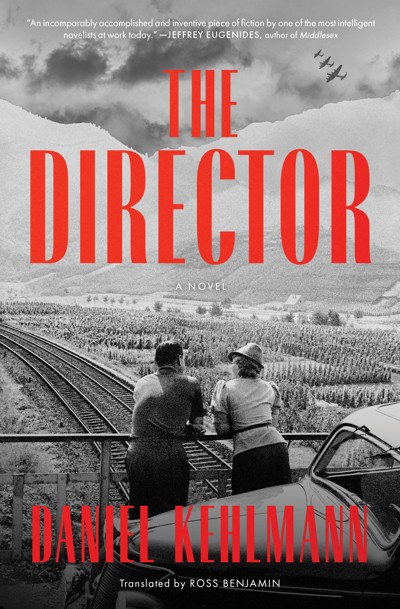
The Director, by Daniel Kehlmann, translated by Ross Benjamin
In storytelling, the roads to pure evil or to victimhood are frequently clear-cut, but the journey of a person who is slowly recruited into complicity is a subtler thing. That is the kind of tale that Kehlmann found in G. W. Pabst, whose life he dramatizes in this novel. The groundbreaking Weimar-era Austrian filmmaker left his country when the Nazis came to power, but he was reeled back in just a few years later, and began making movies under the auspices of Joseph Goebbels. Like a director manning a film dolly, Kehlmann pans from one perspective to another—including those of Greta Garbo and Louise Brooks, two glamorous actors whom Pabst discovered—to give an expressionistic sense of the people and the forces shaping his life. At the center is the director himself, torn between a desire to make his art and a conscience that never goes completely quiet. When he finally ends up using concentration-camp inmates as extras in a film, his moral surrender is complete, but he is also gutted. The director knows what he’s given up.
[Read: Why do collaborators do it?]
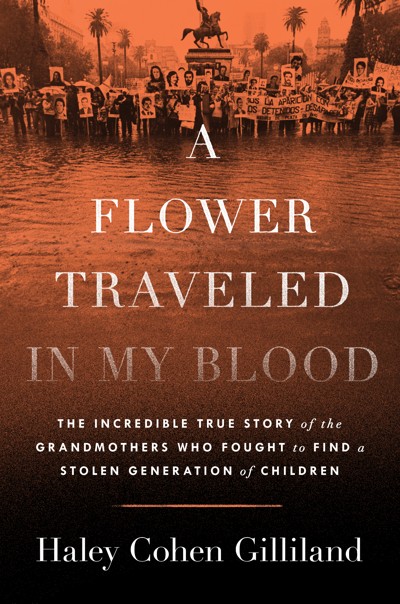
A Flower Traveled in My Blood, by Haley Cohen Gilliland
When Argentina was ruled by a military junta in the 1970s and ’80s, an estimated tens of thousands of people were “disappeared”: kidnapped by paramilitary forces, usually tortured, and never seen again. After democratic rule was restored, in 1983, the nation was split between advocates for uncovering the past and those who thought it was best to move on. Gilliland’s fascinating, detailed portrait of a fragile society is framed by the story of one grandmother, Rosa Roisinblit. Rosa’s daughter, Patricia, was kidnapped in 1978 while eight months pregnant. Even after it becomes obvious that Patricia is dead, Rosa continues searching for the grandchild she learns her daughter birthed in detention. In recounting the efforts of Rosa’s activist group, the Abuelas de Plaza de Mayo, Gilliland leads readers through half a century of Argentine politics, a revolution in genetics, and fierce debates about what defines a family. Her recent reporting also doubles as a powerful record of a dwindling generation: Rosa just died this past September, at 106. As the desaparecidos pass out of living memory, Gilliland’s book forces us to consider both the price of forgetting the past and the ache of remembering it.
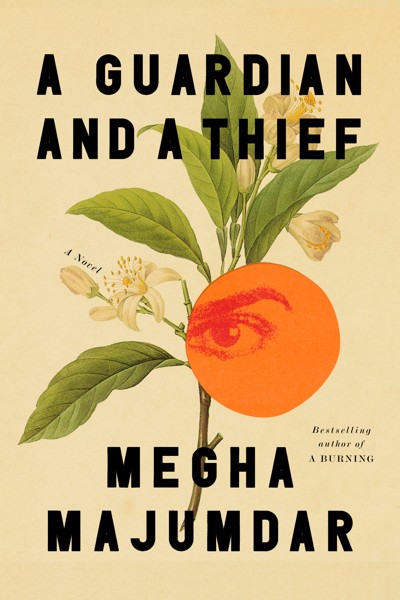
A Guardian and a Thief, by Megha Majumdar
As Majumdar’s short novel opens, its protagonist, Ma, serves up illicitly scrounged eggs and rice to Dadu, her widowed father, and to her toddler daughter (a fan of unavailable cauliflower): Food is scarce in their scorched city, a Kolkata of the near future. But rescue is at hand. In seven days, after they get their “climate visas,” the family is due to fly to America, where Ma’s husband has been studying mosquito-borne diseases in a lab. Majumdar’s title signals the ethical question at the core of her parable about survival in a crisis: In the name of protecting those we love most, what crimes against others will we commit? Suspense ratchets up when this well-laid emigration plan intersects with the ad hoc dream of a desperate refugee. Boomba, a hapless young man who yearns to rescue his family from their flooded village, has landed in the shelter where Ma works. He’s caught her pilfering from its pantry, and now careens into action himself. A week of wild swerves, both comic and tragic, confirms a reflection that has a timely ring: “Hope wasn’t soft or tender,” Ma thinks, and Boomba would agree. “It was mean. It snarled. It fought. It deceived.”
[Read: When scarcity blurs the line between right and wrong]
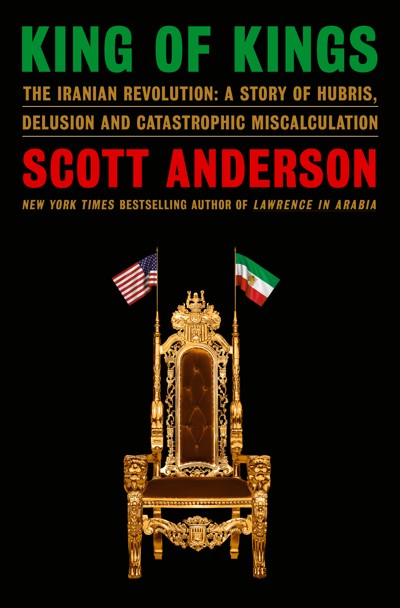
King of Kings, by Scott Anderson
Some events unfold so quickly, and overturn the status quo so completely, that they seem preordained. The Iranian Revolution of 1979 transformed the country almost overnight into a fundamentalist theocracy. But as Anderson, a war correspondent who has covered conflicts in the Middle East and beyond, shows in this thrilling account, nothing about the final months of the reign of the shah appears settled or inevitable. Drawing on government communiqués and first-person accounts—including that of a cantankerous American diplomat who seems to have witnessed every pivotal moment—Anderson describes a failure that had many fathers: not just the imperious yet indecisive Shah Mohammad Reza Pahlavi, or the ruthless Ayatollah Khomeini, but also the useful idiots who surrounded the cleric, along with President Jimmy Carter’s fractious and communism-obsessed foreign-policy team. A catastrophe that reshaped the world, Anderson suggests, was enabled by people who couldn’t imagine how the world might change.
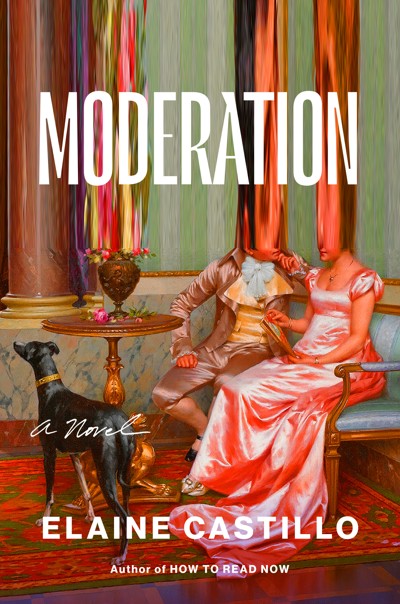
Moderation, by Elaine Castillo
Girlie Delmundo, a daughter of Filipino immigrants, is a Las Vegas–based content moderator at a social-media company who bears the distinctly unpleasant burden of being a specialist in child-sex-abuse materials. She’s also one of the most memorable, expertly drawn characters in recent fiction: sarcastic, tough, funny, and so good at her job that she’s promoted into a high-paying role policing a lush new virtual-reality system, Playground. As Castillo gradually makes clear, Girlie is suppressing a lot of pain, even beyond the daily horrors of her work. Along with formidable descriptions of cyberspaces, the novel also explores the ever-shifting relationship between Girlie and her new boss, William—two equally repressed people who feel drawn to each other. At one point, Girlie observes to William that Playground is “larger than life. Realer reality. Sensory overload.” Castillo’s book creates that same feeling—it’s about the costs and responsibilities of technological progress, explored through delicious, full-bore immersion into a fictional character’s head.
[Read: The tech novel’s warning for a screen-addled age]
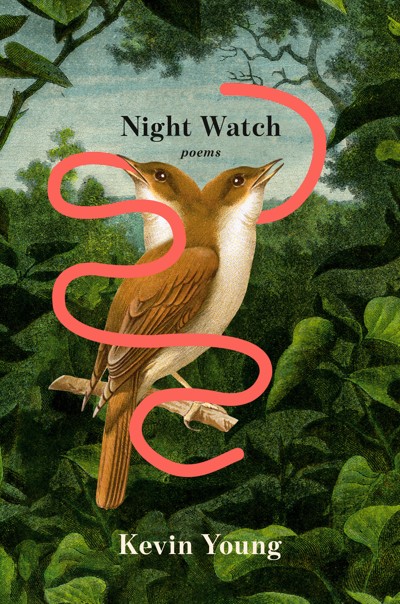
Night Watch, by Kevin Young
Young’s 13th book of poetry, dedicated to three of his departed family members, is about the space that the dead take up in the hearts of the living. The collection consists of four sequences; each features long, skinny columns of poetry, studded with unsettling rhymes. In “All Souls,” set during the time of the year in which this world and the next may be closest together, Young looks at the late-October leaves and summons the image of a runaway slave; he ends with the specter of a Union soldier saluting. In the next section, Millie and Christine McCoy, 19th-century conjoined twins who performed shows as “The Two-Headed Nightingale,” narrate their shared lives from birth to burial. Young closes with a loose rendering of Dante Alighieri’s Divine Comedy, recasting the progression from hell to Paradise as an inward struggle to cope with irrevocable loss. This is a book of marvelous transfigurations: Grief is like “a garment / that shrinks each / wash”; the dead are like wasps who “want / your house / to be their house.” And the poet’s lively, loitering ghosts are shown to be more present than the people they’ve left behind. Those in mourning have a poignantly unfinished, and painfully universal, task ahead of them.
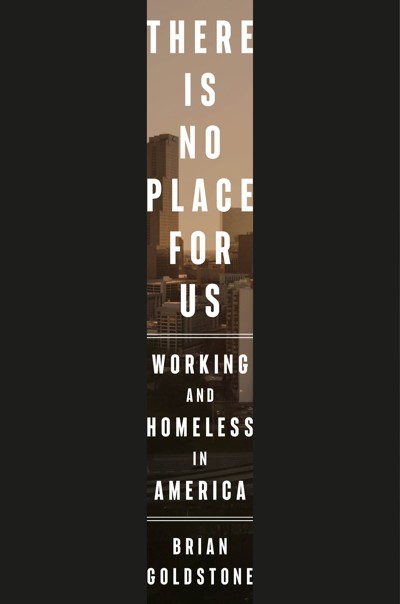
There Is No Place for Us, by Brian Goldstone
Goldstone profiles five Atlanta families who are members of the “working homeless”—people living not on the street or in a shelter, but temporarily with friends or family, in cars, or in decrepit or dangerous extended-stay hotels. His reporting demonstrates how hard it is for many to escape this situation: Several of his subjects have evictions on their records, which cause some potential landlords to reject them even if they have the money for rent. One subject is elated to receive a Section 8 housing voucher, only to encounter apartment-building managers who won’t accept it, or claim to have no vacancies. Another woman takes her kids to see a beautiful house that seems too good to be true—and nearly sends more than $1,100 to a scammer who preys on renters in dismal straits. How did these Kafkaesque scenarios become so common? Rents have outpaced wages, Goldstone explains, and Atlanta is now a city where someone with a full-time job (or, hypothetically, even two or three) may not be able to afford a place to live. Reading this book can be an intense experience. But it makes visible a large population—possibly millions of people, by the author’s estimate—who might otherwise remain out of sight.
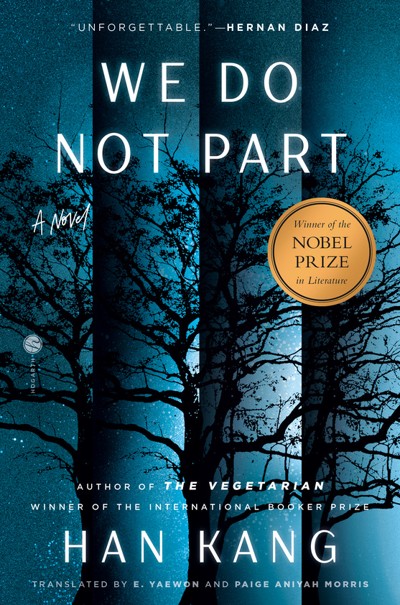
We Do Not Part, by Han Kang, translated by e. yaewon and Paige Aniyah Morris
The long tail of state violence haunts this surreal, intimate story of friendship. The novel’s protagonist, Kyungha, a writer whose work—like Han’s—has excavated grim periods in South Korean history, suffers nightmares featuring tree stumps shaped like bodies. On a strange and difficult errand for a friend, she ends up on Jeju Island, off the Korean peninsula’s southern coast, during a snowstorm. History, hallucination, and reality swirl together as Kyungha begins to probe a deep, decades-old wound in her friend’s family—the aftereffects of a brutal, government-backed crackdown, known as the Jeju Massacre, that left thousands of the island’s residents dead and was rarely spoken of after. Han uses a powerful form of indirect storytelling: Readers glimpse the atrocity only through layers—of disturbing memory, newspaper snippets, official documents. The composite record builds subtly and slowly, almost arduously. But in the process, Han reveals how trauma that has yet to receive a full accounting can act like a damaged nerve, and she makes an eloquent case for revisiting it, agonizing though that might be.
[Read: Where Han Kang’s nightmares come from]
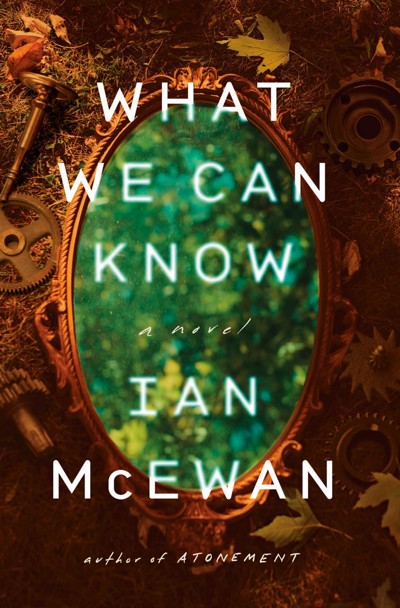
What We Can Know, by Ian McEwan
The Booker Prize–winning McEwan began his career writing Gothic tales, matured into creating twisty literary mysteries, and later dabbled in political fiction and sci-fi. Now, at an age when many novelists ease up on the throttle, he has synthesized all of these strains into something close to a masterwork. Half of What We Can Know follows Thomas Metcalfe, a literary scholar in 2119 England, which has been remodeled by cataclysms into an anarchic archipelago; the other half is set in the Cotswolds of the 2010s, among the milieu he studies—the circle of the (fictional) great poet Francis Blundy. Tying together a mystery about death, infidelity, art, and ecological calamity is an ingenious MacGuffin: an elaborate lost poem that Blundy read to his wife at a 2014 dinner party. We learn only enough about this supposed masterpiece to realize that it is both more and less significant than its legend suggests. Yet the violent act it describes not only helps resolve a juicy plot but highlights the ruinous hubris that might one day make our present moment, chaotic as it is, look like paradise on Earth.
The post The Atlantic 10 appeared first on The Atlantic.