Sana Shinwari is a student at Columbia University.
On March 26, the new school year began in Afghanistan. In Kabul, my two younger brothers packed their bags, put on their uniforms and walked out the door — one heading to ninth grade, one to fifth. I listened over the phone from more than 6,000 miles away as they recounted their first day of class, and it struck me how much they had grown. The last time I saw them, they were still little kids. Now, the older one has a mustache.
My 17-year-old sister did not pack anything that morning. She has not been inside a classroom in five years. She would be starting college this year if the Taliban had not taken over the country in August 2021 and banned every girl from school above sixth grade.
I have a baby sister who will turn 3 in May. I have never met her. She is not old enough for school yet. But once she completes primary school, the door to further schooling will be closed to her, too — unless something changes.
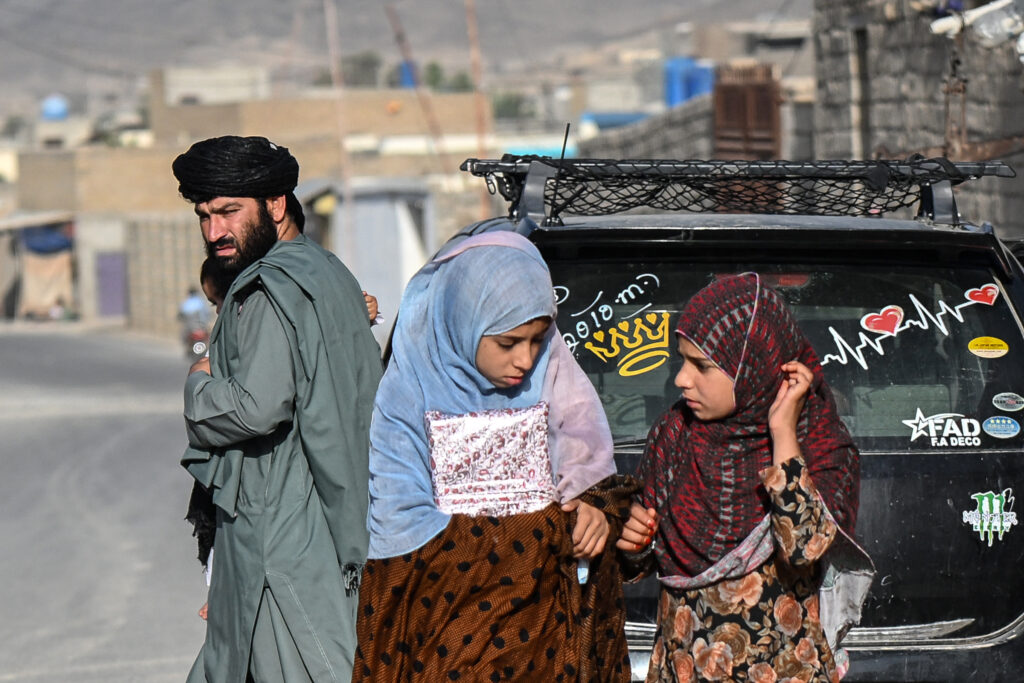
Afghanistan is the only country in the world where girls and women are prohibited from secondary and higher education. According to UNICEF, that ban applies to more than 2.2 million girls. This is the fifth consecutive year that secondary school and university doors have opened for boys and stayed shut for girls.
When the Taliban recaptured Kabul in 2021, world leaders promised they would not abandon Afghan women. The United States, European Union and United Nations have denounced the Taliban’s anti-education decrees. The U.N. condemned the banning of women from universities, saying it may constitute “gender persecution,” a crime against humanity. The E.U. denounced a decree in 2024 as an “appalling violation of fundamental human rights.”
But none of it meant anything to the girls sitting at home. No government has made girls’ education a condition for engagement or coordination. No country has faced diplomatic or economic consequences for engaging — as have China and Turkey — with a regime that has banned half of its population from learning. According to UNESCO, the Taliban have now implemented more than 70 decrees stripping women of their rights, and the international response has been to object, denounce and wait. Years later, the girls are still waiting too.
I am one of the lucky ones. I was a freshman at Afghanistan’s only all-girls boarding school when the Taliban took control. I was evacuated along with my teachers and fellow students and was welcomed to an all-girls boarding school in Massachusetts. I am now studying at Columbia University. Every day feels like a dream.
My older sister, who is 21, was not so fortunate. For her, most days feel like a nightmare. She spent years working to secure a scholarship to a university in the U.S. When she found out she had won the scholarship, I began to feel more hopeful. But that did not last long. A week after she received her university acceptance in May 2025, the U.S. enacted a travel ban on Afghan nationals, as well as nationals of several other countries. Her hope of coming here vanished. She has a seat in a classroom waiting for her, and she cannot reach it.
The U.S. cut off nearly all aid last year to my home country, but that has not improved living conditions or changed the Taliban’s decrees. Instead, it has punished ordinary Afghans while the Taliban continue doing what they want. Afghan girls deserve a more targeted response.
First, Western governments must fast-track visas and scholarships for Afghan girls who have already secured university placements abroad. Many Afghan girls, like my older sister, have been accepted to universities in the U.S. and Britain, but travel restrictions in both countries make it impossible for them to go. Afghan girls with confirmed university placements are not security risks. If Western governments and the U.N. care about girls’ education as much as they have declared, making them wait in Afghanistan — rather than welcoming them to universities that want them — amounts to abandonment. It is strange indeed for British officials to call for Afghanistan’s referral to the International Court of Justice while it bars Afghan girls from attending university in London and Manchester.
Second, the U.N. must create a specific accountability mechanism for the education ban — one with real consequences for the Taliban, not for the Afghan people. The current approach of issuing statements and expressing disappointment has failed. Five years of disappointment has not opened a single classroom door.
I am proud of my brothers. I am glad they are in school, and I want them to learn, grow and build their futures. But I cannot celebrate their first day back without thinking about my sisters, my cousins and the more than 2 million girls who stayed behind that morning.
Five years is long enough. The girls of Afghanistan have been patient and resilient. They have learned in secret and held on to hope longer than anyone should have to. They are not asking for sympathy; they are asking for what the Taliban took from them: a chance to learn.
The post I’m living a dream at Columbia. Other Afghan girls face a nightmare. appeared first on Washington Post.