
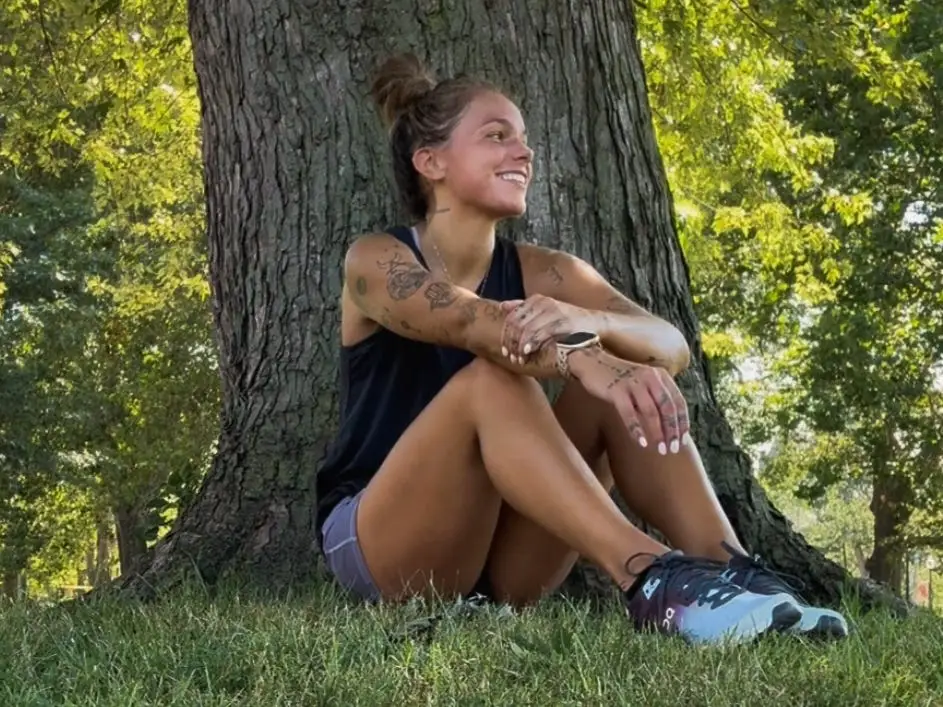
From a young age, Katelyn Jonozzo took pride in being very active.
Up until she was 18, she practiced gymnastics 4 to 5 days a week. “I loved the discipline, I loved having a regimented schedule,” Jonozzo, 31, told Business Insider. “That instilled how important health and fitness are to your lifestyle.”
In her 20s, she gravitated toward marathon running. A supply chain analyst, Jonozzo would regularly wake up at 4 or 5 am to lift for two hours and run before going to work. In 2024, she qualified to run the Boston Marathon. She couldn’t wait to run it in 2025.
That was before she felt a sudden, sharp stomach pain in February.
Jonozzo started experiencing flu-like symptoms and throwing up. She chalked it up to norovirus, which was going around at the time in her Cleveland suburb.
“My stomach started to get really, really bloated — I looked like I was almost pregnant,” Jonozzo said. “But that was also a symptom of norovirus, so I kind of just lumped it into that.”
When the pain got worse — stabbing sensations in her sides and nonstop vomiting — her two best friends urged her to go to the ER instead of waiting another day. Jonozzo complied, assuming the worst-case scenario was appendicitis.
After an emergency surgery to remove part of her colon, she learned she had stage 3 colon cancer, with secondary cancer in her abdomen.
Jonozzo said her training mindset helped her navigate her new reality. “I’m definitely a tunnel-vision person,” she said. “I think I cried for about 30 seconds. Then, I looked back at the doctor, and I was like, ‘What’s the plan? What do we do?'”
Zero warning signs
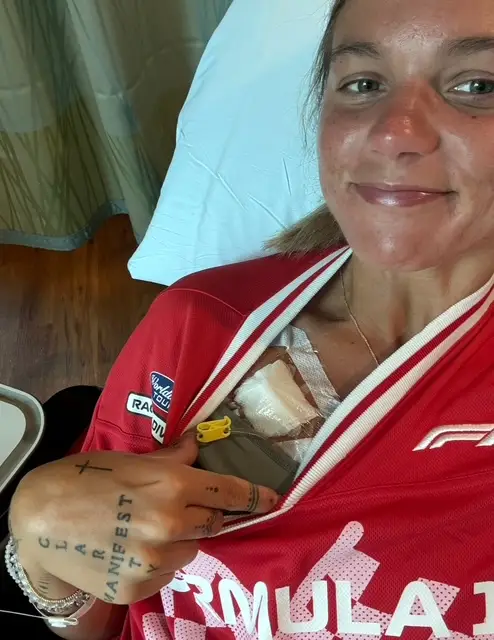
Jonozzo said she was initially dismissed when she went to the hospital and told she might just have a stomachache or gassiness. She insisted that she had a high pain tolerance and wouldn’t come in unless it was serious.
Eventually, she had an MRI done, which revealed a three-inch tumor on her colon — one that was about to rupture.
Within the next 48 hours, she had an emergency colostomy that removed one-third of her colon and installed a colostomy bag. “I was just in so much shock and so much was going on that I didn’t really know what was happening,” she said.
After recovering from a catatonic state for 10 days, she learned her exact diagnosis. Her doctor estimated that the tumor had been growing for about a decade, Jonozzo recalled.
“How have I been running marathons?” she said. “How have I been working out when I had a tumor on my stomach?”
Working out with a colostomy bag
Weeks after the surgery, Jonozzo began her chemotherapy treatments. At first, she stayed positive: making poster boards with affirmations to leave around her house.
“It still didn’t really ever sink in, the journey that I was about to go through, until I would say probably around three or four of chemo,” she said.
By that point, she started to lose her hair and taste, experience skin changes, and develop neuropathy, losing sensations in her hands and feet. “That’s when I realized, ‘Ok, you have cancer. This is not just something that we’re going to duck our head down and go through.”
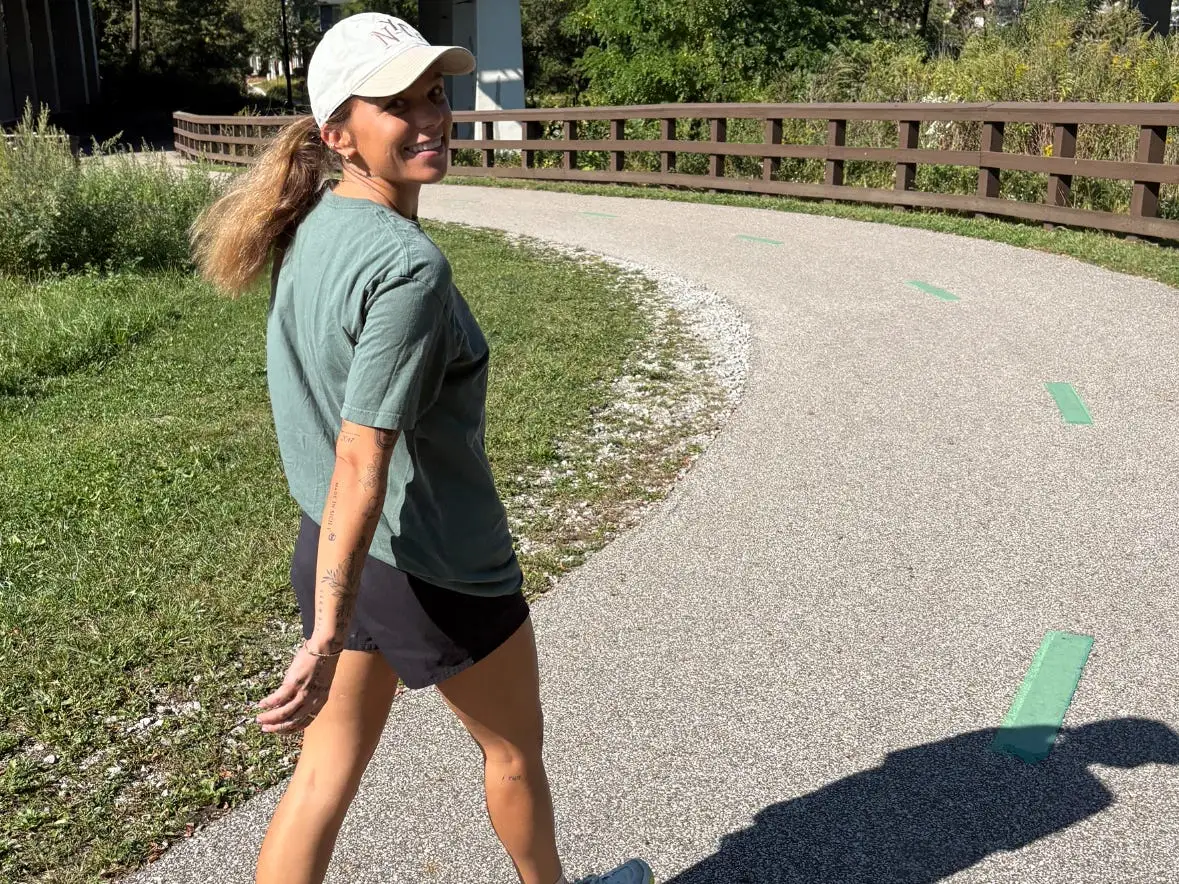
One challenge was working out. During treatment, her usual routine was out of the question. “I definitely had to tone everything down,” she said. She swapped long training runs and weightlifting for outdoor walks and three-mile jogs.
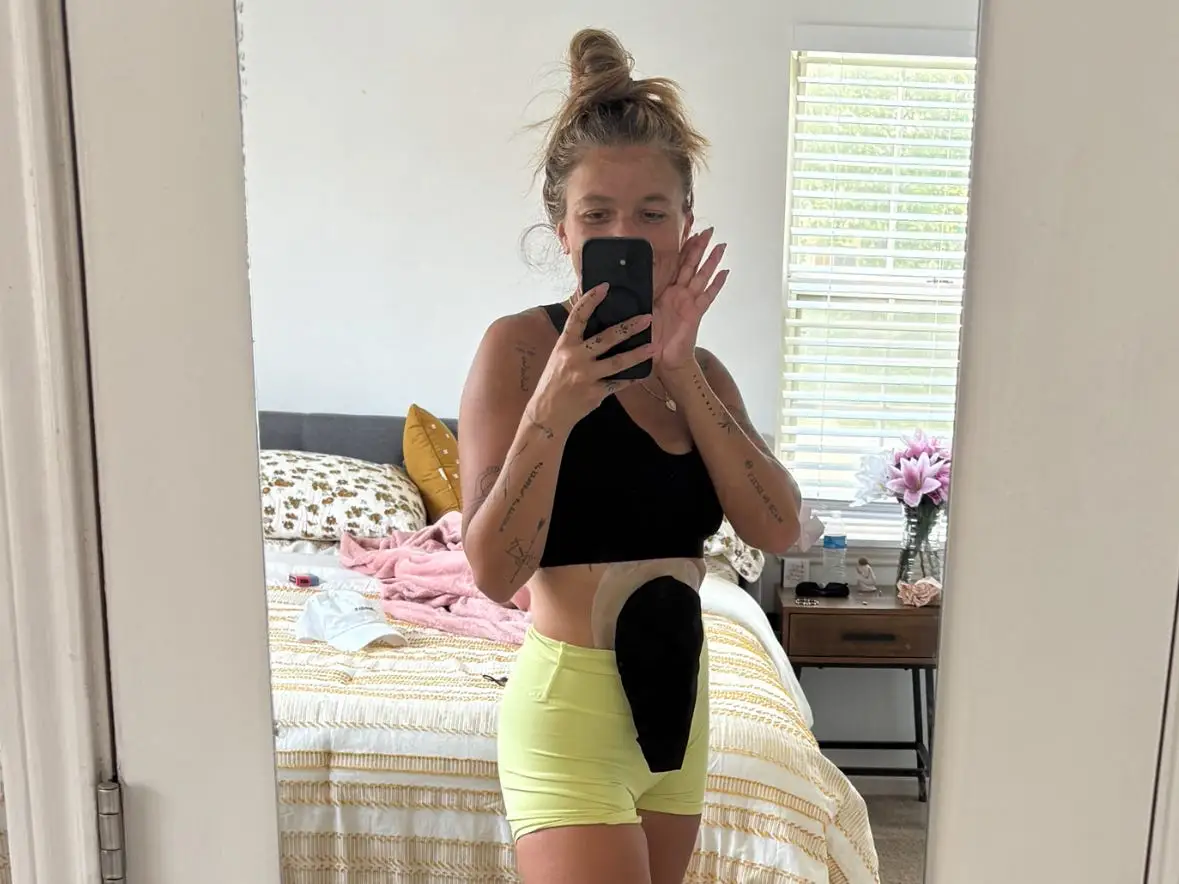
The biggest obstacle was the colostomy bag. “I was obviously super self-conscious about the bag in the beginning,” she said. But as she started to connect with other young cancer patients through The Gathering Place support group and the Colorectal Cancer Alliance, she began to embrace the bag.
“I would go to the pool in a bathing suit, with the bag out, or I would lift my shirt up at the gym and let people know that the bag was there, which I guess made me just gain confidence,” she said.
Looking for the positives helped her keep up her normal routine as much as she could. “I think it’s amazing that they found out how to pull your intestine out and you could still go to the bathroom,” she said. “It’s a great contraption, if you ask me.”
She’s running a marathon with her cancer support group
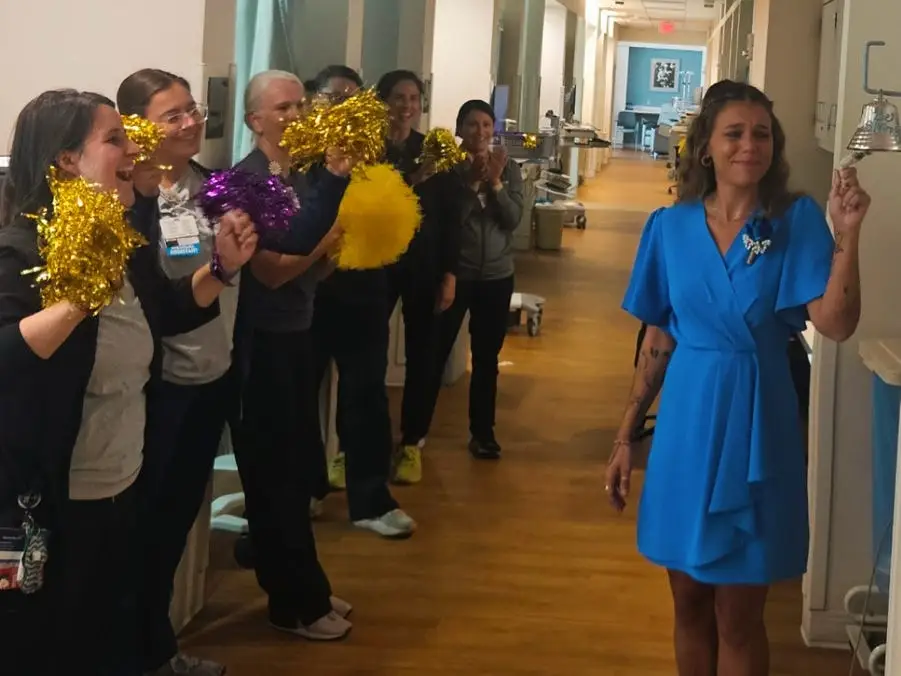
After seven months of treatment, Jonozzo was deemed cancer-free. She finished chemotherapy in August and had a colostomy reversal in November. In mid-December, her first screening since finishing treatment, she’ll learn more about her future screening schedule, which she already knows will include two colonoscopies a year.
She’ll also be officially cleared to work out after her surgery — and is eager to go back to her old routine.
“I’m a little nervous just because normally I can just pop out and run and do those things, but I have to take baby steps back into it,” she said. She plans to run three marathons in 2026, with the hopes of re-qualifying for Boston through one of them.
She’s especially excited for the Cleveland Marathon in May. She’ll run it as the team captain for her cancer fundraising group, which she said awakened new passions in her. “I love advocating, I love talking to people,” she said. “I’ve always loved doing that — I just didn’t have the confidence to do so before.”
It’s just one of the ways that her cancer experience changed her, she said, along with becoming more present.
“People think I’m crazy for saying this, but I truly believe it was one of the best things that ever happened to me,” she said. “I would not trade this experience for anything. I really wouldn’t.”
Read the original article on Business Insider
The post A 31-year-old marathon runner thought she had norovirus. She was diagnosed with stage 3 colon cancer. appeared first on Business Insider.