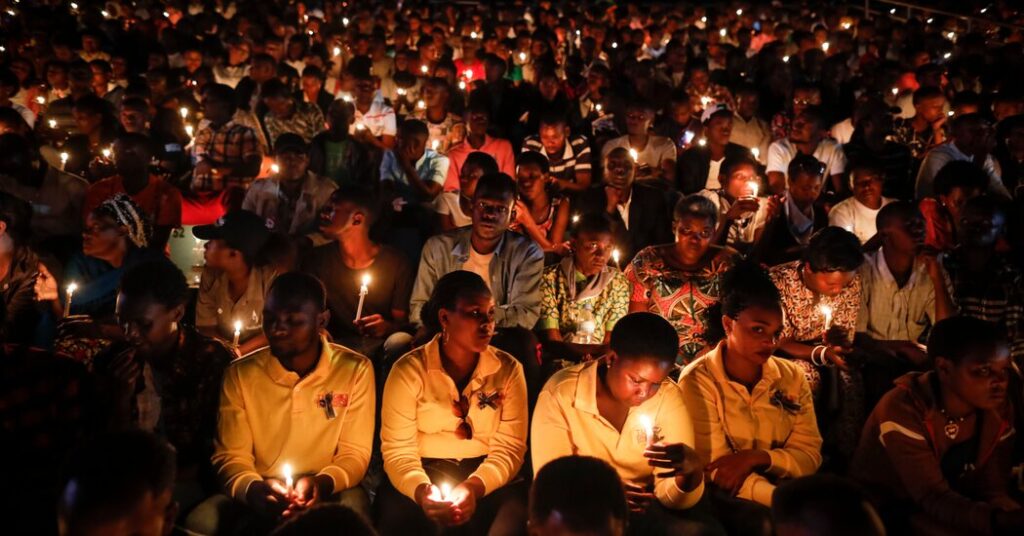
As the United States celebrates 250 years of independence with fireworks, parades and pool parties, July 4 in Rwanda is a much more somber affair. On Saturday, the small Central African nation will commemorate Liberation Day, the moment 32 years ago that capped 100 days of terror.
Beginning in April 1994, extremists from the country’s ethnic Hutu majority killed hundreds of thousands of people — most of them ethnic Tutsis — using machetes, clubs and guns. The genocide raged until July 4 that year, when a Tutsi rebel group seized control of the nation’s capital from the Hutu-led government.
The rebel group, known as the Rwandan Patriotic Front, was led by Paul Kagame, who has governed the country since his forces prevailed in 1994.
Rwanda’s Liberation Day, an official national holiday, falls at the same time of year as the date the nation shrugged off Belgian colonial rule in 1962. Some historians point to the social and political power dynamics imposed under Belgian rule as a key factor in the ethnic tensions that led to the mass killings. In 2021, President Emmanuel Macron of France recognized his country’s role in supporting the Hutus in the lead-up to the genocide.
On Friday, thousands of people marched a 21-kilometer route (about 13 miles) in Rwanda’s northeast to commemorate the occasion, according to the nation’s public broadcaster.
In America’s 250th year, celebrations take place alongside reflection. The same is true in Rwanda, where a remarkable period of rebuilding over three decades has not been enough to mask internal and international concern over the actions of its leaders.
Since 1994, the hilly nation of about 14 million people has grown economically, significantly reduced maternal mortality and poverty and improved education and health access. Rwanda has also become a major conference and tourist destination, and each year it hosts a star-studded gorilla-naming ceremony that has attracted people like Bill Gates, the Microsoft co-founder and philanthropist, and Idris Elba, the British actor.
But even as he has pulled his nation back from the brink, Mr. Kagame has become increasingly authoritarian, analysts say, jailing opposition figures, limiting press freedom and targeting critics at home and abroad.
Rwanda has also been accused of backing rebel forces in the neighboring Democratic Republic of Congo and plundering mineral riches in that country’s eastern regions, accusations that Mr. Kagame’s government has denied.
Last year, Rwanda’s government agreed to accept 250 deportees from the United States, as part of President Trump’s policy of removing immigrants to countries with which they often have no connections or guarantees of safety.
In a recent speech at a nonprofit organization led by Jeannette Kagame, the first lady of Rwanda, Mr. Kagame delivered a defiant message in commemoration of Liberation Day.
“We went through a very dark chapter, but is that who we were meant to be?” he said. “As Rwandans, we freed ourselves.”
The post In Rwanda, July 4 Is Liberation Day From Genocide appeared first on New York Times.