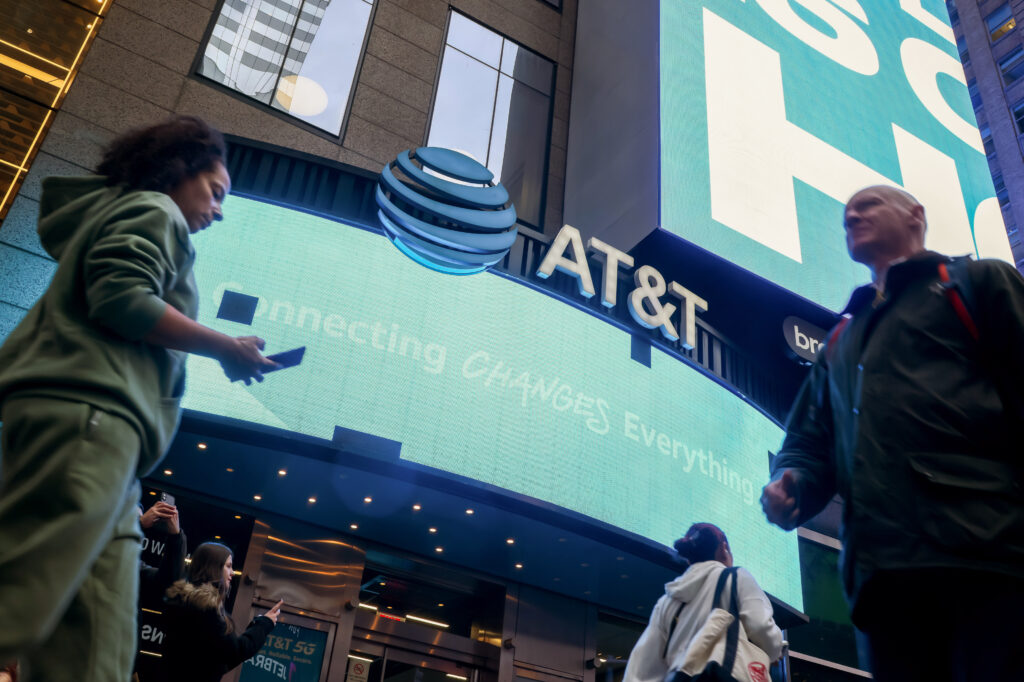
If you’re one of the millions of AT&T customers affected by a pair of data breaches the company disclosed last year, it’s time to make sure you get paid.
Earlier this year, AT&T settled a combined class-action lawsuit over both breaches by earmarking a total of $177 million for affected customers.
The deadline to file a claim has already been extended once, but former and current AT&T customers shouldn’t count on that happening again. You have until Dec. 18 — just two weeks from now — to claim a slice of the settlement.
Don’t worry: You’ve still got time to take care of things. Here’s your guide to what happened, and what you need to do.
Why is this happening?
Because AT&T customers got caught up in two distinct — and very serious — hacks.
The first, which occurred in 2019 but wasn’t disclosed by the company until 2024, saw “a third-party threat actor” gain access to sensitive customer information, including full names, addresses, birthdays, passcodes and even Social Security numbers.
By the time AT&T acknowledged the breach, that data dump — which contained personally identifiable information from more than 70 million past and current AT&T account holders — had found its way to the dark web.
The second breach occurred in 2024, when hackers stole the phone call and text message records of more than 100 million AT&T customers. The contents of those conversations were not part of the breach, but the phone numbers involved and durations of those conversations were, which experts at the time warned could lead to more effective, more targeted scams.
“While we deny the allegations in these lawsuits that we were responsible for these criminal acts, we have agreed to this settlement to avoid the expense and uncertainty of protracted litigation,” an AT&T spokesperson said in a statement. “We remain committed to protecting our customers’ data and ensuring their continued trust in us.”
Who is eligible for a settlement payout?
Since we’re talking about two massive data breaches being settled at once, a lot of people.
Are you already an AT&T customer? There’s a pretty good chance you’ve received a notice about all this via postcard, letter or email. These notices will contain your claim ID, which you’ll need to submit your claim, along with instructions.
If you believe you were affected by AT&T’s data breaches but haven’t received a claim ID from the settlement administrator, check the email associated with your AT&T account carefully — your notice might’ve wound up in your spam folder.
Still can’t find it? Call the settlement administrator at (833) 890-4930 to get things straightened out.
How do I file my claim?
Visit telecomdatasettlement.com, click “Submit Claim,” and provide your claim ID. Once you’ve done that, you’ll be able to start filling out the necessary forms and uploading documentation if needed. (More on that in a second.)
One more thing: Be patient. Because so many people were affected by these breaches, the website used to file claims often gets slammed; when that happens, respondents are placed in a virtual queue while others work through the forms. This usually doesn’t last for longer than a few minutes, but if you keep running into issues, try filing your claim a little later.
How much is the payout?
That depends on a few things, like which data breach you were affected by, and how much you can prove you lost as a result. Here’s what the payout structure looks like in a nutshell.
If you were affected by the first, more dire AT&T data breach, and you can provide proof of financial losses that stemmed from it, you can file a claim to receive up to $5,000.
Otherwise, you can submit a general claim for a slice of the settlement fund — $149 million, minus legal and administrative fees — set aside for that incident. If your Social Security number was leaked as part of the data breach, your one-off “tier cash payment” will be five times the amount of someone whose SSN wasn’t leaked.
The process for those affected by the second AT&T breach is much the same, just with different numbers. If you have documented financial losses related to the second breach, you can file a claim for up to $2,500. If not, you can file a claim for a one-off slice of that smaller settlement fund: $28 million, minus similar legal and administrative costs.
Because these breaches were so big, there’s a pretty good chance you’ll be able to submit claims for both. Just remember that, if you’re trying to recoup high-value losses that stemmed from both breaches, you’ll need to provide clear, distinct documentation for each incident.
The post How to claim your share of AT&T’s $177 million data-breach settlement appeared first on Washington Post.