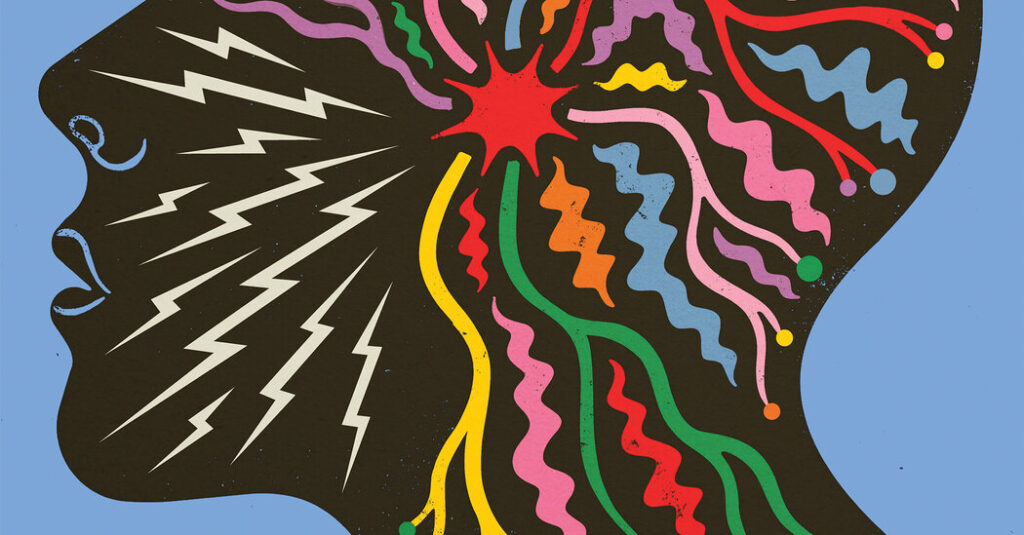
Quiet jazz played on the radio as the 69-year-old woman cruised down Interstate 57 from her home in Chicago Heights to an appointment at the University of Chicago Medical Center. Suddenly, a thunderbolt of pain hit the right side of her jaw. The intensity brought tears to her eyes and her hand to her face. She quickly pulled off the road. Once the car was fully stopped, she gingerly probed her lower jaw, seeking the exact tooth that was sending this pulse of jagged electricity through her mouth. Then the pain stopped as suddenly as it started. It had lasted only minutes but felt like an eternity.
She’d had this pain a few times in the last couple of weeks. The first time was brushing her teeth — and whammo. Same pain, same place. That time, she had to grip the sink until it passed. It was confusing. She’d always taken good care of her teeth and never had even a toothache.
Weeks later, she sat in the reclined chair as her dentist swung his light into position, directing the beam onto the right side of her lower jaw. It looked fine, he murmured. He tapped each tooth with a metal tool. No pain. He probed the gums gently. No pain. He took X-rays of her jaw. Normal. There was a filling in one tooth near the remembered site of pain, the dentist told her. Maybe the filling was cracked and was causing the pain. He suggested they drill it out and fit her with a crown. She agreed, somewhat reluctantly. She was on Medicare and had no dental insurance. But if it meant she would never have that pain again, it would be worth the $1,600 she had to pay out of pocket.
Still, just days after the crown was in place, the same knife of pain stopped her in her tracks. This time she went to her father’s longtime dentist. He examined her recent X-rays. Nothing abnormal. This dentist took more X-rays — still nothing. He wondered if she was grinding her teeth and fitted her for an oral appliance that would keep her from putting pressure on her back teeth — $485. She wore it religiously. But it did nothing to change the pain, which now came with increasing frequency.
A third dentist also saw nothing. Maybe she needed a root canal, he suggested, and sent her upstairs to see an endodontist. That specialist took his own X-rays and reported that, no, she did not need a root canal. He didn’t know what was causing her pain either.
A Theory at Last
A friend’s daughter worked as a hygienist in another dental office, in Frankfort, Ill. The woman was scheduled for her routine biannual cleaning, and in that chair the pain struck again — the worst yet. The simple motion of opening her mouth for the hygienist brought on a pain so unexpected and so severe that she began to sob uncontrollably. The hygienist, alarmed, called in Dr. Dominik Dubravec.
Dubravec was a periodontist — a specialist in the structures surrounding the teeth. Through her tears, the woman described the pain; it was sharp like a knife but charged with an unbearable electricity. It came erratically, five, sometimes 10 times a day, nearly every day. Usually when she was eating or drinking. Sometimes when she was just talking.
He examined her mouth. Dubravec too saw nothing. Yet another set of X-rays was uninformative. Trauma from grinding teeth could injure the nerve, but he saw no evidence that she was a tooth grinder. He checked for misalignment, which could cause pain in the joint of the jaw that could be referred to the teeth. Normal. He felt her neck for masses or enlarged lymph nodes that could suggest a tumor as the cause of her pain. She was being treated for carcinoid, a type of slow-growing cancer. He found nothing. He was sorry, he told her, but he too was baffled by her pain.
By then, over a year into her ordeal, the woman decided she’d have find a way to live with this pain. And she tried to adjust her life to avoid the triggers she’d identified. She started living on homemade smoothies, which allowed her to get the nutrition she needed without chewing or opening her mouth wide. And she avoided the cold — a real challenge in wintertime Chicago. But she was determined to manage.
The woman kept in touch with Dubravec by phone. She was reluctant to go to the office, where she would be charged for a visit. He understood that. Few of his older patients had dental insurance because dental care is not considered part of health care — at least not by most Medicare plans.
Nine months after that terrible cleaning, the patient’s phone rang. It was her friend’s daughter, the dental hygienist. Dubravec had been thinking about her persistent pain since that visit, she said, and thought he had come up with an answer. He suggested she see a neurologist. He thought she might have something called trigeminal neuralgia.
The trigeminal nerve provides sensation and movement to the face. As the name suggests, there are three main branches, the lowest serving the lower jaw and teeth. Any injury or pressure to that nerve will be felt as pain in the region it serves. That, he suspected, was the culprit.
She looked up neurologists who took her insurance and made an appointment. It was months away, but she figured she could bear the wait now that there might be an answer. When she finally saw the doctor, he agreed with the diagnosis. And an M.R.I. confirmed it: There was an artery just above her jaw that was pressing on that lowest branch of her trigeminal nerve. Many patients with this disorder will ultimately need surgery, he told her. But sometimes medication will do the trick. He started her on oxcarbazepine, an antiseizure drug that is effective in treating nerve pain. Within days, the pain disappeared. It felt like a miracle.
The Pain Returns
The patient was pain-free for three and a half glorious years. Then one day it returned with a passion. For over an hour, she was crippled by the stabbing electrical shocks she thought she’d never have again.
When the pain receded, she called the neurologist. It is common for the nerve compression to worsen with time, so he increased her dose of oxcarbazepine. That got rid of the pain again, and she was grateful for it. But the medication now left her feeling like a zombie — so tired and spacey that she could barely do anything. She couldn’t drive, could barely think.
She searched the internet for a surgeon who could help. She asked for referrals in the facial-pain support groups she frequented online. And she quickly found a neurosurgeon at the Mayo Clinic in Phoenix who was highly recommended. She could stay with her daughter-in-law, who lived there.
She flew to Arizona and met the doctor. She liked him immediately. He had a warm manner and answered all her questions. An M.R.I. showed exactly where the problem was. Using those images, as well as anatomical drawings, he explained what the surgery would entail. The maxillary artery, which took blood to the muscles of the jaw, was pressing on the nerve. The surgeon would cut into her scalp just behind her ear and lift that artery, gluing it to the bone above the nerve.
It all made sense to her, and she eagerly scheduled the surgery. After the operation, as the anesthesia was wearing off, a nurse asked her if she had any pain. She was still groggy but immediately recognized that she was completely pain-free. And that this time it wouldn’t be back.
I spoke with the patient recently. She is still part of a group for facial nerve pain and told me that trigeminal neuralgia is sometimes called the suicide disease. She understood that. “At one point, it crossed my mind,” she said. But her faith helped her. So did Dubravec. “That man saved my life.”
She had the surgery two summers ago and remains pain-free. But she will never forget the torment that dominated her life for so long. “I would not wish that pain on my worst enemy,” she told me, her voice thick with emotion. “It’s just that bad.”
The post The Electric Pain in Her Tooth Baffled Every Dentist. What Was Wrong? appeared first on New York Times.