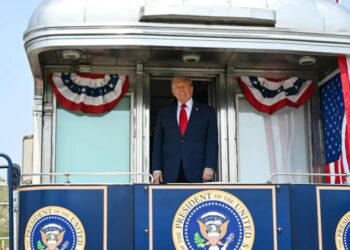
JERUSALEM — In his push to end the unpopular war against Iran and reopen the Strait of Hormuz to global commerce, President Donald Trump agreed to a key demand by Tehran: reining in Israel’s military campaign against Hezbollah in Lebanon.
Trump got results. Israeli attacks on the Iran-backed militant group have eased. But in Lebanon, fears are growing of a new war between Hezbollah and the Lebanese government, and a revival of the internal strife that tore the country apart from 1975 to 1990.
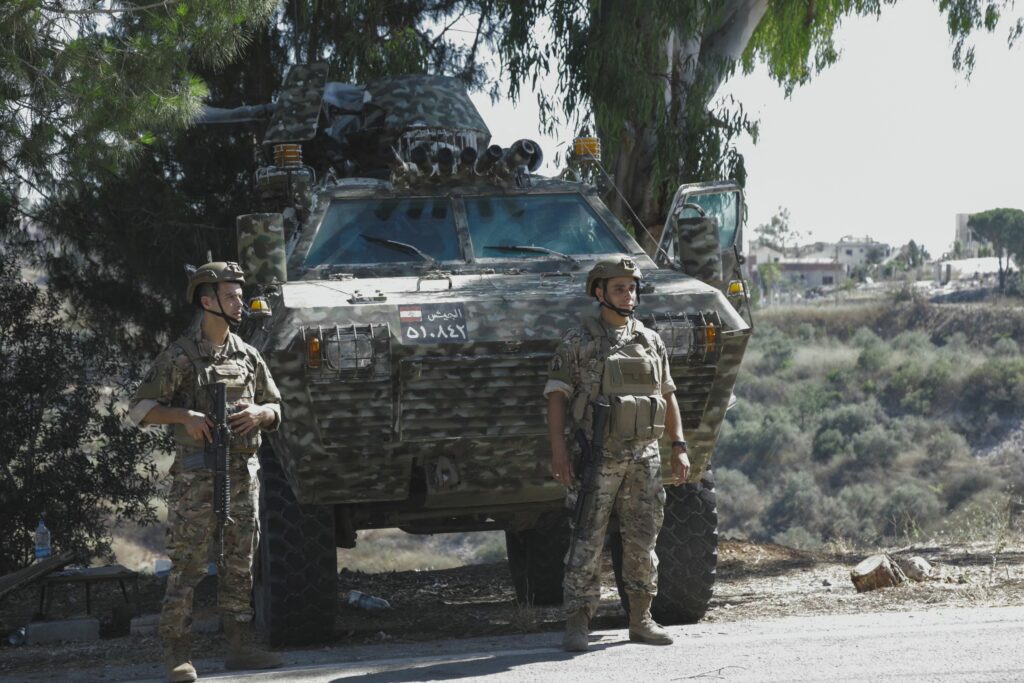
The Lebanese government and Israel reached a deal Friday, brokered by the White House, that would allow Israeli troops to remain in southern Lebanon until Hezbollah disarms and the Lebanese Army takes over its territory. But Hezbollah was not part of the talks and has warned Lebanese authorities that they risk igniting a civil war.
The group has vowed to block the agreement “by any means necessary” and its supporters quickly roared through the streets of downtown Beirut on motorcycles in a show of force. Israel, meanwhile, has occupied what it calls a “buffer zone” reaching six miles inside Lebanon running along the length of the shared border.
Hanging in the balance is Trump’s effort to turn an initial memorandum of understanding with Iran into a durable peace accord. So far that effort has sputtered, with the United States and Iran trading intermittent airstrikes and negotiators seeming to gain little ground at talks in Qatar this week as each side resists concessions.
“Lebanon is emerging as the principal spoiler for a broader regional agreement,” said Dennis Citrinowicz, a former Israeli intelligence official who specialized in Iran.
Iran has insisted that Israel pull out of Lebanon entirely, in accordance with the MOU. Israel has argued that its war with Hezbollah should be resolved on a separate diplomatic track, even though a commitment to immediately end fighting in Lebanon was a key component of Trump’s deal with Iran.
The impasse represents a central tension in Trump’s Middle East diplomacy. On June 17, he signed the agreement with Iran calling for an Israeli withdrawal from Lebanon. A week later, he agreed to a new deal giving Israel leeway to keep troops there while placing the onus of resolving the crisis on the Lebanese government and Hezbollah.
“Israel is well aware that the Lebanese Armed Forces are highly unlikely to disarm Hezbollah in the foreseeable future,” Citrinowicz said. “By making its withdrawal contingent on an outcome that is not realistically achievable anytime soon, Israel has effectively created a condition that allows it to justify an open-ended military presence in southern Lebanon.”
In recent days, the agreement with Israel has drawn broad criticism in Lebanon — not just by Shiites, Hezbollah’s base of support, but by liberal commentators. Under its terms, Israeli soldiers would be allowed not only to remain in Lebanon until Hezbollah disarms, which seems unlikely, but also to return and conduct inspections.
The fighting since March has left 4,000 people killed and 12,000 people injured in Lebanon, according to the country’s Health Ministry.
Hilal Khashan, a professor of political science at the American University of Beirut, said the agreement contained unequal terms because “Lebanon had no choice and no cards to play.”
“Lebanon has no means to get its land back by force, but neither does Hezbollah,” Khashan said. “Failure to strike a deal means Israel’s expansion of the yellow line.”
Israel has said it needs to occupy Lebanese territory bound by the “yellow line” to dismantle Hezbollah’s infrastructure and prevent the group from launching drone and missile attacks on northern Israel, which have displaced residents and fueled criticism of Israeli Prime Minister Benjamin Netanyahu.
The deal has “little chance of success,” and its implementation will be a “test for the Lebanese army, because Hezbollah will resist disarmament,” Khashan said.
Hezbollah, with Iran’s financial and material backing, has built up a fighting force with thousands of missiles and deadly drones that even Israel’s cutting-edge military has struggled to overcome. “It is not a question of Hezbollah’s strength,” Khashan said. “The army will splinter if it takes on Hezbollah.”
On Tuesday, Lebanese President Joseph Aoun defended the deal and warned against “incitement and attacks” on the army.
Appealing for calm and national unity, Aoun said that a key ally of Hezbollah, the Lebanese parliamentary Speaker Nabih Berri, had also agreed there should be “fundamental red lines” against calls for sectarian conflict, which historically have proved disastrous for Lebanon.
In a televised interview Wednesday evening, Lebanon‘s Prime Minister Nawaf Salam assured the public that the deal was still in preliminary stages and the next round of negotiations with Israel would focus on a timetable for its withdrawal from Lebanon.
But with neither Israel nor Hezbollah willing to withdraw first, the situation in Lebanon is combustible.
Analysts say there are not only risks of direct clashes between the fragile Lebanese state and Hezbollah, which remains heavily armed, but also of renewed fighting between Israel and Hezbollah, or of a prolonged stalemate that leaves Israeli troops in Lebanon and tens of thousands of Lebanese civilians displaced from their homes.
Israel would not necessarily oppose any of these scenarios, but they would anger Iran and pile more misery on Lebanon, a country already racked by sectarian divisions and economic paralysis.
Still, supporters of the Lebanon deal argue that it will empower the state to take action against Hezbollah, which has long meddled in Lebanese politics while acting in the interests of Iran, its main benefactor.
For years, much of Lebanon’s diverse population, including Christians and Sunni Muslims, have bristled at the outsize influence of the group and its Shiite supporters, who make up roughly one-third of the country. Supporters also say that the accord between the two neighboring nations, which are frequently entangled in conflicts, could even pave the way to diplomatic normalization.
On Monday, Netanyahu visited a base in Lebanon and described the deal as a joint effort by the Lebanese government and Israel to expel Iranian and Hezbollah influence from the country. In a speech to Israeli troops, he warned that Hezbollah might fight back and insisted that Israel would not withdraw.
“This is a slap in the face, a blow to the face of the Iranian axis, and it won’t necessarily go unchallenged,” Netanyahu told soldiers. “As long as Hezbollah is armed and present here, posing a threat to us —we will remain here.”
Israeli officials have touted the Lebanon agreement as a diplomatic coup after Netanyahu found himself sidelined in Trump’s negotiations with Iran. After Iran protested Israeli strikes against Hezbollah and its ongoing military presence in Lebanon, Trump and Vice President JD Vance repeatedly rebuked Netanyahu.
Nabil Bou Monsef, a Lebanese analyst, said that the Trump administration’s negotiations with Iran, led by Vance, and with Lebanon, led by Secretary of State Marco Rubio, appeared to be at odds.
“There is speculation whether this is merely a rivalry between political figures like JD Vance and Marco Rubio, or if it reflects Trump’s broader strategy in the region,” Monsef said. Either way, he said, the future is “likely to yield negative outcomes for Lebanon.”
Haidamous and El Chamaa reported from Beirut.
The post Trump-backed truce in Lebanon, key to Iran peace deal, risks new civil war appeared first on Washington Post.