National Geographic has long been the entry point for learning about science, nature and the wonders of Earth, whether through its iconic magazine, documentaries starring the likes of Jacques Cousteau and Jane Goodall, or popular television series. Naturally, the exploration of our planet, from seabed to stratosphere, is the focus of its new Museum of Exploration.
It is, however, about much more than looking at objects in glass cases: The attraction, which opened at the organization’s downtown D.C. headquarters on Friday, boasts 100,000 square feet of public space, including exhibit halls, a 400-seat auditorium and an outdoor plaza that will host concerts, a weekly farmers market and a nightly show about the world’s oceans.
National Geographic is putting its “explorers” — the people in the field conducting research or taking photographs — front and center, with regular public talks, Q&A sessions and tours. “Storytelling is our superpower,” National Geographic Society CEO Jill Tiefenthaler said during a June press preview.
Some of the events, such as a July 31 lunchtime discussion with explorer and diver Tara Roberts, who documents shipwrecks that carried enslaved people, are included with museum admission. There are also ticketed gatherings called “Coffee With an Explorer” or “Drinks With an Explorer,” depending on whether you’d like to chat about photography and conservation in the morning with a small group in the museum’s cafe or attend an evening happy hour and learn about similar topics over themed cocktails. Expect these events to take place several times a month.
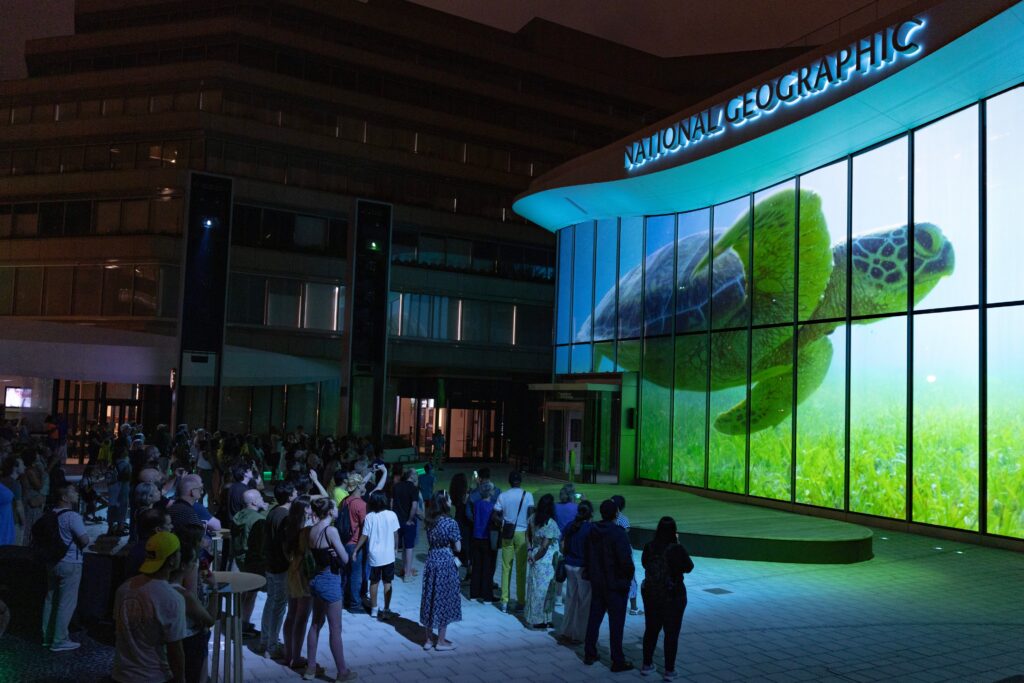
The new museum has also transformed National Geographic’s large courtyard on M Street NW. The museum’s multistory glass facade becomes a high-resolution screen every night for “Wonders of Our World: Oceans,” a stunning 17-minute presentation that takes viewers deep into the ocean and up close to blue whales, schools of fish, sharks, bioluminescent animals and other aquatic creatures while immersing them in music and natural sounds, such as whale song. The program, which begins after sunset, costs an extra $10.
The courtyard will also be used for concerts on Saturday evenings and a farmers market from 9 a.m. to 2 p.m. on Tuesdays. While there, explore the different “habitats,” where you can encounter virtual penguins, capybaras and wildebeest with a wave of your smartphone.
Other programming leans into D.C.’s popular after-hours museum scene (see also: Phillips Collection, the National Gallery of Art, etc.) with a party called “Nat Geo Nights,” mixing cocktails and a DJ with pop-up talks in the galleries, a scavenger hunt and other activities. The theme July 23 is “America’s National Parks,” featuring an immersive photo presentation. On Wednesday nights, there are two games of trivia in the Explorers Eatery cafe, with rounds heavy on science, nature and other topics that feature prominently in the magazine.
The Museum of Exploration’s permanent exhibits are a celebration of National Geographic itself: “The Archives” includes a screening room showing highlights from the extensive library of documentaries, and there’s a wide range of displays related to the magazine. Where else in D.C. can you find a reconstruction of what Tutankhamun might have looked like, a Zimbabwean thumb piano, and a replica cast of “Turkana Boy,” a 1.6 million-year-old skeleton discovered in Kenya in 1984?
An interactive section highlights National Geographic photographers and lets visitors play “photo editor” to pick the most compelling photos for, say, an article about adorable panda cubs.
Upstairs in the museum, the “Explorers Landing” gallery brings the focus back onto people in the field. Imagine donning the bulbous JIM diving suit that Sylvia Earle wore to walk on the Pacific Ocean seafloor or ascending in the high-altitude Explorer II helium balloon. Even smaller artifacts, such as a fake tusk that tracked ivory poachers and a seal-shaped decoy used to lure sharks for close-up photos, have fascinating backstories. National Geographic promises to rotate items and bring in fresh artifacts to update the displays.
Perhaps the most compelling reason to visit now is the exhibition “Photo Ark: Animals of Earth.” Longtime National Geographic contributor Joel Sartore has captured portraits of more than 17,000 species of animals, from snails to elephants. In this multiroom experience, you’re surrounded by them: snakes flicking their tongues, turtles emerging from their shells. Visitors are encouraged to peer into curtained boxes where it feels like owls and lemurs are mere inches away. A jumbo screen shows a gorilla lazing and a polar bear walking directly into the camera. It’s hard to tear yourself away.
Families shouldn’t miss the Learning Launchpad, an area designed for students. Interactive games will have them identify an animal from the way it moves in its environment or figure out where to place a beaver dam to improve river habitats. There’s also an immersive 270-degree “Geoverse” focused on Australia’s Great Victoria Desert, with animated animals and natural sounds.
The exhibits are spread throughout the building, and you’ll have more fun if you don’t walk from point A to point B. On the way to “The Archives” is an interactive, wall-size installation of National Geographic magazine covers. It’s enjoyable to watch them shuffle, but you can also use touch screens to find the cover from your birthday month. Keep an eye on the ground for custom “floor case” displays highlighting more history documented by National Geographic, including the discovery of the Titanic, Chinese terra-cotta warriors and a penguin wearing a “crittercam” to provide scientists with a bird’s-eye view.
You may not be an explorer, but on a visit to the Museum of Exploration, you’ll probably feel just like one.
National Geographic Museum of Exploration, 1600 M St. NW. moe.nationalgeographic.org. Tickets start at $29.99 for ages 18 to 64, $25.99 for visitors 65 and older, $22.99 for ages 5 to 17, and free for age 4 and younger. Discounted tickets are available through the Museums for All program. Special events, such as “Coffee With an Explorer” and “Nat Geo Nights,” require additional tickets. More information about individual events is available on the website.
The post What to see at National Geographic’s new Museum of Exploration appeared first on Washington Post.