I was the kind of kid who dug holes, the deeper the better. I vividly recall the ecstasy of once splaying out my fingers in a bucket full of backyard dirt, a bliss punctuated only by a sudden burning sensation in my right hand that turned out to be my first-ever encounter with a fire ant.
The textures of my childhood loom larger in my memory than sights or sounds. My first paper cut, on a piece of sheet music, and the rush of cold water my older sister used to wash away the blood. The warmth of my mother’s hug and the tender squeeze of my grandmother’s hand in mine. The whoosh of air I’d get from barreling a scooter down a hill, and the pristine crunch of stepping out into a winter’s first snow.
Why I wrote this story
Eager to break my own screen addiction, I toggled my iPhone into grayscale a few years ago, an accessibility setting that renders everything in black and white. In the days that followed, I’d look up from my phone and marvel at the sense that suddenly, the world’s colors appeared more vibrant than they were before, dulled by my adjustment to highly saturated displays. It was as if I’d just kicked a really bad sugary candy habit, and could once again appreciate the natural sweetness of a piece of fruit.
I’ve since been fascinated by the ways that our senses warp to adapt to our largely digital lives, and the extent to which those changes have seeped across our perceptions of the real world. I wanted to write this piece because I had a hunch that in the same way that screens had desensitized my eyes to color, making the world appear washed out, perhaps the opposite was happening with our sense of touch: By spending so much time tapping on a screen, we’d become hypersensitive to the point of aversion to the textures of the world around us.
I found some evidence to this effect, including links between excessive screen use and sensory issues, like the overwhelm many neurodivergent children feel in response to certain textures. But in conversations with experts, I also learned there has been a much longer societal arc away from engaging dynamically with our sense of touch, a loss that has had a profound impact on how we understand the world around us.
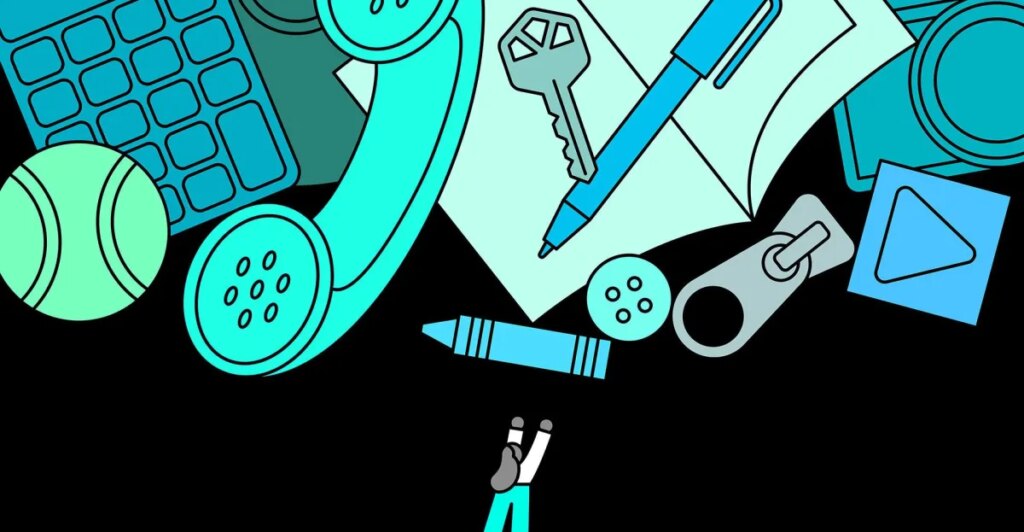
This was the world where many of us grew up, one in which we felt our way toward understanding, sometimes playfully, sometimes a little painfully, sometimes both. To make a phone call, you once had to rotate a dial. Entering an apartment building meant turning a key inside a wobbly knob. Calculators and cameras used to be clunky, and writing was something you did with a pencil you sharpened yourself.
But now, almost everything gets done through the touch of a screen, and the sharper that resolution becomes the fuzzier sense of what’s real and what’s not becomes. We’re starved for clarity, and as we fall out of touch with the world — both literally and figuratively —we’re only getting more ravenous.
“We’re aching for friction; we need and we crave friction,” said Mark Paterson, an expert on the sociology of touch at the University of Pittsburgh, because “it affirms ourselves and the boundaries between the self and the world.”
To be an adult today is to literally lose touch, to recede into the contours of your workaday life, and to reserve your exertions to do or to produce, but less frequently to explore. And to never willingly expose yourself to the fire ants lurking in the dirt.
Growing up isn’t the only reason why the textures that stitched together my early memories — those lines between real and imaginary play — now fall as flat as a crushed juice box or a deflated birthday balloon. Like most Americans, I spend far too much of my time with my nose pressed to a glossy screen, electroconductive feedback loops replacing the many discrete activities my younger hands mastered.
If kids once grew up surrounded by a smorgasbord of textures, many of today’s iPad babies struggle to hold crayons or zip up their jackets by the time they enter kindergarten. Socializing is something we now do overwhelmingly online with teens hanging out with their friends face-to-face nearly half as often as they did 20 years ago. We’re told to touch grass, but we keep touching screens: Americans spend 90 minutes less outside of the house now than they used to, and two-thirds of parents say they spent far more time outdoors as kids than their children do now.
“If the screen could imagine what its users look like,” Paterson told me, “then we’d be one big set of eyes and just one finger.” That one finger — or at most, two to four — is the dominant medium through which most young adults engage their sense of touch for over seven hours each day, tapping and texting and swiping for the equivalent of 106 days per year.
What so many people experience as screen fatigue might actually be better described as touch hunger, the unyielding sense that we don’t touch grass, touch one another, or touch textures — neither buttons, pens, nor dials — as often as we used to. In the quest to make our daily lives as frictionless as possible, we might be losing out on some of what makes life feel like life itself.
“The world is a wonderful interface to engage with,” said Rachel Plotnick, an expert in human-technology relationships at Indiana University. “Giving that up comes with a real loss.”
How the world became flatscreen
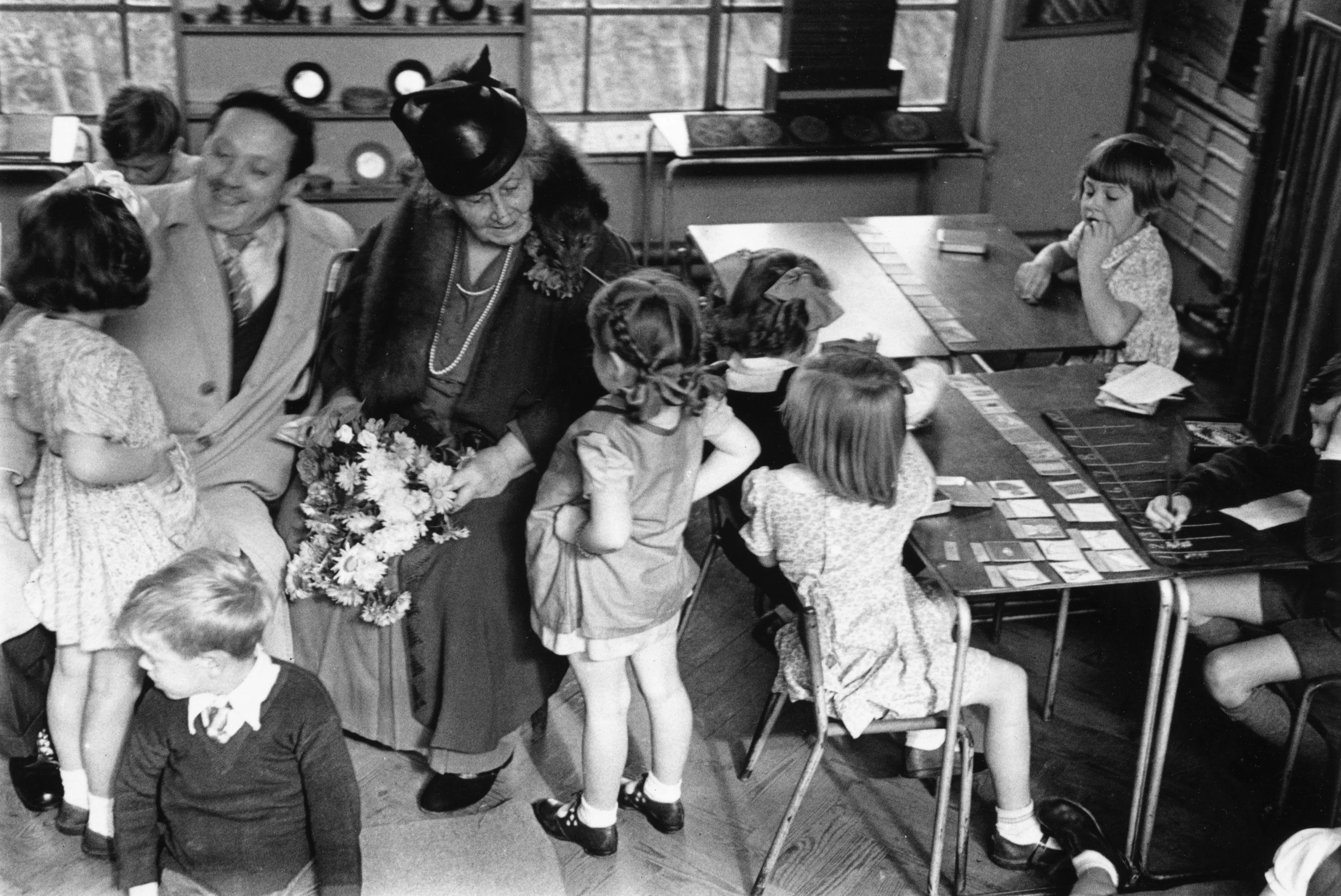
As the 19th century yawned into the 20th, an Italian physician named Maria Montessori opened up an experimental preschool for children cooped up in an impoverished tenement in Rome.
The first Casa dei Bambini, as Montessori called it, embraced a pedagogy of touch, eschewing lectures in front of a blackboard in favor of sensory activities such as fastening buttons, sorting blocks, and sweeping corridors. In their tactile environment, the students who arrived to the schoolroom “wild and uncivilized,” Montessori once said, soon “showed extraordinary understanding, activity, vivacity, and confidence. They were happy and joyous.” At a time when only half of Italian adults were literate, many of these children quickly became the first in their families to learn to read and write.
“In order to form and maintain our intelligence, we must use our hands,” Montessori said decades later in 1946, by which time hundreds of schools around the world had adopted her methods and her name.
The anxieties that first made Montessori’s educational innovations take off around the world will feel familiar to anyone nursing a smartphone addiction today. In the wake of the industrial revolution, nobody seemed to use their hands like they used to anymore. By 1920, more Americans lived inside cities than outside of them. As that shift continued, entire generations of workers began to earn their living primarily using their minds, not their hands, for the first time.
But the dawn of mass production also led to “real concern about bodily disengagement from the world,” said David Parisi, a professor of touch and digital technologies at New York University. Americans began buying their bread instead of baking it. They did away with churning butter, spinning yarn, chopping wood, and pickling produce in favor of buying packaged margarine sticks, factory-woven fabrics, coal furnaces, and canned vegetables.
There were ultimately tremendous benefits to these industrial era innovations, like more abundant food, the birth of modern medicine, and dramatically longer lifespans. But as transformative as those innovations were, they also represented an early manifestation of the “loss of what I like to think of as a certain type of epistemology, a certain mode of knowing or being in the world,” Parisi said. “That sense of knowing through touch.”
In the century since sliced bread began appearing on market shelves, our daily lives have only become more and more tactilely convenient, which is another way of saying still more physically disengaged. And while earlier technologies still involved some “differentiation of the interface,” said Parisi — think of a button versus a knob — now ubiquitous touch screens, despite their name, have flattened even those differentiations.
Plotnick, who wrote a definitive history of the button’s electrified early days, notes that there was plenty of fear at the turn of last century that all forms of touch would one day be replaced by the pushing of a switch. “Electric buttons have become the masters of the world, overcoming distance, doing away with the necessity for forethought,” a French nobleman that she quotes complained in 1903. “And, for that matter, for thought at all. Everything is changed.”
But today, most of what we do is achieved not through a push, which at least requires a modicum of pressure, but through a fleeting tap or swipe. What Plotnick refers to as “touchscreen mania” has flattened even those once ubiquitous buttons, levers, and knobs into a glossy lifeless display.
Even branding has gone flat in deference to the smartphone, which favors the legibility of 2D design at the expense of the richness that even a veneer of texture brings. If you’ve wondered why the logos for brands like BMW, PayPal, and Olive Garden look so sterile and interchangeable now, blame the fact that most advertising now happens through your phone, which can make anything remotely textured — like Spotify’s much-maligned disco ball icon — look distorted. Like most of modern life, it seems, branding has contorted itself to fit into the deflated topography of a largely digital world.



“We are tactile creatures,” Plotnick said. “How boring is it that all of the digital experiences that we have in the world are just touching the same slick flat glass over and over again.”
Our screens, ourselves
And boy, do we spend a lot of time touching that slick flat glass, often at the expense of touching more important things, like nature — and one another.
Americans check their phones nearly 200 times per day. It is the first thing they see in the morning and the last thing they see when they go to sleep. Nearly one-third of adults under 30 spend over nine hours per day looking at screens, which means that if nothing changes, they will spend over 20 years of their lives under the cool blue glow. Their dexterity, and even grip strength, appears to be atrophying away the handwriting or even typing mastery of older generations, and collapsing toward the great plains of the smartphone screen.
Worry not for the grown-ups, whose motor skills are more or less fully baked, but for the iPad babies, whose fingertips have been expeditiously wired like those of a prodigious violinist to deftly navigate the contourless landscape of their devices, as anyone who’s seen a toddler navigate an iPhone can attest.
Montessori’s hands-on learning methods remain popular, particularly among well-to-do parents. But many toddlers are glued to their screens, spending about 2.5 hours per day with them on average, instead of stacking blocks or painting with their fingers. And, while affluent families might be able to afford the Montessori preschools, $80 audio toys, and screen-free summer camps, many families can’t afford the increasingly premium experience of an unplugged childhood. According to a 2019 study, tweens from low-income families use their phones two hours more per day than high-income kids. Kindergarteners from low-income families spent a startling six hours per day on screens at the height of the Covid-19 pandemic.
It’s no wonder that over three-quarters of preschool teachers say their students can’t hold scissors, crayons, or pencils as well as they used to anymore, according to a 2024 survey by Education Week. Nearly 70 percent of teachers said kids have a harder time tying their own shoes. “The only place I’ve seen crayons given to kids is on airplanes,” said Field, the developmental psychologist, who believes that children’s motor skills have increasingly molded around their use of screens, rather than around the hexagonal barrel of a pencil or the steel frame of the monkey bars.
But this haptic atrophy is about more than pure playground nostalgia. As Montessori spent a lifetime pointing out, children — and teens and adults for that matter — learn better when they learn with their hands. Kids who count on their fingers are better at math, and writing by hand lights up your brain in all the right places for encoding new memories and information. For every additional hour per day that children spend on screens, they score 10 percent lower on standardized tests, a correlation that probably helps explain why American kids have been testing precipitously worse on math and reading ever since the smartphone took over about a decade ago.
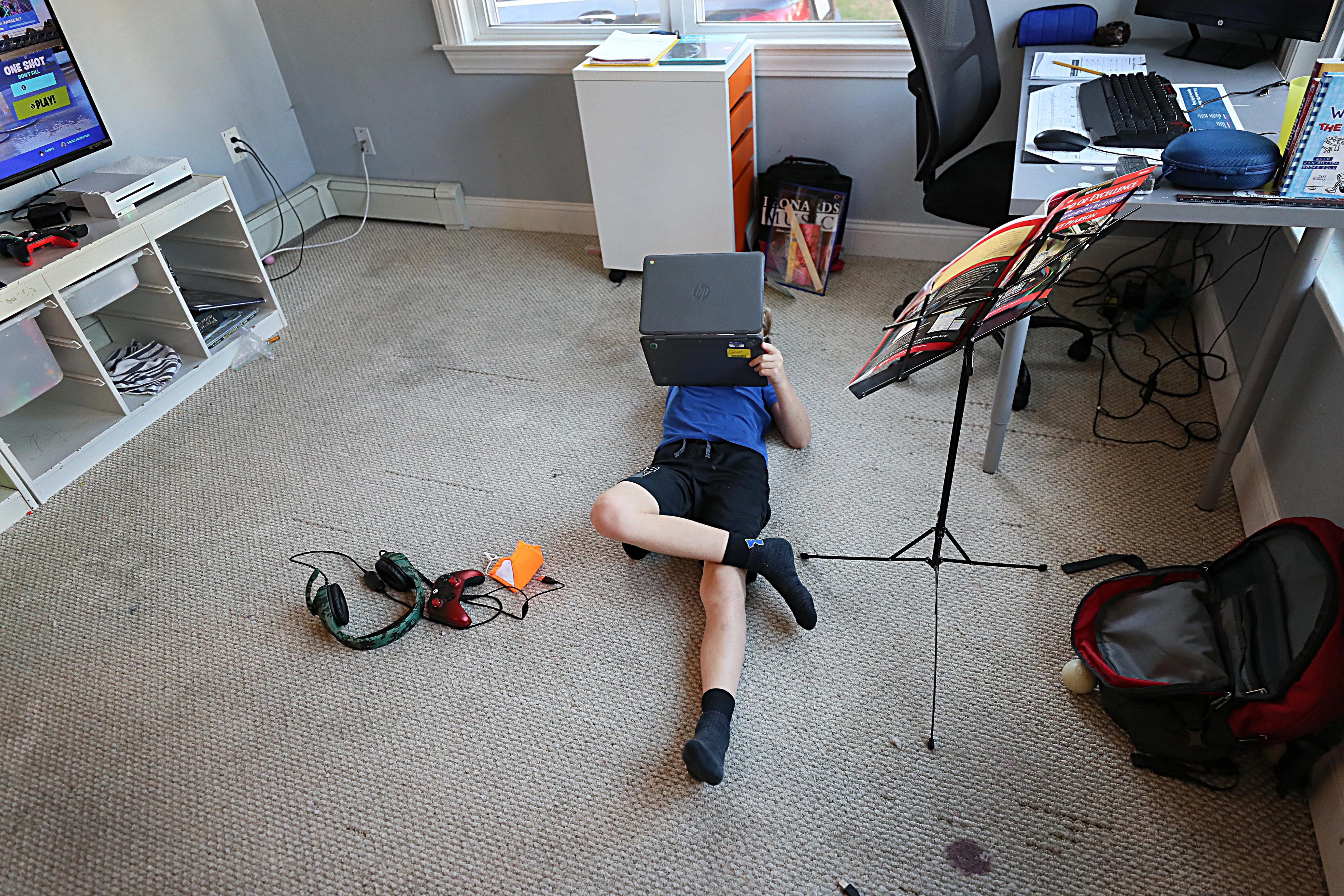
“How do kids learn about the world? Well, they need to feel if something is lumpy or soft or hard or hot or rough,” said Plotnick, who becomes concerned at times when she sees her own kids learning math on the computer. “If they’re not moving around pieces and they’re not erasing with an eraser,” she said, they might not be able to “process that content in as rich a way as if they were using their hands.”
While adults may be less vulnerable to the worst effects of screen time, they’re not immune to its dangers. Smartphone-addicts are more prone to vertigo and balance problems, meaning that the majority of Americans may be clumsier than they used to be. And if you spend all of your free time spiking your dopamine levels on your phone, then you have less time for using your hands to knit, cook, and garden, which all measurably improve your mood and can ward off depression.
“Even just writing, holding a crayon or pen, is stimulating the pressure receptors under your skin” leads to “a more relaxed neurological state” in which “your nervous system slows down, your heart rate slows down, your blood pressure slows down,” Field said. “You can trace a whole path towards ill health” from failing to adequately engage your sense of touch.
Like most technologies, the touchscreen is not inherently evil. It is not predestined to be cast as the cartoonish bad guy siphoning kids away from their cowboy dolls like LilyPad the tablet does in the latest Toy Story sequel. During the pandemic, for example, touchscreens were arguably an overwhelming force for good, allowing people to preserve some slimmer of connection with one another when being physically together became unsafe.
Arko Ghosh, a professor at Leiden University, has studied patients going through brain surgery. After they come out of anesthesia, “one of the most difficult moments of their life,” almost all of them “grab their phone, because it’s so easy and it immediately connects you to your loved ones,” he marveled. “There’s a magic going on through your fingertips that wasn’t there before.”
“How do kids learn about the world? Well, they need to feel if something is lumpy or soft or hard or hot or rough.”
Rachel Plotnick, Indiana University
But there are also inescapable tradeoffs to outsourcing your social life to the screen instead of rubbing shoulders and shaking hands in the real world. Touch starvation or skin hunger — the yearning for human contact — reached a much–discussed fever pitch during the pandemic, but many people never shook off the itch, in part because its roots long precede the pandemic.
Teens and young adults today spend 70 percent less time hanging out in person than they did two decades ago, and a poll in the UK found that 40 percent of adults go days without speaking to another person face-to-face. Americans have far fewer friends and have way less sex than they did a few decades ago. Even when they hang out with one another, most admit that they can’t stop checking their phones.
“There is more touch on the screen than there is on other people,” Field said, “and that is a sorry experience.” Holding hands or hugging have been shown to reduce cortisol levels and flood your brain with happy hormones. Touching grass has a similar effect, and so does collaging or ceramics.
It’s no wonder that people feel existentially lonelier, far less trusting, and I would argue, fundamentally less grounded in reality than they were when they, like me, spent their childhoods literally digging into the ground. When we no longer feel the grain of the world, how can we hold onto what’s real or not?
Have we reached peak screentime?
There are some indications that the world has reached its anti-tactile breaking point.
Dissatisfaction with our touch-deprived status quo has spilled out in the form of fidget spinners and the revival of the printed word, flip phones, clackity keyboards, wristwatches, and grannycore hobbies like ceramics or crochet. “People want that tactility, that physicality,” Parisi said, of textures as benign as “the play button on a cassette deck.” They crave the subtle etched sound grooves of a vinyl record — sales of which surpassed $1 billion last year for the first time since last century — or the feel of a cool metal needle pressed against a fuzzy bunch of yarn.
“I’m of that generation where I used to love taking the record home from the store and lifting the needle” of a new vinyl, Paterson said. “There was a tactile element that’s missing in digital streaming.” He believes their resurgence may belie “an appetite to introduce more friction into people’s lives again,” he said. “I think the tide is turning.”
Naturally, as with Montessori schooling, one’s digital detox now comes with a premium price tag: An app blocker can run for $60, ceramics classes are prohibitively expensive for many hobbyists, and some dumb phones — devices with far more limited access to apps and other functions — cost far more than their “smart” counterparts. But there are other reasons to be hopeful too.
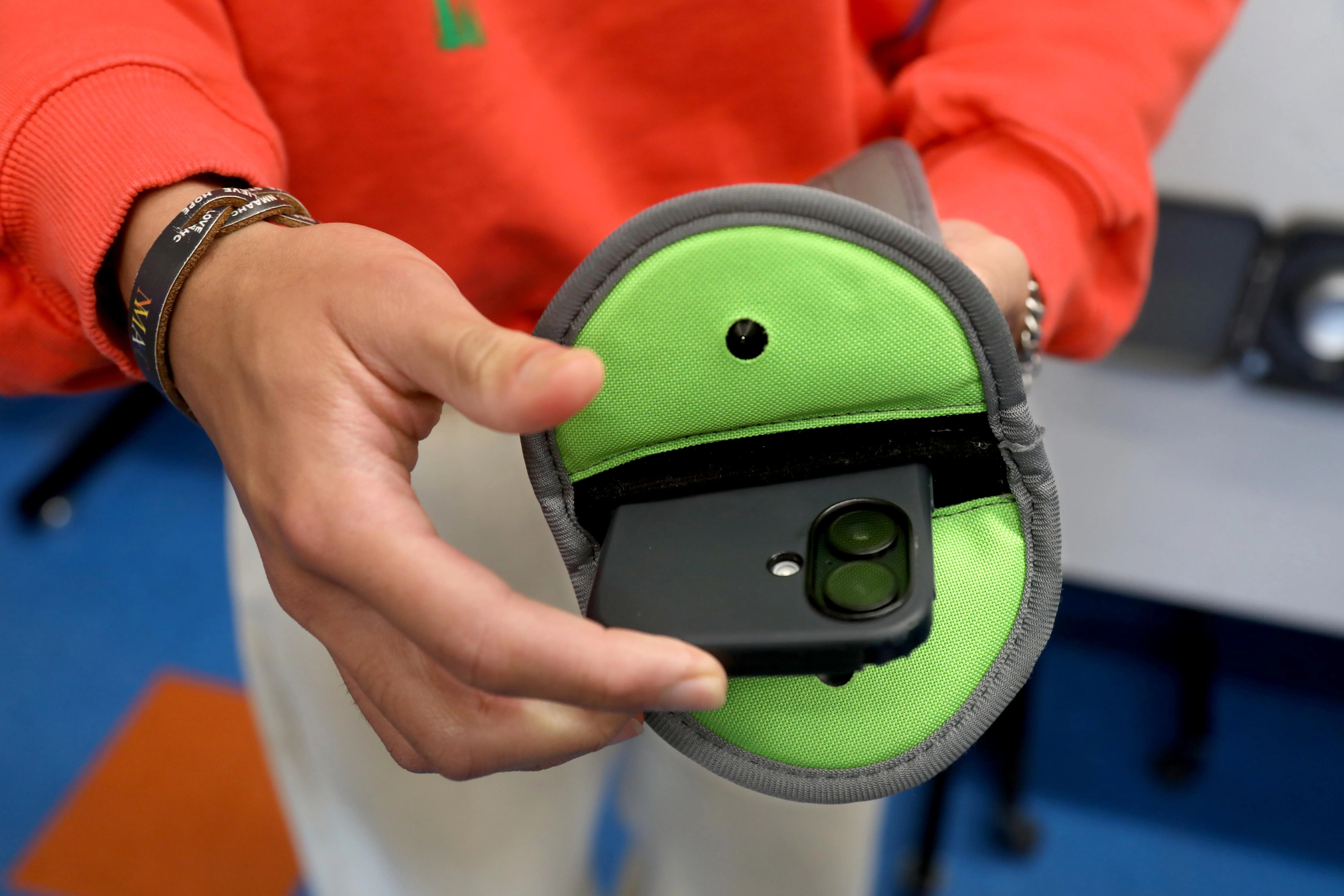
Critically, schools (and in some cases, indie musicians) have begun locking up kids’ phones altogether, mandating recess, and forcing students to go back to handwriting essays in blue books. Quite suddenly, the lunchroom is loud again.
Even car companies, which so eagerly began adopting their big ugly touchscreens a decade ago, have begun bringing back the button. “People seem to have a hunger for physical buttons, both because you don’t always have to look at them — you can feel your way around for them — but also because they offer a greater range of tactility and feedback,” said Plotnick, who’s advised companies looking to make the switch. “I do think we are seeing that pendulum swing back.”
If you are not a neo-luddite, and the idea of a small computer wrapped around your index finger doesn’t make you seethe, then there is also the promise of wearables — like Oura rings, Apple watches, and Meta glasses — which could portend a more ambient technological future, one where people spend less time staring at screens and more time living in life.
“We don’t want to romanticize buttons and demonize touchscreens or vice versa,” said Plotnick. “We don’t have to live in a world where you have to only have one or the other.”
Haunting all of this, an actual ghost in the machine, is the spectre of artificial intelligence. On the one hand, it could push us towards an entirely frictionless future, Plotnick said, one where people need not even tap or swipe anything anymore to send out a message or get food delivered to your door. On the other hand, AI calls into question the very premise that led many people to value the cerebral over the corporeal in the first place. After all, the dawn of the white-collar workforce helped crystallize the idea of an America that worked — and by extension, defined itself — within the contours of the mind. Disrupting that premise — combined with the dawn of reality-warping AI photos, videos, and misinformation — could force a reassessment of the value of a human touch.
Over half of Americans now say they have a hard time knowing what’s true, and perhaps even more importantly, more than half feel isolated from one another, and three-quarters say they’re more stressed about their country’s future than they used to be. Over 65 percent of Americans don’t feel like they belong in this country, and over three-quarters said the same of their neighborhoods. The nodes that once connected people to their surroundings, to one another, and to their own personal truth appear to be eroding.
You really can’t believe everything that you see anymore. But with the almost quaint certainty that comes from a fresh blade of grass or a fire ant’s sting, you can in fact believe almost everything you can touch. If we choose to outsource our sense of reality, and even our precious early memories, to our frictionless digital lives then we are dooming ourselves to a life in a sea of slop, that thankless mire of the proverbial metaverse. At worst, we risk stripping away the textured frictions that help define where our selves end and where the rest of the world begins.
The post What we lost when everything became a screen appeared first on Vox.