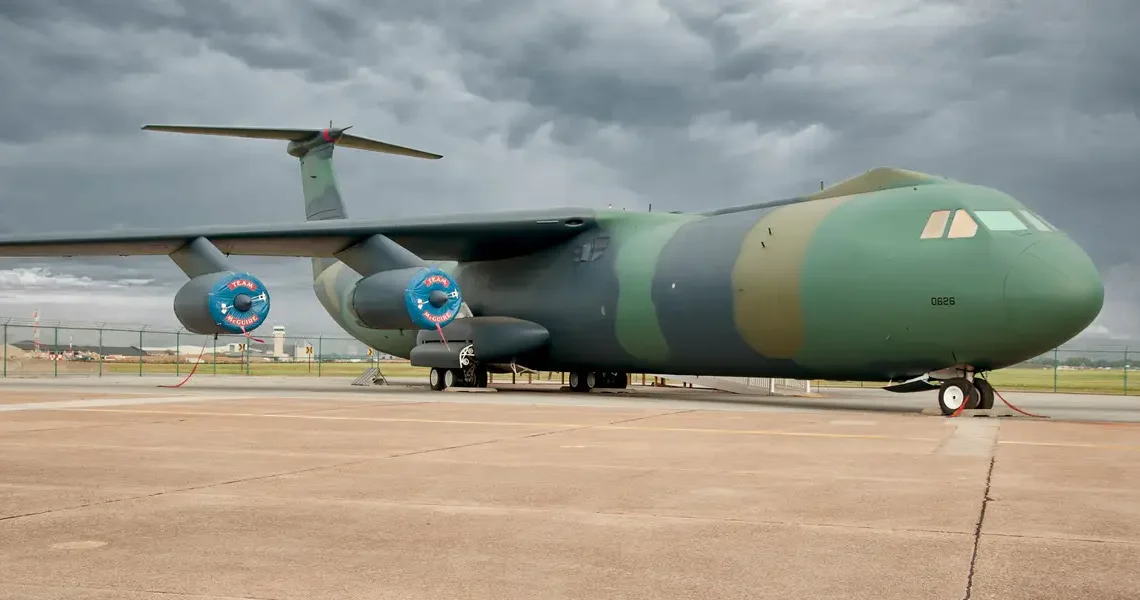
The C-141 Starlifter was known as the “workhorse” of the US Air Force.
From the Vietnam War through Operation Iraqi Freedom, the aircraft airdropped troops, evacuated wounded soldiers and prisoners of war, and transported crucial military supplies into combat zones as part of the Air Mobility Command.
The planes also participated in humanitarian missions, including medical shipments and evacuations following natural disasters such as Hurricane Katrina.
The Air Mobility Command Museum on Dover Air Force Base in Delaware features a C-141B Starlifter open for visitors to explore the cargo bay, cockpit, and crew bunks. Take a look inside.
The C-141 Starlifter operated in the US Air Force from 1965 to 2006.
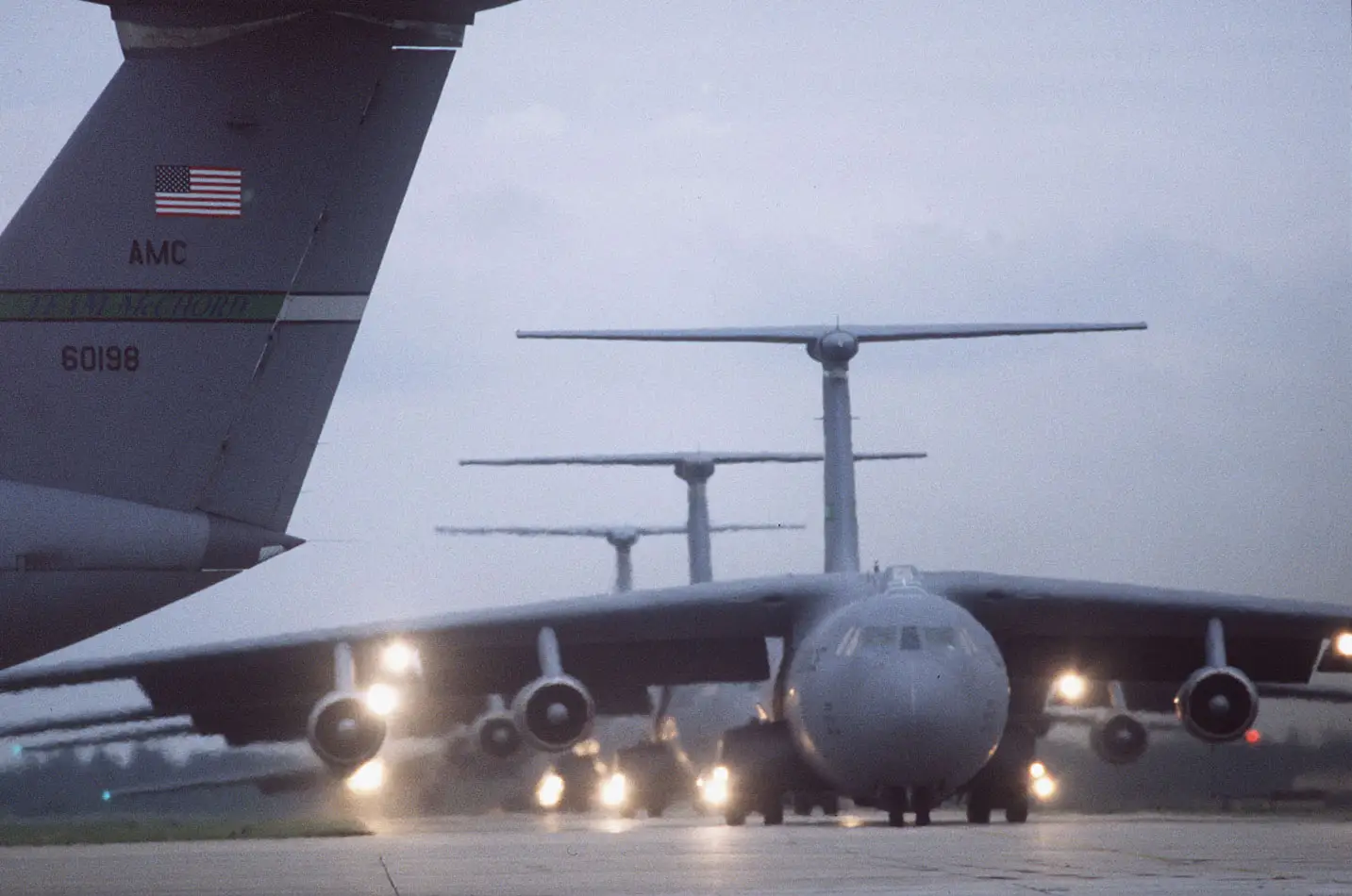
Built by Lockheed, now Lockheed Martin, and unveiled by President John F. Kennedy in 1963, the first C-141A model entered service in 1965.
The C-141B, which first flew in 1977, could carry up to 68,000 pounds of cargo — 30% more than the C-141A — and fly as fast as 500 miles per hour, powered by four turbofan engines.
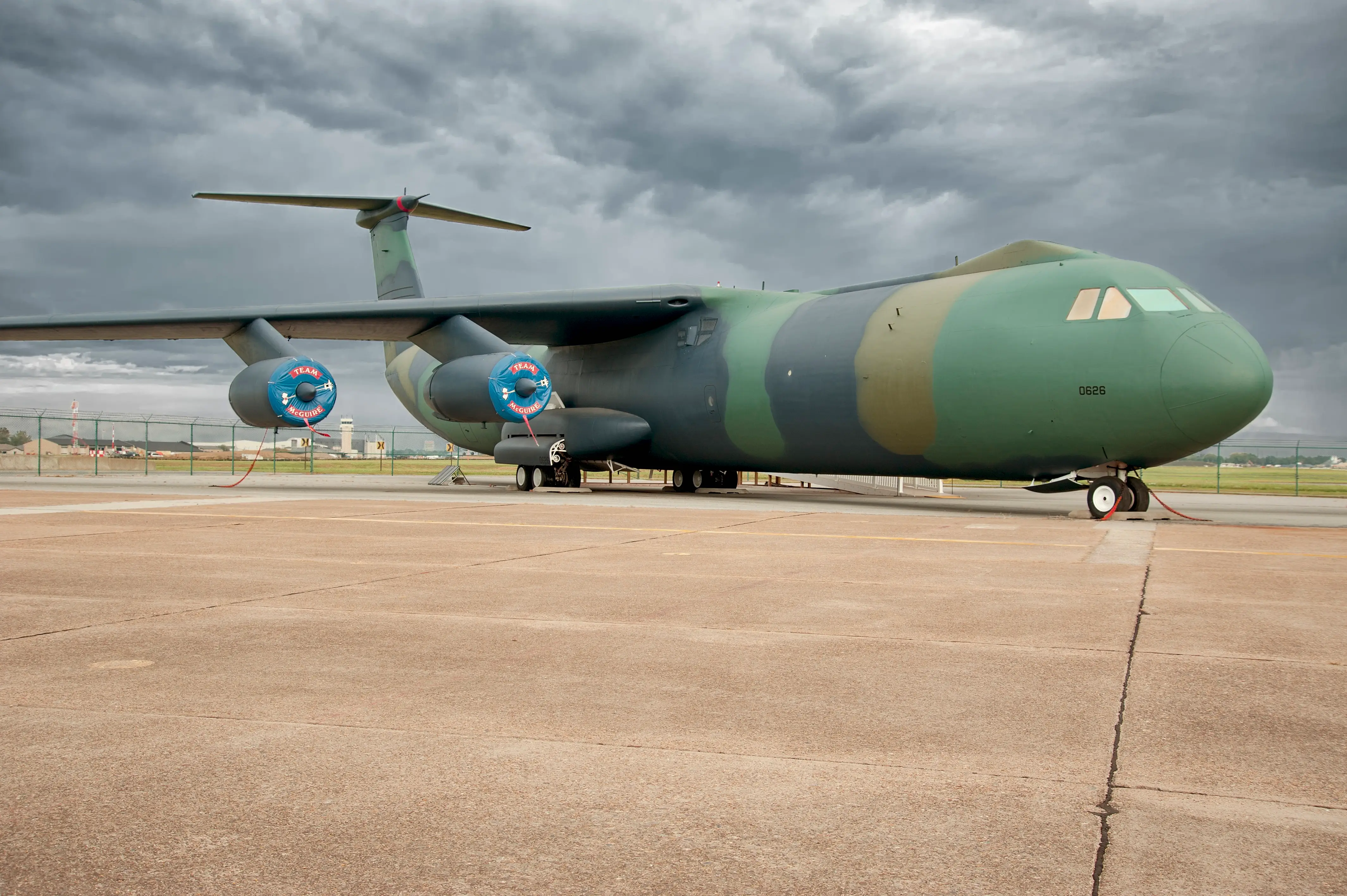
The Air Mobility Command Museum on Dover Air Force Base in Delaware features the last C-141 Starlifter ever stationed at the base.
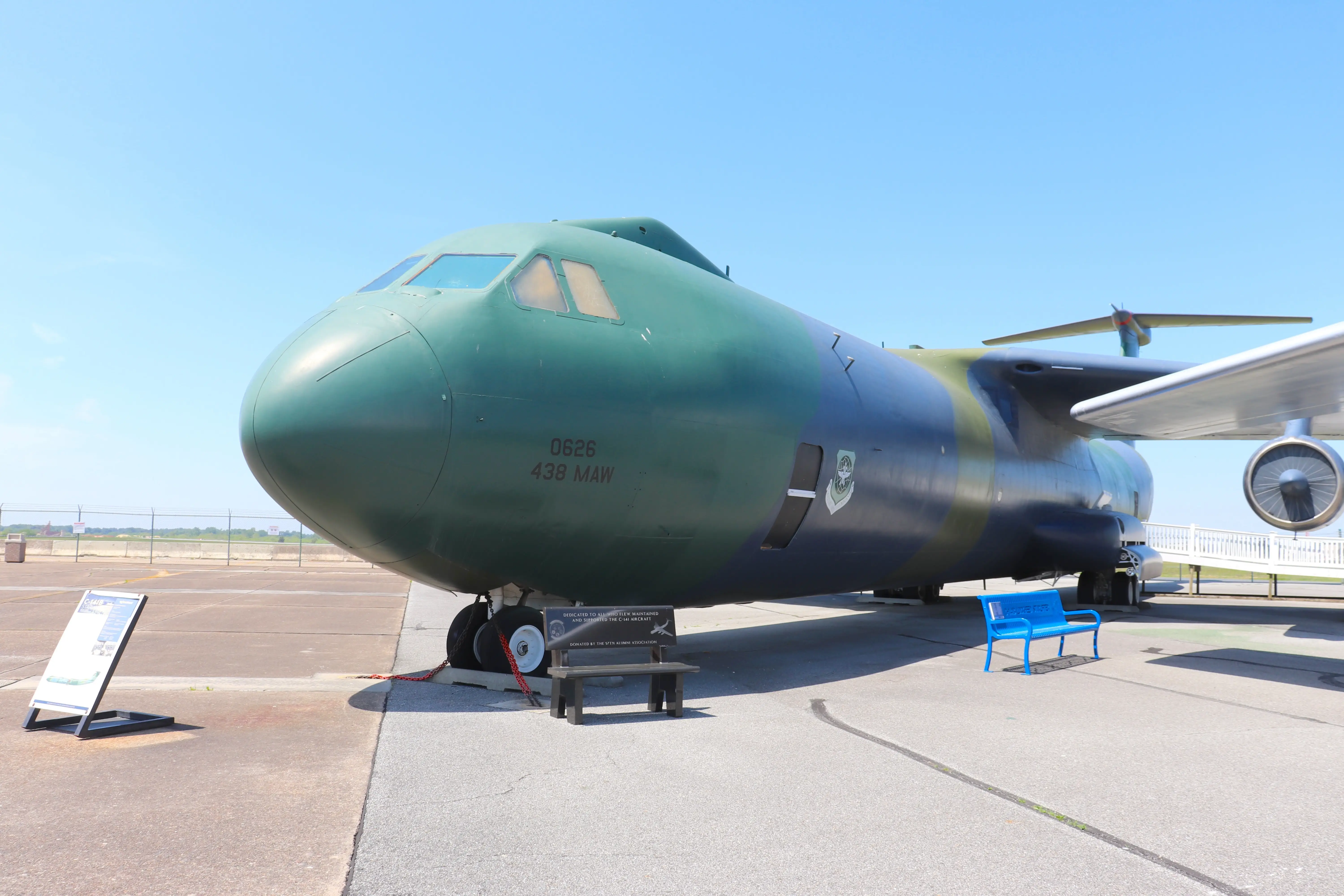
Retired in 1996, the museum’s C-141B Starlifter is now an exhibit open to the public. Admission to the Air Mobility Command Museum is free.
The plane door that museum-goers enter through is one of the two doors that paratroopers used to jump out of.
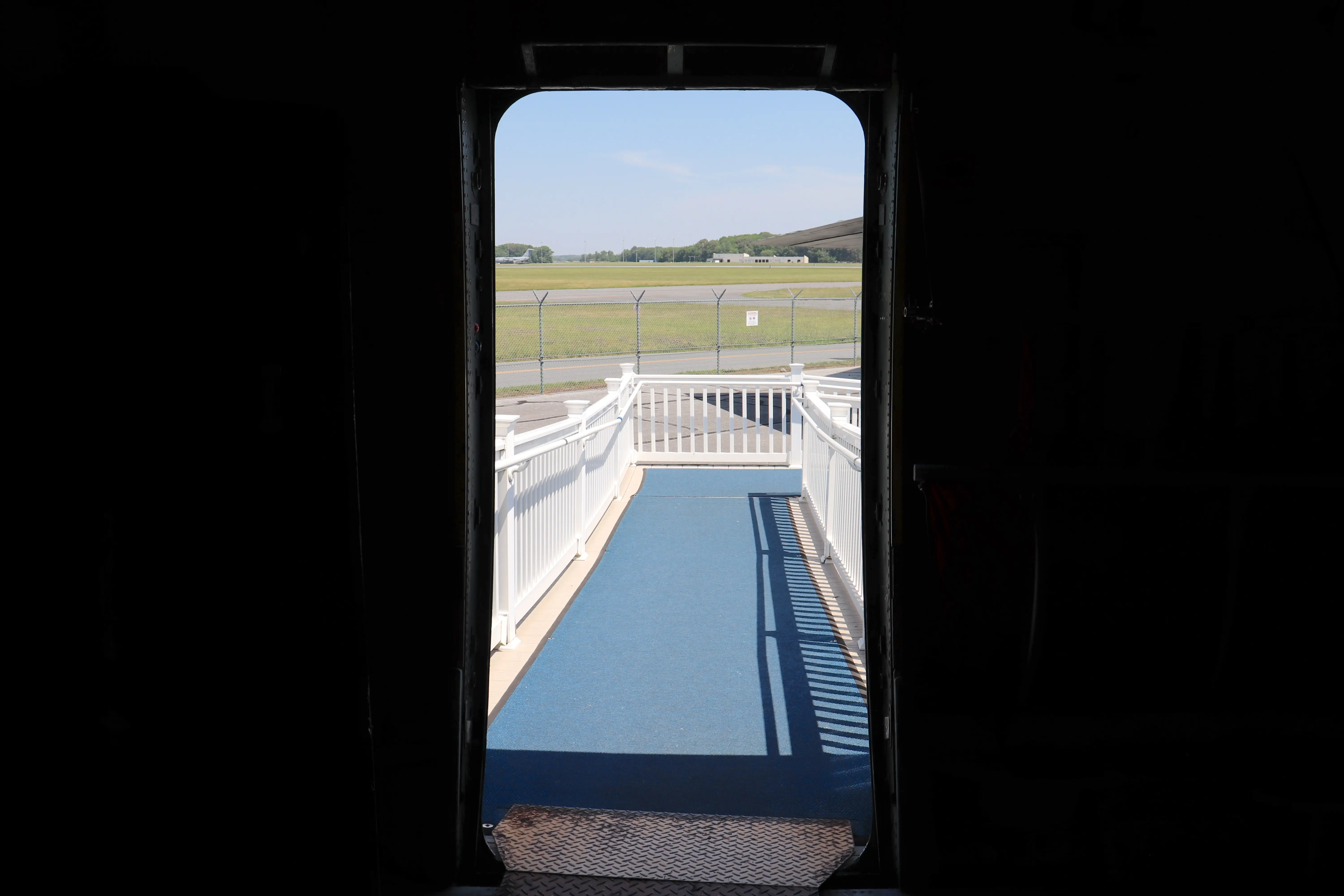
C-141B Starlifters have two troop doors, one on either side, behind each wing. The cargo doors for loading, unloading, and airdropping cargo were located in the rear.
The plane could hold up to 168 paratroopers. C-141B Starlifters dropped paratroopers of the 82nd Airborne Division into Grenada during Operation Urgent Fury in 1983 and into Panama during Operation Just Cause in 1989, among other operations.
The cargo bay measures 93 feet and 4 inches long and 10 feet and 3 inches wide.
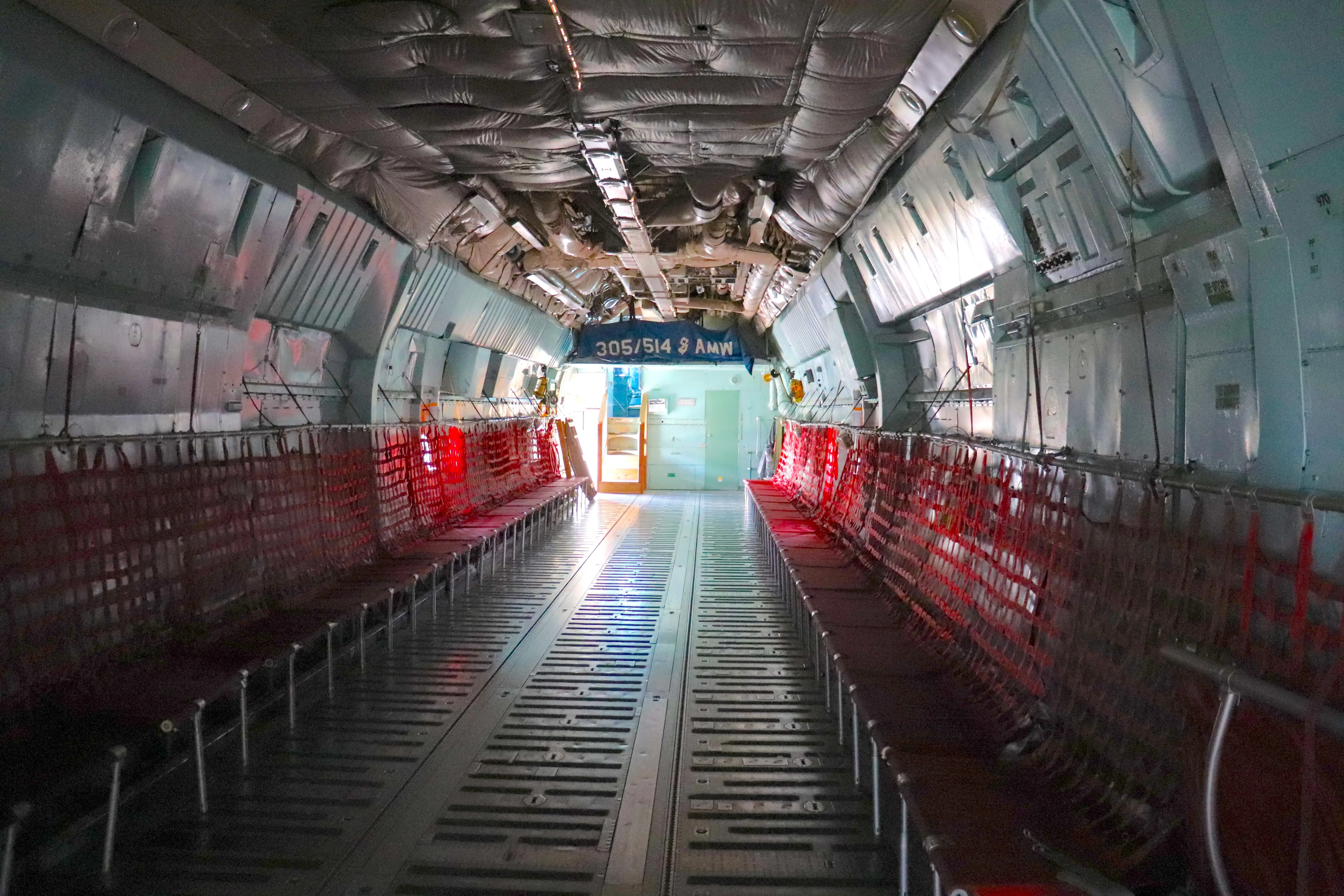
The cargo bay could transport cargo as well as troops, who would sit on the foldout red benches. There was room for 205 service members.
The C-141 could be configured to carry many types of wheeled vehicles: towed artillery, armored personnel carriers, and trucks.
Large cargo planes deliver the food, fuel, supplies and vehicles that are the lifeblood of operations, and a critical component of the US’ global footprint.
The airlifter could hold 13 463L pallets like these, each weighing 290 pounds.
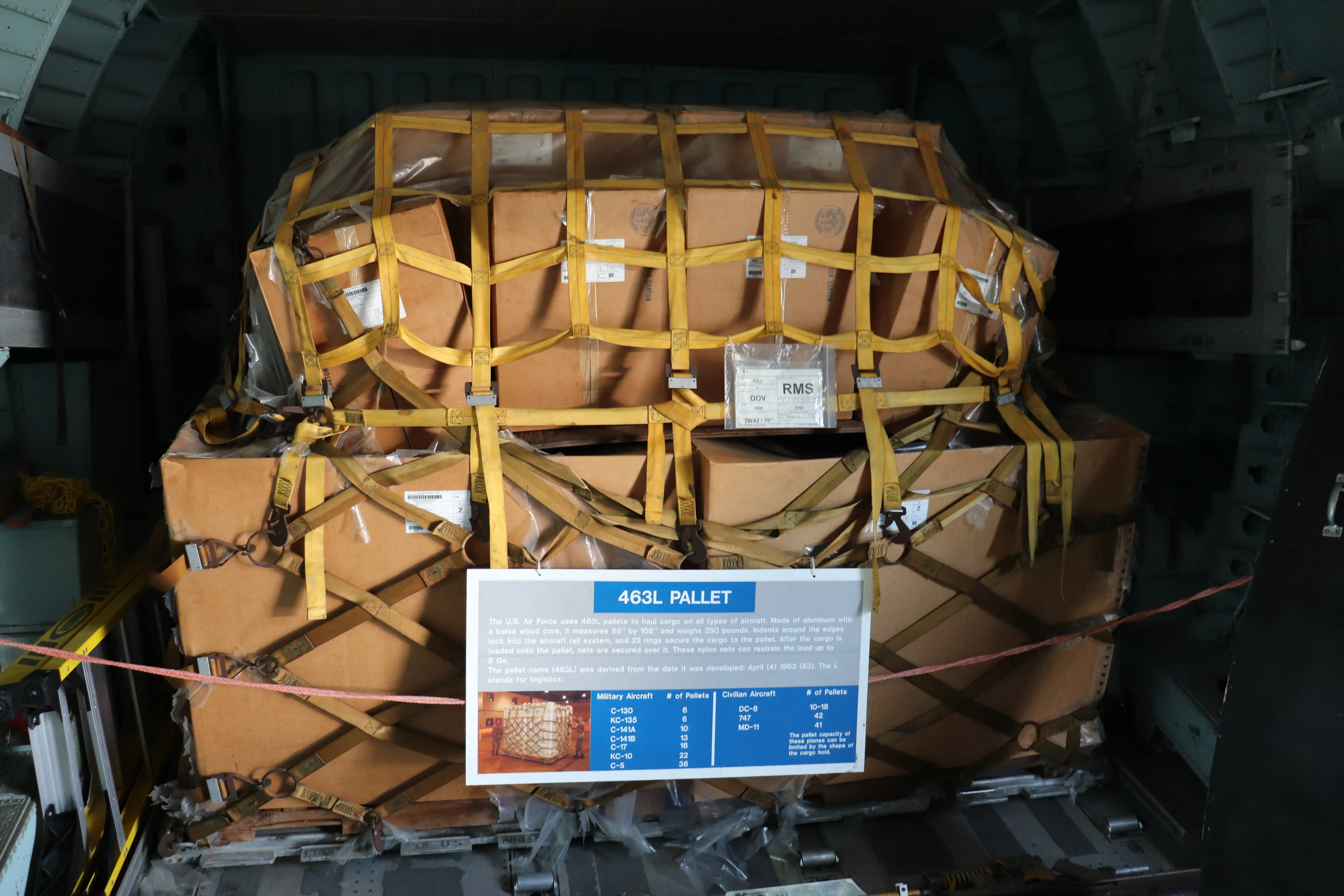
Made of aluminum and balsa wood, 463L pallets are named for the month and year they were developed, April 1963. The nylon nets help keep the cargo secure in up to 8 Gs, or 8 times the force of gravity.
The crew rest area was cordoned off behind a wall to allow the in-flight crew to rest on long flights.
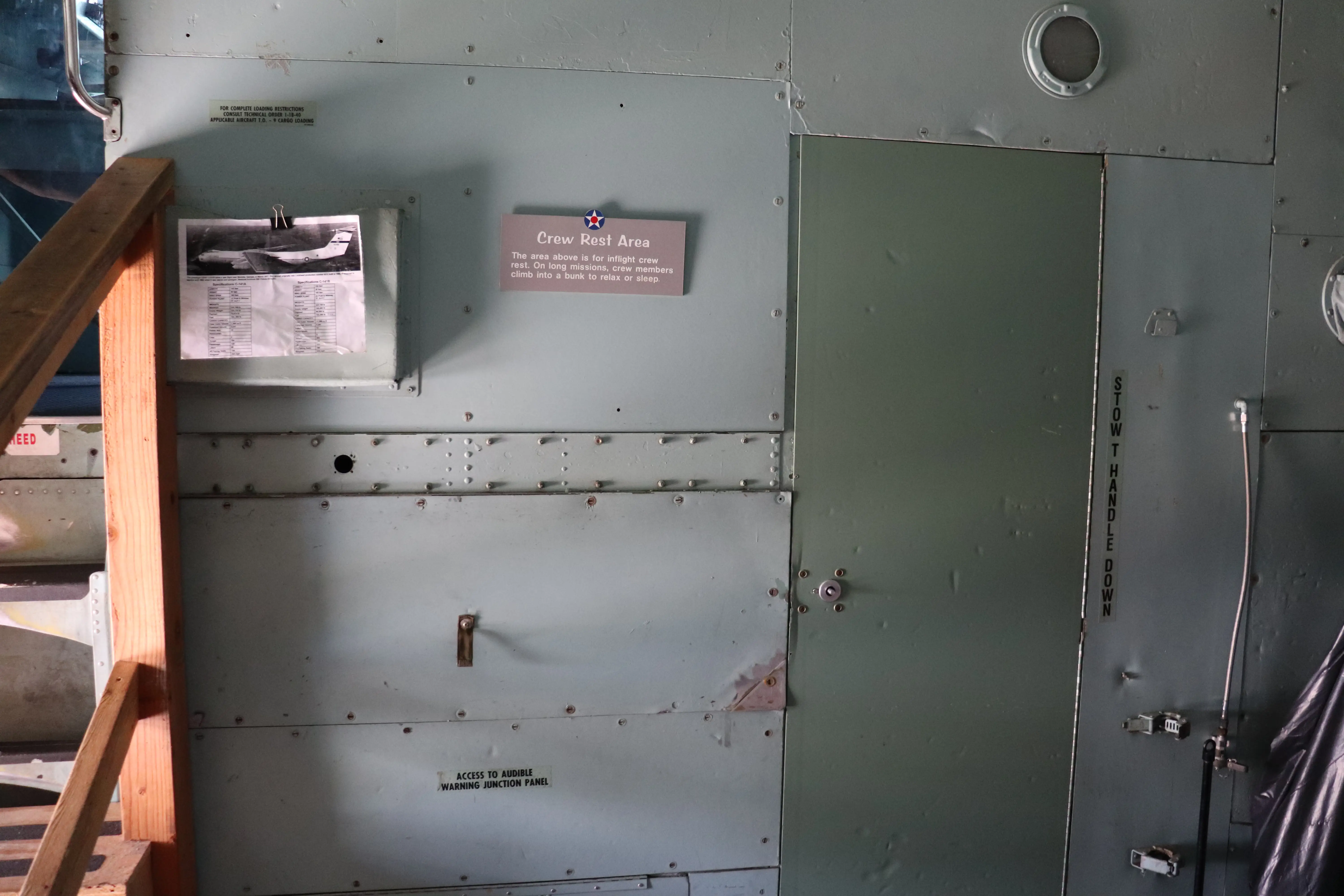
Unlike the C-141A, the C-141B was capable of being refueled while in flight thanks to aerial tankers that could transfer fuel via an extendable gas pump called a boom.
With no need to stop and refuel, the C-141B could fly nonstop to and from international destinations.
The snug space featured elevated bunks.
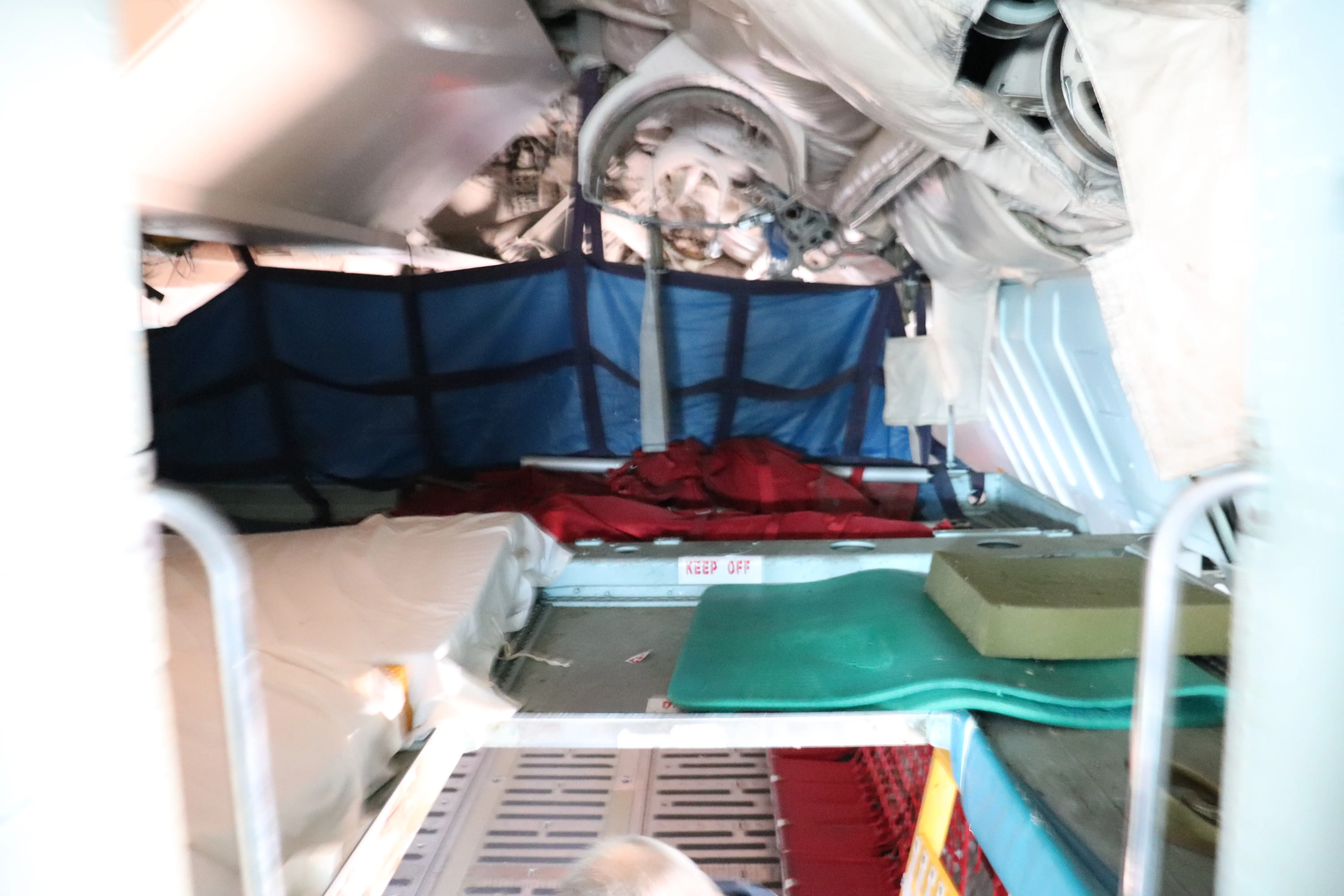
The crew rest area was located behind the flight deck.
The flight deck featured four seats, for the pilot, co-pilot, navigator, and flight engineer, as well as a jump seat in the middle.
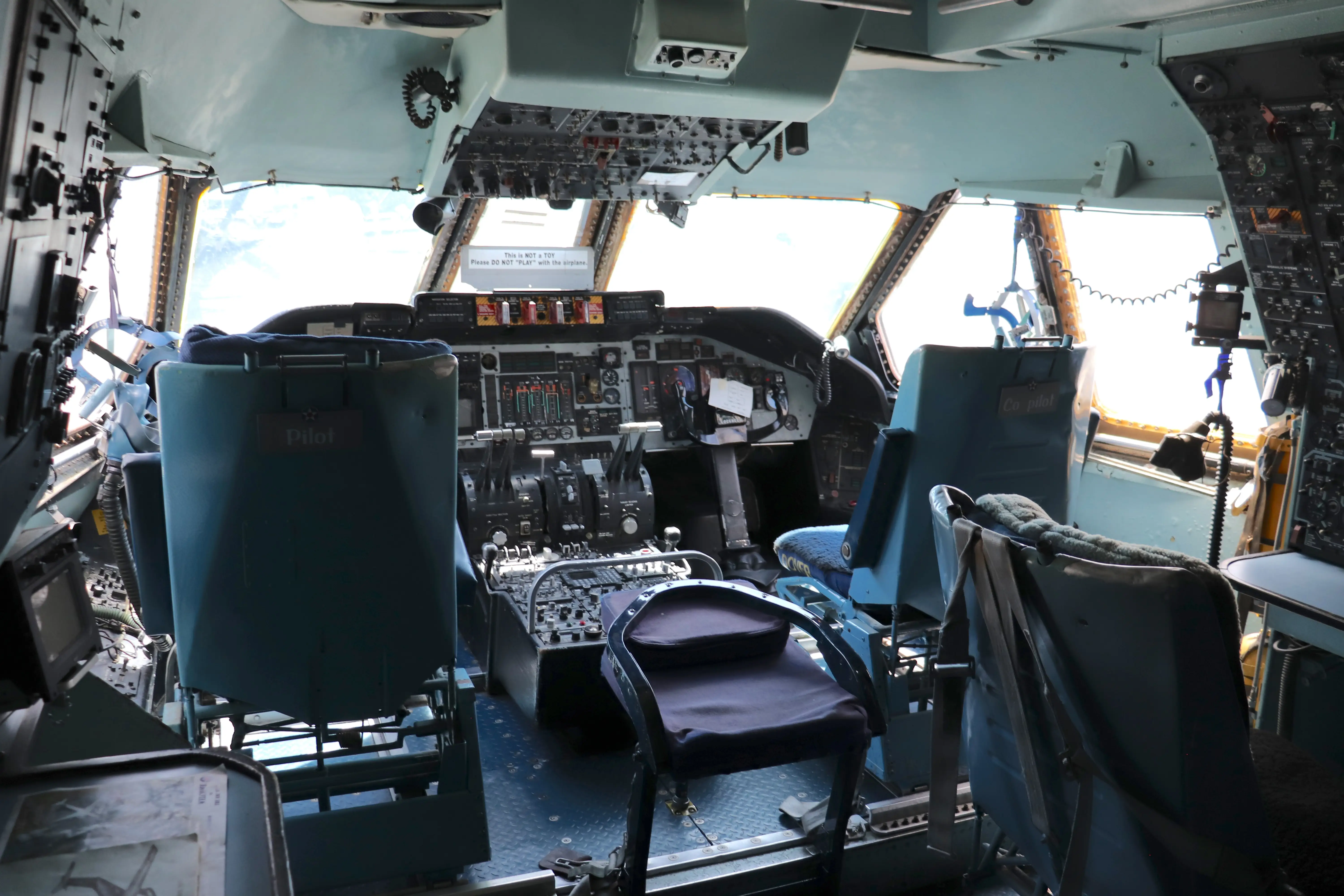
The jump seat was used by the second flight engineer, known as the scanner when not seated at the flight engineer’s console.
The flight deck windows of a C-141B Starlifter are nearly identical to those of a C-5 Galaxy, the Air Force’s largest plane, with the exception of the center windshield.
The flight engineer was responsible for monitoring and managing the aircraft’s systems, including the engines.
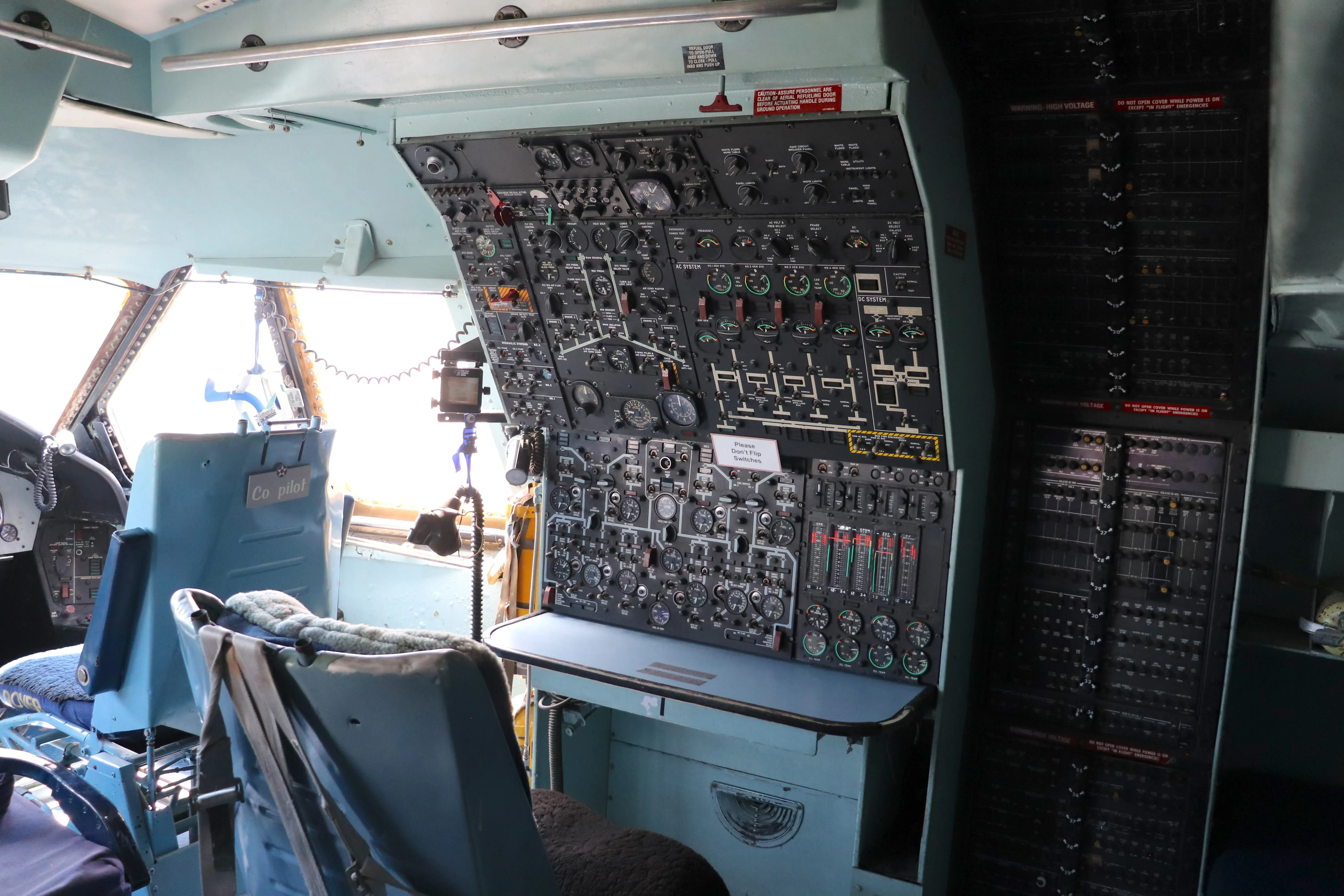
The role largely became obsolete with the introduction of digital technology.
As the Air Force retired C-141 Starlifters, they were replaced by the C-17 Globemaster III.
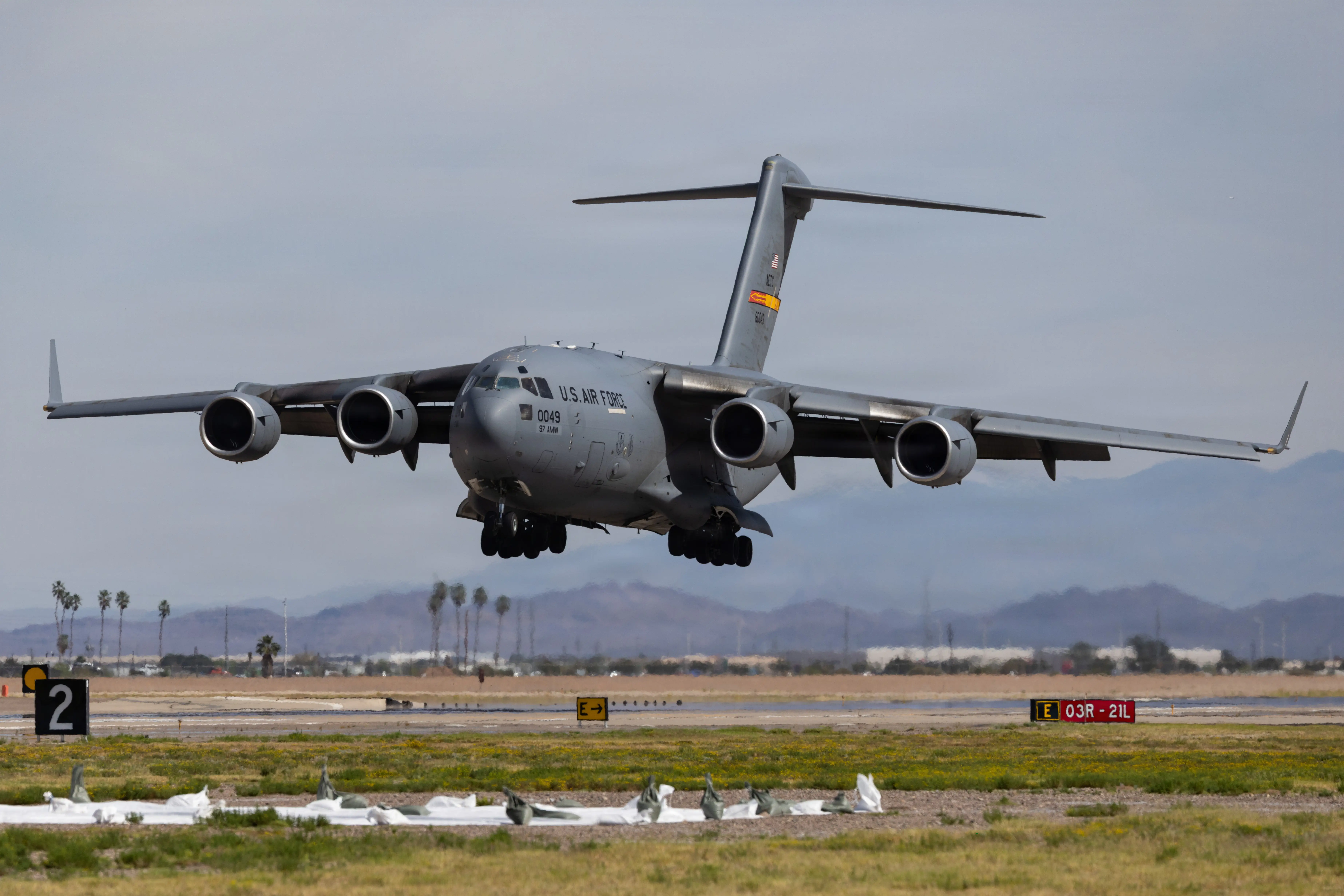
The C-17 Globemaster III only requires three crew members: a pilot, co-pilot, and loadmaster. It can transport up to 170,900 pounds of cargo — more than twice the capacity of the C-141B — and fly at 450 knots, or about 517 miles per hour. It can also operate on runways as short as 3,500 feet.
The C-17 entered service in 1993 and continues to support the Air Force’s combat operations and humanitarian missions, picking up where the C-141 Starlifters left off as the US military’s primary long-haul transport aircraft. Boeing has a $2.5 billion contract to sustain the Air Force’s C-17s, and there continues to be interest in building new Globemasters even though Boeing closed the production line over a decade ago.
“In every conflict, every disaster, every contingency anywhere on the globe, Starlifter crews have been the first responders,” June Shrewsbury, Lockheed Martin’s vice president of Strategic Airlift, said at a C-141 retirement ceremony held in 2004. “The C-141 has quite a record of achievement.”
Read the original article on Business Insider
The post C-141 Starlifters transported troops and cargo for over 40 years before C-17s made them obsolete. Take a look inside. appeared first on Business Insider.