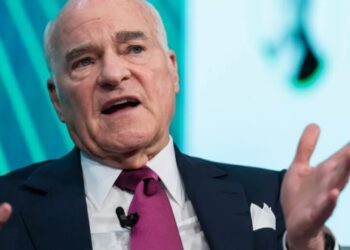
Bradley A. Smith is the chairman of the Institute for Free Speech and a former chairman of the Federal Election Commission.
Americans of all persuasions routinely join and support groups — typically organized as corporations — to achieve their various goals, including political ones. However, critics of the Supreme Court’s 2010 decision in Citizens United v. Federal Election Commission, which upheld the rights of corporations to spend money in support of political causes, insist the decision “corrupted” American democracy.
Hawaii has now taken the campaign against Citizens United to its logical endpoint. In May, the state enacted Act 11, a sweeping law designed to strip most incorporated organizations of the ability to engage in election- or ballot-related advocacy. Any corporations that spend money on such efforts could be suspended or dissolved.
This new law is not evenhanded. Act 11 exempts newspapers, broadcasters and periodicals. These institutional media corporations retain full First Amendment rights while most other organizations lose theirs, making the government the arbiter of which corporations deserve a voice.
Hawaii didn’t stumble into Act 11 randomly. The law is an attempt to implement a legal strategy developed by the Center for American Progress (CAP), a progressive think tank in Washington that describes Hawaii’s law as a test case.
CAP believes that even though a state cannot deny a corporation the right to speak, it can deny a corporation the ability to speak by “redefining” the corporate powers granted by state law. The law applies to out-of-state corporations, too. They must also abide by the limits as a condition of doing business in the state. If this semantic trick is upheld, it would make the benefits of a corporate structure conditional on a surrender of First Amendment rights.
Supporters argue that the law is needed to stop corporate influence in politics. But “artificial persons”— as the new law calls corporations and other types of organizations — are not limited to big businesses, out-of-state interests or corporations. Rather, the sweeping provisions of this law even apply to nonprofits, labor unions, trade associations, advocacy groups and civic organizations, regardless of size.
Act 11 denies these groups — and thus their individual citizen members — the right to speak collectively. A union can’t pool member resources to weigh in on a county charter amendment. A nonprofit founded to educate the public about government accountability is barred from engaging in the very civic advocacy that defines its mission. The law could even treat an informal neighborhood environmental meetup as an “unincorporated nonprofit association” and prohibit it from spending money in support of a ballot measure protecting open space.
One of the many groups stripped of its right to speak is the Grassroot Institute of Hawaii, a local nonprofit that promotes individual liberty, economic freedom and limited, accountable government through public education. The organization’s efforts have included analysis and advocacy supporting or opposing state ballot measures. My organization, the Institute for Free Speech, is representing Grassroot in a federal lawsuit challenging Act 11 on First Amendment grounds.
Associations are vital for robust political speech. Most people can’t afford a television advertisement, a digital campaign or the cost of creating a political action committee. So individuals band together in organizations — nonprofits, unions, advocacy groups and for-profit corporations — with like-minded people, pool their resources and express views that otherwise might go unheard.
Act 11 does not even achieve its purported aim of removing money from politics; it just moves it around while silencing ordinary voices. The only voices left belong to media institutions, politicians and wealthy individuals who have enough money to make themselves heard on their own.
Citizens United recognized a foundational principle: People do not forfeit their First Amendment rights when they act as a group.
If Hawaii can strip speech rights from certain disfavored organizations today, other states can strip them from different disfavored organizations tomorrow. The question is not which organizations are silenced first. It is whether government gets to make that choice at all. The First Amendment’s answer has always been no.
The post I chaired the FEC. Hawaii’s attack on Citizens United is dangerous. appeared first on Washington Post.