Oil prices bumped up on Tuesday as the United States and Iran prepared for further talks after a spurt of hostilities underscored the uncertainty surrounding attempts to secure a lasting peace.
Both Iran and the United States have said they are sending representatives to Doha, the capital of Qatar, on Tuesday. The two sides were not expected to meet directly.
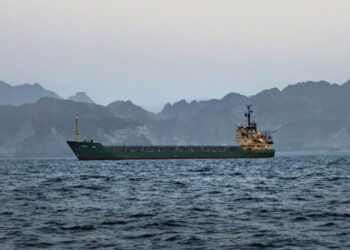
Shipping traffic through the Strait of Hormuz, disrupted for months, bounced back on Monday after many shipowners held back over the weekend in the face of tit-for-tat strikes by Iran and the United States.
Oil holds steady.
-
The price of Brent crude, the global benchmark for oil, rose slightly on Tuesday to about $74 a barrel for September delivery, the most actively traded contract.
-
West Texas Intermediate crude, the U.S. benchmark, also moved between small gains and losses, hovering around $71 a barrel for August delivery, the most popular contract.
Stocks gain.
-
Futures on the S&P 500 pointed to a small increase when stocks resume trading in the United States on Tuesday.
-
As measured by the S&P 500, U.S. stocks are set to record a small decline for June, but a 14 percent rise in the second quarter, the strongest quarterly return in six years. The first half is in line for a 9 percent gain.
-
In Europe, the Stoxx 600, a broad index that tracks the region’s largest companies, rose 1 percent.
-
Stocks in Asia, where countries import vast quantities of oil and gas, were mostly higher. South Korea’s benchmark KOSPI index and Japan’s Nikkei 225 rose nearly 1 percent, while Hong Kong’s Hang Seng fell 0.6 percent.
The dollar rallies, yen falls.
-
Oil is hovering around prewar levels and stock markets are taking the turmoil in stride, but the war’s ripple effects remain visible in the currency market. An index measuring the U.S. dollar against other major currencies recently hit its highest level since mid-2025.
-
Traders predict that stubborn inflation will prompt the Federal Reserve to keep U.S. interest rates elevated, making the dollar — already a haven during times of geopolitical stress — even more attractive to hold relative to other currencies.
-
In Japan, a major importer of oil and gas from the Middle East, the yen fell to its weakest level against the dollar in nearly 40 years as higher energy costs weighed on the currency. On Tuesday, the yen traded at about 162 to the dollar, a level not seen since 1986. Japan spent $72 billion in recent months defending its currency, but those efforts have done little to halt its decline.
Gasoline prices slide.
-
Gas prices fell again on Tuesday, dropping to a national average of $3.85 a gallon, according to the AAA motor club. Still, gas prices have risen 30 percent since the war began.
-
Gas prices don’t move in lock step with crude, usually trailing increases or drops by a few days.
-
The average price of diesel fell by a penny to $4.85 on Tuesday, up 29 percent since the start of the war.
What they are saying: A ‘modest surplus’ of oil in August?
-
Over the past week, the estimated flow of oil through the strait has risen to nearly 80 percent of the prewar level, with laden tankers among the vessels in a burst of shipping activity after the United States and Iran signed a preliminary agreement to reopen the passage and cease hostilities, according to analysts at Goldman Sachs. If shipments continue to recover at their recent pace, oil flows from the Persian Gulf could return to the prewar level of 23 million barrels per day in early July, the analysts said.
-
A setback to shipping traffic over the weekend, however, demonstrated the “key risks and constraints for a swift recovery,” they wrote. But with empty tankers in and around the strait able to transport more than 900 million barrels, the analysts estimated, oil exports from the region could fully normalize by the end of July, leading to a “modest surplus” of global oil supplies a month later.
The post Oil Prices Tick Higher as Iran and U.S. Prepare for Talks appeared first on New York Times.