When Michelle Parsons was planning her wedding in 2007, she had only one honeymoon destination in mind.
“My fiancé asked, ‘Where do you want to go?’ And I said, ‘The Monroeville Mall,” Parsons recalled.
The modest two-story shopping complex, 20 minutes from downtown Pittsburgh, might not seem like the most romantic choice. But to horror lovers like Parsons, the Monroeville Mall is “a holy place” — not to mention one of the largest and longest-standing movie sets in the country.
In the late 1970s, George A. Romero, the creator of the modern zombie genre, took over the building to shoot “Dawn of the Dead,” a blood-soaked tale of four survivors who hide out in an abandoned mall as they try to fend off bloodthirsty creatures and greedy bikers. As Romero once told Rolling Stone, the Monroeville Mall epitomized “the false security of the whole consumer America trip,” making it the perfect backdrop for a gory allegory about 20th-century capitalism run amok.
Since the film’s U.S. release in 1979, “Dawn of the Dead” has attracted generations of fans to Monroeville, including Parsons, a 46-year-old X-ray technologist from Yarmouth, Nova Scotia. When she finally arrived at the mall after her wedding, Parsons began to cry.
“I was in heaven,” she said.
The marriage didn’t last. But Parsons’s love for the movie, and for the mall, has endured.
Earlier this month, she was back in Monroeville for the Living Dead Weekend. This year, it united an estimated 3,000 “Dawn of the Dead” aficionados with more than 60 cast and crew members, its organizer, Kevin Kriess, said. Together, the “Dawn of the Dead” faithful celebrated the building’s history — and began the uneasy process of saying goodbye to the mall.
In October, Walmart announced it had teamed with Cypress Equities, a development company, to buy the property for $34 million. According to a filing, there are plans to demolish the mall and build a multiuse center. The Living Dead Weekend, which has been held since 2015, will need to find a new home.
“I’m in denial,” Parsons said. “You just kind of hope there’s a Hail Mary, that maybe they’ll save some part of this.”
Many Living Dead Weekend attendees expressed a similar disbelief. How could their beloved gathering space simply disappear?
“It’s hard to fathom, because it’s so iconic to so many people,” said Greg Nicotero, a Pittsburgh native and an executive producer of “The Walking Dead” who got his start as a special-effects makeup artist with help from Romero. “I’d equate visiting the mall to going to Georgetown and standing at the bottom of the steps where Father Karras lands in ‘The Exorcist,’” he said. “Or going to Martha’s Vineyard and seeing Quint’s shack from ‘Jaws.’”
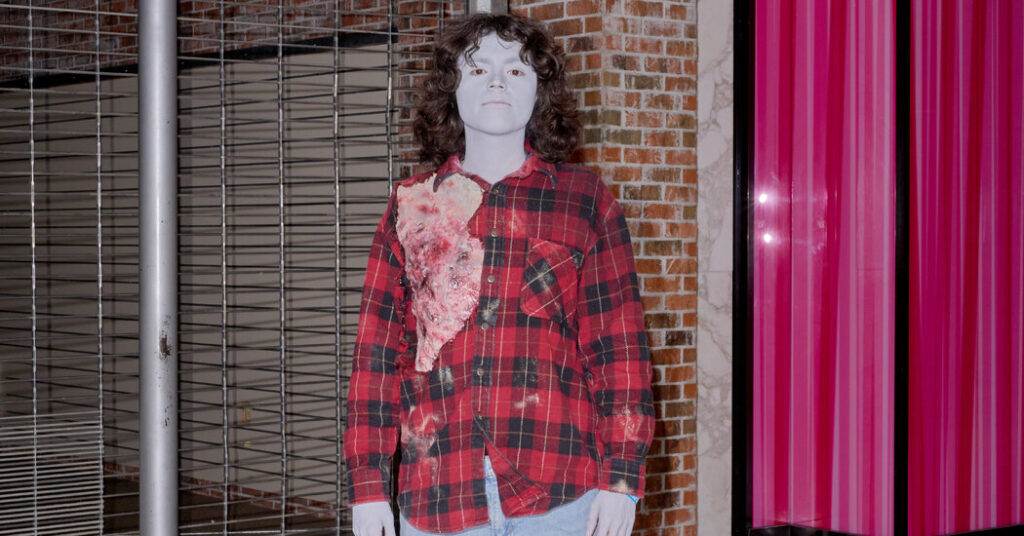
Given the mall’s imminent closure, the mood over the weekend was bittersweet. There were panel discussions, autograph sessions and V.I.P. parties where former zombies mingled with revelers. Fans, some of whom paid $50 for a three-day pass, re-created their favorite scenes — like a shootout on the mall’s top floor — and met up with enthusiasts, including people from New Zealand, Sweden and Britain.
“I’ve told friends and family, ‘If you love this movie, get down here as soon as possible,’” said Joseph Lilagan, a warehouse traffic-support specialist from Mesa, Ariz., who has visited the mall nearly a half-dozen times, and was attending this event for his 38th birthday. “Being here widens the fan vibe within you. Who wouldn’t want to come and enjoy whatever’s left?”
‘A Zombie Apocalypse’
As attendees overtook the mall, the building’s declining health was hard to ignore.
A handful of prominent businesses were shuttered, including a vast Forever 21 store that sat in darkness. Some smaller stores looked as though they’d been abandoned in a hurry: In one hollowed-out location, all that remained were a few skeletal fixtures and a lone red hat; in another store, a limp “Grand Opening” sign sat on the floor.
Such images of retail decay would no doubt feel familiar to dead mall scholars — as well to viewers of “Backrooms,” the industrial-space horror film playing at the Monroeville Mall’s movie theater.
“We’ve gone from deindustrialization to de-mallization,” noted Tony Buba, the 82-year-old documentarian who’s spent decades chronicling the plight of working-class Pennsylvania. Buba, who had a small role in “Dawn of the Dead,” admitted he was no fan of malls, having watched them put mom-and-pop stores out of business. But even he was feeling sanguine about the Monroeville Mall’s current state. “I think someone should buy it and turn it into an indoor zombie amusement park,” he said.
During the convention’s first two days, the number of shoppers trickling in was notably low. “It looks like a zombie apocalypse happened here, which is kind of spot-on,” said Scott Yesh, 52, a regional manager for AAMCO Transmissions from Houston who was posing next to a bust of Romero in the courtyard.
Dennis Biondo, the mayor of Monroeville, said that while the sale of the building is complete, no plans for its development had been submitted to the municipality. No closing date has been announced.
In a statement, Walmart said it had no new information, noting only that, “We believe this transformation will create a vibrant, community-centered destination that helps shape a strong, exciting future for the Monroeville area.”
But given that some tenants have been told to vacate by April 2027, the building’s end seems near.
A few of the storefronts, including a giant-size former Party City, had been converted into halls for the weekend. On the Saturday afternoon, Tom Savini, the makeup effects wiz on “Dawn of the Dead” and other classic movies like “Friday the 13th” — and who acted in “Dawn” — signed autographs close to where he’d executed a daring stunt.
“I dove off this balcony into cardboard boxes,” Savini, who played a machete-wielding biker in the film, said. “I can’t even look at it now without my knees getting weird.”
Savini, 79, said he was taking a stoic approach to the building’s demise. “What can you do?,” asked Savini, who directed the 1990 remake of “Night of the Living Dead.” “There are petitions out there, but they’re not going to do a bit of good.”
Stumbling on Escalators
Such a fate seemed impossible when the mall opened its doors in 1969. Hailed by its founders as “the U.S.’s largest enclosed shopping center,” the building featured an ice-skating rink, a $125,000 clock tower that hosted puppet shows, and more than 100 stores and businesses.
“It was busy all the time,” remembered Beverly Galando, 76, a longtime Monroeville resident who had stopped by the celebration to do some people-watching. “I used to meet my mom here for walks, and now my sister and my friends walk here. This place is a gem.”
Romero felt the same way when he toured the mall in 1974. By that point, the Pittsburgh-based filmmaker had been running from zombies for years. Following the success of his 1968 thriller “Night of the Living Dead” Romero was inundated with requests for a sequel. “I was just resisting completely,” he recalled in the 2004 documentary “The Dead Will Walk.” “I didn’t want to get typecast.”
Romero’s visit helped inspire the screenplay for “Dawn of the Dead,” which filmed between late 1977 and early 1978. The movie’s cast and crew members shot in the evening and wrapped by 7:05 a.m. the next day. That’s when the mall’s automatic Muzak system switched on, and local cardiac patients arrived for their morning exercise, passing blood-splattered zombies on their way in.
“The mall was sort of our home,” said Gaylen Ross, a documentarian who played one of the human survivors in “Dawn of the Dead.” “We had complete freedom to roam around,” she said. “And we spent a lot of time waiting for blood to be cleaned up.”
Romero shot additional sequences at various Pittsburgh-area locations, including a regional airport and a gun shop (both now gone). But nearly all of the action was captured at the mall. That’s where the zombies ctry to reconnect to their human pasts: They wander through department stores, stumble along escalators and even take to the ice.
In one exchange from the film, Ross’s character struggles to understand the creatures’ behavior.
“Why do they come here?” she asks.
Her boyfriend, played by David Emge, says, “Some kind of instinct.”
“Memory of what they used to do,” the character adds. “This was an important place in their lives.”
A Hopeful Future
Though Romero took aim at me-decade commercialism in “Dawn of the Dead,” he surrounded that message with plenty of chaos and carnage, not to mention lots of gnarly special effects. That led the U.S. ratings board to slap the movie with an “X,” making it a tough sell in America (Romero ultimately decided to release it in theaters unrated). The movie proved too much for some critics, including Janet Maslin of The New York Times, who left “Dawn of the Dead” after just 15 minutes.
Nonetheless, the low-budget film eventually became a box-office hit, powered by action sequences — including scenes of motorcycles and cars tearing through the mall — as well as wry humor and an unlikely upbeat message.
“There’s a family component to the movie, because the survivors only have each other,” said Carl Hoelzl, 61, an insurance-industry employee from Stonybrook on Long Island. He was relaxing in a massage chair in the middle of the mall. “‘Dawn of the Dead’ gives you the sense of, OK, even though the world’s falling apart, people can come together and start building for a hopeful future.”
Romero would likely never have guessed that the building he used to symbolize excess would become a product itself. And there were plenty of spending opportunities for the Living Dead Weekend attendees: Autographs of many of the zombie actors cost $20 to $60, while old bricks from the mall were available for $75 each.
On the Saturday night, Dan Bertha was killing time near the food court, an unlit cigar in his hand. Bertha, 79, had a long history with the mall: He’d worked on its construction, and played hockey on its ice rink. He’d even starred as a SWAT team member in “Dawn of the Dead.” This was the third convention he’d attended for the film, and it was going well: The fans had been friendly, and he estimated he’d made about $1,000 a day signing autographs.
For those who wanted a more immersive zombie experience, daily tours of the mall (for $50) were conducted by Larry DeVincentz, 51, an enthusiastic “Dawn of the Dead” authority from Fort Mill, S.C. At one point, DeVincentz rolled on the ground for about 100 tour guests, re-creating a scene in which zombies gobble a biker’s guts.
DeVincentz was confident the “Dawn of the Dead” celebrations will continue.
He won’t have to wait that long: Over the course of the weekend, word got out that another Living Dead Weekend had been set for October. (Since 2017, the event has been held twice a year, with other installments dedicated to different horror films.) That will allow “Dawn of the Dead”-heads to revisit their beloved mall one last time.
Parsons said she’d be among those returning. Many of the fans here, she noted, had come to feel like family. Last year, she even served as a maid of honor at a wedding of two friends she’d met at the Living Dead Weekend.
“George Romero brought us all together for this one thing,” Parsons said. “And this is the only vacation I take.”
The post Horror Fans Bid a Bittersweet Farewell to an Empty Mall Full of Zombies appeared first on New York Times.