For two years, I dreamed of the day I would once again land in Maiquetía, where Venezuela’s main international airport is. I spent those years effectively in exile. Like many other Venezuelans living abroad, I stopped visiting my home country when President Nicolás Maduro intensified his crackdown on critics and human rights defenders like me after he stole the presidential election in 2024.
The recent release of several of those human rights defenders from prison made me feel I could take the risk of returning home and seeing my family. I had anticipated a restful and quiet visit.
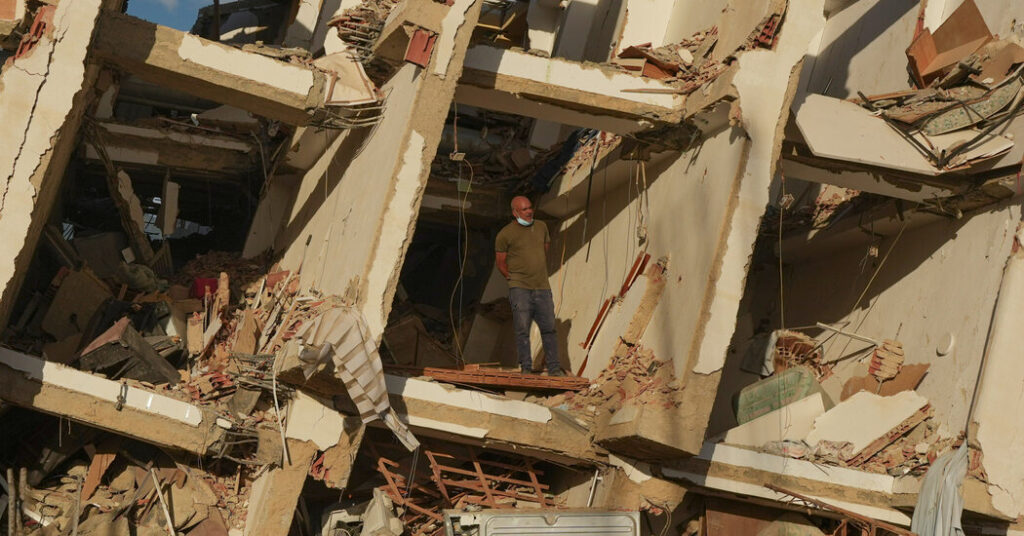
The twin earthquakes struck just days after I arrived. I held my mother’s hand for what felt like an eternity as the ground shook violently beneath our feet. When we emerged, it was to a changed world — one of collapsed buildings, downed phone lines and missing loved ones. It’s still hard to make sense of the dimensions of the tragedy we are living in.
But in the days since, one thing has become clear: The earthquakes have exposed the toll of years of corruption, institutional dismantling and the abandonment of Venezuelan citizens by their state. This crisis is as much a tragedy of authoritarian rule as it is a tragedy of nature. Venezuela’s natural disaster was unavoidable, but the devastation it has left in its wake was not.
These earthquakes, the deadliest to hit Venezuela in decades, have killed at least 1,700 people, injured thousands more and heaped new devastation onto a country already buckling under a protracted economic and humanitarian crisis. By the end of 2025, the United Nations and independent civil society organizations estimated that more than 7.9 million people faced critical food, water and health care shortages.
Nearly eight million Venezuelans, including doctors, nurses and other essential workers, have fled the country in recent years. The long collapse of public services — sporadic running water, periodic blackouts and dilapidated, poorly supplied hospitals, to name a few — left Venezuelans utterly unprotected when the earthquakes struck. So did years of government attacks on civil society, which demolished the nonprofits and civilian rescue networks that might have aided the response.
My immediate instinct, when the shaking stopped, was to seek information — not a simple thing to do in Venezuela, where the state has long restricted access to various independent Venezuelan and international media outlets. But with the government temporarily granting access to X, Venezuelans have stepped in to document what is happening and share the reality of the crisis from the worst-hit provinces.
What these posts have shown is that in the precious minutes and hours after the quakes, the state has, once again, been absent. Although the Venezuelan government insists it is doing all it can, it has shared little information and deployed the armed forces in a manner that has often been chaotic, insufficient and, in some cases, an obstacle to other relief efforts. Local rights organizations have warned about the risks of human rights abuses should the response be left in the hands of the military. Ordinary citizens and courageous local and foreign journalists are recording volunteers desperately searching for survivors in the rubble, rescue teams working without proper equipment and relatives fighting to save their loved ones with their bare hands.
Washington’s response to the disaster also shows the limits of the Trump administration’s engagement with what the president has suggested could be “America’s 51st state.” This week marks six months since the United States’ capture of Mr. Maduro on Jan. 3 and the subsequent installation of President Delcy Rodríguez. But the Trump administration’s so-called stabilization plan for Venezuela, which charted out the country’s economic and political recovery after years of dictatorship, seemed unlikely to fully materialize even before the earthquakes.
Although Venezuela’s oil production has increased in the wake of Mr. Maduro’s removal, the Trump administration has created a highly unusual custodial arrangement to control the revenue, routed first through an account in Qatar and now via the U.S. Treasury. Venezuela exported almost 100 million barrels of oil, worth an estimated $8 billion, in the first quarter of 2026, but it’s unclear how much of that money has reached the people of Venezuela.
In the aftermath of the earthquakes, the U.S. government has pledged some $300 million for relief efforts and deployed a disaster assistance response team and two search-and-rescue teams. This falls far short of the $632.2 million the United Nations estimated Venezuela needed in humanitarian assistance for 2026 even before the disaster — $470 million of which is still unmet. Now the country’s needs will be far greater.
In the face of all of these deficits and dysfunctions, the people of Venezuela have shown a tremendous amount of solidarity and resilience.
But Venezuelans’ support for one another — impressive as it is — cannot rebuild the country.
Venezuela now needs to resupply emergency rescue and medical teams, secure more machinery to lift debris, find food and shelter for the potentially tens of thousands of people who have lost their homes or been displaced, establish protection systems for unaccompanied children who survived the earthquakes and come up with a reconstruction plan.
This crisis has exposed more than the fragility of the country’s neglected infrastructure. How can Venezuela chart a path to recovery when public confidence in the government is so low? How can Venezuelans feel protected by a U.S. government that won’t respond to questions about where their money has gone? How can Venezuelans expect help from a regime that has repressed and abandoned them? Those questions will demand answers, and Venezuelans deserve them now, not tomorrow.
Carolina Jiménez Sandoval is a human rights advocate and the president of the Washington Office on Latin America.
The Times is committed to publishing a diversity of letters to the editor. We’d like to hear what you think about this or any of our articles. Here are some tips. And here’s our email: [email protected].
Follow the New York Times Opinion section on Facebook, Instagram, TikTok, Bluesky, WhatsApp and Threads.
The post Venezuela’s Tragedy Is Bigger Than the Earthquakes appeared first on New York Times.