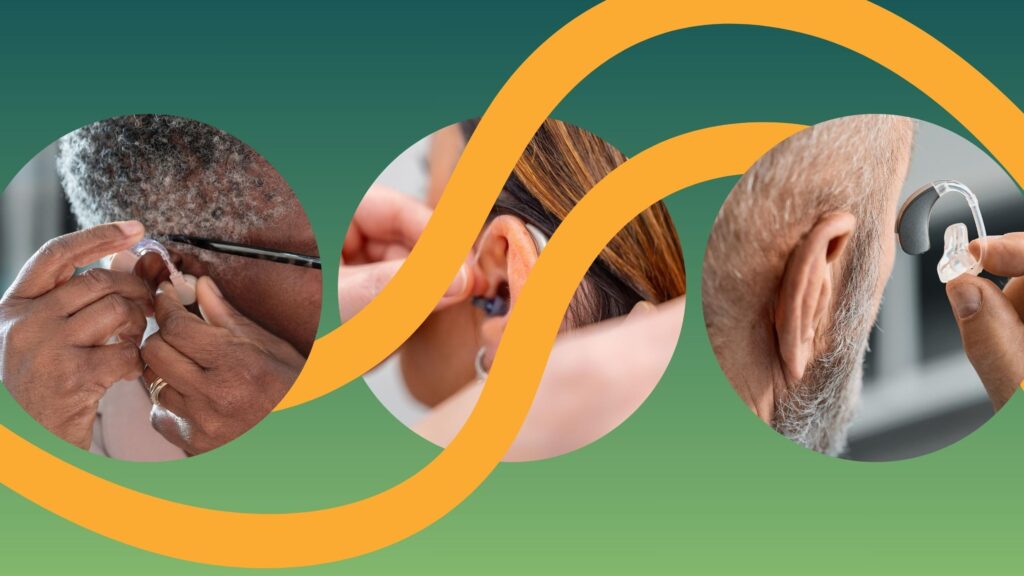
Plenty of people put off getting hearing aids because they’re afraid the devices will make them look old. Audiologist Eileen Clark tells them they have it backward. “Wearing hearing aids is not what makes you old,” says Clark, who owns Integral Audiology in Cornelius, N.C. “It’s what helps keep you young.”
The science backs her up: Untreated hearing loss has been tied to problems well beyond the ears—with memory, mood, social isolation—which is why audiologists increasingly treat it as a brain issue rather than a cosmetic afterthought.
Many myths persist about hearing aids, which is why audiologists spend so much time talking not just to patients, but to the people around them. Here’s what they wish everyone knew.
1. Treat hearing loss as brain care, not vanity
When hearing fades, the brain has to work harder to make sense of the world. Researchers believe that extra cognitive effort—sometimes called “listening effort”—may help explain why hearing loss is associated with poorer brain health. Studies have linked even mild hearing loss to nearly double the risk of developing dementia, and untreated hearing loss has also been associated with faster cognitive decline.
“We hear with our ears, but we listen with our brain,” says Sarah Lundstrom, an audiologist at HearCare Audiology & Tinnitus Center in Florida and fellow of the American Academy of Audiology. Hearing loss is the third most common chronic physical condition in the U.S., yet many people put off treating it. That’s a mistake, Lundstrom says: When the brain goes too long without clear sound, it can become less efficient at processing speech. “I don’t want you to come back in two years and say all of a sudden everybody sounds like Charlie Brown’s teacher,” she says.
The mental toll of straining to hear isn’t limited to older adults. Virginia Gural-Toth, manager of the audiology and tinnitus programs at Hackensack Meridian JFK Johnson Rehabilitation Institute in Edison, N.J., recalls seeing a patient in medical school; she had lost her hearing aids while studying abroad and spent weeks trying to keep up with lectures without them. “It was absolutely exhausting,” Gural-Toth says. The student was decades younger than the typical hearing-aid patient, but the lesson was the same: When the brain is constantly filling in missing pieces of conversation, listening becomes hard work.
2. Forget your parents’ hearing aids
Hearing-aid technology has evolved rapidly. Many modern aids use AI to distinguish speech from background noise, and some automatically switch settings when you walk from a quiet room into a loud restaurant. “They’re not your parents’ hearing aids,” Lundstrom says—no longer bulky or whistling.
Most stream audio over Bluetooth, too. Clark leans into that to dissolve the stigma: “You’re not getting hearing aids—you’re getting Bluetooth devices, just like all the kids.” Phone calls and TV can play straight into the ears, and add-ons like TV streamers or a remote or table microphone can sharpen speech in the most challenging environments. None of it makes hearing perfect. But it’s a long way from the clunky beige devices people still picture.
3. Get a baseline assessment before you think you need one
You don’t wait for a problem to get your eyes or teeth checked, and audiologists wish people treated hearing the same way. Clark suggests a baseline test around 55, then an annual check once you’re 65 or older, since hearing tends to decline faster with age. Catching loss early means better outcomes.
A few early signs worth acting on: new ringing in the ears, or tinnitus, can be one, Gural-Toth says. And often the very first signal comes from someone else—a family member tired of repeating themselves. The test itself is nothing to dread; it screens for treatable culprits like earwax or an eardrum issue, and, as Lundstrom tells nervous first-timers, it’s “the easiest, most painless doctor’s appointment you can have.”
4. Approach it as a prescription, not a purchase
People tend to think of hearing aids as a product you select, like glasses off a rack. Audiologists think of them as a prescription you’re fitted for. Hearing loss is rarely uniform—most people lose certain pitches faster than others, usually the high ones. Gural-Toth uses a piano to explain it: Picture the keys running from low notes on the left to high notes on the right. Plenty of people hear the left side of the keyboard just fine but struggle with the right. So the aid isn’t simply turned up; it’s programmed to boost the high pitches a lot and the low ones barely at all—a different amount of amplification at every frequency, matched to the exact shape of your hearing loss.
That calibration isn’t a one-time setting. A clinician measures it, dials it in, and adjusts it over time. It’s why Clark frames what she offers as a service rather than a gadget: “I don’t recommend hearing aids. I recommend care packages.” That can include the device, the fitting, follow-ups, accessories, and even aural rehabilitation classes. “I think of it as like physical therapy for the ears,” Clark says, “retraining your brain on how to understand.”
5. Ask whether your provider does “real-ear verification”
A hearing aid can fit comfortably and still be programmed incorrectly. That’s where a test called real-ear verification comes in: It measures the sound in your ear canal while you’re wearing the devices.
Clark considers it essential. “It’s the only objective way to know that we’re giving you your full prescription,” she says. She runs it on every patient. Not every provider does, partly because the equipment is expensive and the test takes time. So before choosing an audiologist, consider asking whether they use real-ear verification at their office.
6. Expect an adjustment period and wear them all day
New hearing aids usually don’t feel “right” on day one, and that surprises people. The brain may have spent years adjusting to a quieter world; now it has to relearn. Many wearers report their own voice sounds strange at first, so providers often start the volume lower than the full prescription and build it up over several visits.
The mistake that sabotages this, audiologists say, is wearing the aids only sometimes. “It’s not like an aspirin, where you take it only when you have a headache,” Gural-Toth says. The brain can’t acclimate if it’s constantly relearning. People who waited years before treating their loss can feel ambushed by ordinary sound—the refrigerator, traffic, the dishwasher. Gural-Toth’s phrase for it: “the country mouse moving to the big city.” That’s normal, she says, and it settles.
7. Think of a hearing aid as a tool, not a cure
People are often surprised to learn that even the best devices won’t make every conversation effortless. Hearing aids improve hearing; they don’t erase hearing loss.
“It’s not giving you bionic hearing,” Lundstrom says. If a restaurant feels loud to someone with normal hearing, she notes, “you’re going to feel that way even with hearing aids.”
Clark often has to remind patients that hearing aids aren’t a magic fix. “We’re still working with a damaged auditory system,” she says. “Hearing aids are great, but it’s not this quick fix where you’re going to put this on and everything is going to be perfect.”
Still, perfection isn’t the point. As Gural-Toth puts it, hearing aids may not restore normal hearing, but they can give people “an opportunity to stay in the game.”
8. Focus on clarity, not volume
Here’s the distinction almost everyone misses. “When you lose your hearing, you lose it in loudness and in clarity,” Gural-Toth says. A hearing aid can restore the loudness, but the distortion—the loss of crispness in speech—is harder to fix. That’s why people say what Gural-Toth hears constantly: I can hear you, but I don’t understand you. (The clinical term is word recognition.)
That leads to the single most common mistake well-meaning family members make. “Volume is not usually the issue—it’s the clarity,” Lundstrom says. “Sometimes being louder doesn’t make it clearer.” Shouting doesn’t add clarity; it just adds volume, and often irritation. As she describes the typical exchange: “I didn’t hear you, and then you yelled at me.”
9. If your family member wears hearing aids, stop shouting
Hearing aids help, but they work best when the people around the wearer meet them halfway. Audiologists recommend a few simple communication habits:
-
Get their attention first. Say your loved one’s name, or wait until they’re looking, before you start the sentence. The brain needs a beat to switch into listening mode.
-
Face them. Visual cues help. When a patient’s kids tease that he’s reading lips, Gural-Toth tells them: “He’s reading my lips—but that’s a good thing.”
-
Rephrase, don’t just repeat. If a word isn’t landing, swap it for another rather than saying the same thing louder.
-
Kill the competing noise. Turn off the TV, and don’t try to hold a conversation from another room. Move closer.
-
Give them a second to process. Before repeating yourself, pause—people with hearing loss often need a beat longer to assemble what they heard, and they’ll frequently get there on their own. “Our brain just takes a little longer to put those pieces together,” Lundstrom says. When something does drop out, repeat just the part they missed rather than the whole sentence.
Clark offers one final reminder: “Don’t say, ‘Are you wearing your hearing aids?’ They are wearing their hearing aids. They’re doing the very best that they can.”
10. Don’t push the issue when a loved one resists
Audiologists all know this person. Maybe it’s your dad, your spouse, or even you.
For someone who’s dug in their heels and refuses to get hearing aids, bringing up the issue repeatedly can backfire. Instead, Gural-Toth suggests lowering the stakes: Forget the devices, and focus on the test. “Let’s just get a baseline,” she tells people. Find out what’s going on, then decide what to do about it. If possible, go to the appointment with your loved one; a second set of ears can help.
In the meantime, skip the nagging. Instead, point out specific moments: “You didn’t hear what she just said. Did you miss it, or were you distracted?” The goal isn’t to shame someone—it’s to help them recognize what they’re missing. And if you’re noticing memory changes, Lundstrom says it can be worth mentioning the connection between hearing and brain health as another reason to get checked out.
The stakes extend beyond the person with hearing loss. Lundstrom remembers a patient’s husband breaking down in her office after she asked how his wife’s hearing loss had affected him. “No one has ever asked me how it’s affected me before,” he told her. His wife wasn’t hearing him, and over time their marriage had changed because of it.
That’s another part audiologists wish more families understood. Hearing loss may happen in one person’s ears, but its effects ripple through every relationship.
The post 10 Things Doctors Want You to Know About Hearing Aids appeared first on TIME.