
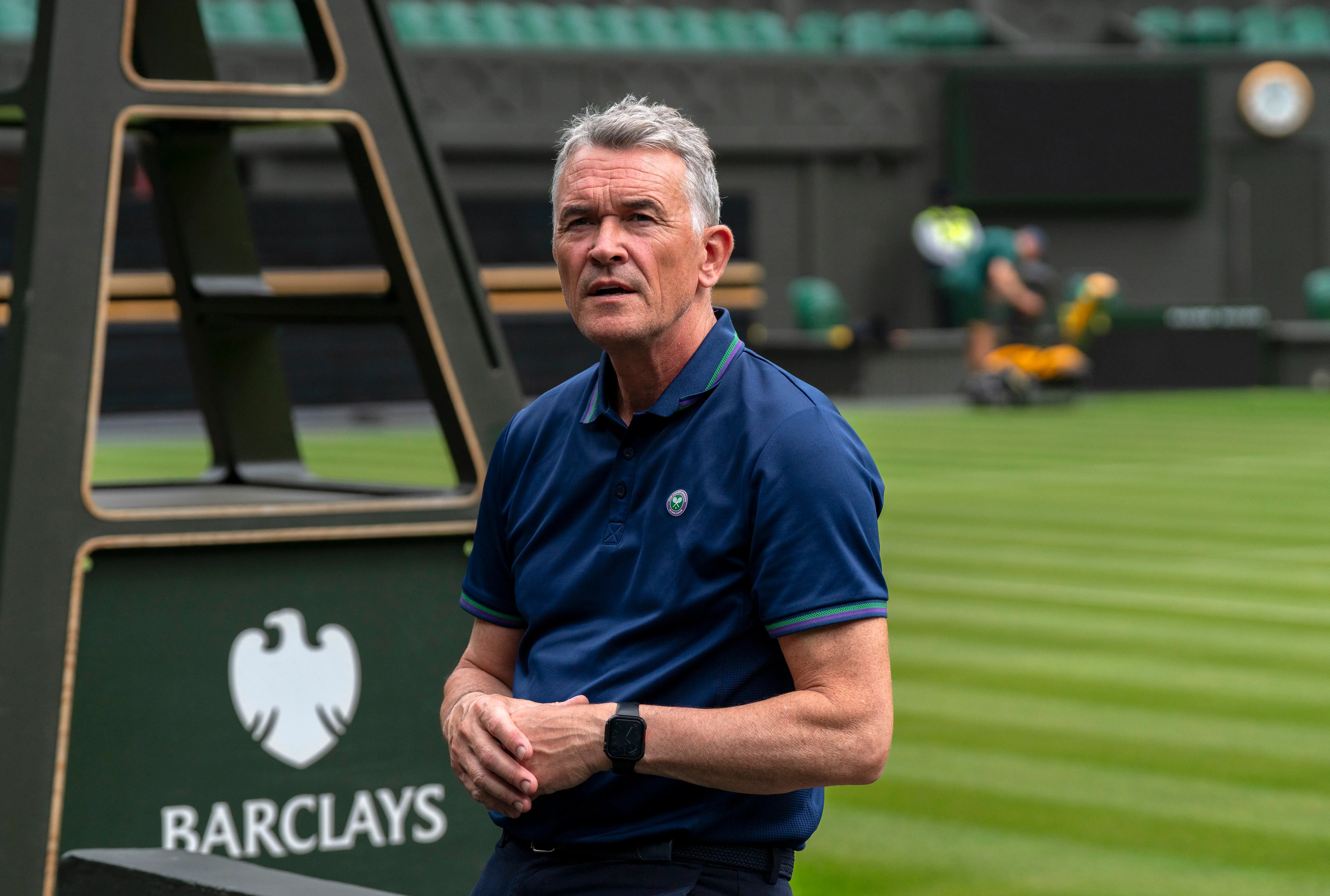
This as-told-to essay is based on an in-person interview with Neil Stubley, head of courts and horticulture at the All England Lawn Tennis Club, home of the Wimbledon tennis championships. The following has been edited for length and clarity.
I’ve been head of courts and horticulture at the All England Lawn Tennis Club for almost 10 years, and 2026 marks my 31st Wimbledon Championships. I started as a groundsman and worked my way up. My job is to maintain the grass courts year-round so they’re ready for the two-week tournament.
Like the players, we need the grass in perfect condition from day one. The challenge is that we’re managing a living surface that changes with the environment.
Most people think our busiest time is just before Wimbledon starts in June, but it’s actually August and September. This is when we start preparing the courts for the following year. If we cut corners then, we’ll pay for it the following year.
Even when the forecast looks good for the tournament, I still get a knot in my stomach. It doesn’t go away until the referee says, “Ladies and gentlemen, this concludes the Championships.”
Until then, I’m waiting for something to go wrong.
My day begins at 5 a.m.
During a typical day during the Championships, I’m up at 5 a.m, take my dog for a 45-minute walk, and go through my morning priorities in my head.
I take a look at the weather forecast as I’m walking, consider what the potential risks are for that day, and have a mental debrief about how the day before went.
I arrive at work at about 6:30 a.m., sit with the senior courts and grounds team, and go through the same things that were on my mind during the dog walk. Risks range from court covers not being inflated to activist groups disrupting the games, or even foxes peeing on the fields.
If there’s an overnight crisis, the 6-person night team will phone me at any time. Their job is to walk the grounds overnight and ensure the covers are inflated. My first move is to liaise with them in the mornings.
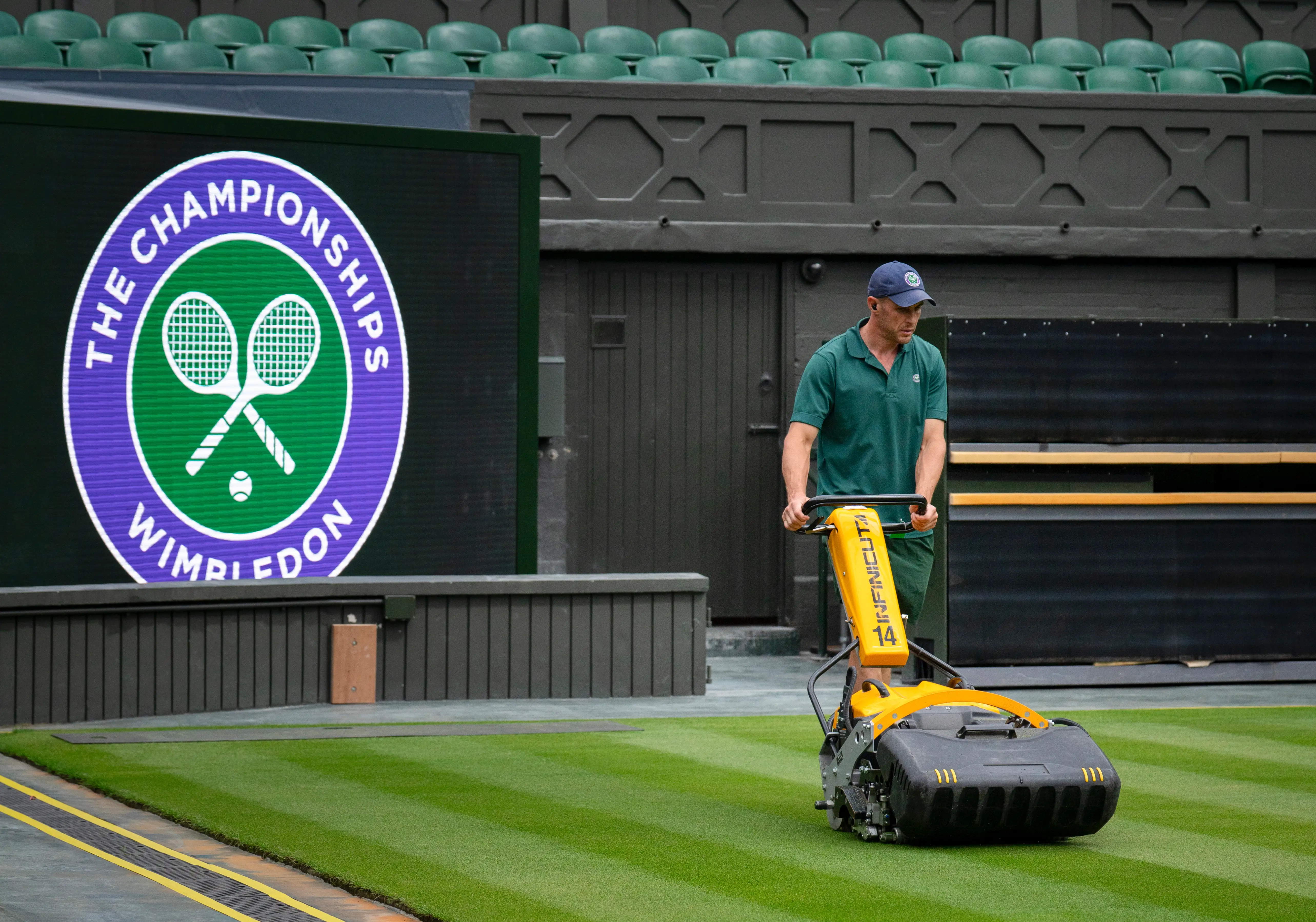
All the court covers come off at 7:30 am, and the grounds team will be either mowing or marking the courts.
The team and I walk around all the courts and touch base with the referee’s office to see whether there have been any reports of player racket damage on the courts. If so, we’ll go and assess them.
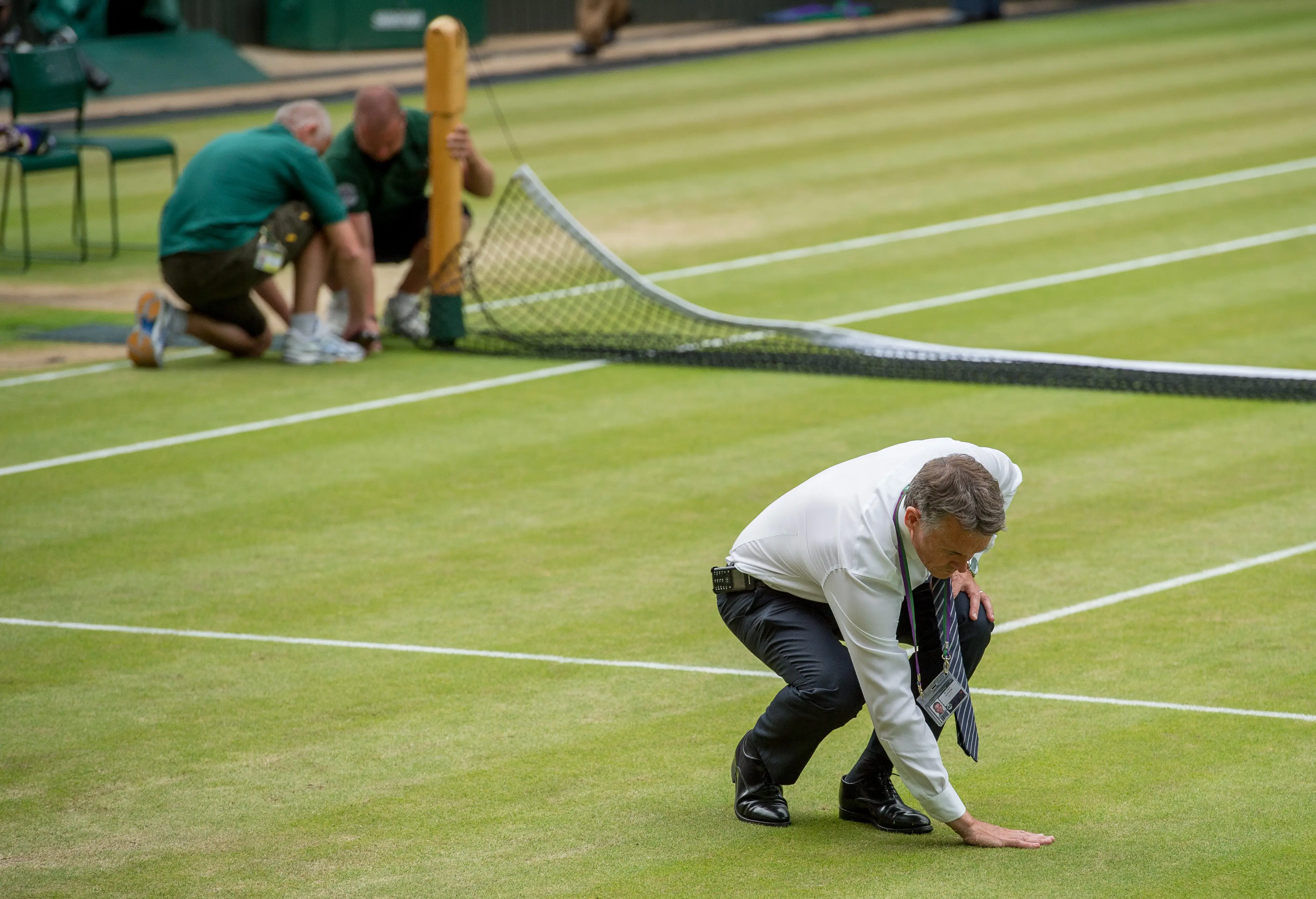
A team from the Sports Turf Research Institute (STRI) arrives on-site at 7.30 a.m. each morning to check the grass. They’ll take a bunch of readings from each court, from surface hardness to soil moisture, and drop a tennis ball on the same spots on the courts each day to measure the bounce and check its consistent.
The tennis begins at 11 a.m.
The tennis kicks off at 11 a.m. We receive the STRI’s data and use it to help us manage the courts.
Like any high-performing athlete who is always number-crunching, we do exactly the same in turf management. It’s very analytical.
We ensure the data is also available to the tennis players, so if one of them says that a court they played on felt slower, we have the data to prove how the courts are actually performing rather than relying on a subjective view.
When the tennis is on, we’re on standby in case any issues arise on the courts.
We’ve got every single weather app you could think of, plus a few that most people have probably never seen. We also liaise with Météo-France, France’s weather agency, which operates a satellite system covering the championships.
The system helps track the weather coming through, which guides us on how much water we will apply to the match courts in the evening to keep the courts in performance condition.
My evening routine
Every evening, we vacuum and typically water all 18 match courts using an automated irrigation system.
If it’s been a hot day and rain is forecast for the following day, we can’t water the court because we need to guarantee it’s dry for the following morning. Sometimes we’re up against it, and even if we want to water, we can’t, because the weather doesn’t allow it.
We have a plan A, and we hope that we stick to the plan A, but there’s always plans B, C, D, and F.
Our no. 1 target is consistency. It doesn’t matter whether the players like the courts or not — they’ve all got to be the same.
We sometimes finish up at 11 p.m.
The biggest matches at Wimbledon are played on Centre Court and No. 1 Court, and they can run until 11 p.m. In the worst-case scenario, I’m finishing my prep work for the next day by about midnight.
I always say it feels a bit like going home after a concert. There’s a ringing in my ear; I’m wired; I’m awake; I can’t just go straight to bed. It might take me til 1 a.m. for me to go to bed — after a cup of tea or a glass of wine, depending on how the day’s gone.
Then I’m up at 5 a.m again the next day. I hit the alarm buzzer, and Groundhog Day starts again. And that’s the routine until the end of the tournament.
When it’s over, I get a kind of jet lag feeling for about a week. I feel tired all the time and don’t know why — it’s probably just the adrenaline.
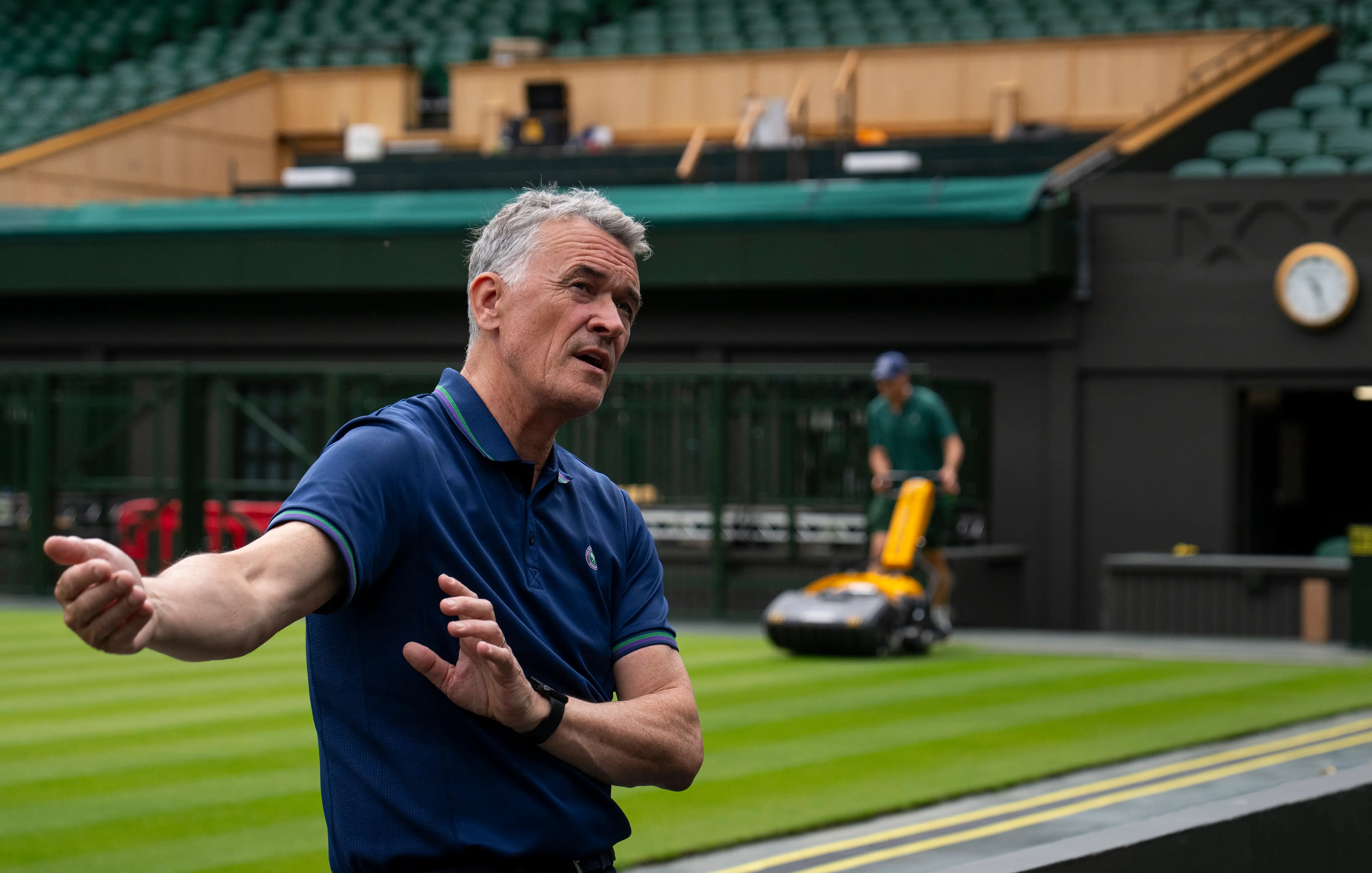
The knot in my stomach becomes my friend
I get my own seat in Centre Court, but I never sit in it. It’s too stressful.
In 2013, my first year in charge of the whole operation, Andy Murray was playing Novak Djokovic in a tense men’s singles final. People ask me what it was like when Murray won, but I always tell them I wasn’t even looking. I was watching his feet because it was such a hot day; the grass had worn away, and it was getting dustier. I was worried the court was becoming slippery. Then the crowd erupted, I looked up, and he’d won. That’s the job — while everyone else is watching history, I’m worrying about the turf.
I’ve learned that the knot in my stomach that arrives at the start of the tournament is actually my friend. If I’ve got that, I know it means I’m not complacent.
Even when I’m waking up in the middle of the night and worrying about things that might go wrong, at least I’m thinking about them.
At the end of the day, if the team and I can look ourselves in the mirror and say we did our very best, that’s enough. If the club gets rid of me, it won’t be because we cut corners.
Read the original article on Business Insider
The post I oversee all courts at Wimbledon. A typical workday during the Championships is 15 hours long and fueled by adrenaline. appeared first on Business Insider.