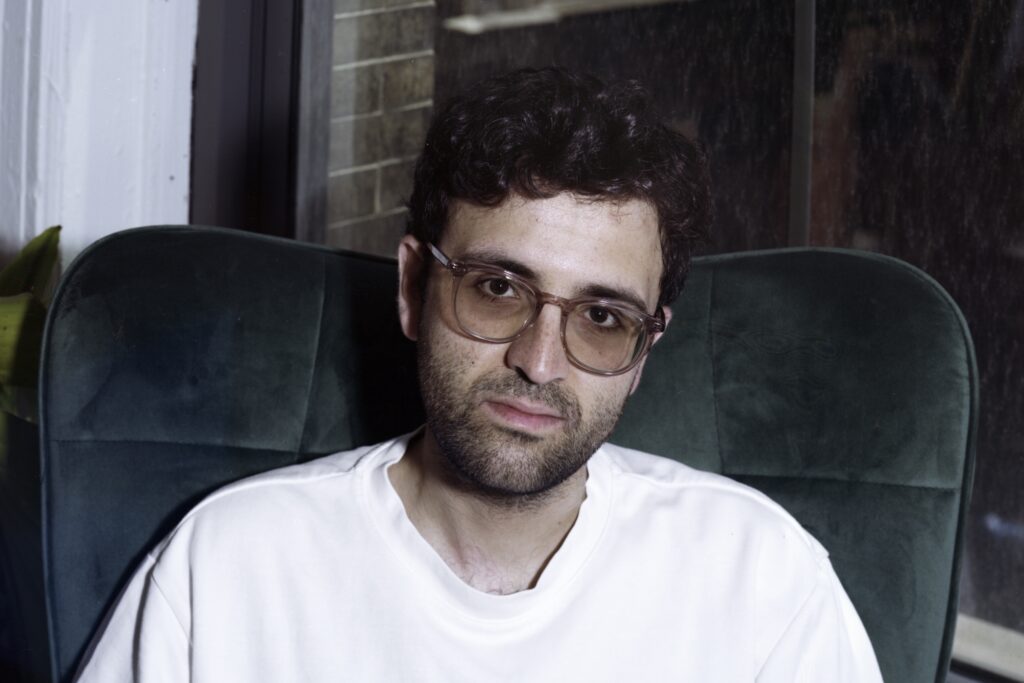
Max Raskin is a co-founder of Uris Acquisitions and a fellow at New York University School of Law.
Sen. Elizabeth Warren (D-Massachusetts) and casino moguls are an unlikely duo. But they’re a classic case of what economists call “baptists and bootleggers” — moral crusaders and entrenched monopolies backing the same cause, for opposite reasons, to stifle innovation. Their targets are prediction markets, which allow customers to trade “event contracts”: yes-or-no wagers on everything from Taylor Swift’s wedding location to whether the Save America Act will become law. To many critics, that sounds like a high-tech form of lowbrow gambling, a new way to bring the vices of Vegas right to your phone.
Yet Tarek Mansour, the 30-year-old co-founder of Kalshi, the largest federally regulated exchange in the United States, has a different vision. He’s hoping that non-sports event bets, which now make up about a third of trades on his company’s site, will fundamentally reshape how everyone receives news and information. That’s premised on the understanding that free financial markets — in which forecasters have real money on the line — are better at predicting events than pundits with nothing at stake.
Since creating Kalshi in 2018, Mansour and his Brazilian co-founder, Luana Lopes Lara, have become billionaires on paper. With headlines of political insiders profiting on prediction markets and skeptical attitudes toward gambling, Mansour has a heavy lift — both to police a red hot industry and to convince Americans and financial institutions that this is more than just brain rot. We spoke about all this and more.
This interview has been condensed and edited for clarity.
* * *
Max Raskin: Do you have any prediction markets that you follow every day?
Tarek Mansour: Have you heard of the Citrini report? It was published in February under the heading, “The 2028 Global Intelligence Crisis.” It’s basically this idea that artificial intelligence is going to create such profound gains in productivity that it will kill domestic consumption to the point where we’re going to go into a deep, dark recession, and everything’s going to become horrible. They came out with that thesis, and then Citadel, the hedge fund, ran a rebuttal.
Kalshi listed the market “Will the Citrini scenario happen?” immediately. I look at that a lot. It started at 13 percent when it was first listed, and now it’s at about a 25 percent chance of absolute AI doomsday. We’re talking about unemployment above 10 percent, the S&P declining more than 30 percent, the home price index down 10 percent year over year labor share of gross domestic product below 50 percent.
But that could also pay out because of nuclear war.
That’s true, but it’s hard to imagine all of these things happening. It’s hard to imagine nuclear war with deflation.
Well, it depends on how bad the nuclear war.
I mean, if we all die, yes, maybe. Maybe there’s a 1 percent to 2 percent chance of nuclear war that’s embedded in there, but I think the vast majority of this is AI.
You were born in California but raised in Lebanon. Do you follow the news there at all?
I’ve never been asked that. Not really. It’s just always utter chaos, and the news there is very biased. You’re getting a lens on it whenever you read anything.
Do you follow your prediction markets about Lebanon?
I’ve followed the Strait of Hormuz reopening. If you live in Lebanon, you get used to it. It’s always bumpiness on and off all the time.
You grew up in the early 2000s. There were all kinds of wars and assassinations and protests in Lebanon then. How much do you think that influenced how you think about things — and your choice to go into prediction markets dealing in a world of uncertainty?
A lot. I’ll say two things. First, the whole region — it isn’t bad. It’s not like there’s misery. It’s volatile, which is different. There’s a lot of upside — there’s a lot of positive and negative, and you can swing between the two overnight.
That creates a sense of being very adaptable. People from the Mediterranean area are very adaptable. They’re used to things getting thrown at them or changing, which I think generally is pretty good for someone who wants to become an entrepreneur or risk-taker or someone who needs to be in an environment where things are always dynamic and changing.
The second thing: I think the world was so chaotic on the outside that my refuge ended up being math. There were things going back and forth, and when I was young, the way to deal with it was to become obsessed with math. It instilled this feeling of clarity and precision and perfection. I think math was my refuge from a lot of uncertainty. And then that ended up being markets. I like that markets can help you make sense of all the chaos.
If there were a prediction market in whether God existed, where would you set the line? How about whether we’re living in a simulation?
Simulation is 1 in 4, I think.
If you look at the Bayesian lens on this, the probability that there’s a God is actually very high. The range of possible permutations for us to land here, given where we started, is really bad. And then the probability of us being here, given God, is one. The probability of us being here, given “not God,” is one in a gajillion.
So where are you putting the line?
The pure math side should say that the answer is a pretty clear “yes,” but I have to think about it a little bit more.
A lot of people look at what you do and simply see another vehicle for sports gambling. What do you say?
If you define gambling to mean any speculation, then all financial markets are gambling. There’s speculation on all financial markets. Actually, most activity in most financial markets is speculation, right? And you really don’t get liquid, vibrant financial markets with real price discovery without speculation. If it’s just hedging by itself or capital allocation by itself, that doesn’t build a real marketplace. So that definition of gambling, where people are putting some money to make more money on something they don’t control — well, that encompasses everything.
The core differentiator with sports gambling is whether you are trading on an open, fair, liquid marketplace or in a closed forum system against the house that picks winners or losers. One of them you can win. It doesn’t mean you will win, but you have the opportunity to win. That’s how the law has been set historically. That’s why we have the Securities and Exchange Commission and the Commodity Futures Trading Commission.
What about culturally? For whatever reason, people love sports betting. There is a demand for it. Why?
Because they understand it. It’s relatable. They get it.
But people aren’t as interested in news-driven event contracts.
I don’t think that’s right. I think the growth of the non-sports predictions on Kalshi is higher than that of the sports predictions.
But that’s because it’s probably starting from nothing.
That’s not quite right. I think the latest numbers I was looking at were basically at two-thirds, one-third now. It’s going to eat into the sports very quickly. I mean, it’s happening.
I’m excited about prediction markets. I wish people used them more. What’s stopping people from doing so? Is it education? Is it because of some “ick” factor?
It’s a mix of things. One, there aren’t enough events per week.
But stuff happens every week.
Yeah, but sports are scheduled and organized well and put on a calendar. People are used to that. They’re used to watching the sport. Over time, as you add more events and structure them better, that will catch up. So that’s one.
Number two is a question of education. People just need to learn more about them. That’s the beauty of this — if you onboard people to come trade on politics or sports or whatever, then they start getting interested in things like understanding AI and its consequences. Oh, what is that thing on Kalshi? Let me read about that. Now they’re learning about AI doomsday.
Do you think your casual observer is going to read about the Citrini report?
The way to think about it is: The more that people spend time on Kalshi and prediction markets, the less they’re spending time brain-rotting on Instagram. That doesn’t mean everyone is going to become an AI expert, but they will have moved toward something better.
I think a lot about the place of prediction markets. When I talk to parents, they’re super excited about using Kalshi because their 25-year-old kids are using it. Some will say: It’s awesome. All of a sudden, my son is talking to me about the State of the Union and inflation. They debate these things; they’re spending time on them. That’s a very positive externality because we’re pushing people toward financial literacy and literacy about the world.
There are some very difficult problems to solve in prediction markets. How do you think about the question of insider trading?
I think it’s actually easier to police insider trading in prediction markets than in the stock market. Don’t forget, we spent four years getting regulated before launching. We were thinking a lot about that all the time. So that’s why the foundation of Kalshi is robust; we’ve been building these systems for eight years now. Today, I think that we’ve just hired incredibly well. We’ve hired people from the FBI with a forensics background.
When insider trading like this happens …
… George Santos?
I was thinking of the Nicolás Maduro case where the U.S. soldier was charged with using classified information to profit.
That wasn’t on Kalshi.
Which one was on Kalshi?
We had a few politicians running campaigns, buying themselves. We had Santos, apparently. (Editor’s note: The former congressman has written that the basis of the accusation is “preposterous.”)
Does that bum you out?
No, I think it’s the system working. There will be fraudsters in any system. People will try to commit cyberattacks or steal credentials on any large consumer platform. They will try to cheat or commit insider trading. The question is: Are you doing a good job catching them? Now we say, “Great. We caught them. We caught them super fast.” Keep looking.
How much do you think you don’t catch?
I mean, look, you can’t say any system is perfect, but I think we catch most of them.
I have a funny story about this. I once interviewed an enforcement lawyer at the SEC and asked, “What percentage of insider trading do you catch?” The answer: very little. He said they have big whale cases and the “control-F” cases. For the latter, he explained, “You subpoena someone who made a type of trade they’d never made before, then you press “control-F” on your keyboard and search for “jail” or “prison.” You go to their chat logs, and it says: “Dude, can we go to prison for this?” And that’s how you catch them. But he said those two types of cases make up a small amount of the insider trading that goes on.
Prediction markets are easier than stock markets. The stock market is hard because you may have a piece of information, like a certain product is going to be released, and then you buy the stock. It’s very broad. Whereas in prediction markets, you have a piece of information, like a certain product is going to be released, and then you buy “This product is going to get released.” It’s very direct. It’s very noiseless.
What are your plans for when the administration changes? The Trump White House is very amenable to prediction markets — the president told me he’s a fan and his CFTC just proposed a very favorable rulemaking. What happens if that’s no longer the case?
I think people are making this out to be more partisan than it is. People, especially in D.C., love creating tension and drama. I think there are supporters of prediction markets on both sides. And there’s people who have questions and are skeptical about them. It’s significantly less of a partisan issue than people are making it out to be. That’s my general view.
You just made a lot of money. You’re rich now. Do you spend any money on indulgences?
I don’t have anything physical. I don’t own a car. I still have the same apartment.
Do you collect anything?
I have a bunch of anime posters, but they’re 20 bucks each.
I want to ask about competition. How do you distinguish Kalshi from others?
Oh, I think this is night and day. We took the regulatory-first approach to every step of building the company. We started in 2018. Our primary competitor started around 2020. It launched immediately. We were waiting for the regulatory license. We never wanted to do anything illegal or offshore or whatever. We wanted to change the system and disrupt financial markets.
And so it was a much harder, more painful route, but it was definitely the correct one. And look at the market share today. We’re over 90 percent market share in prediction markets, but more important, we’re trusted. People, when they use Kalshi, they feel like they’re using a robust financial market versus an offshore gimmick. And I think that’s very important to our approach. So insider trading, we ban; we don’t have death markets. We have know-your-customer processes to verify people.
If you could have a prediction market in something related to your business, what would be the thing that you’re most interested in finding out?
We’d need to define a metric for how often people quote a prediction market when thinking about the future versus quoting any other traditional source. Imagine if we could have a metric that measures everything: news, pundits, social media. Are prediction markets more cited than any alternative? If that happens in the culture, I think we would’ve fundamentally achieved the mission.
The post A conversation with a prediction-market prophet appeared first on Washington Post.