Subscribe here: Apple Podcasts | Spotify | YouTube
Do you wish you could read more books? You’re not alone. These days, fewer people are reading for pleasure, and even those who do tend to struggle with distractions. Is this a literacy crisis, or has our attention just been warped? And what can we do?
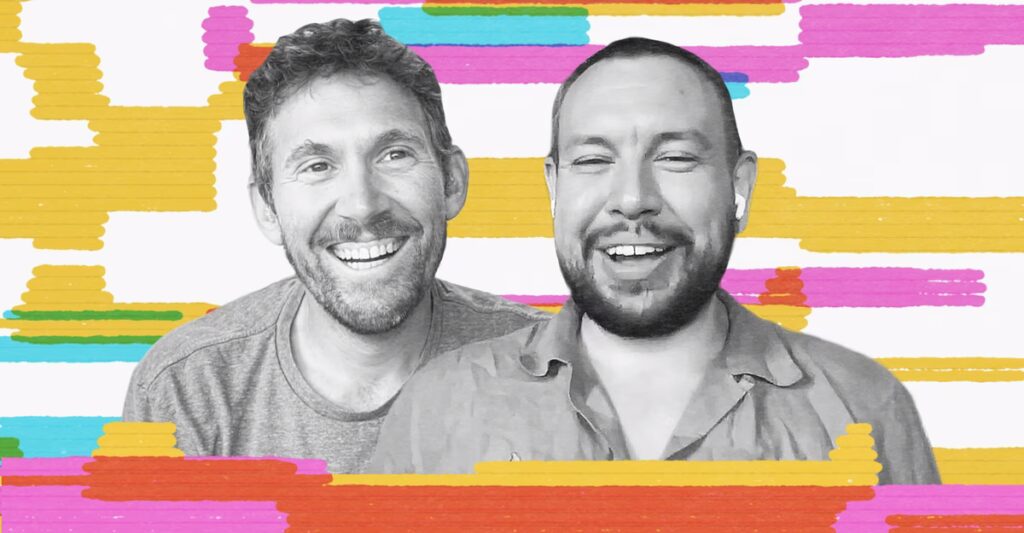
In this episode of Galaxy Brain, John Paul Brammer joins Charlie Warzel to talk about how he managed to ditch the allure of his screens and social media and rewild his attention. This is a conversation about how to reignite your curiosity, what deep reading does to your mind, and how anyone can learn to love to read again.
The following is a transcript of the episode:
John Paul Brammer: I was just such a dire case of “brain being addled by social media” that I knew on a sort of intuition level that I needed to find a way to make myself hungry for books. Because I knew that if I wasn’t hungry for them, it was simply not gonna happen. It’s like giving yourself homework as an adult. As long as the option is there to not do it, you probably just won’t do it.
[Music]
Charlie Warzel: I’m Charlie Warzel, and this is Galaxy Brain, a show where today we’re going to talk about rewilding our attention and maybe, just maybe, getting a jump start on the summer reading lists.
Outside of hosting this podcast, I’m a writer. And as a writer, I’ve often harbored a pretty deep insecurity about my reading habits. Great writers, at least according to the stereotypes, are supposed to be excellent readers. And it’s not just about amassing knowledge, but also picking up on style and form. To read is to be in conversation with someone else’s ideas—somebody else’s words end up rattling around in your mind. And it is this intimate, almost sacred, world-expanding process. Being a voracious reader doesn’t guarantee that you’ll be a fantastic writer, but it’s no coincidence that many of the greats confess to getting lost in the written words of others.
But unfortunately, it’s hard to get lost in a book these days. It’s not that I’m not reading. Like many of you, I am positively drowning in text—in emails, and Slack messages, articles, links, posts, all of it hurled at me in a pull-to-refresh feed. I am reading constantly for my job. But it is not deep reading that slows the mind, the kind that gives this meditative sense of calm. It’s this harried, tab-switching, attentionally jarring stuff. The kind that leaves you feeling vaguely ill when you look up from your phone or screen.
Maybe you feel this way, too. Maybe you read all the time when you were younger, before the noise and the interruptions of our devices, and you want to get back to it. Or maybe you’ve grown up with phones and algorithmic social media being ever present, and you’ve never really developed that strong reading muscle.
Whatever camp you fall into, I think there’s this broader sensation these days that something is being lost. Some have described it as a literacy crisis, and others as an attentional one. But educators are writing these concerned op-eds about kids who struggle to focus on shorter reading assignments and with comprehension.
A recent article in The Chronicle of Higher Education put it bluntly: “My Students Can’t Read.”
And there’s data that seems to suggest this isn’t all anecdotal. In September, the National Assessment of Educational Progress showed that 12th-grade reading scores were at the lowest level recorded since the assessment began in 1992. According to that assessment, 32 percent of 12th graders now score below the assessment’s basic reading level.
Amidst all of this, I recently stumbled on an essay by John Paul Brammer: a writer and a Substacker whose insightful and humorous work I’ve been reading for years via my frenetic feeds. It was titled: “How I Learned to Read Way, Way More.”
In it, he lays out how, in this moment of constant distraction, he was able to rekindle his childhood love of reading—and the ways in which it had a profound effect on his mind, his writing, even his relationship to reality. It’s also an essay about attention and curiosity, and how those two things work together in pretty unexpected ways.
So I figured Brammer is the perfect person to talk to about how we can guide our attention with intent. How to be a curious person. And the ways that curiosity may just be an antidote to the cynicism and despair that are too often the lingua franca of the internet. What happens when we let our curiosity drive and turn away from the feeds? John Paul Brammer joins me to discuss it all.
[Music]
Warzel: John Paul, welcome to Galaxy Brain.
Brammer: Charlie, thank you for having me.
Warzel: So I wanna start with you just telling me about your relationship with books and with reading. How did your reading life start, and how has that experience shifted over time?
Brammer: Yeah, one thing that’s important to know about me, I think, is that my mom was my ninth-grade English teacher. So when I was a freshman in high school, I had my mom in first-period English.
Warzel: That’s an interesting experience. Say more about that.
Brammer: One time we were late to her class, and she had to like drive me there because I was in this very rural middle school where things weren’t going so great for me. And so, because she was a teacher at this much bigger school, she negotiated it out with the school board: I’ll just take my son every morning; I’ll take him. The bus didn’t go out to our house because we were out in the country, you know? So my mom always drove me there. But one day we were late to first period together, because she was doing her hair, and then she counted me tardy. And I was like, Why would you do that? And she’s like, I can’t treat you any differently. I mean, I wouldn’t accept that excuse from any of my other students. So it counted against me. So that’s what having my mom as my English teacher was like.
But she was huge on reading, huge on literature. The policy in my household was: If you want a book, you can have it. We’ll find a way to get it to you. So yeah—literature had a big premium in my house, for sure.
Warzel: What did you grow up reading? Like, what did you love?
Brammer: I was such a freak. And so much of my journey as an adult has been trying to like get back to that freak that I was when I was such a bookworm as a kid. Because I was reading everything. I would just go into the library and just pick something for no reason, and start reading it. So, you know, I read the stuff like—I had Goosebumps, I had Hatchet. You know, things that a lot of people read when they were kids. But I was reading stuff I had no business reading at a young age. So I remember there was this one book called A Door Into Ocean, and I can’t pronounce the name of the author [Joan Slonczewski]. I think she’s Polish, but I could be mistaken. It’s an ecofeminist sci-fi book, and it’s about a planet of lesbian catfish called the Sharers, and they get invaded by this like race of men, and the men are trying to oppress the lesbian catfish people. And I was in like the fourth grade, I think, in Catholic school, and I was like, Man, books are amazing. I read it front to back. I know what actually happened in it.
But I was just grabby, you know: anything in front of me. My mom had a copy of a David Sederis book in my hands by the time I was in sixth grade. So, you know, it’s like I was on game, I would say.
Warzel: You write: “Getting on a reading jag has dramatically improved the quality of my life.” Tell me more about that. What does reading do to your mind when you’re locked in? Like, what is the quality of that attention that you feel?
Brammer: Yeah, so I’ve been reading a lot of Simone Weil, who is a French philosopher. Really kooky lady. if you ever read her, you’re in for a real time, because she kinda like—you know how weebs are like white people who love Japan? She was like that, but for Catholics—where she just loved Catholicism without ever actually becoming a Catholic. And so she writes a lot about God, but she approaches God through this sort of neoplatonist slash; like, she arrives there through Plato, kind of. And so there’s a lot of richness in the way she talks about religion. And it’s almost like when she’s talking about certain things, even if you’re a secular person like myself, you’re able to get a lot out of it. And so she writes a lot about attention, and she writes a lot about prayer. And she means attention in, I think, a different way than the way I talk about it in my essay.
However, when I saw her writing about curiosity, it really got me thinking, because I only came across her as the result of this big reading journey that I was on. So I only started really reading books, seriously reading books, like a little over a year ago. Which—as a writer, that might sound really crazy. But you know, I, like most people, was averaging just a few books a year. To me, I say in the essay, I’m a little embarrassed. It feels like I was walking around without having taken a shower for most of my life, like without reading.
Warzel: Right.
Brammer: Being a writer without reading a lot now strikes me as kind of crazy. But all that’s to say: I got really into the way [Weil] was talking about attention. And it really did strike me that attention is this sort of like—I don’t want to say buzzword, but we’re always talking about it, right? Because we live on the internet; we’re on social media all the time. A lot of us are addicted to tech platforms. And tech platforms kind of beget a certain confusion, a certain fog, a certain way of seeing the world and consuming media. And it is reading of a kind, right? Like you, especially on text-based platforms, text is constantly being lasered into your brain. Even if you’re on TikTok or these video-based platforms, information is just constantly on its way through your eyeballs. And so when I talk about how reading books can benefit a person, I think that does have a necessary backdrop of “because we’re all on our phones and our laptops all the time, and it is kind of scrambling our brains in a certain way.” And so I don’t necessarily believe that reading books is going to automatically fix everything in your life or anything. I do think, however, it is kind of a panacea for a lot of the ills and a lot of the struggles that we’ve brought into our life through these tech platforms.
Warzel: When you are locked into reading—because I think this is a fundamental part to ground everything else—what is that quality of attention? How does your brain feel when you’re doing that?
Brammer: Yeah, so in the essay I sort of distinguish between two major types of attention. There’s the muscular attention, which is the kind that, you know, you remember from school. Like when you can’t focus, but you’re really pushing yourself to. And also, I’m not saying in the essay this is an unimportant kind; I think this is a very important kind of attention. It is important to be disciplined enough and to apply effort to be able to pay attention to something even when you don’t necessarily want to.
However, we are sort of always trying to use that form of attention to enter what I call “a state of pure attention.” Which, you know—a lot of us, you might recognize that from just when you are no longer really super conscious of yourself. You’re sort of immersed; you’re enthralled. You are really deep inside: be it a piece of content, a piece of media, a book. It’s just coming naturally to you. You’re not stumbling across, like, Oh, I need to go back and read that paragraph because my mind was wandering. Oh, I don’t know what that word means. There was a hiccup. You are just on the track. You are locked in. And I sort of make the case that this is the version of attention that has been commodified, and it is the version of attention that we really like. Because there is a depersonalized, anesthetic quality to it. It sort of does take us out of the world a little bit and places us somewhere else.
So if you’re reading a really good book, a really informational book—and I’ve experienced this a lot in my reading career now, where like I’m reading one of those philosophical texts I always thought that I wasn’t smart enough to read. And suddenly something about these words are just—they’re opening up, and I’m in them. And I am really taking in someone’s thoughts, their point of view. I’m really connecting what they’re saying to other things about the world, to the structure of reality. That’s such a beautiful, sacred thing to experience. And yet—that state of pure attention, it’s like we do sort of fetishize it in a way, because we think of it as so rare. We think of it as like, Oh, it’s so hard, because I can’t focus, because I can’t pay attention. I can’t get there. I sort of argue that we’re in states of pure attention all the time. You know, I had to reach for like spiritual language in that essay; I called it prayer. So that’s my case for what pure attention is.
Warzel: You talk about this shell, basically, that comes up: the wall of the muscular attention. People feel it so much now with the, Okay, I’m not reading as much. I’ve gotta try to read one of the great books, or a piece of nonfiction that everyone’s talking about. And they can’t crack it. And they feel lesser than. I’ve felt this very acutely.
But what is—in your mind—what is the beginnings of cracking that shell? What is the trick that you have come across in this reading experiment?
Brammer: Yeah, I mean it’s a horrible tragedy to me that there’s so many people who want to read—and have the time to, even—but just can’t bring themselves to do it. There’s something in the way there. And there was for me too. You know, as a writer, I was always wanting to read more. And the more I thought about: Well, how do I overcome this barrier? What is this barrier? Like, I don’t even know what to name it. And you know, pop culture, it’s sort of been named as just “the attention crisis,” right? Like, the narrative is sort of: Well, you are too distracted by everything else.
And there’s also this sort of implicit argument—sometimes it’s explicit—that in doing so, attention is sort of like this muscle that’s atrophying. Like: It is actually degrading; it is getting worse over time, and so you are sick in a way. It’s a deeply pathological argument, where it’s like: You are getting worse. You are actually getting worse at paying attention to things. And I was afraid of that, and I wanted to wrestle with that in a real way and not just try to like comfort myself about it. So I started looking into ways, like: Okay, well; I know for a fact that reading more books makes me feel better. I feel better when I’m not on social media and I’m reading a book. I wonder why that is.
And so I knew that I knew on a sort of intuition level that I needed to find a way to make myself hungry for books. Because I knew that if I wasn’t hungry for them, it was simply not gonna happen. It’s like giving yourself homework as an adult, you know?
Warzel: Right.
Brammer: Like, as long as the option is there to not do it, you probably just won’t do it. And so what I learned in the essay, I name it curiosity. Which is like—it really is just a genuine appetite to know. And when I started thinking about curiosity, I started thinking, you know, in a very different way about attention as well. Because I found that I’m capable of crazy feats of attention when I’m curious about something. I will spend hours digging into a fight between strangers on the internet if I’m curious. I will find out where they went to school. You know what I mean?
Warzel: Sure.
Brammer: Like, I will dig and dig and dig. And so I thought, Actually, I’ve got quite a few tools in my arsenal when it comes to attention. I wonder how I can harness them to do something more productive than what I’m currently putting them toward. And so that’s where the question of appetite came in, which led me to curiosity. Which is like: I call curiosity an “attention multiplier” in the essay, and I sort of compare it to a child. Because it’s very greedy; it’s either like going, going, going, or it’s dead asleep. It has no concept of right or wrong. When it wants to taste dirt, it will taste dirt. That child will find a way to get dirt in its mouth, and I think that that’s such a powerful human drive.
And I knew that there was so much horsepower in it that I just felt like, Okay, there’s gotta be a way to apply this to books. And there was; in fact, I realized that I was trying to start in a completely wrong direction with books. I wanted to read the most impressive thing, because I was coming from a place of insecurity. Like being around other writers and thinking, Oh, I haven’t read Moby Dick yet. You know what I mean?
It was kinda like that. I want to read the most impressive tome that I can get my hands on, so I can feel like a real writer. And that wasn’t me working with appetite or curiosity; that was me working with insecurity. So I had to start with like: No, I’m actually genuinely interested to read this. And for me that was, yeah, David Foster Wallace’s nonfiction essays.
Warzel: And you know, well: first off, Moby Dick. You mentioning that is great, because I had the experience exactly with Moby Dick. I am a writer; I haven’t read this. And felt this extreme guilt, right? And it was like, it’s a long book. This just feels like that, This is the literature that I need to cram into my brain. I will be a better person once I have gone through this. But I also totally approached it like homework, and thought: I have to struggle through whatever this is, and on the other side of it will be a better version of myself.
And then I started reading it, and I was like, This is just, like, funny. And at times like almost a little like pulpy. And then in the middle of it there’s this weird textbook about whales that’s kind of really interesting, because you’re just like reading a Wikipedia article about whales. And I realized, Oh, this is so much more accessible. It was written to be entertainment. And I think that that’s a big part of it too, right? We just psych ourselves out as well on these things, because it’s like the equivalent of running a marathon, right? It’s so hard that you must be a better person at the end of it.
Brammer: Yes. And like now—me having read Moby Dick—I can say there was no way that I was gonna read Moby Dick a year ago. Sometimes you need to read two books just to read a third one. And like, one book will give you the context that you need to read another one. So I was approaching Moby Dick completely blind. I couldn’t place it in a cultural moment; I couldn’t place the language in—like, why was the language like that?
And so much of these big novels, some parts of it are just genuinely a response to another literary movement, or a critique of it. Or there’s like a context around it that we just don’t have because it’s so old. But then you read—this is most prominent, I would say, in philosophy, where I thought I was too dumb to understand philosophy. I didn’t know what any of them were talking about. And then you find one philosopher that’s just like—it cracks the door open. You kind of step inside, and you realize that, no—it’s all intelligible. They just are using words that mean something different in a different context. You just need to, like, massage the definitions out a little bit.
And then—so Nietzsche becomes understandable, because I read someone more legible to me than Nietzsche, is what I’m trying to say.
Warzel: What I like about your framework of the curiosity—and thinking about that as the waypoint of attention—is that a lot of people who care about this stuff, you know, they think what we’re going through with smartphones and social media and AI slop and this fractured online environment as an attentional crisis. But you have this line that says, “Here’s some hypothetical good news. Our faculty of attention isn’t shrinking after all. It’s just that our curiosity has changed.” How did you apply this theory—that, you know, “curiosity is a child”—to the slump? Take me through logistically how this worked.
Brammer: There was like a mystical element of this where I was saved by the fact that I read a paragraph of David Foster Wallace at the right time. You know? Like, it wasn’t like I was truly sitting myself down and being like, Okay, now I will become a reader. I have to, right? Something floated across the internet one day, and it was a paragraph. And it was David Foster Wallace’s essay “How Tracy Austin Broke My Heart.” She’s a tennis player. But it is just an essay about: Why are superstar athletes always putting out memoirs that are so bad? Like, what is it about an athlete’s memoir that’s so bad?
Warzel: Yes. I love this essay.
Brammer: It’s so good, right? And that essay is a lot about, you know, storytelling, narrative, types of intelligence, types of genius. You know, he sort of makes the case that, well, athletes are in possession of a different kind of genius than a writer is. And so he’s talking about different ways of the brain applying itself. And I thought it was just magical.
As someone who’s interested in writing, you know, I was much more of a doer than I was, like, a reader, when it comes to the written word at that point in time. And I was sitting here watching this man demystify something that I didn’t even know was a mystery. And him explaining. Because I was like, Yeah, why are they so bad? And he had a way of using words that just made it feel like—not only did I understand why, but it felt like I was just inside his brain with him. I felt like I was thinking with him. And as someone who writes, I was like, I want my writing to have that quality: where someone can read it, and it unlocks something in their brain as well. Like, that’s such a magical experience, right?
Warzel: And so you kind of like daisy-chained that, right? Did that lead you to just—you’re basically just cracking the spine on a ton of different books in that genre to see, then, what hits?
Brammer: Yeah. I mean, I would just say I had an incorrect view of literature. I don’t know how else to put it. Like, before I went down this path, I don’t think I knew, I didn’t fully understand genre. Or like writing in general, or what an author’s obligation really was. You know, I was writing a lot, because writing happened to be the thing that, like when I was a kid, I started winning essay contests. And so I started getting awards, and I started being able to travel for the first time. And I was like, Wow, okay; writing is really cool. I’m just gonna keep writing.
And so a lot of my career, up to that point, was just getting new bylines and publishing where I could, and making a living out of it. And you know, I didn’t think of it as much more than that. And then literature, once I started actually reading more widely, and I started reading people who were doing crazy stuff with literature. I mean, I mentioned in the essay Clarice Lispector—this Brazilian author whose writing style is just utterly unique. And it’s like: This is a woman in the throes of either madness or genius, and it was like watching someone just perform magic in front of me. And it was like—Oh my God, this is scary. But it’s thrilling. And it’s like she didn’t care if she was intelligible in certain passages, you know?
And I didn’t know language could do that. I always thought that language—you know, coming from a journalistic background, I was very keen on very clear messages. Making sure everything was very put in its right order. Etc., etc. And yeah, I was introduced to this concept of language being even more than that. And so once I had that in my heart, I sort of saw it as like: I need to read everything I can get my hands on.
Now that I see that little spark of something in everything I read, I just become addicted to finding it in every book that I read. It’s almost like genre doesn’t matter anymore. And so, in that way, I did get back to my childhood self, where I was just like reading everything, you know? And yeah—it’s a very special time in my life, for sure.
Warzel: Now that you’re into this—I’m just gonna keep calling it a reading jag—are you able instead, like, do you not have to put things down? Because your brain is a little more formatted for “No, I don’t have to struggle with any of this, really, in the sense I’m alive to it all.” What, logistically, are you doing with individual books?
Brammer: Yeah, so at first I almost had to mimic the feeling of “screen” with books. You know, where it was just like clicking around from tab to tab, losing interest, going over here, going over there. Because you know, I was just such a dire case of “brain being addled by social media.” And so I kinda knew, like: I know this is what you need right now; I’m just gonna work with it. So when I got bored, I wouldn’t say, like, Oh, we’re done reading this; we’re gonna put it away forever. Just for now, put it over here, and start this other one that you just got.
Like, I was almost working with that feeling of when you get something new in the mail and you’re just so excited to open it. And you just wanna get with it, like, right away and just start tearing it open. I had to use that as an accelerant at first, you know? Because the new new new of it all was still so hardwired into my brain that I almost didn’t know of any other way. And it took a while for me to get hooked enough, in a long enough book, to sort of start teaching myself, like, This is what it’s like to read a book.
Which sounds kinda funny, but that’s literally what it was like. It was like, Okay, see, you’re doing it; you’re doing it. It’s like you’re riding a bike—like you’re going, you haven’t fallen over yet, you’re going, you’re going farther than you did before.
And you know, now I find it pretty easy to motor through something if need be. But I also find it easier to abandon something. Like I said, in the past, I had to tell myself: We’re not junking this; we’re gonna eventually finish it. We’re just gonna go do something else. Now I kinda know when something holds something for me, or it doesn’t. And I’m more confident in being like, Okay, this isn’t for me. And of course, like when I’m on the verge of doing that, I always confer with Reddit. Because sometimes people will be like, “No, no, no; that last fourth of the book goes crazy.” And sometimes they’re right. But, yeah.
Warzel: Earlier I asked you to describe your relationship to reading. But what’s been your relationship to the other side of this? The technology, the internet, social media? What’s that relationship been like for you?
Brammer: I mean, Twitter ate me alive. It really did. Like, my brain. Like, “I just gave my brain to Twitter” is the only thing that I can think to say. And on some level, I get why. I wanted to be a writer, kind of nebulously defined back then. I didn’t care what kind of writing I did, which is how I ended up in journalism. And you know, for a college kid in Oklahoma, I didn’t have a lot of open doors for me.
And there was this technology there that was just a bunch of open doors. Like, I could pester anyone on Twitter. Especially back then—there was this really exciting iconoclasm to Twitter where it was just this really rapid onset democratization of “We’re all in this same plane of existence together,” and Twitter was being touted as this thing that was gonna topple regimes. And: You’re all gonna be a journalist from now on, because there’s a phone in your pocket, and you can record whatever you want. And you know, there was a real flattening of hierarchies going on in that space at the time. And I took full advantage of that. And that was maybe one of the smartest instinctual things I ever did, because that’s how I was able to get my first job. It’s how I was able to start scoring bylines. And so it was very auspicious to me, and back then it was kind of my assigning editor. Like, I would make a tweet, and some editor would DM me being like, “What if you wrote about this for us?”
And that was how I was able to pack in so many bylines at places I’ve always wanted to write at. And so, in a way, I can’t see myself doing it through any other method, you know? But at the same time, I mean …
Warzel: There was a cost.
Brammer: There was a huge cost. There was a huge cost. And the cost only grows in clarity as I get older. And I was anxious all the time, and I was sort of letting Twitter write for me. Like, there were so many things that you know, I won’t say that I didn’t believe them. But it was very easy to respond to certain social pressures when there was this giant town square, and you kinda knew what they disliked and what they liked. And so, certain things that I wanted to write I had to couch a certain way. And I had to, you know, diminish certain things that I wanted to say and magnify other things to appease people. And I think that’s no real way to write. I think that’s not a good way to train yourself This is how we write. Because you’re going to write scared.
Warzel: Right.
Brammer: And writing is a brave thing. You have to be able to put it out there. And if you’re being timid about it in any way, the good stuff will not visit you that way. And so I know better now. I know why I needed to use it. But yeah—I was just hooked on it. It literally shaped the way I thought, which continues to be scary to me.
Warzel: You write, though, that it also seemed to change just the way that you experienced reality, right? You say you experienced it as this kind of series of loud, urgent, disconnected images. And then you wrote something that—as a fellow denizen of the internet during the Twitter heyday—I felt this deep in my bones. I’m gonna quote you to yourself here. You said: “The powerlessness that chronic social-media use inspires comes from the mediums packed with the absolute present. New, new, new. Show it to me. I recall scrolling to the very top of the feed and desperately trying to pull the absolute present towards me with my thumb, needing to know: And then what?”
And what’s interesting to me about that paragraph is that many people frame our attentional issues as a struggle to stay in the present. But you frame it almost in the opposite way. That these tools are trapping us in something that that you call the absolute present, which is actually really painful and really extractive. What is it about the absolute present that drains our curiosity, that saps our spirit?
Brammer: So I think that, at any given moment in time, of course, you and I, everyone else, we are subject to the cultural milieu. Whatever’s going on. There’s always horrible things happening; things beyond our control.
And when you’re constantly glued to the absolute present, you’re witnessing all the things happening. You are a passive observer to the way events are unfolding. You’re a passive observer to history. And to relegate yourself to that inert position so much does, at some level, inspire a certain helplessness in you. Because you know, you see this all the time on Twitter where people are professing this idea of, like, I’m so tired of living through historically unprecedented times. Etc., etc. You know?
And these are comfortable people. These are people who have lots of technology at their disposal; they are living pretty good lives in general. I’m sort of generalizing here, but they feel powerless in the face of I guess what I could only call “the spirit of the age.” And when you are put in a position where all you can be is a witness, it teaches you that you can’t do anything.
And with social media, we can get addicted to trying to only know what’s going on right now, because that feels productive. It is like the ghost of being productive. It’s sort of like: Well, as long as I know what’s happening, as long as I’m informed, I’m doing my part. But what social media kind of taught me is that being informed only goes so far, and in fact it can start to make you feel like the world is this terrible place.
Because on social media, what gets privileged is the bad news, obviously. And if you get used to living in that, of course it’s gonna make everything else feel bad. Of course it’s gonna make you feel hopeless. Of course, it’s gonna feel like things will never get better—because the only mode this machine has is “Dire,” you know?
Warzel: How is reading in the way that you have, how has it been—maybe antidote’s the wrong word, but something like that? An antidote to that; the other side of that. How has it helped you realize, as you alluded to earlier, the fakeness of it?
Brammer: I mean, for one thing, it does take you out of just the kinetic present, which is just constantly exhausting you. It really does feel like—reading a good book, I feel like a really hysterical chihuahua barking and trembling, and then someone picks me up, and then I just go limp. You know?
Like I’m just calm, and I’m in air jail for a little bit. And when I’m there, and when I can actually feel stillness—I mean every tradition, be it secular or religious, will tell you how beneficial stillness is. Because that’s when good-quality thoughts can reach you, but also sort of be generated. And when there is no stillness—when there’s frantic emotion, when you’re in the riptide of it all, when you’re just flailing around—yeah, you will not arrive at quality thoughts that way. It has no time. You’ve got this dire feeling of necessity guiding you, and so you’re not able to actually contemplate things.
And so when I’m reading a book—and this is true of books of various quality. It helps when it’s a higher-quality book, and it touches something really higher in you. But I’ve read certain novels that also, for me, just make me contemplate life itself. That contemplate the human condition, that contemplate the way we treat each other, why we fall in love, what it means to be lonely. Like, big questions. And I’m able to sort of rest myself in those questions and arrive at more meaningful conclusions than if it was some little post that was just yelling at me for breathing, you know?
Warzel: You’re right. Drink more water.
Brammer: Yeah.
Warzel: How has it changed your writing?
Brammer: Oh, gosh; dramatically. Hugely dramatically. Like, I almost feel like I’m a different writer entirely. Because I feel like now my writing is just strictly the outcome of the reading. And that wasn’t the case before. It really does feel like I was using, not to toot my own horn, but just like raw, brute talent before. I was like, I’m good at voice, and that’s all I was doing. I didn’t quite feel reckoned with, if that makes any sense. I didn’t quite feel I was putting a whole lot out there that needed to be reckoned with, because a lot of it was impressing via an impressive combination of words. Which, to me, is a little bit different than what I’m up to now. The way I describe it—I’m writing something about this right now—is I just feel like there’s a “why” inside of my writing. And it’s a real beating heart in my writing, and it feels more urgent and alive than it used to.
Warzel: You are almost describing, your pre–“deep reading, deep work” self, almost in the way that people describe a chatbot or an LLM, right? Like, I’m really good at the predictive text. And what’s interesting is: We’re in the middle of this huge cultural debate over “What is a human for?” Especially when it comes to these things like writing. What’s interesting to me is you’re describing now your work as being imbued with this human through line and spark. That, for you at least, that ineffable quality that gives a density, a weight.
Brammer: And that’s the other thing. I mean, AI also kinda pushed me in this direction. Because the backdrop of all this is that I think social media got worse.
Warzel: True.
Brammer: Like, I would have stayed addicted to Twitter probably forever if Elon [Musk] hadn’t walked in there with the sink that one day. And you know that, to me, looked like doomsday. But, in fact, it probably saved my life. Because when he kind of wrecked Twitter, I didn’t quite know what to do with myself. Because that’s where my platform was. And so I got kind of sick of the internet, and it brought me to reading a lot more.
And one thing about reading a lot more is that it makes you way, way better at being able to discern what is good writing and what has meaning in it. Versus what is slop, and what is just sort of like, I call them “language blobs.” And you’re right to say earlier, when you talk about it almost sounds like I’m just describing LLMs before I started reading with my writing.
Yeah; a lot of it was language blobs. A lot of it was just like—social media had these imperatives about what you should say at all times. And it became very easy to just create the vague shape of what they wanted to hear, using language. And it was always guaranteed to be a hit among certain people, because that’s what they wanted to hear.
And there is something ChatGPT, LLM about that. Where it’s like, yeah—they want to hear a certain something. I provided it to them. And I know I’ve done that before, which is why I’m so hard on myself. And why I feel I’m kind of right to, even if some things I’ve written, I think, are better than others for sure in my past.
But I have done that. And having done that, it explains a lot about the threats of AI-generated writing. Because it can do that better than any human ever could. What it can’t do better than a human is what I’m describing, of what I’m doing now. And so I do think it’s important—as readers and as writers—to develop a certain palette. Because that palette is going to protect you from all this fake, empty, low-calorie stuff that looks like it’s high quality.
Warzel: Yeah. A phrase that I love, because we’re talking about attention here, is that “attention is sometimes an act, but it’s first an instinct.” And I’m curious how you feel you’re honing that instinct now.
Brammer: I mean, I’ve spent so much money on ThriftBooks. I really have. Like, I can’t believe how much money I’ve spent on ThriftBooks. But it’s almost like I’m using that feeling of getting an Amazon package that people talk about sometimes. You know, when there’s just a package waiting for you at home, and you’re like, Goody. You know, I can’t wait to see what that is. That’s like the child in me being fed a little bit.
And in the essay, I talk about curiosity as a child. And I’m really trying to work with this part of me that I know won’t get cynical and old like the rest of me. I make the case that curiosity is this permanently childlike thing. It’s very hard to, in an old curmudgeonly way, be curious about something. It’s almost always got this bright-eyed, jejune sort of quality to it that’s just like, Ooh, what’s that? Tell me more.
And it’s a very pure instinct. Learning to work with an itch and learning to work with that appetite, for me, has just been so important. It’s almost like the way my parents treated me when I was a kid, and they let me have any book I wanted. That’s the policy I have for myself now. It’s just like, You want a book, kid; you got it. It’s gonna show up, and you’re gonna read it.
And I’m all over the place right now. I’m reading books that have nothing to do with each other. I’m sure I’m really annoying on Instagram, because I’m always posting stories about what I’m reading, and I probably look really pretentious. But it’s working. It’s doing great things for me.
Warzel: You can’t argue with results.
Brammer: You can’t; you can’t.
Warzel: So the backdrop of this conversation is that—by a lot of different measures—we’re approaching some kind of crisis of literacy. And you have, almost constantly, professors writing these op-eds that are the same version of “my students can’t read” or “students can’t read.” You also have some data. In September, the National Assessment of Educational Progress showed that 12th-grade reading scores were at the lowest level recorded since the assessment began in 1992. And, according to that, 32 percent of 12th graders now score below “basic” in that reading assessment. When you think about that broader trend? Are you concerned? Do you think it’s—what do you make of it all?
Brammer: Yeah. I would say one thing about reading that’s made me less anxious—I used to be quite anxious about these things. Huge societal movements, shifts. I’m kind of a stoic about these things now. Where it’s like what Gandalf says in The Lord of the Rings, you know? It’s like: We don’t get to choose what times we’re born in. We have to just work with what we’ve got. That’s not what he said, but you know what I mean. Paraphrasing Gandalf here.
Warzel: You wouldn’t be the first.
Brammer: And I completely agree with the sentiment. It’s like, this is the world I was born in.
Warzel: You were very clear at the beginning of your essay about this. That, you know, this reading experiment that worked for you may not work for everyone. What is your advice for people who are trying to either develop or redevelop this atrophying muscle of curiosity and attention?
Brammer: I do believe that most people have a name or two that’s always floating around them throughout their lives. That there’s some writer out there, and for one reason or another you feel this strange sense of gravity to them. I certainly have. And for one reason or another we sort of over time just think, Yeah, I’ll get to it eventually, I’ll get to it eventually. Etc. But I would urge people to answer that name and go out right now. Find a book by them; any book. Don’t think, Oh, I need to understand this book. Oh, this needs to be the book that starts this huge journey for me in literature.
You just need to get accustomed to scratching the itch when it shows up. Because it’s a good itch, I think, to wonder: What does this person want with me? Because I had quite a few authors after I started reading David Foster Wallace. Other names kept popping up, and I kept wondering, like, Why do I keep seeing this person everywhere?
And at first, you know, they’re very vague. Their body of work; I don’t quite understand it. And it’s also, as a writer, easy to be intimidated by people like that. Because they’re often very prestigious; they have huge careers behind them. You almost don’t want to confront sometimes what this amazing genius has managed to do with words, because it might make you feel bad. But curiosity just has to overcome those things.
And even if you’re not a writer, I really do think there is a book out there, or an author out there, that’s calling to you. And you know what it is, and you just need to go grab it.
Warzel: I’m curious if you think that it’s just reading that does this. Or is this, what we’re describing, really just a form of a different kind of escapism? And that I mean—is the idea here that reading is this higher thing that we should be trying to achieve for our minds? Or is it really just—we need to get a hobby? That everyone needs to find a hobby that’s distracting them from the din of social media, and all that chaos?
Brammer: While I make the case in this essay that books are one of the better sort of … how do I say this? Books are one of the better things to place pure attention toward. There are of course other edifying things. You know, artistic endeavors. Even just being involved in your local community. But I also say that I do think books are a privileged medium, because we’re grammatical beings. We talk to ourselves in sentences. The way you talk to yourself—the way you understand yourself, the things you say to yourself—are sentence based. They’re language based. And when you improve your relationship to language, you sort of improve your entire life.
So I’m always gonna advocate for literature in books. But yes, I think that this method could be applied to a lot of wonderful things that aren’t social media.
Warzel: I love that. I love the language piece there. Amazing. But also I write for a living, too. So clearly there’s a little bit of my insecurity around all this—sometimes that of course the writers are like, There’s a crisis, and we need to be prioritizing this thing that I do. Right? But I also do believe it in my bones.
Brammer: It’s also worth noting that sometimes reading books has its own madness in it, and its own dangers. Where like Don Quixote, for example, is very funny in this way—because it’s about a guy who goes crazy ’cause he read too many books. And you have to imagine that maybe that guy was doing the equivalent to scrolling Twitter at the time, you know? So yeah; there’s complications to address, for sure.
Warzel: I love that. I think that’s a perfect place to end this. John Paul, thank you for coming on. Thank you for walking us through this. And also thank you for talking about this in a way that I think will make everyone feel a little less vulnerable and insecure about this thing that we’re all walking around feeling a little bit of agita or insecurity about. So thank you for coming on Galaxy Brain.
Brammer: Thank you so much for having me. It was so much fun.
[Music]
Warzel: That’s it for us here. Thank you again to my guest, John Paul Brammer. If you liked what you saw here, new episodes of Galaxy Brain drop every Friday. You can subscribe on The Atlantic’s YouTube page, or on Apple or Spotify or wherever you get your podcasts. And if you want to support this work and the work of my fellow colleagues, you can subscribe to The Atlantic at TheAtlantic.com/Listener. That’s TheAtlantic.com/Listener. Thanks so much, and I’ll see you on the internet.
This episode of Galaxy Brain was produced by Renee Klahr and engineered by Miguel Carrascal. Our theme is by Rob Smierciak. Hadley Robinson is our senior supervising producer. Claudine Ebeid is the executive producer of Atlantic audio, and Andrea Valdez is our managing editor.
The post A Writer Learns How to Read Again appeared first on The Atlantic.