Scott Hodge is a tax and fiscal policy fellow at Arnold Ventures and president emeritus of the Tax Foundation.
The holiday season is a time to consider a generous gift to those in need, such as a food bank, a homeless shelter or perhaps the athletic department at your alma mater to help finance the buyout of the recently fired football coach.
Say what?
With more than a month left in the college football season, over a dozen universities are already on the hook for a record $228 million in buyouts to 15 fired football coaches, and much of this will be financed by tax-deductible donations from alumni.
It’s unlikely that when Congress created the charitable tax deduction a century ago, it envisioned it as a tool to subsidize losing college football programs. University athletic departments should no longer be treated as charities.
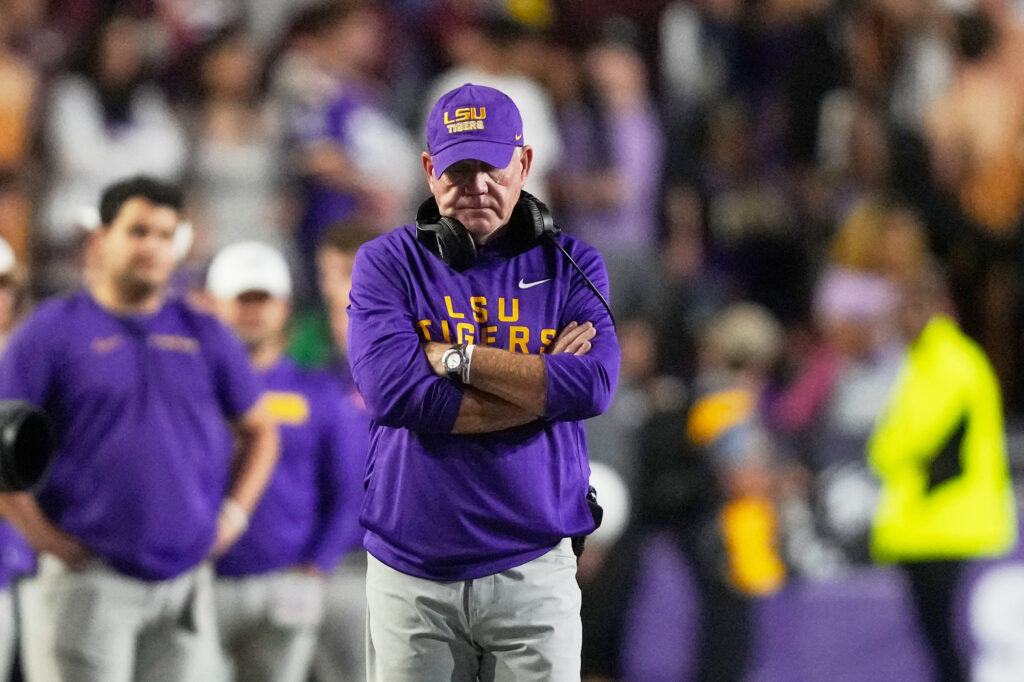
The most notable buyout this year is the $54 million severance package LSU owes fired football coach Brian Kelly, which is reported to be underwritten by one donor. Kelly’s buyout is still short of the record $76 million that Texas A&M owed fired coach Jimbo Fisher in 2023. LSU hired Ole Miss coach Lane Kiffin Sunday to replace Kelly with a pay package worth $13 million annually over seven years, making Kiffin one of the highest-paid coaches in college sports.
These buyouts are just the latest in what has been an expensive pattern by top collegiate athletic programs. According to the Knight Commission on Intercollegiate Athletics, the universities in the 10 conferences that compose the Football Bowl Subdivision— and who compete for the national championship — have paid out over $852 million in severances to coaches fired between 2012 and 2024. This year’s buyouts brings the total to over $1 billion.
While this is certainly a staggering sum, these schools and conferences generated nearly $110 billion in revenue over the same period.
As Sen. Maria Cantwell (D-Washington) reminds us in a recent letter to Congress’s Joint Committee on Taxation, “Unlike professional sports, however, the NCAA and athletic conferences operate as tax-exempt organizations because they are under the umbrella of the tax-exempt educational institutions with whom they are affiliated.”
While athletic departments rely heavily on revenue from media rights, corporate sponsorships and ticket sales, charitable donations play a key role. At LSU, donations accounted for 37 percent, or $82 million, of the athletic department’s total revenue of $220 million in 2024. Media rights and distributions from the NCAA accounted for 28 percent ($61.6 million) and ticket sales 24 percent ($51.8 million).
To rein in coaches’ salaries, Rep. Michael Baumgartner (R-Washington) recently introduced the Correcting Opportunity and Accountability in Collegiate Hiring (COACH) Act. It would limit the amount an athletic department could pay an employee to no more than 10 times the amount of the in-state tuition for a full-time undergraduate student.
This is well-intentioned, but the base salary most coaches are paid is a fraction of their total compensation from endorsements; shoe deals; name, image and likeness (NIL); and appearance fees. As we have seen with attempts to restrict corporate chief executive compensation, there are always ways to game the rules.
In a broader effort, Cantwell has asked the Joint Committee on Taxation to help her “develop legislative proposals that address the tax implications associated with the future of college athletics.” This could mean removing the tax exemption for the NCAA, member institutions and their affiliated conferences. Or it could mean taxing the revenue these organizations receive from TV contracts, corporate sponsorships, ticket sales, advertising and licensing — just as professional sports teams are taxed.
Cantwell’s inquiry is long overdue. The last time Congress deeply examined the business of college sports was in 2006. In a lengthy letter to Myles Brand, then-president of the NCAA, Ways and Means Committee chairman Bill Thomas (R-California) asked a question that is still relevant today. “From the standpoint of a Federal taxpayer, what benefits does the NCAA provide taxpayers in exchange for its tax exemption?”
Plumbing this issue more thoroughly, Thomas asked, “Why should the Federal government subsidize the athletic activities of educational institutions when that subsidy is being used to help pay for escalating coaches’ salaries, costly chartered travel, and state-of-the-art athletic facilities?”
Brand’s answer was less than satisfactory, merely citing a 1984 Supreme Court case which “recognized the importance of the regulatory role of the NCAA in preserving amateurism in college sports.”
How quaint.
Since then, the business model for college sports has changed as much as the way we consume live sports. Colleges can now pay athletes. Athletes can profitfrom their NIL. The transfer portal makes them free agents every year looking for the best deal. One-and-done athletes see college as a springboard to the pros. And private equity firms are looking to get a piece of these lucrative media deals.
Universities are preparing for the inevitable professionalization of college athletics. The University of Kentucky has transferred its athletic department into Champions Blue, a tax-exempt limited liability corporation designed to make the program more nimble, thus able to generate revenue streams. The University of Tennessee recently formed a nonprofit, the UT Athletics Foundation, to manage its new $10 million deal with Adidas and to take over player compensation duties from the current booster-supported NIL sponsorship groups.
The problem with these ventures is that they are created under the tax-exempt umbrella of the universities. So, while the athletic departments stand to profit handsomely, the question Rep. Thomas asked the NCAA 20 years ago still holds: “What are taxpayers getting in exchange for this tax-exemption?”
Not enough to justify subsidizing $228 million in buyouts for fired coaches.
The post Colleges owe fired football coaches $228M. Why are taxpayers helping? appeared first on Washington Post.