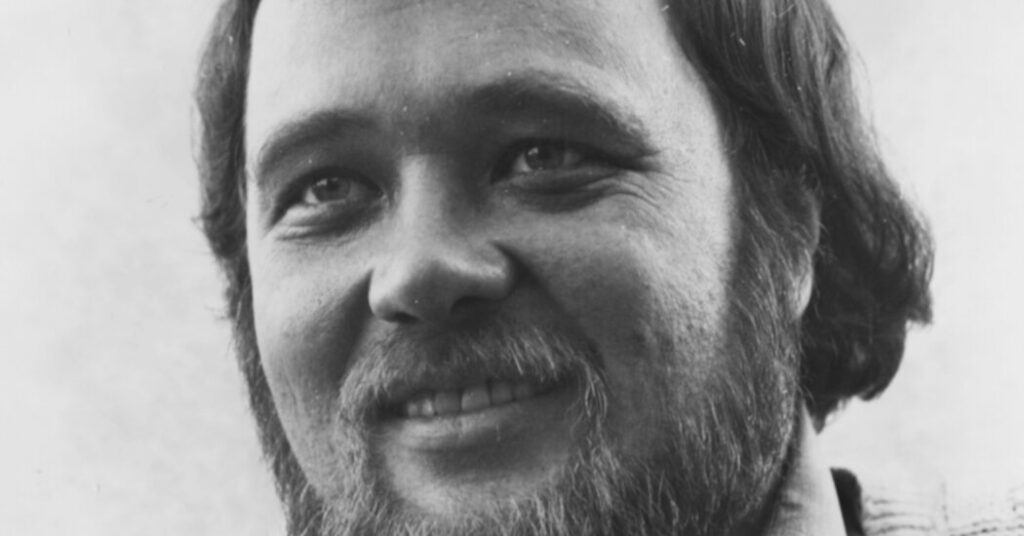
David Clayton-Thomas, a homeless Toronto runaway who learned guitar in prison and went on to become the lead singer of the gritty, blues-inspired band Blood, Sweat & Tears, whose songs like “Spinning Wheel” and covers like “You’ve Made Me So Very Happy” neared the top of the Billboard charts, died on Wednesday in Toronto. He was 84.
His publicist, Eric Alper, confirmed the death, at a hospital, but did not provide a cause.
Mr. Clayton-Thomas joined Blood, Sweat & Tears in 1968, shortly after it formed, and quickly became an indelible part of the group and crucial to its popularity. A self-taught, charismatic frontman with a burly physique and a snarling, bluesy tenor, he stood out in a nine-member ensemble filled with jazz- and conservatory-trained musicians.
The music producer Clive Davis, who was then president of Columbia Records, wrote in his memoir about his first meeting with Mr. Clayton-Thomas: “He jumped right out at you. He seemed so genuine, so in command of the lyric lines, a perfect combination of fire and emotion to go with the band’s somewhat cerebral appeal. He was almost animalistic.”
BS&T, as the band was often called, was for several years a stadium-filling act that fused rock ’n’ roll with elements of pop and big-band jazz. It was known for its funky rhythm and psychedelic guitar licks, with “a four-piece brass section that punctured the group’s rock flow with sharp, rhythmic blast,” the critic Mike Jahn wrote in The New York Times in 1968.
Mr. Jahn described Mr. Clayton-Thomas as a lead singer who “lumbers around stage happily screaming into the microphone.”
With Mr. Clayton-Thomas at the helm, BS&T played the Woodstock festival in 1969 and won the Grammy Award for album of the year in 1970 for its self-titled release, which included a cover of Brenda Holloway’s “You’ve Made Me So Very Happy,” Mr. Clayton-Thomas’s original “Spinning Wheel,” Laura Nyro’s “And When I Die” and a version of Billie Holiday’s “God Bless the Child.” The track “Variations on a Theme by Erik Satie” also won a Grammy for best contemporary instrumental performance.
The group’s musical cocktail of symphonic arrangements blended with horns and pop was met with particular contempt by Rolling Stone magazine, which tended to look askance at anything but unadulterated rock, the music historian John Covach said.
Writing in the magazine in 1969, Jon Landau said, “The listener responds to the illusion that he is hearing something new when in fact he is hearing mediocre rock, OK jazz, etc., thrown together in a contrived and purposeless way.”
Many BS&T fans turned on the group the next year when it became the first major American rock band to perform behind the Iron Curtain — in Yugoslavia, Romania and Poland — as part of a State Department-sponsored tour to promote cultural exchange.
It was later reported in the 2023 documentary “What the Hell Happened to Blood, Sweat & Tears?” that the Nixon administration had presented Mr. Clayton-Thomas with an ultimatum: Play the tour in return for permanent residency in the United States, or be forced to leave the country.
Because of his criminal record — which included arrests in Canada and a prior deportation from the United States for overstaying his visa and working without a permit — the band decided it had no choice but to comply with the State Department’s request.
“We were blackmailed,” Steve Katz, a guitarist in the band, said in the documentary.
The arrangement involving Mr. Clayton-Thomas was not public knowledge, and the band’s decision to associate itself with the Nixon administration, which was reviled by its counterculture fan base, left members open to criticism. Many fans called them sellouts.
At BS&T’s first big post-tour show, at Madison Square Garden, the antiwar activist Abbie Hoffman and his followers carried signs defaming the band. Protesters threw dog feces at the stage.
Mr. Clayton Thomas blamed the blowback on the band’s naiveté. “I don’t think we realized how it would bounce up and bite us,” he said.
Bobby Colomby, the founding drummer, lamented, “We became the most uncool band in the world.”
Mr. Clayton-Thomas left BS&T in 1972, citing burnout from touring, dueling egos and disputes over the band’s business affairs. He had also developed a reputation for heavy alcohol and drug use, and belligerent behavior.
Over the next decade, he recorded three solo albums: “David Clayton-Thomas” (1972), “Tequila Sunrise” (1972) and “Harmony Junction” (1973). (He would go on to record many more during his career.) But he struggled professionally and personally, with several divorces and a lawyer who stole most of his money, he said.
After rejoining BS&T in the early 1980s, he spent another two decades with the group.
“I discovered — and they discovered — that Blood, Sweat & Tears wasn’t worth much without me — and I wasn’t worth much without them,” he told The Toronto Star in 2020.
David Henry Thomsett was born on Sept. 13, 1941, in Kingston upon Thames, near London. He was the elder of two sons of Fred Thomsett, a utility-company lineman who was serving overseas in the Royal Canadian Corps of Signals during World War II, and Freda (Smith) Thomsett, an English pianist.
After the war ended, the family moved to Canada, settling in Willowdale, a Toronto suburb. In his 2010 memoir, “Blood, Sweat and Tears,” Mr. Clayton-Thomas wrote that his father, a violent alcoholic, beat him with fists, boots and razor straps, and his mother did not intervene.
He left home at 15, sleeping in deserted buildings, stealing food and clothing, and brawling in the street. He wound up spending time in reformatories and labor camps, and was eventually sentenced to short stints in prison.
“I was called a habitual offender,” he told The Star. “So even though none of the things I did was that bad — joyriding, vagrancy, kid stuff like that — I did them so often that they kept putting me in worse and worse holes.”
At Millbrook prison in Ontario, he learned guitar on a battered instrument and developed an instant “kinship” with folk and blues music — songs by men who were “dirt-poor working-class hobos with nothing to their name,” he wrote in his memoir.
When he left the institution, at 21, he changed his surname to Clayton-Thomas, to avoid trouble with the police, and began to haunt Yonge Street, a rowdy, club-filled strip in Toronto. A self-described “leather-clad, Telecaster-playing thug,” Mr. Clayton-Thomas sat in with Ronnie Hawkins’s band, The Hawks, which later morphed into Bob Dylan’s backing group, the Band.
Mr. Clayton-Thomas also started his own rock bands — the Shays, the Bossmen — that climbed the Canadian charts with songs he wrote, including “Walk That Walk” and “Brainwashed,” which he called an “antiwar primal scream of refusal and outrage,” and John Lee Hooker’s “Boom Boom.”
He moved to Manhattan in 1966, without a work visa, and performed at small clubs and house parties — activities that later caused legal problems. He developed a following for his thunderous vocals, and the folk singer Judy Collins, he said, helped get him recruited to BS&T as a replacement for the lead singer, Al Kooper, who had left the group.
Mr. Clayton-Thomas’s marriages to Nancy Hewitt, Terry Nusyna, Jennifer Goodson and Suzanne Warren ended in divorce. His survivors include a daughter from his first marriage, Christine Graham, and a daughter from his third marriage, Ashleigh Clayton-Thomas.
In his memoir, he acknowledged that his personal relationships had suffered because he had been so consumed with musical fame. “In my mind,” he wrote, “it was the only thing standing between me and where I came from, and I wasn’t going back.”
Ash Wu contributed reporting.
The post David Clayton-Thomas, Lead Singer of Blood, Sweat & Tears, Dies at 84 appeared first on New York Times.