In 2022, California passed some of the most sweeping plastics restrictions in the nation, setting ambitious targets for reducing use. At the time, the law was heralded by environmentalists and even had buy-in from some industry groups.
But now, with the law having gone into effect last month, significant opposition has emerged from other states, a business group and some environmentalists.
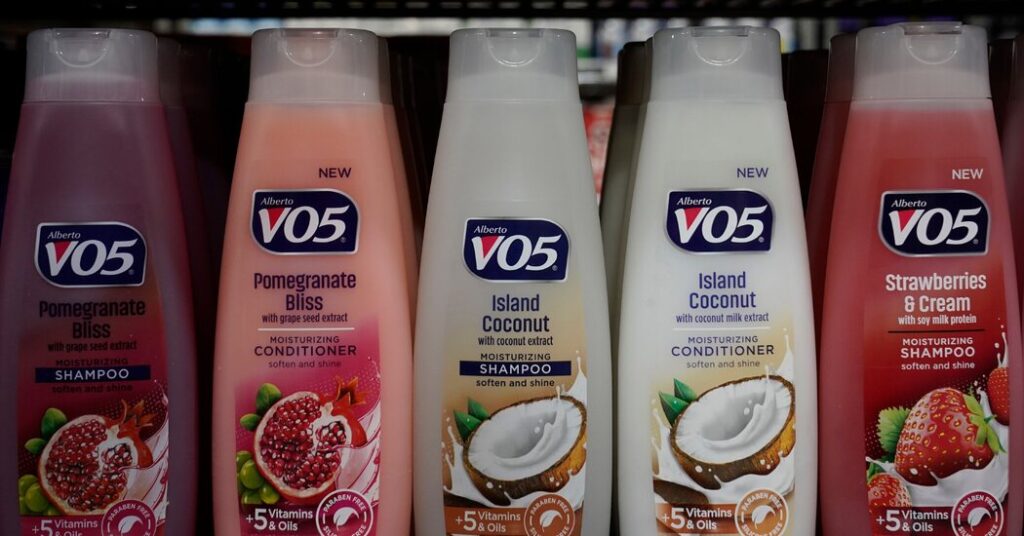
California’s new law sets deadlines for manufacturers to make products such as shampoo bottles and food wrappers with less plastic. It also creates requirements that plastic products be recycled at higher rates.
This week, a group of 17 states sued California, calling the law an overreach that will affect the cost of goods in their states. Earlier this month, environmental groups also sued California, saying the law is being put into effect with loopholes that make it less effective.
Central to both lawsuits is the idea that California policy often sets a standard for the rest of the nation, both because other Democratic states often follow suit and because the state’s market share is so large. For example, the state’s stringent vehicle emissions standards have for decades effectively set the bar for carmakers nationwide.
The states challenging the law, which include Texas, Florida and Georgia, say in their complaint that the law’s “unprecedented requirements reflect California’s bespoke environmental preferences — preferences irreconcilably at odds with those of many other states.”
Their complaint, filed Monday in the U.S. District Court for the Eastern District of California, argues that the law will require “revolutionary changes” that will saddle producers with extra costs that will ultimately be passed on to consumers purchasing basic necessities.
“Once again, California is trying to enact a policy that negatively impacts the rest of the country,” Attorney General Mike Hilgers of Nebraska, who is leading the lawsuit, said in a statement.
The plaintiffs, which include the National Association of Wholesaler-Distributors, are asking a judge to immediately block enforcement of the law.
“California is not entitled to pronounce nationwide policies,” Eric Hoplin, chief executive of the wholesalers’ group, said in a statement.
Environmental groups are unhappy for a different reason: They say California officials have weakened the new law.
The law sets benchmarks for reducing the amount of plastic created and increasing recycling rates in California.
By January 2027, producers must reduce the amount of plastic in packaging by 25 percent. The reduction can be achieved by reducing package sizes, switching to a different material or making the products reusable. By 2030, the recycling rate for single-use plastics must be 40 percent. By 2032, all packaging must be either recyclable or compostable.
Environmental advocates say that any reduction in plastics creation will reduce greenhouse gas emissions as well as the amount of waste ending up in landfills. But the specific regulations written to carry out the law undermine its scope, according to the environmental groups suing the state.
For example, the regulations consider pyrolysis — a form of breaking down plastic at high temperatures — to be a form of recycling, even though only a tiny fraction of the plastic that’s incinerated ends up as new plastic, according to the complaint filed by the groups.
Pyrolysis also creates a significant amount of hazardous waste, said Tara Brock, legal campaign director with Oceana, a nonprofit ocean conservation organization that joined the Natural Resources Defense Council and the Californians Against Waste Foundation to sue the state.
The environmental groups allege that the recycling rules conflict with what the law initially intended when it was signed by Gov. Gavin Newsom in 2022.
Ms. Brock said that the onus was on California to ensure that its law was tough, as other states eventually could want to follow suit.
“As the fourth largest economy in the world, California is really on the forefront here of environmental policy, and we really need to make sure we’re implementing it in a really strong way to set the standard for the country,” she said.
California’s Department of Resources Recycling and Recovery, which oversees how the law will be carried out, declined to comment on the litigation.
The post California’s Plastic Law Goes to Court: Is It Too Strict or Too Lax? appeared first on New York Times.