The Cuban economy is in shambles, power outages can last 30 hours, and the Trump administration, with a figurative gun to Cuba’s head, keeps announcing new ways to deprive the Communist government of much-needed cash.
The Cuban government, responding to the country’s worst crisis in modern history, recently announced a sweeping economic restructuring. The package of 176 measures would allow more private enterprise and loosen the Cuban government’s grip on the island’s economic activity.
Cuba denies the measures were designed to placate the Trump administration, which is demanding the island adopt wholesale economic and political changes, but few experts accept that denial. Official speeches have stressed the urgent need to resuscitate an ailing economy that is collapsing under decades of centralized rule as well as increased pressure from Washington, while insisting that Cuba will remain a socialist country.
Economists say the blueprint, which was rushed through Cuba’s legislature last week, represents a drastic shift. It’s the first time since the 1959 revolution, which ushered in Communist rule, that the regime is offering to relinquish full control of commerce.
But even as Cuba’s government says it will allow private banking and individuals to own more than one business and real estate property, experts are skeptical.
A wholesale move toward a system like those in place in Vietnam or China, away from a strictly state-controlled, centrally planned economy toward a flexible, market-driven mixed economy, would be hard to pull off unless the Trump administration eases sanctions.
Some foreign businesses have started pulling out of Cuba because they fear running afoul of recent U.S. rules that make it even more difficult to do business there. For them to come back, more than just Cuba’s regulations would have to change.
And the Cuban government has a serious credibility problem, experts say. Officials have announced economic changes before, only to pull them back without explanation. Cuba lacks the rule of law and a separation of powers and often fails to pay its bills. It’s a notoriously risky business environment.
Some experts likened the ambitious new package of incentives designed to encourage foreign investment in Cuba to a recurring bit from the cartoon “Peanuts”: Lucy trying to sweet talk Charlie Brown into taking another swing at that football.
So What Exactly is Cuba Planning to Do?
The package includes an expansion of the fledgling private sector with greater freedom to import and export without state interference.
-
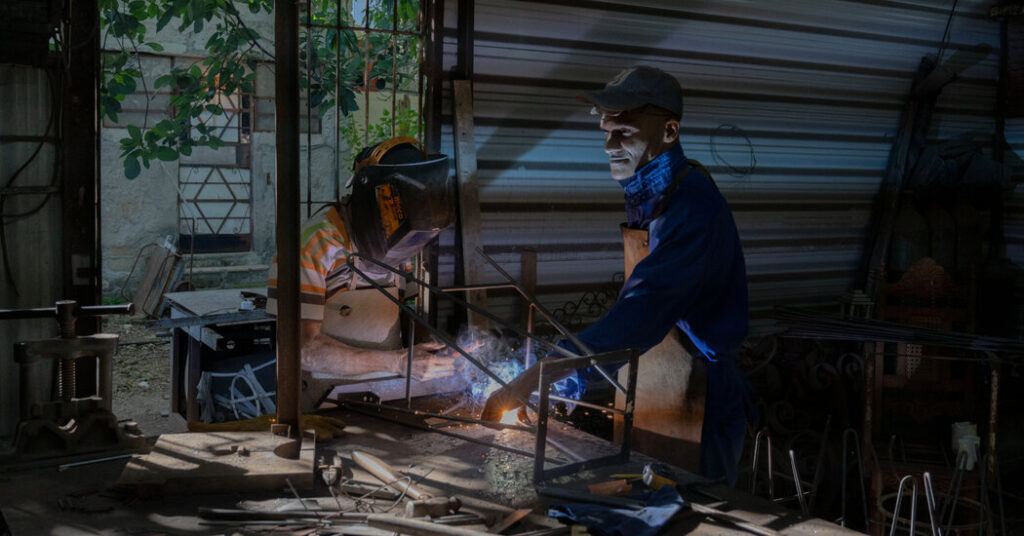
Businesses in Cuba would for the first time be permitted to hire more than 100 employees, a limit meant to prevent the private sector from growing too big. Entrepreneurs would also be allowed to own multiple private businesses, ending a stifling practice and longstanding grievance of the private sector.
-
The changes open the door to private real estate development on the island and propose transforming state-owned businesses into private commercial ventures with shares and equity stakes. It would allow private banks to enter Cuba’s once exclusively state-run finance sector.
-
The government also plans to eliminate 70 of 125 prohibited business activities, but did not specify which ones. Businesses are highly regulated in Cuba and government prohibitions are wide ranging; they include buying wholesale, selling honey directly to the public and making orthopedic footwear.
-
State-owned properties can now also be sold to national and foreign companies and individuals, including Cubans residing abroad. It even permits fast-food chains to open franchises on the island.
-
Acknowledging that its safety net is fraying, the Cuban government wants to shift responsibility for old-age homes and other social welfare programs to private businesses.
What do experts say about it?
Most experts say the ideas sound familiar: Economists have been proposing them for decades. Others said it was maybe not too little, but likely too late to rescue the economy or satisfy the United States.
Experts also believe some measures violate the Cuban Constitution, which enshrines socialism. Economists worry that the Cuban government announced a slew of measures, all at once, without a timeline or a clear path forward of how to implement or finance them.
“Some of them are quite radical,” said Pedro Monreal, a Cuban economist. “The problem is not so much whether they arrived late or early, but whether it’s feasible — if they can really work.”
Daniel Torralbas, a former policy analyst at Cuba’s Ministry of Economy and Planning, said that though many questions remain unanswered, “without a doubt” the changes “are the most profound” the Cuban government has announced since taking power in 1959.
“But that doesn’t mean that they are going to work, nor does it mean they are going to be implemented all at once, nor does it mean they will be successful,” said Mr. Torralbas, who is currently studying in London.
Several experts warned that some measures, like opening state assets to private ownership, while unthinkable even a few months ago, could open the door to cronyism.
Pavel Vidal, a Cuban economist who teaches at Pontificia Universidad Javeriana in Cali, Colombia, said such changes are risky. Without oversight, transparency and a clear legal framework, he said, they could lead to inside dealing.
“They can create opportunities for corruption, rent-seeking, and opaque asset transfers to elites with political power or privileged access to information,” Mr. Vidal said.
What are Cuban government loyalists saying about it?
Prime Minister Manuel Marrero bluntly stated that the accumulation of wealth in private hands — for decades a communist taboo in Cuba — would no longer be forbidden. He explicitly recognized “the legitimate growth of the financial and material assets of legal entities and individuals.”
President Miguel Díaz-Canel added: “If there is no wealth, there is nothing to distribute. If there is no wealth, there is no social justice.”
Carlos Luis Jorge Méndez, Cuba’s deputy minister of foreign trade and foreign investment, said the government would cut back on bureaucracy and other obstacles to making deals.
He told a United Arab Emirates newspaper that Cuba was “open for business.”
But what about Washington?
The U.S. State Department, responding to questions, said in a statement that President Trump would continue to apply pressure to drive much more substantial economic and political overhauls.
Mr. Trump, the State Department said, wants to “make Cuba investable” and allow private businesses to grow in ways that will help the Cuban island develop and recover and “give the Cuban people the freedom, dignity and opportunity they deserve.”
On Tuesday, the State Department announced new sanctions against more Cuban state-run financial businesses, as well as a member of the Castro family.
“These gradual ‘economic reforms’ are modest, long overdue and ultimately superficial smoke signals from the Cuban regime,” the State Department said.
Cuban activists such as the free speech advocate Yoani Sánchez and the dissident José Daniel Ferrer largely agreed, stressing that the lengthy list of changes did not include any mention of political freedom or a multiparty system.
“Cuba doesn’t need stopgap measures,’’ Mr. Ferrer said, “but a profound economic transformation and a complete political transition.”
The post Under U.S. Pressure, Cuba Rushes Drastic Economic Overhaul appeared first on New York Times.