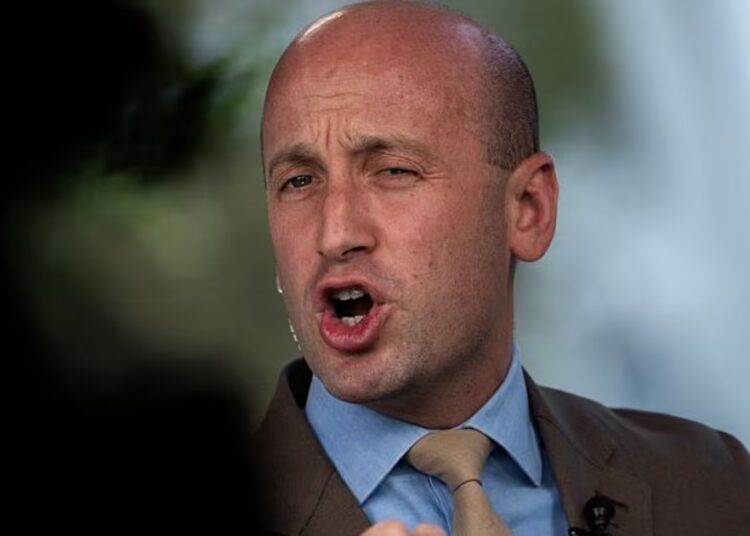
Somalia’s leader said Wednesday that it was “better not to respond” a day after President Trump called Somali immigrants “garbage” during a xenophobic tirade.
“We are not the only country that Trump insults,” Prime Minister Hamza Abdi Barre told an audience at an innovation summit in Mogadishu, the Somali capital, in response to a question about Mr. Trump’s comments, according to video published by Shabelle TV, a local media network. “Sometimes it’s better not to respond,” he said.
Somalia, a nation of 19 million people in the Horn of Africa, has long regarded the United States as a key ally in the fight against the Al Shabab terrorist group. Though the Trump administration has slashed foreign aid budgets in recent months, the United States gave around $128 million to Somalia in the 2025 fiscal year.
But on Tuesday, Mr. Trump said the country “stinks” and that he did not want Somali immigrants in the United States. “We’re going to go the wrong way if we keep taking in garbage into our country,” Mr. Trump said at a cabinet meeting at the White House.
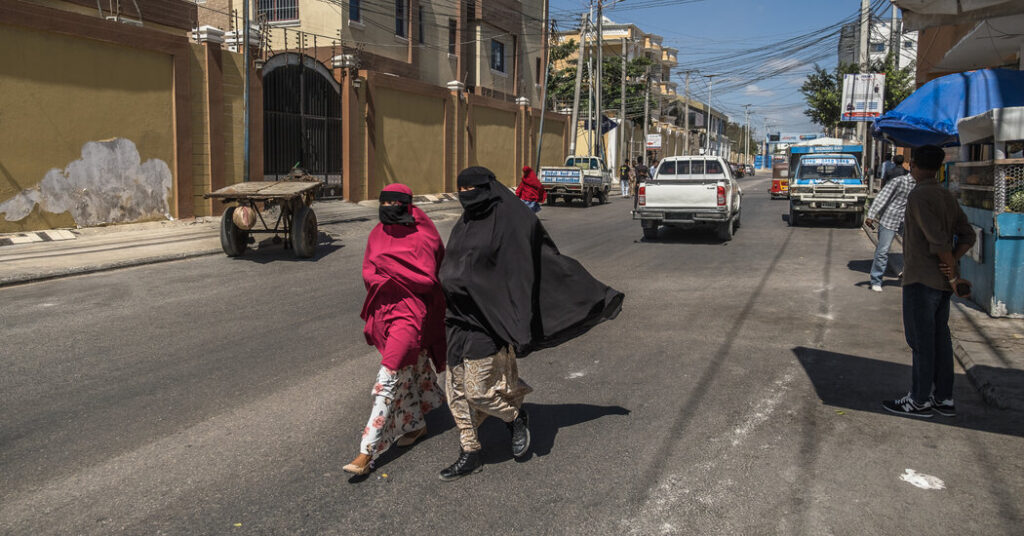
In Somalia on Wednesday, some people were angry that their government had not criticized Mr. Trump’s comments.
“Somali leaders and politicians have to defend the nation and the national interests,” said Abdullahi Omar, 35, a trader in Mogadishu, the Somali capital. “Why have you kept your mouth shut about Trump’s hate speech toward our people?”
Others were frustrated by what they saw as a pattern of disrespect toward Africa from Mr. Trump, who has a history of insulting Black people, particularly those from African countries.
“We are not garbage,” said Ali Yahye, 24, a graphic designer in Mogadishu. “Trump’s remarks were baseless and the Somali community in the U.S. has made a lot of contributions to the country.”
Anwar Abdifatah Bashir, the executive director for the East African Institute for Peace and Governance, described Mr. Trump’s comments as “naked insults,” but said the Somali government was unlikely to criticize the Trump administration because it still provides Somalia with some financial support.
The Trump administration dismantled the United States Agency for International Development earlier this year, cutting off swaths of foreign assistance to the world’s poorest countries, including Somalia. Many Somalis are still struggling with the dire humanitarian crisis that followed years of severe drought, which killed at least 43,000 people there in 2022 alone, and heavy rains and floods in 2023.
“If they keep silent, they are indirectly subscribing to his bombastic and hyperbolic rhetoric,” said Mr. Bashir.
Mr. Trump has used such rhetoric throughout his rise in politics, including in his first term as president, when he demanded to know why the United States would accept immigrants from Haiti and African nations, which he described as “shithole countries,” rather than, say, Norway.
But he has long been especially focused on Somalis in the United States, and in particular, on Representative Ilhan Omar, Democrat of Minnesota, who came to the United States from Somalia as a refugee and became a citizen 25 years ago.
Mr. Trump’s remarks came as an immigration enforcement operation began targeting Somalis in the Minneapolis-St. Paul region, as part of the Trump administration’s immigration crackdown.
Somalis began migrating to Minnesota in large numbers as the East African nation descended into civil war in the mid-1990s. There are about 79,400 Somalis in the state, of whom just over half were foreign-born, according to recent data from Minnesota Compass, a research group in the state.
Immigrant activists and local officials say that the vast majority of Minnesotans with Somali roots are American citizens or legal permanent residents. Nationally, about 73 percent of Somali immigrants are naturalized U.S. citizens, according to the Census Bureau.
Mr. Trump has seized on immigration as a potent political weapon, demonizing immigrants and equating them with crime and disease. In a social media post on Thursday night, Mr. Trump claimed that Somalis were “taking over” Minnesota and that Somali gangs were “roving the streets looking for ‘prey.’”
Abdirashid Hashi, an analyst who once led the Heritage Institute of Policy Studies, a nonpartisan think tank based in Mogadishu, condemned such framing as grossly disproportionate.
“There are about 40 million Somalis worldwide,” he said on X, noting the diaspora across Africa. He said while a “microscopic” number of Somalis in the diaspora may have committed crimes, “reducing an entire people to the actions of a handful is simply bigoted and dishonest.”
Matthew Mpoke Bigg contributed reporting from London.
Amelia Nierenberg is a Times reporter covering international news from London.
The post On Trump’s Insults, Somalia’s Prime Minister Says ‘It’s Better Not to Respond’ appeared first on New York Times.