It was the fastest “college” class I ever took.
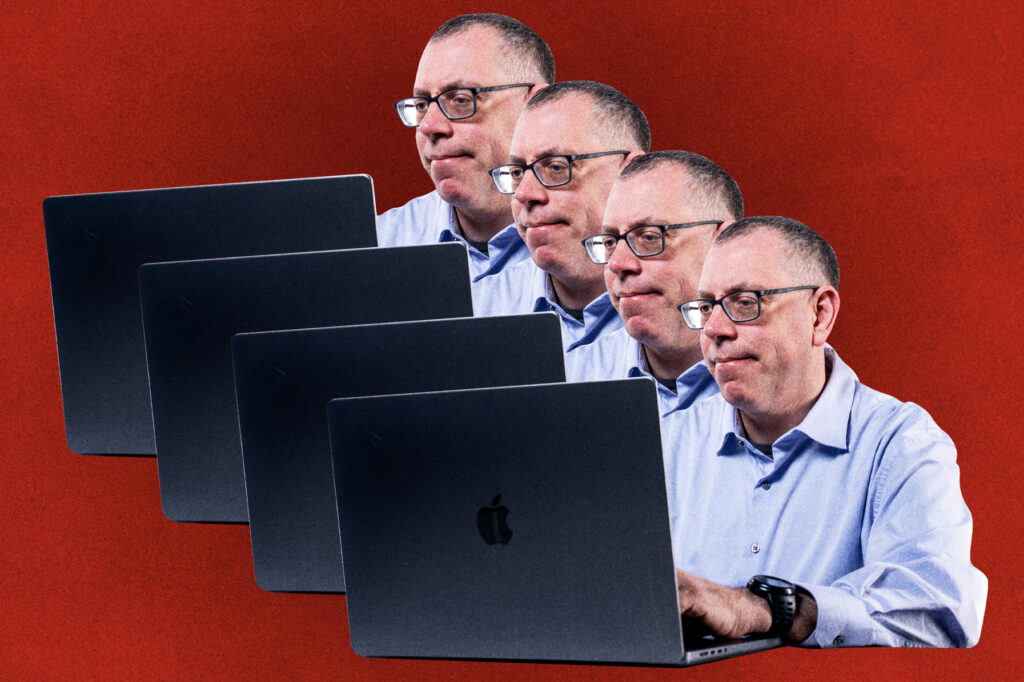
I opened my MacBook in the morning, logged onto an online platform called Sophia Learning and started a business course on managing conflict.
A little over an hour later, I was done. I had clicked through an electronic textbook, answered a flurry of multiple-choice questions, and the course was over. I just earned one credit, good toward a bachelor’s degree at more than 50 accredited colleges, including the University of Maine at Presque Isle, the University of Massachusetts Global and the University of Maryland Global Campus.
By the afternoon, I finished a second class on environmental science, good for three more college credits. At that pace, I figured I could knock out what would normally take a year of work in college in a week or two. In another month, I might have most of the credits for a bachelor’s.
I learned one important lesson: It’s possible to rack up college credit faster than many people can imagine.
I discovered Sophia Learning when I was researching a story about students earning bachelor’s degrees in as little as a few months, instead of the more typical four years.
The biggest question my editors and I had was, how? So I signed up for a Sophia account and set out to see for myself.
More on degree hacking
They aren’t colleges. But they promise fast, cheap college credits.
Students are speeding through their online degrees in weeks, alarming educators
Here are the undergraduate programs that pay off (and some that don’t)
It turns out one explanation is that many online colleges have adopted generous transfer policies, accepting credits from not only other colleges but also an assortment of nontraditional sources.
That includes certifications earned on the job or in the military. Or exams that prove students have already mastered the material, including Advanced Placement and College-Level Examination Program tests.
But it also includes getting credit for taking classes on online learning platforms such as Sophia, Study.com and StraighterLine, which are known as fast and inexpensive places to rack up college credits.
To be clear, these learning platforms are not colleges. But many accredited colleges will accept the courses as transfer credit, slashing the time to eventually earn a degree.
The affordability factor in particular is hard to ignore. Both Sophia and Study.com let students take an unlimited number of classes for less than $100 a month.
After finding a discount code online, I knocked the cost down even more. I signed up for a month of classes at Sophia — one of the most popular places for people trying to accelerate their degrees — for $83.74 including tax. So the five classes I took cost about $17 each.
And the time invested was minimal compared to a traditional college class that might last 15 weeks or more.
Sophia told me students take 24 days on average to finish classes, less than a quarter of the length of a standard college semester. But some students can finish much more quickly.
“People with extensive professional work experience and degrees, like yourself, may be able to progress through courses at a faster pace because of their ability to demonstrate mastery,” Sophia spokeswoman Elaine Kincel said in an email.
The environmental science course took me 5½ hours, even though I had never taken a course on the subject before. Another three-credit class, called Introduction to Business, took me a little over three hours. (I have written about corporations before, so some of that material was more familiar.)
A key difference between the Sophia classes and courses I took in college decades ago is there were no class meetings or due dates. I also discovered I could skip all the recorded lectures and readings, and still pass the class.
All the tests were open-book.
So when I ran into a test question asking for details about the Kyoto Protocol — an international treaty signed in 1997 to reduce greenhouse gas emissions — I searched for the name of the treaty in the course materials and quickly found the answer.
Only one of the classes I took included a paper or project, which Sophia calls “touchstones.” Classes with papers typically take longer because it requires about two days on average for someone to grade each assignment. So I mainly focused on classes with just tests, which Sophia calls “milestones.”
But the one paper I wrote didn’t require much effort.
The visual communications assignment asked six questions about design, each of which was supposed to be answered in 200 words, for 1,200 total. I turned in only one-third that many words, didn’t fully answer the questions and still earned more than enough partial credit to pass the course. All the classes are pass-fail, so the exact score doesn’t matter; students just need 70 percent overall to pass. And if students do poorly on a test or assignment, they can try again.
One big draw for asynchronous classes, such as the ones offered by Sophia, is that you can work on them whenever you have time (so long as your subscription remains active). So I was able to work on one course over a weekend, pause, and come back to it later. Students can take up to two classes at once.
And because there aren’t proctors for tests, it’s tempting for some students to use Google or artificial intelligence to go even faster. One person joked on a Reddit thread about Sophia: “Am I the only one who doesn’t use ChatGPT?”
For those unafraid to cheat, there are also plenty of “tutors” offering to help with tests and papers.
After I joined a Facebook group on Sophia Learning, one of them messaged me.
“I only charge $70 per class,” the person said. “I complete everything.”
My Facebook page says I am a reporter for The Washington Post. But I am not sure the tutor understood what that means. When I told them I was a reporter working on an article about Sophia, they asked, “So you need help on writing the report?”
They became decidedly less chatty when I said I could write the article myself but hoped to interview them. I asked them how many students they have helped.
“That’s confidential,” they replied. “Byeee.”
Sophia tells students they are welcome to consult the course materials or their own notes while taking tests. “All assessments are open book to support flexible, on-your-time learning,” the company says on its website.
But Sophia also warns subscribers against “unethical or inappropriate use of outside resources,” including consulting other people, outside websites or artificial intelligence.
The company also employs software to try to detect cheating. It flashed warnings when I switched to a second browser window to check my notes during a test, even though that is allowed.
I spent a week in Sophia purgatory — unable to sign up for new classes — after tripping the company’s alarms.
“Your account has been identified as potentially in violation of the Sophia Honor Code due to suspicious browser/IP activity while completing Sophia coursework,” Sophia warned.
After 10 days, Sophia sent me a note saying it reviewed my account and “decided to lift the warning.”
Sophia said the temporary lockout shows just how seriously it takes academic integrity.
“In your case, the system worked as intended,” said Kincel, the company spokeswoman. “Your case was flagged, reviewed, and ultimately cleared to continue.”
To put my 11 Sophia credits toward a degree, I would need to find a university that would accept them.
There is no shortage of options.
Sophia says more than 115 colleges have signed transfer agreements with the company. (And others have accepted credits on a case-by-case basis.)
I didn’t try to transfer the credits because I have no plans to earn another degree. I was, however, interested in learning about the instructors behind Sophia’s classes.
As a Sophia student, I never actually spoke with anyone outside of tech support. Not even the person who graded the paper I submitted.
But I noticed a few of the classes had thumbnail photos and names at the top of the webpages — with the option to mark them as your “favorite instructor.”
My environmental science class had an avatar of a man with a huge smile labeled Jensen Morgan. So I decided to track Morgan down.
Morgan, who lives in Colorado, said he was so surprised to hear from me that he first wondered whether it was a scam.
He said his only role in the course was to create a set of narrated videos more than a decade ago.
“So I have no contact with any students,” Morgan said. “I never did.”
Sophia later added the other course materials, including the tests and electronic textbook, he said.
Kincel said the firm’s courses are assembled by a team of experts.
The spokeswoman said they use presenters such as Morgan to “better support student connection to the content.”
At the time, Morgan had some video-production skills and an undergraduate degree related to the environment.
Morgan told me he thought the course was a new way for people to learn a subject, similar to how he used YouTube to help learn new video-production skills.
Now Morgan said he wonders how much students learn — and actually retain — from Sophia courses such as this one.
“You can skate on through, right?” said Morgan, who has since earned a graduate degree and co-founded a marketing company that focuses on equity in the environment. “But if you actually want to learn, I think those tools can be really valuable.”
In my case, I am not sure I retained that much because I only scanned the textbook for answers to the test questions and never watched the videos. (Sorry Morgan.)
But I did learn just how quickly you can earn college credit using CTRL-F.
The post How I racked up college credits in just a few days for less than $100 appeared first on Washington Post.