The International Space Station is slated to be retired just four years from now.
In fact, “retired” confers an aura of decorum that may not be warranted; the plan is to nudge it out of its orbit with the help of a modified SpaceX spacecraft until it unceremoniously plunges into the Pacific Ocean, after facilitating decades of cutting-edge space science.
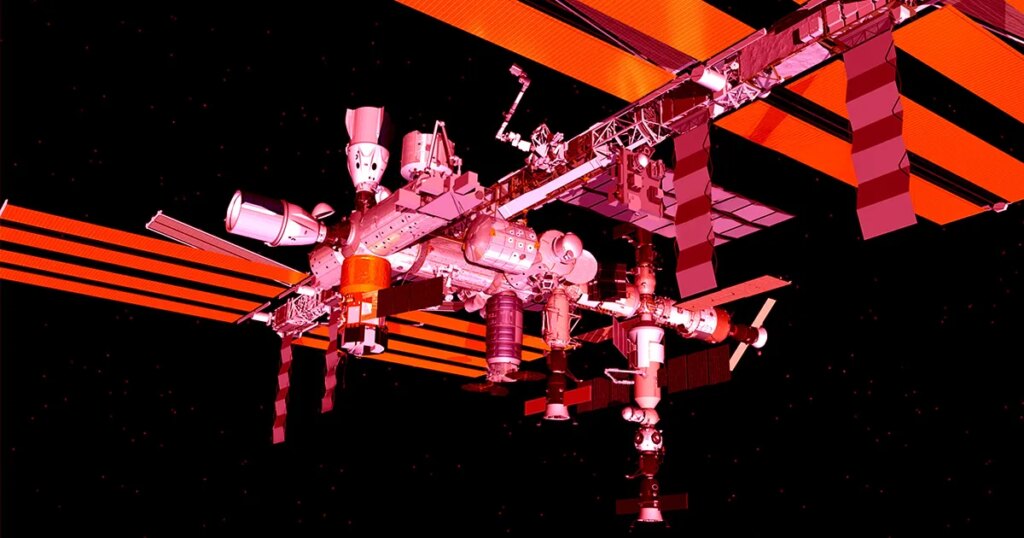
But it’s not being decommissioned just yet. In fact, the ISS is incredibly busy right now, hosting a record number of eight spacecraft docked at all eight of its ports for the first time in its history, as NASA boasted in a new blog post.
In total, there are currently two SpaceX Dragon spacecraft (one crew and one cargo), Northrop Grumman’s Cygnus XL cargo spacecraft, Japan’s cargo spacecraft HTV-X1, which completed its maiden flight to the station on October 26, as well as two Roscosmos Soyuz crew spacecraft and two of its Progress cargo ships.
The Cygnus XL spacecraft was removed by the station’s Canadarm2 last week to make way for the latest crewed Soyuz MS-28 mission, which delivered two cosmonauts and one NASA astronaut to the station on November 27. The station reached its historic milestone when the cargo craft was reattached, according to the agency.
With five cargo and three crew spacecraft currently docked, there are ten people currently residing on board the space station. The record number of crew members at one time on board the ISS was 13, set in July 2009 after the Space Shuttle Endeavor docked, delivering six astronauts at one time.
However, the station will soon clear up one of its dock ports. The Soyuz MS-27 mission is scheduled to leave the orbital outpost, returning NASA astronaut Jonny Kim and Roscosmos cosmonauts Sergey Ryzhikov and Alexey Zubritsky to Earth on December 8.
NASA and SpaceX’s Crew-11 mission will return a crew of three astronauts and one cosmonaut on board the docked Crew Dragon spacecraft sometime next year.
In short, it’s an impressive feat of logistics and coordination. Keeping all of the station’s docks occupied is no easy feat and likely has kept Mission Control in Houston extremely busy.
It’s also a bit of a swan song moment for the aging orbital outpost. In 2030, the station will be deorbited, ending just over three decades of peaceful cooperation in the Earth’s orbit.
What comes next is still a big question mark. Several private space stations are currently in development, but when they’ll be launched into space, let alone host eight spacecraft simultaneously, remains to be seen.
More on the ISS: NASA Responds to Russia Accidentally Blowing Up Its Only Astronaut Launch Facility
The post A Record Number of Spacecraft Have Swarmed the International Space Station appeared first on Futurism.