It took two devastating wars and the collapse of two previous attempts at mediation. Now, regional experts say, Iran and the United States finally look ready at least to try to strike a deal in good faith.
Pessimism was high when negotiations kicked off last weekend in Switzerland, hosted by international mediators and bringing together delegations led by Vice President JD Vance and Iran’s speaker of Parliament, Mohammed Bagher Ghalibaf.
The mistrust between the two nations is deep and decades old. It took mediators months of wrangling to draft a framework for talks that the two sides could agree to. Since talks began, the sides have portrayed their content so differently that one might ask whether they were attending the same negotiations.
Yet political analysts say both Tehran and Washington now have real need for progress.
“All of the other options have simply been exhausted,” said Abdolrasool Divsallar, an Iran expert at the Catholic University of Milan. “That brings me to the conclusion that we may reach a positive trend.”
The Trump administration tried, and failed, to topple the Islamic Republic, or bend it to its will through all-out war. That led to a global energy crisis as Iran effectively closed the Strait of Hormuz, a vital waterway for oil and gas shipping.
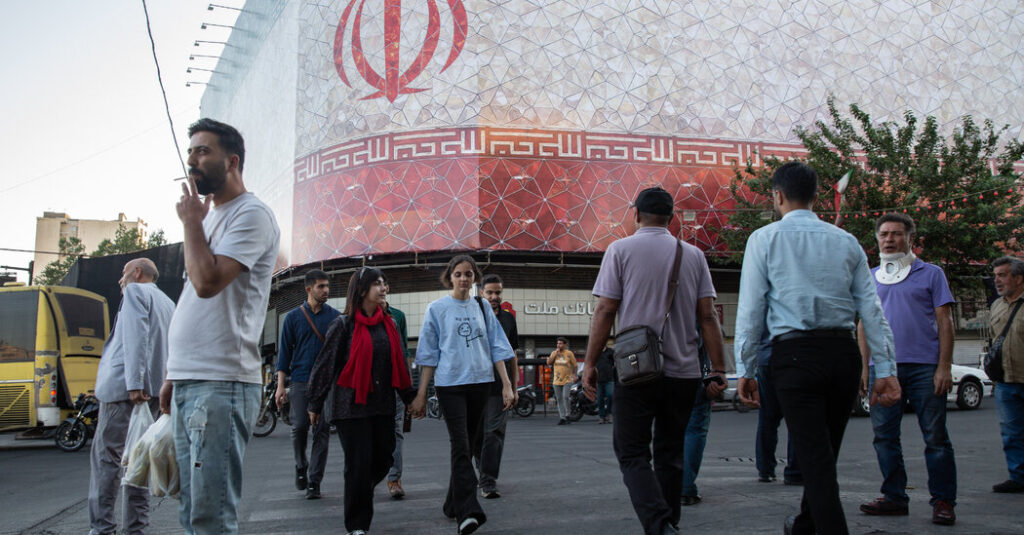
And while Iran may have survived the U.S. onslaught, it lost much of its political and military elite — including its supreme leader, Ayatollah Ali Khamenei. Iran also faces a worsening economic disaster and simmering domestic unrest, which mean its new leaders are keen to find a path toward stability.
Even if the two sides want to reach a deal, they will face myriad pitfalls. Iran has made its participation in the talks conditional on a cease-fire in Lebanon between its ally there, the militant group Hezbollah, and Israel. Iran sees this, analysts say, as a way to test the Trump administration’s ability to keep its Israeli allies in check. Pinning the talks on such a fragile cease-fire leaves plenty of room for the negotiations to fall apart.
Then there is the daunting ultimate objective of these talks — which in Washington’s view is to curb Iran’s nuclear program, while Tehran wants relief from crippling U.S. sanctions.
It took almost two years for the Obama administration to negotiate its comprehensive 2015 nuclear deal with Iran. Mr. Trump withdrew from that agreement in 2018, calling it a bad deal, and the idea that his team can reach better terms in 60 days of negotiations appears extremely unlikely.
The two sides are expected to extend the negotiations far beyond that time period, regional experts say, likely for months.
Implausible as the initial 60-day window for completing negotiations may be, it could provide useful moments for the two sides to evaluate their progress and keep the momentum going, said Ellie Geranmayeh, an analyst and the author of the European Council of Foreign Relations’ Iran Nuclear Monitor, which tracks the country’s nuclear activities.
Yet Ms. Geranmayeh sees a major later hurdle for the talks: Iran will ultimately need to allow international inspectors into its nuclear facilities. Inspectors will also need to consider Iran’s roughly 970 pounds of highly enriched uranium, which may be buried under the rubble of nuclear sites targeted by the United States and Israel in their 12-day war with Iran last June.
“If there is a discrepancy in the numbers, that will be a huge moment of tension,” she said, with Iran likely to insist that material was lost in the bombardment, while Washington will say it has been hidden with the intention of making a bomb. “That is actually the point I’m most afraid of in terms of a breakdown in talks.”
Publicly, both Iran and the United States maintain that the other side is currently making all the concessions.
President Trump said Iran had now agreed to allow inspectors from the International Atomic Energy Agency back in for the first time since the 12-day war — a commitment Iran that says it did not make.
On Tuesday, Mr. Trump pushed his claim further, arguing that Iran had agreed on “inspections long into the future (Infinity!!!)” and adding that “if they did not agree to this, there would be no further negotiations.”
The dispute may be about optics, Ms. Geranmayeh said: Iranian officials may plan to allow inspections, arguing that they allowed them as part of their negotiations with the U.N. agency responsible and not as a concession to Washington.
Sasan Karimi, a political scientist at the University of Tehran and a former Iranian government official, said he thought the maximalist demands on both sides were mostly posturing.
Differences existed, he said, “but not as big as is being shown.” The rhetoric was likely intended to satisfy both countries’ tough domestic audiences, he added.
Mr. Trump, who once vowed to force Iran’s surrender, and to secure a better nuclear deal than President Barack Obama, now has to show that the massive global costs of the war he started were worth it.
And Iran’s government, Mr. Karimi added, has to contend with a hard-line base of support that objects to a deal with the United States, and which some local polls estimate makes up around 38 percent of the population. Iran’s new ruling class may see that as a crucial demographic it needs to appeal to after losing so many top leaders during the war.
Popular discontent in Iran remains high — only a month before the war began, security forces had to brutally quell nationwide antigovernment protests.
Farzan Sabet, an Iran analyst at the Geneva Graduate Institute in Switzerland, said that in recent weeks both the U.S. and Iranian sides had shown unexpected pragmatism.
He said the Trump administration had offered more to Tehran than he expected, pointing to its 60-day Treasury waivers on sanctions for selling Iranian oil, which represented a sharp reversal of U.S. policy that allows Iran to sell its crude at more lucrative market rates.
Iran’s government also appears to be laying the groundwork to frame the peace talks as a popular demand, and a way to silence its critics, he said.
Ahead of a recent vote by Iran’s Supreme National Security Council on whether to allow talks with the United States, the government decided to require a two-thirds majority for it to pass, instead of a simple majority. That, Mr. Sabet said, was shrewd, because when only one council member dissented, it allowed the government to portray hard-liners, who are against the talks, as marginalized.
“After the disaster of two wars and a popular protest movement, there might be some thinking inside the regime that ‘OK, we have to change,’” Mr. Sabet said.
He remained pessimistic about whether a deal would ultimately materialize: “But I do see a horizon — inside of Iran and in terms of these negotiations — that at the start of this month I did not see.”
The post After Wars and False Starts, Cautious Optimism for U.S.-Iran Talks appeared first on New York Times.