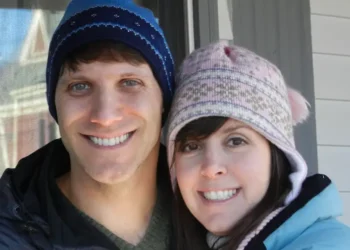
Artificial intelligence most likely saved Louie Quiros’s life.
Mr. Quiros, a 45-year-old caregiver and security guard, showed up at a Queens emergency room in February 2025. For the past four days, he said, he had been coughing up blood and finding it harder and harder to breathe.
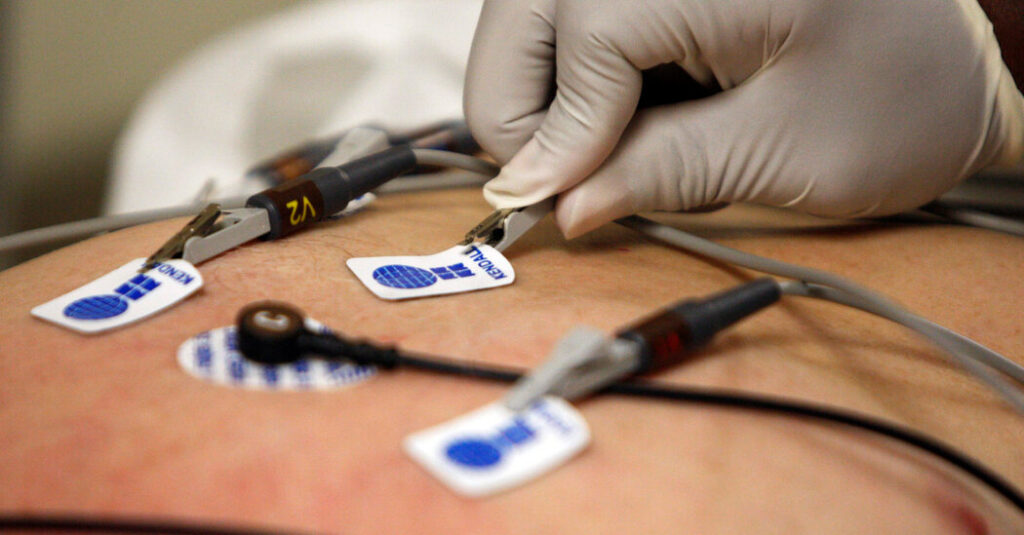
His heart was beating fast, and he wasn’t getting much air to his lungs, but a chest X-ray showed no abnormalities. He also had an electrocardiogram, or ECG, a common test that records the heart’s electrical activity. It was abnormal but showed nothing that would lead to a clear diagnosis. It indicated he might have coronary heart disease — rare in someone his age. But, as it turned out, that was not his problem.
The emergency room doctors learned Mr. Quiros had been exposed to wildfire smoke on a recent visit to California and sent him home with asthma medicine and an inhaler.
Luckily for Mr. Quiros, that emergency room is part of NewYork-Presbyterian’s medical system. Researchers were analyzing all electrocardiograms done on patients in that medical system with an A.I. program, EchoNext, to see if it could find patterns in the scans indicating damage to the heart — patterns a human would not detect.
It’s part of a clinical trial evaluating the A.I. program, which was developed there by Dr. Pierre Elias, medical director of A.I. and cardiologist at NewYork-Presbyterian and Columbia University Irving Medical Center, and his colleagues. Dr. Elias says EchoNext reads an ECG less than 10 minutes after it is performed, and that they analyze nearly 500,000 ECGs a year. Dr. Elias has started a company, Pathway Labs, to market it.
EchoNext found evidence of possible severe heart damage in Mr. Quiros’s electrocardiogram. The team called him back to the hospital one week later for an echocardiogram, a scan that shows the beating heart. What they found was dire. His heart was beating so feebly that just 10 percent of its blood was pumped out with each contraction. At the same time, his mitral valve was leaking blood back into his heart.
When Mr. Quiros’s doctors investigated the cause of his problems using genetic testing, they discovered he had a rare genetic disorder associated with sudden death. To save him, doctors did a heart transplant.
His case was published on Monday in the journal Nature Medicine.
Dr. Roxana Mehran, president of the American College of Cardiology and a cardiologist at Mount Sinai, said this was a dramatic example of the power of A.I. to help address missed diagnoses and disparities in heart disease treatments, as heart problems in women and patients of color often go unnoticed.
Yes, she said, Mr. Quiros’s electrocardiogram was abnormal, and a cardiologist sitting in a quiet office would have asked for an echocardiogram. But in a busy emergency room, it is all too easy for that scan to be overlooked.
“It’s the kind of story we see all the time,” she added.
But the world of medicine is rapidly changing.
EchoNext will be available — for free — to any doctor who uses the popular medical chatbot OpenEvidence and submits a patient’s electrocardiogram. Dr. Travis Zack, OpenEvidence’s chief medical officer, said this was the first time OpenEvidence would offer such an A.I. tool.
It can flag possible poor pumping action, damage to heart valves, abnormally thick walls of the heart and high blood pressure in the part of the lungs connecting to the heart, all of which can indicate serious damage.
The hope is not that A.I. will replace doctors, but that it could be a tool to augment their skills and flag overlooked medical issues.
EchoNext was chosen as the first A.I. program to be available in OpenEvidence, Dr. Zack said, because it was recently approved by the Food and Drug Administration, meaning it was sufficiently validated to be marketed and advertised. That’s a qualification that many A.I. programs, developed within academic centers, do not yet have. As a result, they are limited to academic uses, leaving most patients and doctors out.
Even when A.I. models are approved, Dr. Zack said, “it typically will take a long time before they are used outside of Boston or San Francisco,” shorthand for hubs of major medical centers.
But about half the doctors in the country use OpenEvidence to help with diagnoses or to mull over a patient’s condition or prognosis.
Dr. Elias said it had been a struggle at times to explain to doctors that A.I. can really help by finding patterns in data and images that humans miss. And that includes things that, on closer examination, can seem obvious, like Mr. Quiros’s abnormal electrocardiogram.
“The reality is that who is sick and who is not is not black and white,” Dr. Elias said.
“The ECG is abnormal, but many ECGs are abnormal,” he said. “If we ordered echoes for every single abnormal ECG, we’d probably bankrupt health care.”
“To say an otherwise healthy 45-year-old who is coming in with mild shortness of breath had horrendous heart failure based off the ECG would be shocking,” he added.
The post Doctors Thought It Was Asthma. A.I. Flagged a Serious Heart Problem. appeared first on New York Times.